Results by title
234 books match the query 'Technological innovations' and 17 start with d

Data Management for Libraries
Carly A. Strasser
American Library Association, 2013

Databrarianship
The Academic Data Librarian in Theory and PracticeLynda Kellam
Assoc of College & Research Libraries, 2016
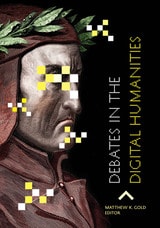
Debates in the Digital Humanities
Matthew K. Gold
University of Minnesota Press, 2012
Encompassing new technologies, research methods, and opportunities for collaborative scholarship and open-source peer review, as well as innovative ways of sharing knowledge and teaching, the digital humanities promises to transform the liberal arts—and perhaps the university itself. Indeed, at a time when many academic institutions are facing austerity budgets, digital humanities programs have been able to hire new faculty, establish new centers and initiatives, and attract multimillion-dollar grants.
Clearly the digital humanities has reached a significant moment in its brief history. But what sort of moment is it? Debates in the Digital Humanities brings together leading figures in the field to explore its theories, methods, and practices and to clarify its multiple possibilities and tensions. From defining what a digital humanist is and determining whether the field has (or needs) theoretical grounding, to discussions of coding as scholarship and trends in data-driven research, this cutting-edge volume delineates the current state of the digital humanities and envisions potential futures and challenges. At the same time, several essays aim pointed critiques at the field for its lack of attention to race, gender, class, and sexuality; the inadequate level of diversity among its practitioners; its absence of political commitment; and its preference for research over teaching.
Together, the essays in Debates in the Digital Humanities—which will be published both as a printed book and later as an ongoing, open-access website—suggest that the digital humanities is uniquely positioned to contribute to the revival of the humanities and academic life.
Contributors: Bryan Alexander, National Institute for Technology in Liberal Education; Rafael Alvarado, U of Virginia; Jamie “Skye” Bianco, U of Pittsburgh; Ian Bogost, Georgia Institute of Technology; Stephen Brier, CUNY Graduate Center; Daniel J. Cohen, George Mason U; Cathy N. Davidson, Duke U; Rebecca Frost Davis, National Institute for Technology in Liberal Education; Johanna Drucker, U of California, Los Angeles; Amy E. Earhart, Texas A&M U; Charlie Edwards; Kathleen Fitzpatrick, Pomona College; Julia Flanders, Brown U; Neil Fraistat, U of Maryland; Paul Fyfe, Florida State U; Michael Gavin, Rice U; David Greetham, CUNY Graduate Center; Jim Groom, U of Mary Washington; Gary Hall, Coventry U, UK; Mills Kelly, George Mason U; Matthew Kirschenbaum, U of Maryland; Alan Liu, U of California, Santa Barbara; Elizabeth Losh, U of California, San Diego; Lev Manovich, U of California, San Diego; Willard McCarty, King’s College London; Tara McPherson, U of Southern California; Bethany Nowviskie, U of Virginia; Trevor Owens, Library of Congress; William Pannapacker, Hope College; Dave Parry, U of Texas at Dallas; Stephen Ramsay, U of Nebraska, Lincoln; Alexander Reid, SUNY at Buffalo; Geoffrey Rockwell, Canadian Institute for Research Computing in the Arts; Mark L. Sample, George Mason U; Tom Scheinfeldt, George Mason U; Kathleen Marie Smith; Lisa Spiro, National Institute for Technology in Liberal Education; Patrik Svensson, Umeå U; Luke Waltzer, Baruch College; Matthew Wilkens, U of Notre Dame; George H. Williams, U of South Carolina Upstate; Michael Witmore, Folger Shakespeare Library.
Designing Culture
The Technological Imagination at WorkAnne Balsamo
Duke University Press, 2011
Digital Depression
Information Technology and Economic CrisisDan Schiller
University of Illinois Press, 2014
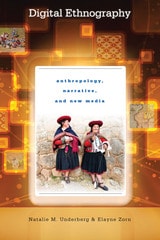
Digital Ethnography
Anthropology, Narrative, and New MediaBy Natalie M. Underberg and Elayne Zorn
University of Texas Press, 2013
Digital ethnography can be understood as a method for representing real-life cultures through storytelling in digital media. Enabling audiences to go beyond absorbing facts, computer-based storytelling allows for immersion in the experience of another culture. A guide for anyone in the social sciences who seeks to enrich ethnographic techniques, Digital Ethnography offers a groundbreaking approach that utilizes interactive components to simulate cultural narratives.
Integrating insights from cultural anthropology, folklore, digital humanities, and digital heritage studies, this work brims with case studies that provide in-depth discussions of applied projects. Web links to multimedia examples are included as well, including projects, design documents, and other relevant materials related to the planning and execution of digital ethnography projects. In addition, new media tools such as database development and XML coding are explored and explained, bridging the literature on cyber-ethnography with inspiring examples such as blending cultural heritage with computer games.
One of the few books in its field to address the digital divide among researchers, Digital Ethnography guides readers through the extraordinary potential for enrichment offered by technological resources, far from restricting research to quantitative methods usually associated with technology. The authors powerfully remind us that the study of culture is as much about affective traits of feeling and sensing as it is about cognition—an approach facilitated (not hindered) by the digital age.
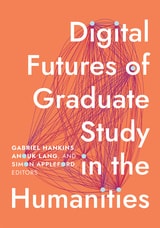
Digital Futures of Graduate Study in the Humanities
Gabriel Hankins
University of Minnesota Press, 2024
A resource for planning, reimagining, and participating in the digital transformation of graduate study in the humanities
How are the humanities adapting to the rise of digital technologies, and what are some of the tried and tested ways that postsecondary institutions are proving the importance of humanities training at the graduate level? Bringing together a diverse group of scholars and students, Digital Futures of Graduate Study in the Humanities invites a reimagining of current models of graduate education to address ongoing challenges to the humanities and to create sustainable and humane pedagogies, classes, and institutions.
The essays cover a wide range of topics, including the skills required to learn and practice digital methods, the resources needed to support students and faculty in this enterprise, the lack of meaningful credit for undertaking this time-intensive work, and the diminished employment possibilities within academia for graduate students who emerge with these skills. Mapping the broad terrain through which to address and intervene in these particular issues and beyond, this book offers deep insights into the digital futures of graduate studies in the humanities.
Contributors: Maria José Afanador-Llach, U de los Andes, Bogotá; Maria K. Alberto, U of Utah; Agnieszka Backman; Travis M. Bartley, CUNY Graduate Center; Peggy Bockwinkel, U Stuttgart; Alison Booth, U of Virginia; Donna Alfano Bussell, U of Illinois Springfield; Joshua Casmir Catalano, Clemson U; Laura Crossley, George Mason U; Quinn Dombrowski, Stanford U; Stuart Dunn, King’s College London; Jennifer Edmond, Trinity College Dublin; Natalia Ermolaev, Princeton U; Laura Estill, St. Francis Xavier U; Malte Gäckle-Heckelen; Vicky Garnett, Trinity College Dublin; Daniel Gorman Jr., U of Rochester; Sabrina T. Grimberg, Stanford U; Tena L. Helton, U of Illinois Springfield; Jeanelle Horcasitas; Melissa A. Hosek, Stanford U; Hoyeol Kim; Brady Krien, U of Iowa; Benjamin Charles Germain Lee, U of Washington; Pamela E. Mack, Clemson U; Meredith Martin, Princeton U; Germán Camilo Martínez Peñaloza, U de los Andes, Bogotá; E. L. Meszaros, Brown U; Sara Mohr, Hamilton College; Sethunya Mokoko, U of Virginia; Rebecca Munson; Erin Francisco Opalich; Olivia Quintanilla, MiraCosta College; Cecily Raynor, McGill U; Amanda E. Regan, Clemson U; Heather Richards-Rissetto, U of Nebraska–Lincoln; Jacob D. Richter, George Washington U; Stephen Robertson, George Mason U; Katina L. Rogers; Claus-Michael Schlesinger, Humboldt U Berlin; Douglas Seefeldt, Clemson U; Kayla Shipp, Yale Digital Humanities Lab; Serenity Sutherland, SUNY Oswego; Toma Tasovac, Belgrade Center for Digital Humanities; Hannah Taylor, Duke U; Manfred Thaller, U of Cologne; Madeline Ullrich, U of Rochester; Ted Underwood, U of Illinois Urbana-Champaign; Gabriel Viehhauser, U Stuttgart; Brandon Walsh, U of Virginia Library; Sean Weidman, Lycoming College; Alex Wermer-Colan, Temple U; Adrian S. Wisnicki, U of Nebraska–Lincoln; Alexander J. Zawacki, U Göttingen.
Retail e-book files for this title are screen-reader friendly with images accompanied by short alt text and/or extended descriptions.
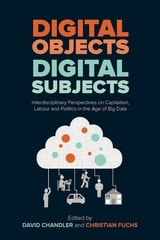
Digital Objects, Digital Subjects
Interdisciplinary Perspectives on Capitalism, Labour and Politics in the Age of Big DataDavid Chandler and Christian Fuchs
University of Westminster Press, 2019
This volume explores activism, research and critique in the age of digital subjects and objects and Big Data capitalism after a digital turn said to have radically transformed our political futures. Optimists assert that the ‘digital’ promises: new forms of community and ways of knowing and sensing, innovation, participatory culture, networked activism, and distributed democracy. Pessimists argue that digital technologies have extended domination via new forms of control, networked authoritarianism and exploitation, dehumanization and the surveillance society. Leading international scholars present varied interdisciplinary assessments of such claims – in theory and via dialogue – and of the digital’s impact on society and the potentials, pitfalls, limits and ideologies, of digital activism. They reflect on whether computational social science, digital humanities and ubiquitous datafication lead to digital positivism that threatens critical research or lead to new horizons in theory and society.
An electronic version of this book is freely available, thanks to the support of libraries working with Knowledge Unlatched. KU is a collaborative initiative designed to make high quality books Open Access for the public good. More information about the initiative and details about KU’s Open Access programme can be found at www.knowledgeunlatched.org.

Digital Pedagogy in Early Modern Studies
Method and PraxisEdited by Andie Silva and Scott Schofield
Iter Press, 2023
This collection of essays focuses on teaching at the intersection of early modern literature, book history, and digital media. It considers how teaching different fields and methods of study can be enhanced and facilitated by digital technologies. The volume provides a snapshot of current thinking on digital pedagogy as practiced by leading scholars in the field and offers a series of models that may be adapted, personalized, and repurposed by future teachers seeking to bring digital methodologies to their classrooms. Supplementary materials for this title are available on the Iter Press website (iterpress.org): see under Books/Supplementary Materials.
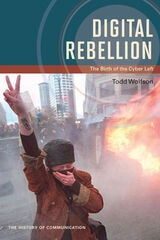
Digital Rebellion
The Birth of the Cyber LeftTodd Wolfson
University of Illinois Press, 2014
Todd Wolfson reveals how aspects of the mid-1990s Zapatistas movement--network organizational structure, participatory democratic governance, and the use of communication tools as a binding agent--became essential parts of Indymedia and other Cyber Left organizations. From there he uses oral interviews and other rich ethnographic data to chart the media-based think tanks and experiments that continued the Cyber Left's evolution through the Independent Media Center's birth around the 1999 WTO protests in Seattle.
Melding virtual and traditional ethnographic practice to explore the Cyber Left's cultural logic, Wolfson maps the social, spatial and communicative structure of the Indymedia network and details its operations on the local, national and global level. He looks at the participatory democracy that governs global social movements and the ways democracy and decentralization have come into tension, and how "the switchboard of struggle" conducts stories from the hyper-local and disperses them worldwide. As he shows, understanding the intersection of Indymedia and the Global Social Justice Movement illuminates their foundational role in the Occupy struggle and other emergent movements that have re-energized radical politics.
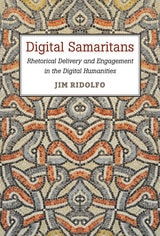
Digital Samaritans
Rhetorical Delivery and Engagement in the Digital HumanitiesJim Ridolfo
University of Michigan Press, 2015
Digital Technology and Democratic Theory
Edited by Lucy Bernholz, Hélène Landemore, and Rob Reich
University of Chicago Press, 2021
To understand these transformations, this book brings together contributions by scholars from multiple disciplines to wrestle with the question of how digital technologies shape, reshape, and affect fundamental questions about democracy and democratic theory. As expectations have whiplashed—from Twitter optimism in the wake of the Arab Spring to Facebook pessimism in the wake of the 2016 US election—the time is ripe for a more sober and long-term assessment. How should we take stock of digital technologies and their promise and peril for reshaping democratic societies and institutions? To answer, this volume broaches the most pressing technological changes and issues facing democracy as a philosophy and an institution.
Digital Visual Effects in Cinema
The Seduction of RealityPrince, Stephen
Rutgers University Press, 2012
Avatar. Inception. Jurassic Park. Lord of the Rings. Ratatouille. Not only are these some of the highest-grossing films of all time, they are also prime examples of how digital visual effects have transformed Hollywood filmmaking. Some critics, however, fear that this digital revolution marks a radical break with cinematic tradition, heralding the death of serious realistic movies in favor of computer-generated pure spectacle.
Digital Visual Effects in Cinema counters this alarmist reading, by showing how digital effects–driven films should be understood as a continuation of the narrative and stylistic traditions that have defined American cinema for decades. Stephen Prince argues for an understanding of digital technologies as an expanded toolbox, available to enhance both realist films and cinematic fantasies. He offers a detailed exploration of each of these tools, from lighting technologies to image capture to stereoscopic 3D. Integrating aesthetic, historical, and theoretical analyses of digital visual effects, Digital Visual Effects in Cinema is an essential guide for understanding movie-making today.
Discorrelated Images
Shane Denson
Duke University Press, 2020

Dream Lovers
The Gamification of RelationshipsAlfie Bown
Pluto Press, 2022
'An exciting, astute analysis of how our capacity for desire has been slotted into the grooves of digital capitalism, and made to work for profit - from porn to Pokémon' - Richard Seymour
We are in the middle of a 'desirevolution' - a fundamental and political transformation of the way we desire as human beings. Perhaps as always, new technologies - with their associated and inherited political biases - are organizing and mapping the future. What we don't seem to notice is that the primary way in which our lives are being transformed is through the manipulation and control of desire itself.
Our very impulses, drives and urges are 'gamified' to suit particular economic and political agendas, changing the way we relate to everything from lovers and friends to food and politicians. Digital technologies are transforming the subject at the deepest level of desire - re-mapping its libidinal economy - in ways never before imagined possible.
From sexbots to smart condoms, fitbits to VR simulators and AI to dating algorithms, the 'love industries' are at the heart of the future smart city and the social fabric of everyday life. This book considers these emergent technologies and what they mean for the future of love, desire, work and capitalism.

Dreamscapes of Modernity
Sociotechnical Imaginaries and the Fabrication of PowerEdited by Sheila Jasanoff and Sang-Hyun Kim
University of Chicago Press, 2015
Driver Adaptation to Information and Assistance Systems
Alan Stevens
The Institution of Engineering and Technology, 2013