Results by title
265 books match the query 'To 1500' and 7 start with d
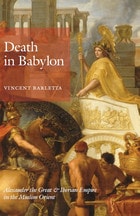
Death in Babylon
Alexander the Great and Iberian Empire in the Muslim OrientVincent Barletta
University of Chicago Press, 2010
Though Alexander the Great lived more than seventeen centuries before the onset of Iberian expansion into Muslim Africa and Asia, he loomed large in the literature of late medieval and early modern Portugal and Spain. Exploring little-studied chronicles, chivalric romances, novels, travelogues, and crypto-Muslim texts, Vincent Barletta shows that the story of Alexander not only sowed the seeds of Iberian empire but foreshadowed the decline of Portuguese and Spanish influence in the centuries to come.
Death in Babylon depicts Alexander as a complex symbol of Western domination, immortality, dissolution, heroism, villainy, and death. But Barletta also shows that texts ostensibly celebrating the conqueror were haunted by failure. Examining literary and historical works in Aljamiado, Castilian, Catalan, Greek, Latin, and Portuguese, Death in Babylon develops a view of empire and modernity informed by the ethical metaphysics of French phenomenologist Emmanuel Levinas. A novel contribution to the literature of empire building, Death in Babylon provides a frame for the deep mortal anxiety that has infused and given shape to the spread of imperial Europe from its very beginning.
Democratic Law in Classical Athens
By Michael Gagarin
University of Texas Press, 2020
The democratic legal system created by the Athenians was completely controlled by ordinary citizens, with no judges, lawyers, or jurists involved. It placed great importance on the litigants’ rhetorical performances. Did this make it nothing more than a rhetorical contest judged by largely uneducated citizens that had nothing to do with law, a criticism that some, including Plato, have made?
Michael Gagarin argues to the contrary, contending that the Athenians both controlled litigants’ performances and incorporated many other unusual features into their legal system, including rules for interrogating slaves and swearing an oath. The Athenians, Gagarin shows, adhered to the law as they understood it, which was a set of principles more flexible than our current understanding allows. The Athenians also insisted that their legal system serve the ends of justice and benefit the city and its people. In this way, the law ultimately satisfied most Athenians and probably produced just results as often as modern legal systems do. Comprehensive and wide-ranging, Democratic Law in Classical Athens offers a new perspective for viewing a legal system that was democratic in a way only the Athenians could achieve.
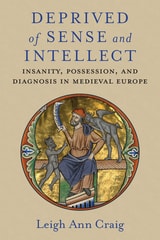
Deprived of Sense and Intellect
Insanity, Possession, and Diagnosis in Medieval EuropeLeigh Ann Craig
University of Michigan Press, 2026
While medieval communities assigned these tensions to a malfunction of consciousness in a single person, medieval miracle texts also reveal how the function and malfunction of consciousness was named and classified. In studying these texts, Leigh Ann Craig explores the terminology and rhetoric used to diagnose a loss of mind as either from natural causes or as an effect of demonic predation, tracing the use of Latin vocabulary in medical compendia, law, and theology. Deprived of Sense and Intellect finds that since diagnoses were difficult and frequently subject to doubt, they varied based on regional cultures of disability in northern and southern Europe, the influences on the development of community consensus in Latin Europe in the Middle Ages, and assumptions based on gender, material evidence, and self-diagnosis.
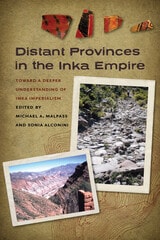
Distant Provinces in the Inka Empire
Toward a Deeper Understanding of Inka ImperialismMichael A. Malpass
University of Iowa Press, 2010
Who was in charge of the widespread provinces of the great Inka Empire of the fifteenth and sixteenth centuries: Inka from the imperial heartland or local leaders who took on the trappings of their conquerors, either by coercion or acceptance? By focusing on provinces far from the capital of Cuzco, the essays in this multidisciplinary volume provide up-to-date information on the strategies of domination asserted by the Inka across the provinces far from their capital and the equally broad range of responses adopted by their conquered peoples.
Contributors to this cutting-edge volume incorporate the interaction of archaeological and ethnohistorical research with archaeobotany, biometrics, architecture, and mining engineering, among other fields. The geographical scope of the chapters—which cover the Inka provinces in Bolivia, in southeast Argentina, in southern Chile, along the central and north coast of Peru, and in Ecuador—build upon the many different ways in which conqueror and conquered interacted. Competing factors such as the kinds of resources available in the provinces, the degree of cooperation or resistance manifested by local leaders, the existing levels of political organization convenient to the imperial administration, and how recently a region had been conquered provide a wealth of information on regions previously understudied. Using detailed contextual analyses of Inka and elite residences and settlements in the distant provinces, the essayists evaluate the impact of the empire on the leadership strategies of conquered populations, whether they were Inka by privilege, local leaders acculturated to Inka norms, or foreign mid-level administrators from trusted ethnicities.
By exploring the critical interface between local elites and their Inka overlords, Distant Provinces in the Inka Empire builds upon Malpass’s 1993 Provincial Inca: Archaeological and Ethnohistorical Assessment of the Impact of the Inca State to support the conclusions that Inka strategies of control were tailored to the particular situations faced in different regions. By contributing to our understanding of what it means to be marginal in the Inka Empire, this book details how the Inka attended to their political and economic goals in their interactions with their conquered peoples and how their subjects responded, producing a richly textured view of the reality that was the Inka Empire.
Divination, Politics, and Ancient Near Eastern Empires
Alan Lenzi
SBL Press, 2014
Advance your understanding of divination’s role in supporting or undermining imperial aspirations in the ancient Near East
This collection examines the ways that divinatory texts in the Hebrew Bible and the ancient Near East undermined and upheld the empires in which the texts were composed, edited, and read. Nine essays and an introduction engage biblical scholarship on the Prophets, Assyriology, the Dead Sea Scrolls, and the critical study of Ancient Empires.
Features:
- Interdisciplinary approaches include propaganda studies
- Essays examine how biblical and other ancient Near Eastern texts were shaped by political and theological empires
- Index of ancient sources
Drama, Play, and Game
English Festive Culture in the Medieval and Early Modern PeriodLawrence M. Clopper
University of Chicago Press, 2001
Drama, Play, and Game demonstrates that the theatrum repudiated by medieval clerics was not "theater" as we understand the term today. Clopper contends that critics have misrepresented Western stage history because they have assumed that theatrum designates a place where drama is performed. While theatrum was thought of as a site of spectacle during the Middle Ages, the term was more closely connected with immodest behavior and lurid forms of festive culture. Clerics were not opposed to liturgical representations in churches, but they strove ardently to suppress May games, ludi, festivals, and liturgical parodies. Medieval drama, then, stemmed from a more vernacular tradition than previously acknowledged-one developed by England's laity outside the boundaries of clerical rule.
Dreams of Waking
An Anthology of Iberian Lyric Poetry, 1400-1700Edited and Translated by Vincent Barletta, Mark L. Bajus, and Cici Malik
University of Chicago Press, 2013
In this anthology, Vincent Barletta, Mark L. Bajus, and Cici Malik treat the Iberian lyric in the late Middle Ages and early modernity as a deeply multilingual, transnational genre that needs to break away from the old essentialist ideas about language, geography, and identity in order to be understood properly. More and more, scholars and students are recognizing the limitations of single-language, nationalist, and period-bound canons and are looking for different ways to approach the study of literature. The Iberian Peninsula is an excellent site for this approach, where the history and politics of the region, along with its creative literature, need to be read and studied together with the way the works were composed by poets and eventually consumed by readers.
With a generous selection of more than one hundred poems from thirty-three poets, Dreams of Waking is unique in its coverage of the three main languages—Catalan, Portuguese, and Spanish—and lyrical styles employed by peninsular poets. It contains new translations of canonical poems but also translations of many poems that have never before been edited or translated. Brief headnotes provide essential details of the poets’ lives, and a general introduction by the volume editors shows how the poems and languages fruitfully intersect. With helpful annotations to the poetry, as well as a selected bibliography containing the most important editions and translations from all three of the main Iberian languages, this volume will be an indispensable tool for both specialists and students in comparative literature.