Results by title
141 books match the query 'Turkey' and 5 start with d
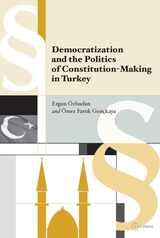
Democratization and the Politics of Constitution-Making in Turkey
Ömer Faruk Gençkaya
Central European University Press, 2009

Directory of World Cinema
TurkeyEdited by Eylem Atakav
Intellect Books, 2013

Disembodied Souls
The Nefesh in Israel and Kindred Spirits in the Ancient Near East, with anRichard C. Steiner
SBL Press, 2015
A reevaluation of the concept of the soul based on the latest evidence
Biblical scholars have long claimed that the Israelites “could not conceive of a disembodied nefesh [soul].” Steiner rejects that claim based on a broad spectrum of textual, linguistic, archaeological, and anthropological evidence spanning the millennia from prehistoric times to the present. The biblical evidence includes a prophecy of Ezekiel condemning women who pretend to trap the wandering souls of sleeping people. The extrabiblical evidence suggests that a belief in the existence of disembodied souls was part of the common religious heritage of the peoples of the ancient Near East.
Features
- A re-examination of the evidence for and against disembodied souls in the Hebrew Bible
- A new look at the nature and behavior of disembodied souls in the Hebrew Bible
- A new study of the meaning and sociolinguistic background of the Katumuwa inscription
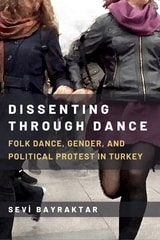
Dissenting Through Dance
Folk Dance, Gender, and Political Protest in TurkeySevi Bayraktar
University of Michigan Press, 2026
Dissenting Through Dance examines how femme activists in contemporary Turkey deploy folk dance as a powerful tool of political resistance and collective solidarity. Drawing on extensive ethnographic fieldwork, choreographic analysis, and archival research, the book examines how traditional dances, particularly those rooted in marginalized cultures such as Kurdish, Roma, Alevi, Laz, and Hemşin communities, are reimagined to contest misogyny, cultural erasure, and oppressive gender politics. Sevi Bayraktar brings to life the stories of feminist, LGBTQ+, and grassroots activists occupying public spaces with dance as a form of protest when conventional forms of assembly are suppressed or criminalized in Turkey.
Working outward from these femmes’ stories, protests, and dances, Bayraktar argues that by reconfiguring Turkey’s folk-dance heritage for their contemporary political aims, dissenting femmes rechoreograph national space in opposition to the state as a way to reclaim the public sphere for pluralist democracy and to subvert hegemonic discourses about Turkish national identity, neoliberal economic development, and female and ethnic bodies. By moving together, activists subvert patriarchal norms, embody new visions of community, and create moments of hope, joy, and resistance even under conditions of surveillance and fear.

Domestic Frontiers
Gender, Reform, and American Interventions in the Ottoman Balkans and the Near EastBarbara Reeves-Ellington
University of Massachusetts Press, 2013
During the nineteenth and early twentieth centuries, American Protestant missionaries attempted to export their religious beliefs and cultural ideals to the Ottoman Empire. Seeking to attract Orthodox Christians and even Muslims to their faith, they promoted the paradigm of the “Christian home” as the foundation of national progress. Yet the missionaries' efforts not only failed to win many converts but also produced some unexpected results.
Drawing on a broad range of sources—Ottoman, Bulgarian, Russian, French, and English—Barbara Reeves-Ellington tracks the transnational history of this little-known episode of American cultural expansion. She shows how issues of gender and race influenced the missionaries' efforts as well as the complex responses of Ottoman subjects to American intrusions into their everyday lives. Women missionaries—married and single—employed the language of Christian domesticity and female moral authority to challenge the male-dominated hierarchy of missionary society and to forge bonds of feminist internationalism. At the same time, Orthodox Christians adapted the missionaries' ideology to their own purposes in developing a new strain of nationalism that undermined Ottoman efforts to stem growing sectarianism within their empire. By the beginning of the twentieth century, as some missionaries began to promote international understanding rather than Protestantism, they also paved the way for future expansion of American political and commercial interests.