Results by title
106 books match the query 'Western' and 3 start with d

Dickens's London
Peter Clark
Haus Publishing, 2012
In five walks through central London, Peter Clark explores “The First Suburbs”—Camden Town, Chelsea, Greenwich, Hampstead, Highgate and Limehouse—as they feature in Dickens’s writing and illuminates the settings of Dickens’s life and his greatest works of journalism and fiction. Describing these storied spaces of today’s central London in intimate detail, Clark invites us to experience the city as it was known to Dickens and his characters. These walks take us through the locations and buildings that he interacted with and wrote about, creating an imaginative reconstruction of the Dickensian world that has been lost to time.
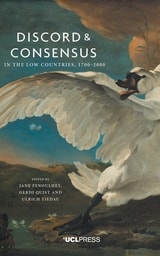
Discord and Consensus in the Low Countries, 1700-2000
Edited by Jane Fenoulhet, Gerdi Quist, and Ulrich Tiedau
University College London, 2016

Dreaming in Books
The Making of the Bibliographic Imagination in the Romantic AgeAndrew Piper
University of Chicago Press, 2009
At the turn of the nineteenth century, publishing houses in London, New York, Paris, Stuttgart, and Berlin produced books in ever greater numbers. But it was not just the advent of mass printing that created the era’s “bookish” culture. According to Andrew Piper, romantic writing and romantic writers played a crucial role in adjusting readers to this increasingly international and overflowing literary environment. Learning how to use and to want books occurred through more than the technological, commercial, or legal conditions that made the growing proliferation of books possible; the making of such bibliographic fantasies was importantly a product of the symbolic operations contained within books as well.
Examining novels, critical editions, gift books, translations, and illustrated books, as well as the communities who made them, Dreaming in Books tells a wide-ranging story of the book’s identity at the turn of the nineteenth century. In so doing, it shows how many of the most pressing modern communicative concerns are not unique to the digital age but emerged with a particular sense of urgency during the bookish upheavals of the romantic era. In revisiting the book’s rise through the prism of romantic literature, Piper aims to revise our assumptions about romanticism, the medium of the printed book, and, ultimately, the future of the book in our so-called digital age.