Results by title
353 books match the query 'World War II' and 8 start with d
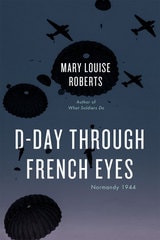
D-Day Through French Eyes
Normandy 1944Mary Louise Roberts
University of Chicago Press, 2014
Silent parachutes dotting the night sky—that’s how one woman in Normandy in June 1944 learned that the D-Day invasion was underway. Though they yearned for liberation, the people of Normandy steeled themselves for further warfare, knowing that their homes, land, and fellow citizens would have to bear the brunt of the attack. In D-Day through French Eyes, Mary Louise Roberts resets our view of the usual stories of that momentous operation, taking readers across the Channel to view the invasion anew. Roberts builds her history from an impressive range of gripping first-person accounts from French citizens, reinvigorating a story we thought we knew. The result is a fresh perspective on the heroism, sacrifice, and achievement of D-Day.
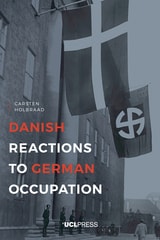
Danish Reactions to German Occupation
History and HistoriographyCarsten Holbraad
University College London, 2017
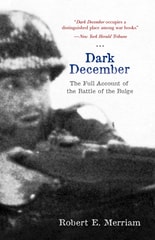
Dark December
The Full Account of the Battle of the BulgeRobert E. Merriam
Westholme Publishing, 2011
One of the Most Important Histories of the Greatest Battle on the Western Front in World War II
“Dark December occupies a distinguished place among war books. Every paragraph is based upon evidence, not flimsy wartime rumors. Technical enough for the professional, accurate enough for the historian (in fact, it is history of the best), it is lucid and understandable for the general reader.”—New York Herald Tribune
“If other veterans of the Army’s historical division can maintain Mr. Merriam’s high standard of stimulating, critical and painstaking work, we will be fortunate. Dark December can be heartily recommended to anyone faintly interested in the war.”—New York Times
“The book explodes a number of myths which have been winning their improper way into general belief.” —Arthur Schlesinger, Jr., Booklist
The massive German counteroffensive through Belgium’s Ardennes forest in December 1944 took the American and British armies by surprise and changed the outcome of the war. With whole divisions destroyed and decimated, the American army scrambled to contain the German threat, while also trying to determine how such an attack had gone undetected. The Americans succeeded in winning the month-long battle, commonly known as the Battle of the Bulge, through the tenacity of several pockets of troops, notably those in the Belgian town of Bastogne, and the remarkable rapid movement of Patton’s Third Army to seal the breech in the American lines. The battle stalled the British and American advances and lengthened the war with the result that the Soviet Union was able to make greater gains in Europe than previously anticipated. Dark December is a thorough and engrossing examination of the Battle of the Bulge by a historian who had the opportunity to prepare notes as the battle was occurring and consult classified American as well as German records. Notably, the book contains unique and critical information, including details gleaned from interviews conducted by the author with commanding officers on both sides, some of which are the only reports gathered from these sources. Originally published in 1947, this the first paperback edition with the complete original text and maps.
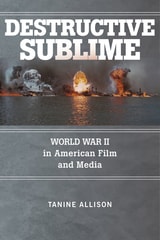
Destructive Sublime
World War II in American Film and MediaAllison, Tanine
Rutgers University Press, 2018
Destructive Sublime traces a new aesthetic history of the World War II combat genre by looking back at it through the lens of contemporary video games like Call of Duty. Allison locates some of video games’ glorification of violence, disruptive audiovisual style, and bodily sensation in even the most canonical and seemingly conservative films of the genre. In a series of case studies spanning more than seventy years—from wartime documentaries like The Battle of San Pietro to fictional reenactments like The Longest Day and Saving Private Ryan to combat video games like Medal of Honor—this book reveals how the genre’s aesthetic forms reflect (and influence) how American culture conceives of war, nation, and representation itself.
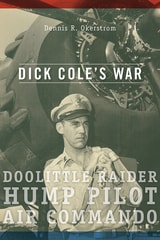
Dick Cole’s War
Doolittle Raider, Hump Pilot, Air CommandoDennis R. Okerstrom
University of Missouri Press, 2026
With the 100th anniversary of his birth on September 7, 2015 Dick Cole has long stood in the powerful spotlight of fame that has followed him since his B-25 was launched from a Navy carrier and flown toward Japan just four months after the attack on Pearl Harbor. In recognition the tremendous boost Doolittle’s Raid gave American morale, members of The Tokyo Doolittle Raiders were awarded the Congressional Gold Medal in May 2014.
Doolittle’s Raid was only the opening act of Cole’s flying career during the war. When that mission was complete and all of the 16 aircraft had crash-landed in China, many of the survivors were assigned to combat units in Europe. Cole remained in India after their rescue and was assigned to Ferrying Command, flying the Hump of the Himalayas for a year in the world’s worst weather, with inadequate aircraft, few aids to navigation, and inaccurate maps. More than 600 aircraft with their crews were lost during this monumental effort to keep China in the war, but Cole survived and rotated home in 1943. He was home just a few months when he was recruited for the First Air Commandos and he returned to India to participate in Project 9, the aerial invasion of Burma.
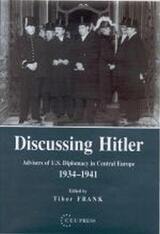
Discussing Hitler
Advisers of U.S. Diplomacy in Central Europe, 1934-41Tibor Frank
Central European University Press, 2003
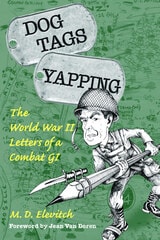
Dog Tags Yapping
The World War II Letters of a Combat GIM.D. Elevitch. Foreword by Jean Van Doren
Southern Illinois University Press, 2003
A chronicle of war infused with uncommon cheer, Dog Tags Yapping: The World War II Letters of a Combat GI is a young man’s education in life and death and a narrative of war told completely in letters.
During World War II, thousands of high school graduates were drafted into the army to be trained in colleges as engineers or other technicians but instead were assigned to fighting units and joined the great assault in Europe after D-Day. One of those reprogrammed combat infantrymen was Morton Elevitch from Duluth, Minnesota. Elevitch’s cartoons, drawings, and extremely unconventional letters home—rescued from box-in-the-basement oblivion after a more than fifty-year dormancy—recover the story of one rerouted GI in a voice that is compelling and new. Embellished with a boyish flair, the quirky and playful documents collected here impart a distinctly personal and uncalculated record of war, family, and coming of age. “It’s much easier to wield a melancholy pen than to sit down and cry,” Elevitch declares to his father.
Sparkling with a patina of wit and the bittersweet allure of lost innocence, the words and letters of “Privitch Elevate” offer the immediacy of the events as they unfolded. With the ease and expertise expected of a more seasoned storyteller, the young Elevitch escorts readers through his basic training and departure for Europe, duty in Brittany with the 94th Division and departure for Germany, combat under Patton’s command, wounding by mortar fragments, convalescence in England, and his return to France with the Signal Corps to guard prisoners and await demobilization. But along with these letters are the stories of his relationships with his parents, his brother, the men of his company and even the prisoners of war. The author’s perspectives on the war radically change. Both comic and tragic in its treatment of war’s chaos and tedium, this sensitive personal history covers experiences from the adjustment to military life and the temptations of flesh to the pain of wounds and recovery and the exposure to foreign countries and cultures.
Presaging his career as a novelist and editor, Elevitch’s words and drawings sketch an audacious and highly imaginative portrait of a young man during an exceptional time in world history. Evocative of life lived and nearly lost, his jarring accounts of combat reveal a soldier who was wounded not only in body but also in soul, in a war that changed him forever—just as it changed everyone it touched. Reproduced here as they were originally written, alongside a gallery of photos and hand-drawn battle maps, Elevitch’s cartoons and letters were initially intended for only three persons. But with their unique historical value and affecting exploration of the human spirit, they resurface in Dog Tags Yapping and result in an exhilarating ride for all readers through his “wild bivouac of the mind.”
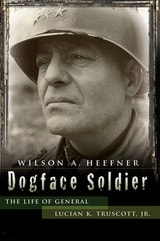
Dogface Soldier
The Life of General Lucian K. Truscott, Jr.Wilson A. Heefner
University of Missouri Press, 2026
Yet no definitive history of his life has been compiled. Wilson Heefner corrects that with the first authoritative biography of this distinguished American military leader. Heefner has undertaken impressive research in primary sources—as well as interviews with family members and former associates—to shed new light on this overlooked hero. He presents Truscott as a soldier who was shaped by his upbringing, civilian and military education, family life, friendships, and evolving experiences as a commander both in and out of combat.
Heefner’s brisk narrative explores Truscott’s career through his three decades in the Army and defines his roles in key operations. It also examines Truscott’s postwar role as military governor of Bavaria, particularly in improving living conditions for Jewish displaced persons, removing Nazis from civil government, and assisting in the trials of German war criminals. And it offers the first comprehensive examination of his subsequent career in the Central Intelligence Agency, where he served as senior CIA representative in West Germany during the early days of the Cold War, and later as CIA Director Allen Dulles’s deputy director for coordination in Washington.
Dogface Soldier is a portrait of a man who earned a reputation for being honest, forthright, fearless, and aggressive, both as a military officer and in his personal life—a man who, at the dedication ceremony for the Anzio-Nettuno American cemetery in 1945, turned away from the crowd and to the thousands of crosses stretching before him to address those buried there. Heefner has written a definitive biography of a great soldier and patriot.