Results by title
28164 books match the query 'History' and 908 start with d
Digital Cinema
Stephen Prince
Rutgers University Press, 2019
Stephen Prince offers a clear, concise account of how digital cinema both extends longstanding traditions of filmmaking and challenges some fundamental assumptions about film. It is essential reading for anyone interested in understanding how movies are shot, produced, distributed, and consumed in the twenty-first century.

Digital Dynamics in Nordic Contemporary Art
Edited by Tanya Toft Ag
Intellect Books, 2018
Offering an in-depth exploration of art’s contingent evolution with technology and digital culture, this book goes far beyond familiar depictions of Nordic aesthetics in art. It explores art’s role and inquiries in response to changing sociopolitical realities in the welfare state and in the wider world. First-hand perspectives of pioneering and pivotal artists form the basis of chapters penned by leading scholars and curators of Nordic art. Digital Dynamics in Nordic Contemporary Art recasts the Nordic art context in an expanding digital condition and reveals horizontal ways to write its histories.
Over the past few decades, the Nordic region has witnessed large shifts in its political, social and international outlook. Meanwhile, its art, commonly described as introverted, contemplative and wild, is also undergoing changes. As technology embeds itself further into the contemporary art scene, there is a renewed need to examine the role of art in society and everyday life, and to consider how the digitalization of art has tackled socio-political realities, locally and in the wider world. Digital Dynamics in Nordic Contemporary Art includes a collection of testimonials from 78 artists, connected to Nordic art, who employ concepts and/or tools relating to the digital in their practice. Their statements form the basis of the essays in Part 2, penned by leading scholars affiliated with the Nordic art context, which inquire into the digital influences on contemporary art, with particular attention paid to the national and international Nordic socio-political context. Landscapes, nature, minimalism, melancholia--this book examines how these traditional Nordic tropes hold up in the growing field of digital contemporary art, and asks: to what extent have digital dynamics been adopted into the imaginaries and practices of Nordic artists?
Chapters by Tanya Toft Ag, Jamie Allen, Laura Beloff, Budhaditya Chattopadhyay, Jonatan Habib Engqvist, Bernhard Garnicnig, Elizabeth Jochum, Ulla Angkjær Jørgensen, Jens Tang Kristensen, Mads Dejbjerg Lind, Björn Norberg, Margrét Elísabet Ólafsdóttir, Jøran Rudi, Lorella Scacco, Morten Søndergaard, Mette-Marie Zacher Sørensen, and Stahl Stenslie.
Tanya Toft Ag (editor) is a curator and scholar specializing in media and digital art and its urban implications.Affected by technology and globalization, the Nordic region is experiencing large shifts in its socio-political conditions and international outlook today. As digital dynamics affect life worlds, contemporary artists are making new inquiries in response to the changing Nordic context. As a result of these ever-evolving circumstances, conditions and motivations for making art change as well. As technology and digital culture become more deeply embedded in the contemporary art scene, there is a renewed need to examine the role of art in society and everyday life, and to consider how the digital inspires artists to evolve and tackle socio-political realities, locally and in the wider world.
Digital Music Videos
Shaviro, Steven
Rutgers University Press, 2017
As these videos have proliferated online, they have become more widely accessible than ever before. In Digital Music Videos, Steven Shaviro examines the ways that music videos interact with and change older media like movies and gallery art; the use of technologies like compositing, motion control, morphing software, and other digital special effects in order to create a new organization of time and space; how artists use music videos to project their personas; and how less well known musicians use music videos to extend their range and attract attention.
Surveying a wide range of music videos, Shaviro highlights some of their most striking innovations while illustrating how these videos are creating a whole new digital world for the music industry.
Digital Mythologies
The Hidden Complexities of the InternetValovic, Thomas
Rutgers University Press, 1999
Surf the web. Ride the information highway. Log on to the future. Corporate ad campaigns like these have become pervasive in the 1990s. You're either online, or you're falling behind the times-at least, that's what the media tells us.
Ever since the 1990s, when the Internet gained widespread popularity, it has been heralded as one of the best things ever to happen to technology and communications. Commentators expected it to revolutionize how we communicate, do business, and educate our children. Conversely, other pundits have vehemently attacked this technology. Naysayers of "cyberlife" emerged with their warnings of how the Net provides an uncensored, round-the-clock venue for pornography, for inaccurate, simplified information, and is rife with opportunities to violate our right to privacy. In Digital Mythologies, Thomas Valovic hopes to raise the level of discussion by giving a full and balanced picture of how the Net affects our lives.
Digital Mythologies, a collection of Valovic's essays, asks hard questions about where computer and communications technology is taking us. Through anecdotes drawn from his experiences as former editor-in-chief of Telecommunications magazine, the author gives readers an insider's peek behind the scenes of the Internet industry. He explores the underlying social and political implications of the Internet and its associated technologies, based on his contention that the cyberspace experience is far more complex than is commonly assumed. Valovic explores these hidden complexities, and points to fascinating connections between the Internet and our contemporary culture.
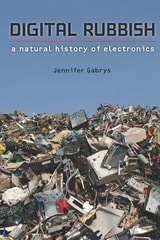
Digital Rubbish
A Natural History of ElectronicsJennifer Gabrys
University of Michigan Press, 2013
This is a study of the material life of information and its devices; of electronic waste in its physical and electronic incarnations; a cultural and material mapping of the spaces where electronics in the form of both hardware and information accumulate, break down, or are stowed away. Electronic waste occurs not just in the form of discarded computers but also as a scatter of information devices, software, and systems that are rendered obsolete and fail. Where other studies have addressed "digital" technology through a focus on its immateriality or virtual qualities, Gabrys traces the material, spatial, cultural, and political infrastructures that enable the emergence and dissolution of these technologies. In the course of her book, she explores five interrelated "spaces" where electronics fall apart: from Silicon Valley to Nasdaq, from containers bound for China to museums and archives that preserve obsolete electronics as cultural artifacts, to the landfill as material repository. All together, these sites stack up into a sedimentary record that forms the "natural history" of this study.
Digital Rubbish: A Natural History of Electronics describes the materiality of electronics from a unique perspective, examining the multiple forms of waste that electronics create as evidence of the resources, labor, and imaginaries that are bundled into these machines. By drawing on the material analysis developed by Walter Benjamin, this natural history method allows for an inquiry into electronics that focuses neither on technological progression nor on great inventors but rather considers the ways in which electronic technologies fail and decay. Ranging across studies of media and technology, as well as environments, geography, and design, Jennifer Gabrys pulls together the far-reaching material and cultural processes that enable the making and breaking of these technologies.
Jennifer Gabrys is Senior Lecturer in Design and Convener of the Masters in Design and Environment in the Department of Design, Goldsmiths, University of London.
Jacket image: Computer dump ©iStockphoto/Lya_Cattel.
digitalculturebooks is an imprint of the University of Michigan Press and the Scholarly Publishing Office of the University of Michigan Library dedicated to publishing innovative and accessible work exploring new media and their impact on society, culture, and scholarly communication. Visit the website at www.digitalculture.org.
Digital Samaritans
Rhetorical Delivery and Engagement in the Digital HumanitiesJim Ridolfo
University of Michigan Press, 2015
Digital State
The Story of Minnesota's Computing IndustryThomas J. Misa
University of Minnesota Press, 2013
Accounts of the early events of the computing industry—the Turing machine, the massive Colossus, the ENIAC computer—are well-told tales, and equally well known is the later emergence of Silicon Valley and the rise of the personal computer. Yet there is an extraordinary untold middle history—with deep roots in Minnesota. From the end of World War II through the 1970s, Minnesota was home to the first computing-centered industrial district in the world.
Drawing on rare archival documents, photographs, and a wealth of oral histories, Digital State unveils the remarkable story of computer development in the heartland after World War II. These decades found corporations—concentrated in large part in Minnesota—designing state-of-the-art mainframe technologies, revolutionizing new methods of magnetic data storage, and, for the first time, truly integrating software and hardware into valuable products for the American government and public. Minnesota-based companies such as Engineering Research Associates, Univac, Control Data, Cray Research, Honeywell, and IBM Rochester were major international players and together formed an unrivaled epicenter advancing digital technologies. These companies not only brought vibrant economic growth to Minnesota, they nurtured the state’s present-day medical device and software industries and possibly even tomorrow’s nanotechnology.
Thomas J. Misa’s groundbreaking history shows how Minnesota recognized and embraced the coming information age through its leading-edge companies, its workforce, and its prominent institutions. Digital State reveals the inner workings of the birth of the digital age in Minnesota and what we can learn from this era of sustained innovation.
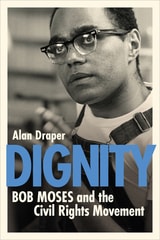
Dignity
Bob Moses and the Civil Rights MovementAlan Draper
University of Illinois Press, 2027
Challenging entrenched accounts, Alan Draper reveals that Moses could pursue either “Freedom Now” or develop local leaders, but not both. Rich with new details, Dignity follows Bob Moses from his early years through his death in 2021, presenting a clear-eyed view of his personality and achievements. Draper describes how Moses pursued Black voter registration in Mississippi and then in a second career devoted himself to math education. Just as dignity for Blacks in the twentieth century required voting rights, so did Moses believe that dignity for Blacks in the next century required math skills.
Dilemmas of Culture in African Schools
Youth, Nationalism, and the Transformation of KnowledgeCati Coe
University of Chicago Press, 2005
Coe identifies the state's limitations in teaching cultural knowledge and discusses how Ghanaians negotiate the tensions raised by the competing visions of modernity that nationalism and Christianity have created. She reveals how cultural curricula affect authority relations in local social organizations—between teachers and students, between Christians and national elite, and between children and elders—and raises several questions about educational processes, state-society relations, the production of knowledge, and the making of Ghana's citizenry.
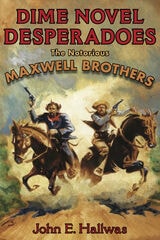
Dime Novel Desperadoes
The Notorious Maxwell BrothersJohn Hallwas
University of Illinois Press, 2011
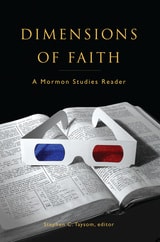
Dimensions of Faith
A Mormon Studies ReaderStephen C. Taysom
Signature Books, 2011
In these seventeen articles on things Mormon—prominent people, religious experience, memory, media, literature, and investigative theory—there is an obvious respect for the past and simultaneous desire to get to the bottom of things, to test the boundaries of knowledge. For instance, Jonathan Stapley and Kristine Wright look at the history of ritual healing within Mormonism, including the use of magic handkerchiefs and blessings performed by women. Matthew Bowman’s essay on “A Mormon Bigfoot” looks at the story retold in Sunday school and elsewhere about an early Church apostle who saw the biblical Cain. Brian Stuy examines Church President Wilford Woodruff’s account of the American founding fathers reaching from beyond the grave—a summons the prophet responded favorably to—requesting temple baptisms on their behalf. Unknown to Woodruff, this ordinance had been performed the year before. And Kathleen Flake looks at how the First Vision and other founding narratives were not emphasized in the Church until the twentieth century.
Other contributors include Gary James Bergera, Martha Bradley, Newell Bringhurst, Samuel Brown, Claudia Bushman, Brian Cannon, Douglas Davies, Rebecca de Schweinitz, Lawrence Foster, Reinhold Hill, and Jacob Olmstead.

Dimensions of the Americas
Art and Social Change in Latin America and the United StatesShifra M. Goldman
University of Chicago Press, 1994
Goldman's extensive introduction provides an up-to-date chronology of modern Latin American art; a history of "social art history" in the United States; and synopses of recent theoretical and historical writings by major scholars from Mexico, Cuba, Brazil, Peru, Uruguay, Chile, and the United States. In her essays, Goldman discusses a vast array of topics including: the influence of the Mexican muralists on the American continent; the political and artistic significance of poster art and printmaking in Cuba, Puerto Rico, and among Chicanos; the role of women artists such as Guatemalan painter Isabel Ruiz; and the increasingly important role of politics and multinational businesses in the art world of the 1970s and 1980s. She explores the reception of Latin American and Latino art in the United States, focusing on major historical exhibits as well as on exhibits by artists such as Chilean Alfredo Jaar and Argentinian Leandro Katz. Finally, she examines the significance of nationalist and ethnic themes in Latin American and Latino art.
Written in a straightforward style equally accessible to specialists, students, and general audiences, this book will become essential reading for anyone interested in understanding the importance of Latin American art and the complex dynamic shaping it.
Dimensions of the Holocaust
Elie Wiesel
Northwestern University Press, 1990
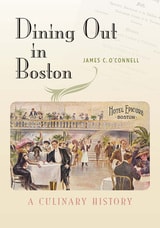
Dining Out in Boston
A Culinary HistoryJames C. O'Connell
University Press of New England, 2016
Dining at the Lineman's Shack
John Weston
University of Arizona Press, 2003
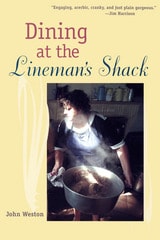
The place is Skull Valley in central Arizona, the time the 1930s. Taking food as his theme, Weston paints an instructive and often hilarious portrait of growing up, of rural family life under difficult circumstances, and of a remote Arizona community trying to hold body and soul together during tough times. His book recalls life in a lineman's shack, interlaced with "disquisitions on swamp life, rotting water, and the complex experience of finding enough to eat during the Great Depression."
Central to Weston's account is his mother Eloine, a valiant woman rearing a large brood in poverty with little help from her husband. Eloine cooks remarkably well—master of a small repertory from which she coaxes ideas surprising even to herself—and feeds her family on next to nothing. She is a woman whose first instinct is to cry out "Lord, what am I going to feed them" whenever visitors show up close to mealtime. Recalls Weston, "Her strength lay in a practical- and poverty-born sense that there must be more edible food in the world than most people realized," and he swears that six out of seven meals were from parts of four or five previous meals coming round again, like the buckets on a Ferris wheel.
Although Weston evokes a fond remembrance of a bygone era that moves from Depression-era Skull Valley to wartime Prescott, rest assured: food—its acquisition, its preparation, its wholehearted enjoyment—is the foundation of this book. "I did not have a deprived childhood, despite its slim pickings," writes Weston. "If I recall a boiling pig's head now and then, it is not to be read as some Jungian blip from Lord of the Flies but simply a recurring flicker of food-memory." Whether remembering his father's occasional deer poaching or his community's annual Goat Picnic, Weston laces his stories with actual recipes—even augmenting his instructions for roasted wild venison with tips for preparing jerky.
Dining at the Lineman's Shack teems with sparkling allusions, both literary and culinary, informed by Weston's lifetime of travels. Even his nagging memory of desperate boyhood efforts to trade his daily peanut-butter sandwich for bacon-and-egg, baloney, jelly, or most anything else is tempered by his acquaintance with "the insidious sa-teh sauce in Keo Sananikone's hole-in-the-wall restaurant on Kapahulu Street"—a peanut-butter-based delicacy for which he obligingly provides the ingredients (and which he promises will keep, refrigerated in a jar, for several weeks before baroque things begin to grow on it).
Through this tantalizing smorgasbord of memories, stories, and recipes, John Weston has fashioned a wholly captivating commentary on American culture, both in an earlier time and in our own. Dining at the Lineman's Shack is a book that will satisfy any reader's hunger for the unusual—and a book to savor, in every sense of the word.

Dining in a Classical Context
William J. Slater, Editor
University of Michigan Press, 1991
Dinner Roles
American Women and Culinary CultureSherrie A. Inness
University of Iowa Press, 2001
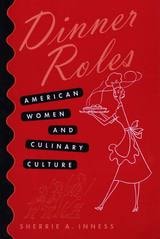
Who cooks dinner in American homes? It's no surprise that “Mom” remains the overwhelming answer. Cooking and all it entails, from grocery shopping to chopping vegetables to clearing the table, is to this day primarily a woman's responsibility. How this relationship between women and food developed through the twentieth century and why it has endured are the questions Sherrie Inness seeks to answer in Dinner Roles: American Women and Culinary Culture.
By exploring a wide range of popular media from the first half of the twentieth century, including cookbooks, women's magazines, and advertisements, Dinner Roles sheds light on the network of sources that helped perpetuate the notion that cooking is women's work. Cookbooks and advertisements provided valuable information about the ideals that American society upheld. A woman who could prepare the perfect Jell-O mold, whip up a cake with her new electric mixer, and still maintain a spotless kitchen and a sunny disposition was the envy of other housewives across the nation.
Inness begins her exploration not with women but with men-those individuals often missing from the kitchen who were taught their own set of culinary values. She continues with the study of juvenile cookbooks, which provided children with their first cooking lessons. Chapters on the rise of electronic appliances, ethnic foods, and the 1950s housewife all add to our greater understanding of women's evolving roles in American culinary culture.
Dinner in Camelot
The Night America's Greatest Scientists, Writers, and Scholars Partied at the Kennedy White HouseJoseph A. Esposito
University Press of New England, 2018
Dinosaurs and Other Ancient Animals of Big Bend
Cindi Sirois Collins and Asher Elbein
University of Texas Press, 2023
A time-traveling field guide to the ancient version of Big Bend National Park.
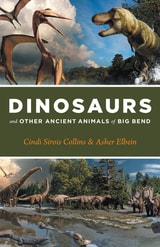
The sheer beauty of Big Bend National Park, along the shores of the Rio Grande in west Texas, never fails to astonish. Yet what lies beneath this natural treasure may be even more extraordinary than what meets the eye. Hidden in the rocks of Big Bend are the remains of giants: toothy sea lizards, enormous flying reptiles, and dinosaurs.
Dinosaurs and Other Ancient Animals of Big Bend is a field guide to what once was. Inspired by the latest research, Cindi Sirois Collins and Asher Elbein imagine what it was like to walk among the plants and animals whose fossil remains tell the story of evolution and geological transformation in this singular landscape. We glimpse the drama of Big Bend’s rugged landscape in creation—the desert’s emergence from retreating oceans and volcanic eruptions. Immersive vignettes introduce dinosaurs, giant fish, and saber-toothed cats. And the history of discovery in the park proves a gripping tale, as paleontologists sifted major scientific insights from the soils, rocks, and riverbeds. Complete with vivid illustrations, this is a wholly original sensory and narrative experience that will deepen any reader’s knowledge and sense of wonder.
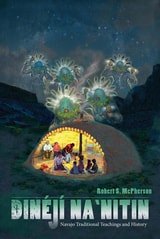
Dinéjí Na`nitin
Navajo Traditional Teachings and HistoryRobert S. McPherson
University Press of Colorado, 2012
Historian Robert McPherson discusses basic Navajo concepts such as divination, good and evil, prophecy, and metaphorical thought, as well as these topics' relevance in daily life, making these far-ranging ideas accessible to the contemporary reader. He also considers the toll of cultural loss on modern Navajo culture as many traditional values and institutions are confronted by those of dominant society. Using both historical and modern examples, he shows how cultural change has shifted established views and practices and illustrates the challenge younger generations face in maintaining the beliefs and customs their parents and grandparents have shared over generations.
This intimate look at Navajo values and customs will appeal not only to students and scholars of Native American studies, ethnic studies, and anthropology but to any reader interested in Navajo culture or changing traditional lifeways.
Diodorus Siculus, Books 11-12.37.1
Greek History, 480-431 BC—the Alternative VersionTranslated with introduction and commentary by Peter Green
University of Texas Press, 2006
2007 — A Choice Magazine Outstanding Academic Book
Sicilian historian Diodorus Siculus (ca. 100-30 BCE) is our only surviving source for a continuous narrative of Greek history from Xerxes' invasion to the Wars of the Successors following the death of Alexander the Great. Yet this important historian has been consistently denigrated as a mere copyist who slavishly reproduced the works of earlier historians without understanding what he was writing. By contrast, in this iconoclastic work Peter Green builds a convincing case for Diodorus' merits as a historian. Through a fresh English translation of a key portion of his multi-volume history (the so-called Bibliotheke, or "Library") and a commentary and notes that refute earlier assessments of Diodorus, Green offers a fairer, better balanced estimate of this much-maligned historian.
The portion of Diodorus' history translated here covers the period 480-431 BCE, from the Persian invasion of Greece to the outbreak of the Peloponnesian War. This half-century, known as the Pentekontaetia, was the Golden Age of Periclean Athens, a time of unprecedented achievement in drama, architecture, philosophy, historiography, and the visual arts. Green's accompanying notes and commentary revisit longstanding debates about historical inconsistencies in Diodorus' work and offer thought-provoking new interpretations and conclusions. In his masterful introductory essay, Green demolishes the traditional view of Diodorus and argues for a thorough critical reappraisal of this synthesizing historian, who attempted nothing less than a "universal history" that begins with the gods of mythology and continues down to the eve of Julius Caesar's Gallic campaigns.
Diodorus Siculus, The Persian Wars to the Fall of Athens
Books 11-14.34 (480-401 BCE)Translated with Introduction and Notes by Peter Green
University of Texas Press, 2010
Only one surviving source provides a continuous narrative of Greek history from Xerxes' invasion to the Wars of the Successors following the death of Alexander the Great—the Bibliotheke, or "Library," produced by Sicilian historian Diodorus Siculus (ca. 90–30 BCE). Yet generations of scholars have disdained Diodorus as a spectacularly unintelligent copyist who only reproduced, and often mangled, the works of earlier historians. Arguing for a thorough critical reappraisal of Diodorus as a minor but far from idiotic historian himself, Peter Green published Diodorus Siculus, Books 11-12.37.1, a fresh translation, with extensive commentary, of the portion of Diodorus's history dealing with the period 480–431 BCE, the so-called "Golden Age" of Athens.
This is the only recent modern English translation of the Bibliotheke in existence. In the present volume—the first of two covering Diodorus's text up to the death of Alexander—Green expands his translation of Diodorus up to Athens' defeat after the Peloponnesian War. In contrast to the full scholarly apparatus in his earlier volume (the translation of which is incorporated) the present volume's purpose is to give students, teachers, and general readers an accessible version of Diodorus's history. Its introduction and notes are especially designed for this audience and provide an up-to-date overview of fifth-century Greece during the years that saw the unparalleled flowering of drama, architecture, philosophy, historiography, and the visual arts for which Greece still remains famous.
Dionysus, Christ, and the Death of God, Volume 1
The Great Mediations of the Classical WorldGiuseppe Fornari
Michigan State University Press, 2020
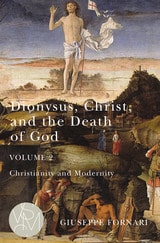
Dionysus, Christ, and the Death of God, Volume 2
Christianity and ModernityGiuseppe Fornari
Michigan State University Press, 2020
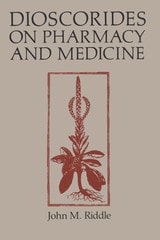
Dioscorides on Pharmacy and Medicine
By John M. Riddle
University of Texas Press, 1985
For 1,600 years Dioscorides (ca. AD 40–80) was regarded as the foremost authority on drugs. He knew mild laxatives and strong purgatives, analgesics for headaches, antiseptics for wounds, emetics to rid one of ingested poisons, chemotherapy agents for cancer treatments, and even oral contraceptives. Why, then, have his works remained obscure in recent centuries? Because of one small oversight (Dioscorides himself thought it was self-evident): he failed to describe his method for organizing drugs by their affinities. This omission led medical authorities to use his materials as a guide to pharmacy while overlooking Dioscorides' most valuable contribution—his empirically derived method for observing and classifying drugs by clinical testing.
Dioscorides' De materia medica, a five-volume work, was written in the first century. Here revealed for the first time is the thesis that Dioscorides wrote more than a lengthy guide book. He wrote a great work of science. He had said that he discovered the natural order and would demonstrate it by his arrangement of drugs from plants, minerals, and animals. Until John M. Riddle's pathfinding study, no one saw the genius of his system. Botanists from the eighteenth century often attempted to find his unexplained method by identifying the sequences of his plants according to the Linnean system but, while there are certain patterns, there remained inexplicable incoherencies. However, Dioscorides' natural order as set down in De materia medica was determined by drug affinities as detected by his acute, clinical ability to observe drug reactions in and on the body. So remarkable was his ability to see relationships that, in some cases, he saw what we know to be common chemicals shared by plants of the same and related species and other natural product drugs from animal and mineral sources.
Western European and Islamic medicine considered Dioscorides the foremost authority on drugs, just as Hippocrates is regarded as the Father of Medicine. They saw him point the way but only described the end of his finger, despite the fact that in the sixteenth century alone there were over one hundred books published on him. If he had explained what he thought to be self-evident, then science, especially chemistry and medicine, would almost certainly have developed differently. In this culmination of over twenty years of research, Riddle employs modern science and anthropological studies innovatively and cautiously to demonstrate the substance to Dioscorides' authority in medicine.
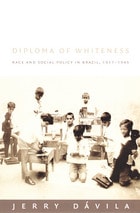
Diploma of Whiteness
Race and Social Policy in Brazil, 1917–1945Jerry Dávila
Duke University Press, 2003
Providing a unique historical perspective on how racial attitudes move from elite discourse into people’s lives, Diploma of Whiteness shows how public schools promoted the idea that whites were inherently fit and those of African or mixed ancestry were necessarily in need of remedial attention. Analyzing primary material—including school system records, teacher journals, photographs, private letters, and unpublished documents—Dávila traces the emergence of racially coded hiring practices and student-tracking policies as well as the development of a social and scientific philosophy of eugenics. He contends that the implementation of the various policies intended to “improve” nonwhites institutionalized subtle barriers to their equitable integration into Brazilian society.

Diplomacy and War at NATO
The Secretary General and Military Action After the Cold WarRyan C. Hendrickson
University of Missouri Press, 2006
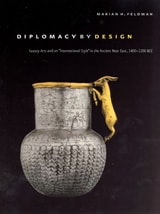
Diplomacy by Design
Luxury Arts and an "International Style" in the Ancient Near East, 1400-1200 BCEMarian H. Feldman
University of Chicago Press, 2006
Marian Feldman's Diplomacy by Design examines the profound connection between art produced during this period and its social context, revealing inanimate objects as catalysts—or even participants—in human dynamics. Feldman's fascinating study shows the ways in which the exchange of these works of art actively mediated and strengthened political relations, intercultural interactions, and economic negotiations. Previous studies of this international style have focused almost exclusively on stylistic attribution at the expense of social contextualization. Written by a specialist in ancient Near Eastern art and archaeology who has excavated and traveled extensively in this area of the world, Diplomacy by Design provides a much broader consideration of the symbolic power of material culture and its centrality in the construction of human relations.

Diplomatic Material
Affect, Assemblage, and Foreign PolicyJason Dittmer
Duke University Press, 2017
Direct Action
Radical Pacifism from the Union Eight to the Chicago SevenJames Tracy
University of Chicago Press, 1996
Taking us through the Vietnam war protests, this detailed treatment of radical pacifism reveals the strengths and limitations of American individualism in the modern era.
Directed by God
Jewishness in Contemporary Israeli Film and TelevisionBy Yaron Peleg
University of Texas Press, 2016
As part of its effort to forge a new secular Jewish nation, the nascent Israeli state tried to limit Jewish religiosity. However, with the steady growth of the ultraorthodox community and the expansion of the settler community, Israeli society is becoming increasingly religious. Although the arrival of religious discourse in Israeli politics has long been noticed, its cultural development has rarely been addressed. Directed by God explores how the country’s popular media, principally film and television, reflect this transformation. In doing so, it examines the changing nature of Zionism and the place of Judaism within it.
Once the purview of secular culture, Israel’s media initially promoted alternatives to traditional religious expression; however, using films such as Kadosh, Waltz with Bashir, and Eyes Wide Open, Yaron Peleg shows how Israel’s contemporary film and television programs have been shaped by new religious trends and how secular Israeli culture has processed and reflected on its religious heritage. He investigates how shifting cinematic visions of Jewish masculinity and gender track transformations in the nation’s religious discourse. Moving beyond the secular/religious divide, Directed by God explores changing film and television representations of different Jewish religious groups, assessing what these representations may mean for the future of Israeli society.
Directing
Virginia Wright Wexman
Rutgers University Press, 2017
The latest volume in the Behind the Silver Screen series, this collection provides the first comprehensive overview of how directing, as both an art and profession, has evolved in tandem with changing film industry practices. Each chapter is written by an expert on a different period of Hollywood, from the silent film era to today’s digital filmmaking, providing in-depth examinations of key trends like the emergence of independent production after World War II and the rise of auteurism in the 1970s. Challenging the myth of the lone director, these studies demonstrate how directors work with a multitude of other talented creative professionals, including actors, writers, producers, editors, and cinematographers.
Directing examines a diverse range of classic and contemporary directors, including Orson Welles, Tim Burton, Cecil B. DeMille, Steven Soderbergh, Spike Lee, and Ida Lupino, offering a rich composite picture of how they have negotiated industry constraints, utilized new technologies, and harnessed the creative contributions of their many collaborators throughout a century of Hollywood filmmaking.
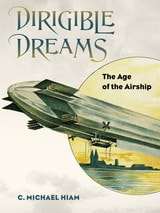
Dirigible Dreams
The Age of the AirshipC. Michael Hiam
University Press of New England, 2014
Dirt and Desire
Reconstructing Southern Women's Writing, 1930-1990Patricia Yaeger
University of Chicago Press, 2000
For Yaeger, works by black and white southern women writers reveal a shared obsession with monstrosity and the grotesque and with the strange zones of contact between black and white, such as the daily trauma of underpaid labor and the workings of racial and gender politics in the unnoticed yet all too familiar everyday. Yaeger also excavates a southern fascination with dirt—who owns it, who cleans it, and whose bodies are buried in it.
Yaeger's brilliant, theoretically informed readings of Zora Neale Hurston, Harper Lee, Carson McCullers, Toni Morrison, Flannery O'Connor, Alice Walker, and Eudora Welty (among many others) explode the mystifications of southern literary tradition and forge a new path for southern studies.
The book won the Barbara Perkins and George Perkins Award given by the Society for the Study of Narrative Literature.
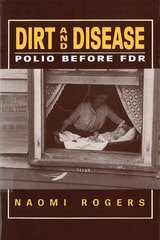
Dirt and Disease
Polio Before FDRRogers, Naomi
Rutgers University Press, 1992
Dirt and Disease is a social, cultural, and medical history of the polio epidemic in the United States. Naomi Rogers focuses on the early years from 1900 to 1920, and continues the story to the present. She explores how scientists, physicians, patients, and their families explained the appearance and spread of polio and how they tried to cope with it. Rogers frames this study of polio within a set of larger questions about health and disease in twentieth-century American culture.
In the early decades of this century, scientists sought to understand the nature of polio. They found that it was caused by a virus, and that it could often be diagnosed by analyzing spinal fluid. Although scientific information about polio was understood and accepted, it was not always definitive. This knowledge coexisted with traditional notions about disease and medicine.
Polio struck wealthy and middle-class children as well as the poor. But experts and public health officials nonetheless blamed polio on a filthy urban environment, bad hygiene, and poverty. This allowed them to hold slum-dwelling immigrants responsible, and to believe that sanitary education and quarantines could lessen the spread of the disease. Even when experts acknowledged that polio struck the middle-class and native-born as well as immigrants, they tried to explain this away by blaming the fly for the spread of polio. Flies could land indiscriminately on the rich and the poor.
In the 1930s, President Franklin Delano Roosevelt helped to recast the image of polio and to remove its stigma. No one could ignore the cross-spread of the disease. By the 1950s, the public was looking to science for prevention and therapy. But Rogers reminds us that the recent history of polio was more than the history of successful vaccines. She points to competing therapies, research tangents, and people who died from early vaccine trials.
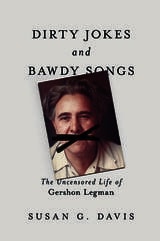
Dirty Jokes and Bawdy Songs
The Uncensored Life of Gershon LegmanSusan G. Davis
University of Illinois Press, 2019
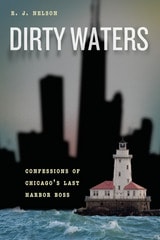
Dirty Waters
Confessions of Chicago's Last Harbor BossR. J. Nelson
University of Chicago Press, 2016
In 1987, the city of Chicago hired a former radical college chaplain to clean up rampant corruption on the waterfront. R. J. Nelson thought he was used to the darker side of the law—he had been followed by federal agents and wiretapped due to his antiwar stances in the sixties—but nothing could prepare him for the wretched bog that constituted the world of a Harbor Boss. Dirty Waters is the wry, no-holds-barred memoir of Nelson’s time controlling some of the city’s most beautiful spots while facing some of its ugliest traditions. Nelson takes us through Chicago's beloved “blue spaces” and deep into the city’s political morass, revealing the different moralities underlining three mayoral administrations and navigating the gritty mechanisms of the city’s political machine. Ultimately, Dirty Waters is a tale of morality, of what it takes to be a force for good in the world and what struggles come from trying to stay ethically afloat in a sea of corruption.
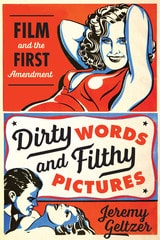
Dirty Words and Filthy Pictures
Film and the First AmendmentBy Jeremy Geltzer
University of Texas Press, 2015
From the earliest days of cinema, scandalous films such as The Kiss (1896) attracted audiences eager to see provocative images on screen. With controversial content, motion pictures challenged social norms and prevailing laws at the intersection of art and entertainment. Today, the First Amendment protects a wide range of free speech, but this wasn’t always the case. For the first fifty years, movies could be censored and banned by city and state officials charged with protecting the moral fabric of their communities. Once film was embraced under the First Amendment by the Supreme Court’s Miracle decision in 1952, new problems pushed notions of acceptable content even further.
Dirty Words & Filthy Pictures explores movies that changed the law and resulted in greater creative freedom for all. Relying on primary sources that include court decisions, contemporary periodicals, state censorship ordinances, and studio production codes, Jeremy Geltzer offers a comprehensive and fascinating history of cinema and free speech, from the earliest films of Thomas Edison to the impact of pornography and the Internet. With incisive case studies of risqué pictures, subversive foreign films, and banned B-movies, he reveals how the legal battles over film content changed long-held interpretations of the Constitution, expanded personal freedoms, and opened a new era of free speech. An important contribution to film studies and media law, Geltzer’s work presents the history of film and the First Amendment with an unprecedented level of detail.
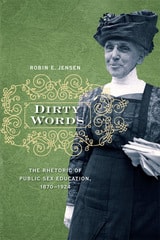
Dirty Words
The Rhetoric of Public Sex Education, 1870-1924Robin E. Jensen
University of Illinois Press, 2010

Dirty Work
Domestic Service in Progressive-Era Women’s FictionAnn Mattis
University of Michigan Press, 2019
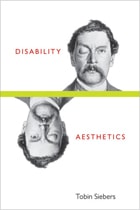
Disability Aesthetics
Tobin Siebers
University of Michigan Press, 2010
"Disability Aesthetics ambitiously redefines both 'disability' and 'aesthetics,' showing us that disability is central not only to modern art but also to the way we apprehend (and interact with) bodies and buildings. Along the way, Tobin Siebers revisits the beautiful and the sublime, 'degenerate' art and 'disqualified' bodies, culture wars and condemned neighborhoods, the art of Marc Quinn and the fiction of Junot Díaz---and much, much more. Disability Aesthetics is a stunning achievement, a must-read for anyone interested in how to understand the world we half create and half perceive."
---Michael Bérubé, Paterno Family Professor in Literature, Pennsylvania State University
"Rich with examples of the disabled body in both historical and modern art, Tobin Siebers's new book explores how disability problematizes commonly accepted ideas about aesthetics and beauty. For Siebers, disability is not a pejorative condition as much as it is a form of embodied difference. He is as comfortable discussing the Venus de Milo as he is discussing Andy Warhol. Disability Aesthetics is a prescient and much-needed contribution to visual & critical studies."
---Joseph Grigely, Professor of Visual and Critical Studies, The School of the Art Institute of Chicago
Disability Aesthetics is the first attempt to theorize the representation of disability in modern art and visual culture. It claims that the modern in art is perceived as disability, and that disability is evolving into an aesthetic value in itself. It argues that the essential arguments at the heart of the American culture wars in the late twentieth century involved the rejection of disability both by targeting certain artworks as "sick" and by characterizing these artworks as representative of a sick culture. The book also tracks the seminal role of National Socialism in perceiving the powerful connection between modern art and disability. It probes a variety of central aesthetic questions, producing a new understanding of art vandalism, an argument about the centrality of wounded bodies to global communication, and a systematic reading of the use put to aesthetics to justify the oppression of disabled people. In this richly illustrated and accessibly written book, Tobin Siebers masterfully demonstrates the crucial roles that the disabled mind and disabled body have played in the evolution of modern aesthetics, unveiling disability as a unique resource discovered by modern art and then embraced by it as a defining concept.
Tobin Siebers is V. L. Parrington Collegiate Professor of English Language and Literature and Art and Design at the University of Michigan. His many books include Disability Theory and The Subject and Other Subjects: On Ethical, Aesthetic, and Political Identity.
A volume in the series Corporealities: Discourses of Disability

Disability Disruptions
Gender, Family, and Care in Post-1989 PolandNatalia Pamula
University of Illinois Press, 2026
Polish politicians regularly idealize the family. But, as Pamula illustrates such rhetoric coerces people into a state of violent intimacy that forces the burden of care onto family members bound by love, dependence, and responsibility. As the narratives show, disability destabilizes national myths, challenges heteronormative and patriarchal family ideals, and exposes continuities between socialist and capitalist regimes in their treatment of disabled citizens.
A rich blend of activism and analysis, Disability Disruptions ventures outside Anglophone notions of disability to highlight how Poland’s disabled people and caregivers overcome lack of recognition, resist social death, and rewrite public memory.
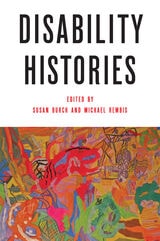
Disability Histories
Edited by Susan Burch and Michael Rembis
University of Illinois Press, 2014
Contributors delve into four critical areas of study within disability history: family, community, and daily life; cultural histories; the relationship between disabled people and the medical field; and issues of citizenship, belonging, and normalcy. As the first collection of its kind in over a decade, Disability Histories not only brings readers up to date on scholarship within the field but fosters the process of moving it beyond the U.S. and Western Europe by offering work on Africa, South America, and Asia. The result is a broad range of readings that open new vistas for investigation and study while encouraging scholars at all levels to redraw the boundaries that delineate who and what is considered of historical value.
Informed and accessible, Disability Histories is essential for classrooms engaged in all facets of disability studies within and across disciplines.
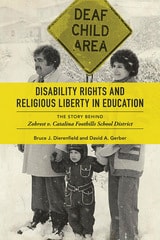
Disability Rights and Religious Liberty in Education
The Story behind Zobrest v. Catalina Foothills School DistrictBruce J. Dierenfield and David A. Gerber
University of Illinois Press, 2020
Bruce J. Dierenfield and David A. Gerber use the Zobrests' story to examine the complex history and jurisprudence of disability accommodation and educational mainstreaming. They look at the family's effort to acquire educational resources for their son starting in early childhood and the choices the Zobrests made to prepare him for life in the hearing world rather than the deaf community. Dierenfield and Gerber also analyze the thorny church-state issues and legal controversies that informed the case, its journey to the U.S. Supreme Court, and the impact of the high court's ruling on the course of disability accommodation and religious liberty.
Disability and History, Volume 2006
Teresa Meade and David Serlin, eds.
Duke University Press, 0
Drawing on archival research and other primary materials, as well as on methods from labor history, ethnic studies, performance studies, and political biography, this special issue explores how historical forces and cultural contexts have produced disability as a constantly shifting and socially constructed concept. One essay examines how Western definitions of disability imposed during colonial rule shaped Botswanan perceptions of disability. Another looks at labor activism among blind workers in Northern Ireland in the 1930s; a third essay, drawing on previously untranslated political texts by disabled writers and activists from the Weimar era, dispels the simplistic assessment of the disabled as complacent in the face of the Nazis’ rise to power. Other essays interpret U.S. radical Randolph Bourne as a philosopher of disability politics and chronicle the emergence of a disabled feminist theater practice in the 1970s and 1980s.
Contributors. Diane F. Britton, Susan Burch, Sarah E. Chinn, R. A. R. Edwards, Barbara Floyd, David Gissen, Kim Hewitt, J. Douglass Klein, Seth Koven, R. J. Lambrose, Victoria Ann Lewis, Julie Livingston, Paul K. Longmore, Robert McRuer, Teresa Meade, Paul Steven Miller, Natalia Molina, Patricia A. Murphy, Máirtín Ó Catháin, Carol Poore, Geoffrey Reaume, David Serlin, Katherine Sherwood, Ian Sutherland, Geoffrey Swan, Everett Zhang

Disability and Passing
Blurring the Lines of IdentityJeffrey A Brune
Temple University Press, 2013
Passing—an act usually associated with disguising race—also relates to disability. Whether a person classified as mentally ill struggles to suppress aberrant behavior to appear "normal" or a person falsely claims a disability to gain some advantage, passing is a pervasive and much discussed phenomenon. Nevertheless, Disability and Passing is the first anthology to examine this issue.
The editors and contributors to this volume explore the intersections of disability, race, gender, and sexuality as these various aspects of identity influence each other and make identity fluid. They argue that the line between disability and normality is blurred, discussing disability as an individual identity and as a social category. And they discuss the role of stigma in decisions about whether or not to pass.
Focusing on the United States from the nineteenth century to the present, the essays in Disability and Passing speak to the complexity of individual decisions about passing and open the conversation for broader discussion.
Contributors include: Dea Boster, Allison Carey, Peta Cox, Kristen Harmon, David Linton, Michael Rembis, and the editors.
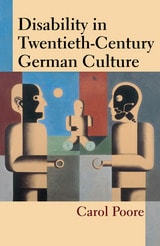
Disability in Twentieth-Century German Culture
Carol Poore
University of Michigan Press, 2010
"Comprehensively researched, abundantly illustrated and written in accessible and engaging prose . . . With great skill, Poore weaves diverse types of evidence, including historical sources, art, literature, journalism, film, philosophy, and personal narratives into a tapestry which illuminates the cultural, political, and economic processes responsible for the marginalization, stigmatization, even elimination, of disabled people---as well as their recent emancipation."
---Disability Studies Quarterly
"A major, long-awaited book. The chapter on Nazi images is brilliant---certainly the best that has been written in this arena by any scholar."
---Sander L. Gilman, Emory University
"An important and pathbreaking book . . . immensely interesting, it will appeal not only to students of twentieth-century Germany but to all those interested in the growing field of disability studies."
---Robert C. Holub, University of Tennessee
Disability in Twentieth-Century German Culture covers the entire scope of Germany's most tragic and tumultuous century---from the Weimar Republic to the current administration---revealing how central the notion of disability is to modern German cultural history. By examining a wide range of literary and visual depictions of disability, Carol Poore explores the contradictions of a nation renowned for its social services programs yet notorious for its history of compulsory sterilization and eugenic dogma. This comprehensive volume focuses particular attention on the horrors of the Nazi era, when those with disabilities were considered "unworthy of life," but also investigates other previously overlooked topics including the exile community's response to disability, socialism and disability in East Germany, current bioethical debates, and the rise and gains of Germany's disability rights movement.
Richly illustrated, wide-ranging, and accessible, Disability in Twentieth-Century German Culture gives all those interested in disability studies, German studies, visual culture, Nazi history, and bioethics the opportunity to explore controversial questions of individuality, normalcy, citizenship, and morality. The book concludes with a memoir of the author's experiences in Germany as a person with a disability.
Carol Poore is Professor of German Studies at Brown University.
Illustration: "Monument to the Unknown Prostheses" by Heinrich Hoerle © 2007 Artists Rights Society (ARS), New York / VG Bild-Kunst, Bonn
A volume in the series Corporealities: Discourses of Disability
"Insightful and meticulously researched . . . Using disability as a concept, symbol, and lived experience, the author offers valuable new insights into Germany's political, economic, social, and cultural character . . . Demonstrating the significant ‘cultural phenomena' of disability prior to and long after Hitler's reign achieves several important theoretical and practical aims . . . Highly recommended."
---Choice
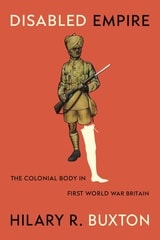
Disabled Empire
The Colonial Body in First World War BritainHilary R. Buxton
University of Chicago Press, 2026
Disabled Empire examines how imperial precedents and racial ideologies shaped the medical treatments that the British state offered to several million Black and brown servicemen during World War I. In recovering the voices and experiences of these soldiers, Hilary R. Buxton illustrates how they navigated the institutional culture of the imperial military and how they helped to shape health and welfare systems well beyond the interwar period.
The Great War was the first time that troops and volunteers from nearly all reaches of the Empire participated in the war effort side-by-side. Despite official attempts at segregation, colonial troops met in trenches, mobile camps, casualty clearing stations, hospital ships, and convalescent homes. Just as importantly, those organizing treatment encountered men of different ethnicities, religions, and cultures from across and beyond the British Empire. For British officials, this moment offered an opportunity to remake colonial efficiency and medical knowledge. Yet, as Buxton shows, colonial servicemen were not passive subjects in a wartime laboratory: they were vocal participants who demanded a say in the therapies prescribed to them, the rations they required, the psychiatric care they received, and the prosthetics with which they were fitted. Together, these encounters profoundly remade colonial relations, reshaping imperial science, administration, and colonial understandings of subjecthood.
Disabled Empire pushes literature on the war and medicine outside its national, Eurocentric focus to confront the colonial logic of global health inequity.
Disabled Veterans in History
David A. Gerber, Editor
University of Michigan Press, 2012
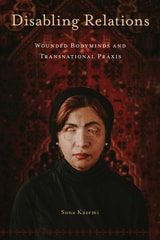
Disabling Relations
Wounded Bodyminds and Transnational PraxisSona Kazemi
Temple University Press, 2026
Kazemi focuses on the disabled dissidents who were incarcerated and tortured by the Islamic regime in the aftermath of the 1979 revolution in Iran, the disabled veterans and civilians wounded during and after the Iran–Iraq War, the disabled survivors of state-sanctioned punitive limb amputation, and the disabled women survivors of acid attacks as a form of gender-based violence. Disabling Relations explains how disabled bodyminds are produced and sustained through the violence of patriarchal, capitalist-imperialist, nationalist, and theocratic social relations. Kazemi uses the theoretical concept of “wounding” as a historical process of becoming and remaining disabled mediated by unequal power relations and “disability consciousness” to show how these survivors come to terms with their disability.
Thinking about critical disability theory in a new way, Kazemi investigates how disability is produced transnationally and the impact that this new theorization can make globally.
In the series Dis/color