Results by title
1713 books match the query '21st century' and 70 start with d
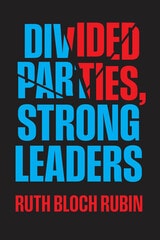
Divided Parties, Strong Leaders
Ruth Bloch Rubin
University of Chicago Press, 2025
Drawing on nearly a century of legislative history, this careful account invites readers to think anew about when, why, and how leaders of divided parties wield power in Congress.
For decades, legislative scholars have viewed party divisions as critical constraints on congressional leadership. The more a party’s rank and file disagree with one another, the weaker their leaders are predicted to be; as member preferences converge, leader power is thought to increase.
In a powerful corrective to this prevailing view, Ruth Bloch Rubin argues that party divisions are not inherently limiting. Divided Parties, Strong Leaders highlights and examines variation in how members of party factions choose to work together. She shows that leaders of divided parties are well positioned to overcome, and even draw strength from, their divided ranks when the collaborative efforts of their coalitions’ competing factions are evenly matched. By contrast, their capacity to get what they want is more limited when one faction has out-collaborated its competition. Presenting detailed case studies of some of the most storied leaders of the postwar Congress, including Speakers Sam Rayburn and Nancy Pelosi, Bloch Rubin analyzes the factional configuration each leader encountered and explains why it mattered for their exercise of power.

Dizzy
Hengameh Yaghoobifarah, Translated by Martha Turewicz
University of Wisconsin Press, 2027
Dizzy opens with its central characters in a nearly impossible situation. Ava is at home in her high-rise apartment building, enjoying an evening with Robin, when the doorbell rings. Her second lover arrives, looking for their lost cell phone; then Ava’s third lover shows up seeking an explanation as to why she is being ghosted. As Ava’s careful calibration of schedules and desires threatens to unravel, overwhelmed, she flees to the roof. The others follow, a door closes, and all four are stranded without a key or a phone. To escape the rooftop, they’ll need to work together—but that won’t be easy.

Dizzy
A MemoirRachel Weaver
West Virginia University Press, 2026
Gold Medal Winner, Living Now Book Awards, Inspirational Memoir (Female)
“An arresting new memoir….”
– Maureen Corrigan, NPR’s Fresh Air
Beverly Donofrio, author of Riding in Cars with Boys, says “Dizzy is a testament to the power of hope. Weaver’s courage and strength are so inspiring they encourage the same in the reader. If all of that isn’t enough, the beauty and agility of the prose may make you regret reaching the last page.”
In her early thirties, Rachel Weaver woke up dizzy and unable to function. She spent the next ten years seeing more than thirty medical practitioners before receiving a diagnosis, and then another eight years before finding relief from her condition. Dizzy is amedical mystery and a cautionary tale about our broken healthcare system. It is a story about learning to live with life's uncertainty, persevering in the pursuit of answers, and striving to find joy in an imperfect yet beautiful world.

Djinns
Fatma Aydemir, Translated by Jon Cho-Polizzi
University of Wisconsin Press, 2024
In this epic tale, Fatma Aydemir explores the lives of characters who could not be more different from one another—except in their insatiable desires to be understood. Rather than a seamless narrative, the novel circles around suppressed memories, unspoken trauma, and buried pasts. Turning expectations and stereotypes of the immigrant experience on their side, Aydemir shows how we all grapple with power and beauty, the holes in our lives, and the demons that hover just out of sight.
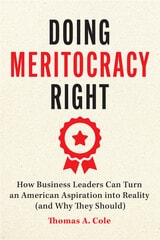
Doing Meritocracy Right
How Business Leaders Can Turn an American Aspiration into Reality (and Why They Should)Thomas A. Cole
University of Chicago Press, 2025
As America’s most vaunted cultural value, meritocracy is celebrated by some as an institution and derided by others as a myth—or even a trap. Thomas A. Cole argues in Doing Meritocracy Right that if meritocracy is to persist as an institution—and it must—it requires structural support in the private sector. For America to achieve a version of meritocracy that more closely matches our aspirations, our business leaders must first offer equity of opportunity for individuals to demonstrate and develop their talents on equal terms.
Drawing on his decades of experience in advising CEOs and corporate boards, personally serving on the boards of major not-for-profits, and leading a large global law firm, Cole cites elite professional-service institutions—consultancies and law firms especially—as improbable laboratories for equity of opportunity. These workplaces, out of self-interest, are laser-focused on the quality of their professionals, seeking out talent and representation and then judging these individuals on (ideally) equal terms once they’re in place. Here, Cole sees an opportunity that no public initiative or platitudes can deliver: if workplaces seek out representational diversity by applying, with thought and care, a single standard of merit—one that emphasizes character—and by providing training and mentoring on an equitable basis, then they will offer a ladder to social and economic mobility that serves both individuals and society.
Cole argues that a meritocratic society is achieved in two interrelated stages: access to education; and post-education promotion to membership in the elite. The latter, he says, is the domain of business. Cole argues that the private sector is better positioned to effect reform and he encourages leaders in the private sector to pursue reform both in their organizations, in government, and in the universities and communities where they have influence.
Meritocracy in the private sector can’t control the many American inequities that exist on the ground of American society. But it can do social good by serving as a reliable, merit-determined path to the highest echelons of business and industry. Cole sets the stage for the discussion of reforms with a “brief history of our imperfect meritocracy,” and rounds out the book with a to-do list for business leaders.
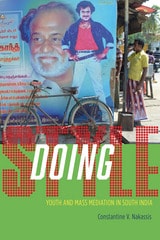
Doing Style
Youth and Mass Mediation in South IndiaConstantine V. Nakassis
University of Chicago Press, 2016
As Nakassis shows, while signs of the global, modern world are everywhere in post-liberalization India, for most of these young people this world is still very distant—a paradox that results in youth’s profound sense of being in between. This in-betweenness manifests itself in the ambivalent quality of style, the ways in which stylish objects are necessarily marked as counterfeit, mixed, or ironical. In order to show how this in-betweenness materializes in particular media, Nakassis explores the entanglements between youth peer groups and the sites where such stylish media objects are produced, arguing that these entanglements deeply condition the production and circulation of the media objects themselves. The result is an important and timely look at the tremendous forces of youth culture, globalization, and mass media as they interact in the vibrancy of a rapidly changing India.

Domestications
American Empire, Literary Culture, and the Postcolonial LensHosam Aboul-Ela
Northwestern University Press, 2018
Domestications traces a genealogy of American global engagement with the Global South since World War II. Hosam Aboul-Ela reads American writers contrapuntally against intellectuals from the Global South in their common—yet ideologically divergent—concerns with hegemony, world domination, and uneven development. Using Edward Said’s Culture and Imperialism as a model, Aboul-Ela explores the nature of U.S. imperialism’s relationship to literary culture through an exploration of five key terms from the postcolonial bibliography: novel, idea, perspective, gender, and space.
Within this framework the book examines juxtapositions including that of Paul Bowles’s Morocco with North African intellectuals’ critique of Orientalism, the global treatment of Vietnamese liberation movements with the American narrative of personal trauma in the novels of Tim O’Brien and Hollywood film, and the war on terror’s philosophical idealism with Korean and post-Arab nationalist materialist archival fiction.
Domestications departs from other recent studies of world literature in its emphases not only on U.S. imperialism but also on intellectuals working in the Global South and writing in languages other than English and French. Although rooted in comparative literature, its readings address issues of key concern to scholars in American studies, postcolonial studies, literary theory, and Middle Eastern studies.

Don't Leave Hungry
Fifty Years of Southern Poetry ReviewJames Smith
University of Arkansas Press, 2009
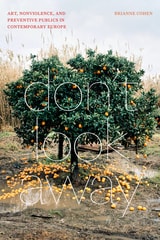
Don't Look Away
Art, Nonviolence, and Preventive Publics in Contemporary EuropeBrianne Cohen
Duke University Press, 2023
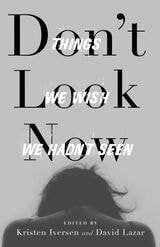
Don't Look Now
Things We Wish We Hadn't SeenEdited by Kristen Iversen and David Lazar
The Ohio State University Press, 2020
Featuring essays by Jericho Parms, XU XI, Jerald Walker, José Orduña, Kristen Iversen, Nicole Walker, Mary Cappello, Lina Ferreira, Colleen O’Connor, Sonya Huber, Paul Crenshaw, Alyce Miller, Patrick Madden, Amelia María de la Luz Montes, Yalie Kamara, Emily Heiden, Lee Martin, and David Lazar,
this collection bares all. The authors invite readers into a dream that resurrects a departed mother each night, only to lose her again each morning upon waking; the post-mortem newspaper photos of a former student; kaleidoscope childhood memories of the mundane mixed up together with the traumatic; an unplanned pregnancy; a bullfight and a spouse’s mortality; a teen witnessing the suicide of her father; a parent trying to shield his children from witnessing a violent death. What these writers are after, though, is not the melancholic/grotesque/violent moment itself, but the process of remembering—and trying to forget. They examine the way these memories take hold, resurface, and never leave, and what it means for a life lived long after these moments have passed. These scenes, slowly enfolding us like bad dreams or flying by like trains on elevated platforms, demand we reach some kind of accommodation with them—make peace or make sense or make amends. The one thing they insist with certainty is this: they cannot—will not—be unseen.
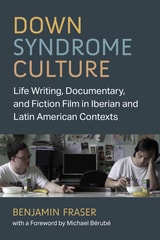
Down Syndrome Culture
Life Writing, Documentary, and Fiction Film in Iberian and Latin American ContextsBenjamin Fraser
University of Michigan Press, 2024
Down Syndrome Culture also pushes the traditionally Anglophone borders of disability studies by examining examples in Spanish, Catalan, and Portuguese-language texts, and incorporating the work of thinkers in Iberian and Latin American studies. Through a close analysis of life writing, documentaries, and fiction films, the book emphasizes the central role of people with Down syndrome in contemporary cultural production. Chapters discuss the autobiography of Andy Trias Trueta, the social actors of the documentary Los niños [The Grown-Ups] (2016), dancers from Danza Mobile, and a variety of fiction films, challenging ableist understandings of disability in nuanced ways. Ultimately, this book reveals the lives, cultural work, and representations of people with trisomy 21 in an international context.

Down from the Mountaintop
From Belief to BelongingJoshua Dolezal
University of Iowa Press, 2014
For more than a decade, Doležal taught in the Midwest throughout the school year but returned to Montana and Idaho in the summers to work as a firefighter and wilderness ranger. He reveled in the life of the body and the purifying effects of isolation and nature, believing he had found transcendence. Yet his summers tied him even more to the mountain landscape, fueling his sense of exile on the plains.
It took falling in love, marrying, and starting a family in Iowa to allow Doležal to fully examine his desire for a spiritual mountaintop from which to view the world. In doing so, he undergoes a fundamental redefinition of the nature of home and belonging. He learns to accept the plains on their own terms, moving from condemnation to acceptance and from isolation to community. Coming down from the mountaintop means opening himself to relationships, grounding himself as a husband, father, and gardener who learns that where things grow, the grower also takes root.
Dragons in the Land of the Condor
Writing Tusán in PeruIgnacio López-Calvo, Foreword by Eugenio Chang-Rodríguez
University of Arizona Press, 2014
While authors like Siu Kam Wen and Julia Wong often rely on their Chinese cultural heritage for inspiration, many others, like Pedro Zulen, Mario Wong, and Julio Villanueva Chang, choose other sources of inspiration and identification. López-Calvo studies the different strategies used by these writers to claim either their belonging in the Peruvian national project or their difference as a minority ethnic group within Peru. Whether defending the rights of indigenous Peruvians, revealing the intricacies of a life of self-exploitation among Chinese shopkeepers, exploring their identitarian dilemmas, or re-creating—beyond racial memory—life under the political violence in Lima of the 1980s, these authors provide their community with a voice and a collective agency, while concomitantly repositioning contemporary Peruvian culture as transnational.
López-Calvo bridges from his earlier study of Peruvian Nikkei’s testimonials and literature and raises this question: why are Chinese Peruvian authors seemingly more disconnected from their Asian heritage than Japanese Peruvian authors from theirs? The author argues that the Chinese arrival in Peru half a century earlier influenced a stronger identification with the criollo world. Yet he argues that this situation may soon be changing as the new geopolitical and economic influence of the People’s Republic of China in the world, particularly in Latin America and the Caribbean, affects the way Chinese and Sino–Latin American communities and their cultures are produced and perceived.

Drawing on Anger
Portraits of U.S. HypocrisyEric J. García
The Ohio State University Press, 2018
For over a decade García has been serving up inked visuals with the sharpest of political critiques through a Chicano lens. If you’re looking for funny punch lines, these aren’t the cartoons for you. But if you want to pull down Uncle Sam’s pants and see what’s really going on, this is your book.
Dreadful Desires
The Uses of Love in Neoliberal ChinaCharlie Yi Zhang
Duke University Press, 2022

Dream Shot
The Journey to a Wheelchair Basketball National ChampionshipJosh Birnbaum
University of Illinois Press, 2017

Dream Zones
Anticipating Capitalism and Development in IndiaJamie Cross
Pluto Press, 2014
Dream Zones explores the dreamed of and desired futures that constitute, sustain and disrupt capitalism in contemporary India.
Drawing on five years of research in and around India's Special Economic Zones (SEZs), the book follows the stories of regional politicians, corporate executives, rural farmers, industrial workers and social activists to show how the pursuit of growth, profit and development shapes the politics of industrialisation and liberalisation.
This book offers a timely reminder that the global economy is shaped by sentiment as much as reason and that un-realised expectations are the grounds on which new hopes for the future are sown.
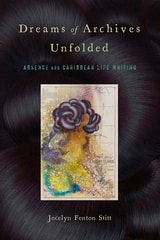
Dreams of Archives Unfolded
Absence and Caribbean Life WritingJocelyn Fenton Stitt
Rutgers University Press, 2021
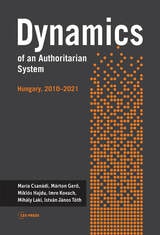
Dynamics of an Authoritarian System
Hungary, 2010–2021Mária Csanádi
Central European University Press, 2022
This conceptually synthetic and empirically rich book demonstrates the vulnerability of democratic settings to authoritarianism and populism. Six scholars from various professional fields explore here the metamorphosis of a political party into a centralized authoritarian system. Viktor Orbán and his Fidesz party needed less than ten years to accomplish this transformation in Hungary. In 2010, after winning a majority that could make changes in the constitution – two-thirds of the parliamentary seats, they evolved and stabilized the system, which produced again the two-thirds majority in 2014 and 2018.
The authors reveal how a democratic setting can be used as a device for political capture. They show how a political entity managed to penetrate almost all sub-fields of the economy to arrive at institutionalized corruption, and how the centralized power structure reproduces itself. With the help of a powerful empirical apparatus—among others analyses of more than 220,000 public tenders, redistributions of state subsidies, and the interconnectedness of those privileged with the political elite — the authors detail the functioning of a crony system and the network aspects of political connections in the rapid enrichment of politically-linked businesses. Their studies demonstrate the role of political capture in this redistribution and how this capture leads to a new social stratification.
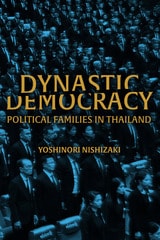
Dynastic Democracy
Political Families of ThailandYoshinori Nishizaki
University of Wisconsin Press, 2022
Drawing extensively on Thai-language primary sources, including assets documents and cremation volumes for deceased politicians and their kin, Nishizaki traces the intricate blood and marriage connections among Thailand’s political families. These families may fall into two categories: influential commoner families that have held parliamentary seats since 1932 and form the core of Thailand’s dynastic democracy; and upper-class families that are kin to or aligned ideologically with the royal family and have repeatedly challenged dynastic democracy through coups, constitutional changes, and other political maneuvers. Nishizaki’s exploration of dynastic democracy illustrates how democratic pluralism in Thailand has been consistently stifled, to the detriment of ordinary citizens. Dynastic Democracy fleshes out a widely acknowledged yet heretofore empirically unsubstantiated facet of Thai political history—that in Thai politics, family matters.