Results by title
3071 books match the query 'Business & Economics' and 73 start with d
Divergent Paths
Economic Mobility in the New American Labor MarketAnnette Bernhardt
Russell Sage Foundation, 2001

Dividing the Land
Early American Beginnings of Our Private Property MosaicEdward T. Price
University of Chicago Press, 1995
In this unprecedented study, Edward T. Price covers most areas of the United States in which the initial division of land was controlled by colonial governments—the original thirteen colonies, and Maine, Vermont, Kentucky, West Virginia, Tennessee, Louisiana, and Texas. By examining different land policies and the irregular pattern of property that resulted from them, Price chronicles the many ways colonies managed land to promote settlement, develop agriculture, defend frontiers, and attract investment. His analysis reveals as much about land planning techiniques carried to America from Europe as innovations spurred by the unique circumstances of the new world.
Price’s analysis draws on his thorough survey of property records from the first land plans in Virginia in 1607 to empresario grants in Texas in the 1820s. This breadth of data allows him to identify regional differences in allocating land, assess the impact of land planning by historical figures like William Penn of Pennsylvania and Lord Baltimore of Maryland, and trace changes in patterns of land division and ownership through transfers of power among Britain, the Netherlands, France, Spain, Mexico, and the Republic of Texas.
Do Deficits Matter?
Daniel Shaviro
University of Chicago Press, 1997
"[An] excellent, comprehensive, and illuminating book. Its analysis, deftly integrating considerations of economics, law, politics, and philosophy, brings the issues of 'balanced budgets,' national saving, and intergenerational equity out of the area of religious crusades and into an arena of reason. . . . A magnificent, judicious, and balanced treatment. It should be read and studied not just by specialists in fiscal policy but by all those in the economic and political community."—Robert Eisner, Journal of Economic Literature
"Shaviro's history, economics, and political analysis are right on the mark. For all readers."—Library Journal
Do Emotions Help or Hurt Decisionmaking?
A Hedgefoxian PerspectiveKathleen D. Vohs
Russell Sage Foundation, 2007

Do Prisons Make Us Safer?
The Benefits and Costs of the Prison BoomSteven Raphael
Russell Sage Foundation, 2009
Doctors and Their Workshops
Economic Models of Physician BehaviorMark V. Pauly
University of Chicago Press, 1980
Doctors are obviously influential in determining the costs of their services. But even more important, many believe, is the influence physicians have over the use and cost of nonphysician health-care resources and services. Doctors and Their Workshops is the first comprehensive attempt to use economic analysis to understand some of the physician effects on nonphysician aspects of health care.

Documenting Desegregation
Racial and Gender Segregation in Private Sector Employment Since the Civil Rights ActKevin Stainback
Russell Sage Foundation, 2013
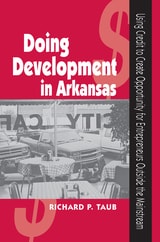
Doing Development in Arkansas
Using Credit to Create Opportunity for Entrepreneurs Outside the MainstreamRichard Taub
University of Arkansas Press, 2004
Doing Development in Arkansas is a history of that program as its creators tried to find their footing in new terrain, establish trust, work with borrowers despite legal pitfalls in doing so, and attempted to create new loan and technical assistance products. It is the story of the towns themselves in which Southern tried to have a substantial impact, including Arkadelphia, Hope, Malvern, Hot Springs, and Pine Bluff. Southern was an experiment and many of its achievements were the results in some cases of trying new ideas and in others of transporting programs successful in one setting to new locations. The most dramatic example of such a move is the development of the Good Faith Fund in Pine Bluff, based on a model of the Grameen Bank in Bangladesh.
Doing Meritocracy Right
How Business Leaders Can Turn an American Aspiration into Reality (and Why They Should)Thomas A. Cole
University of Chicago Press, 2025
As America’s most vaunted cultural value, meritocracy is celebrated by some as an institution and derided by others as a myth—or even a trap. Thomas A. Cole argues in Doing Meritocracy Right that if meritocracy is to persist as an institution—and it must—it requires structural support in the private sector. For America to achieve a version of meritocracy that more closely matches our aspirations, our business leaders must first offer equity of opportunity for individuals to demonstrate and develop their talents on equal terms.
Drawing on his decades of experience in advising CEOs and corporate boards, personally serving on the boards of major not-for-profits, and leading a large global law firm, Cole cites elite professional-service institutions—consultancies and law firms especially—as improbable laboratories for equity of opportunity. These workplaces, out of self-interest, are laser-focused on the quality of their professionals, seeking out talent and representation and then judging these individuals on (ideally) equal terms once they’re in place. Here, Cole sees an opportunity that no public initiative or platitudes can deliver: if workplaces seek out representational diversity by applying, with thought and care, a single standard of merit—one that emphasizes character—and by providing training and mentoring on an equitable basis, then they will offer a ladder to social and economic mobility that serves both individuals and society.
Cole argues that a meritocratic society is achieved in two interrelated stages: access to education; and post-education promotion to membership in the elite. The latter, he says, is the domain of business. Cole argues that the private sector is better positioned to effect reform and he encourages leaders in the private sector to pursue reform both in their organizations, in government, and in the universities and communities where they have influence.
Meritocracy in the private sector can’t control the many American inequities that exist on the ground of American society. But it can do social good by serving as a reliable, merit-determined path to the highest echelons of business and industry. Cole sets the stage for the discussion of reforms with a “brief history of our imperfect meritocracy,” and rounds out the book with a to-do list for business leaders.

Domestic Choices, International Markets
Dismantling National Barriers and Liberalizing Securities MarketsAndrew C. Sobel
University of Michigan Press, 1994

Doormen
Peter Bearman
University of Chicago Press, 2005
Combining observation, interviews, and survey information, Doormen provides a deep and enduring ethnography of the occupational role of doormen, the dynamics of the residential lobby, and the mundane features of highly consequential social exchanges between doormen and tenants. Here, Bearman explains why doormen find their jobs both boring and stressful, why tenants feel anxious about how much of a Christmas bonus their neighbors give, and how everyday transactions small and large affect tenants' professional and informal relationships with doormen.
In the daily life of the doorman resides the profound, and this book provides a brilliant account of how tenants and doormen interact within the complex world of the lobby.

Doormen
Peter Bearman
University of Chicago Press, 2005
This is an auto-narrated audiobook edition of this book.
Combining observation, interviews, and survey information, Doormen provides a deep and enduring ethnography of the occupational role of doormen, the dynamics of the residential lobby, and the mundane features of highly consequential social exchanges between doormen and tenants. Here, Bearman explains why doormen find their jobs both boring and stressful, why tenants feel anxious about how much of a Christmas bonus their neighbors give, and how everyday transactions small and large affect tenants' professional and informal relationships with doormen.
In the daily life of the doorman resides the profound, and this book provides a brilliant account of how tenants and doormen interact within the complex world of the lobby.
Down and Out in the New Economy
How People Find (or Don’t Find) Work TodayIlana Gershon
University of Chicago Press, 2017
Finding a job used to be simple. Now . . . well, it’s complicated. In today’s economy, you can’t just be an employee looking to get hired—you have to market yourself as a business, one that can help another business achieve its goals.
That’s a radical transformation in how we think about work and employment, says Ilana Gershon. And with Down and Out in the New Economy, she digs deep into that change and what it means, not just for job seekers, but for businesses and our very culture. In telling this story, Gershon covers all parts of the employment spectrum: she interviews hiring managers about how they assess candidates; attends personal branding seminars; talks with managers at companies around the United States to suss out regional differences—like how Silicon Valley firms look askance at the lengthier employment tenures of applicants from the Midwest. And she finds that not everything has changed: though the technological trappings may be glitzier, in a lot of cases, who you know remains more important than what you know.
Rich in the voices of people deeply involved with all parts of the employment process, Down and Out in the New Economy offers a snapshot of the quest for work today—and a pointed analysis of its larger meaning.
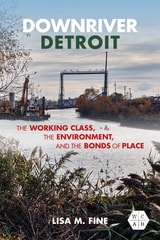
Downriver Detroit
The Working Class, the Environment, and the Bonds of PlaceLisa M. Fine
University of Illinois Press, 2026
Lisa M. Fine examines important moments in the ongoing efforts of the area’s citizens to create a humane and habitable environment. Her analysis shows how people preserved wetlands and the river by working through sportsmen’s organizations, appealing to state agencies, and forming grassroots movements. Fueled by enduring connections to place, local unions fought a proposed nuclear power plant in the 1950s. Years later, steel workers facing the steamroller of deindustrialization tried to preserve their communities by purchasing their own company. The ties that bind gave a unique character to activism in the Downriver region, challenging stereotypes of working-class attitudes toward the environment.
A creative merger of labor and environmental history, Downriver Detroit shows that working people have a right to live in and protect the places they love.
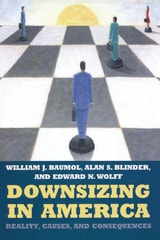
Downsizing in America
Reality, Causes, and ConsequencesWilliam J. Baumol
Russell Sage Foundation, 2003
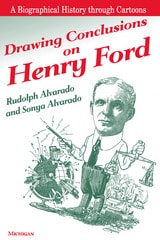
Drawing Conclusions on Henry Ford
Rudolph Alvarado and Sonya Alvarado
University of Michigan Press, 2001
For years political cartoons have shaped the often unflattering popular view of public figures. One of the most-often-portrayed figures of the twentieth century was the automobile manufacturer Henry Ford. Through editorial drawings, a vivid picture of Ford was presented that became the source of myths that surrounded him and continue even to this day.
Drawing Conclusions on Henry Ford is the first and only collection that brings together in one volume these editorial cartoons. They date back as far as the time Ford introduced the Model T in 1908 and extend forward to the introduction of the Model A and subsequent V8 engines in the 1930s. They illustrate the emergence of many of the popular myths surrounding Henry Ford, as seen and understood by the average citizen during the opening decades of the twentieth century. With 150 illustrations, the reader is able to trace the evolving images of Ford from a time period when caricature images of public figures were a primary source of information about those persons. Sometimes funny, sometimes sharp and critical, these cartoons are entertaining in themselves. Viewed as a whole, they create anew view of the Henry Ford story.
Rudolph V. Alvarado is a freelance writer and museum consultant, as well as the former programs leader for the Henry Ford Museum and Greenfield Village. Sonya Y. Alvarado is an instructor of English, at Eastern Michigan University and a former adjunct faculty member, Wayne State University.

Dream Lovers
The Gamification of RelationshipsAlfie Bown
Pluto Press, 2022
'An exciting, astute analysis of how our capacity for desire has been slotted into the grooves of digital capitalism, and made to work for profit - from porn to Pokémon' - Richard Seymour
We are in the middle of a 'desirevolution' - a fundamental and political transformation of the way we desire as human beings. Perhaps as always, new technologies - with their associated and inherited political biases - are organizing and mapping the future. What we don't seem to notice is that the primary way in which our lives are being transformed is through the manipulation and control of desire itself.
Our very impulses, drives and urges are 'gamified' to suit particular economic and political agendas, changing the way we relate to everything from lovers and friends to food and politicians. Digital technologies are transforming the subject at the deepest level of desire - re-mapping its libidinal economy - in ways never before imagined possible.
From sexbots to smart condoms, fitbits to VR simulators and AI to dating algorithms, the 'love industries' are at the heart of the future smart city and the social fabric of everyday life. This book considers these emergent technologies and what they mean for the future of love, desire, work and capitalism.
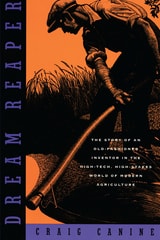
Dream Reaper
The Story of an Old-Fashioned Inventor in the High-Tech, High-Stakes World of Modern AgricultureCraig Canine
University of Chicago Press, 1997
"This intriguing tale weaves together the creativity and ingenuity of an inventor and the hurdles he and his partner face in selling and producing what appears to be an amazingly efficient Bi-Rotor combine."—Science News
"Canine writes with style and flourish. . . Dream Reaper is a riveting journey into America's heartland, where necessity is the mother of invention—and hard work, conviction, and sacrifice are its lifeblood."—People Magazine
"Canine deftly interweaves the story of the two men's struggles with a history of the mechanization of agriculture. This lively account of men working under pressure, improvising repairs and demonstrating the new machine, is also a story of courage that illustrates the barriers facing an independent inventor."—Publishers Weekly
"Craig Canine's Dream Reaper is a delight. It's an important book, rich with history and stories. It brings our most essential industry—farming—into new perspective. Reading it made me want to get out a crop."—Bobbie Ann Mason
A volume in the Sloan Technology Series. The series presents to a general audience highly readable accounts of the development of 20th century technologies and the ways these have shaped and are shaped by society.

Dream Zones
Anticipating Capitalism and Development in IndiaJamie Cross
Pluto Press, 2014
Dream Zones explores the dreamed of and desired futures that constitute, sustain and disrupt capitalism in contemporary India.
Drawing on five years of research in and around India's Special Economic Zones (SEZs), the book follows the stories of regional politicians, corporate executives, rural farmers, industrial workers and social activists to show how the pursuit of growth, profit and development shapes the politics of industrialisation and liberalisation.
This book offers a timely reminder that the global economy is shaped by sentiment as much as reason and that un-realised expectations are the grounds on which new hopes for the future are sown.
Dreamers, Thinkers, Doers
Conversations on the Economy of TomorrowGovert Buijs
Amsterdam University Press, 2026
But these voices do more than imagine a better future; they show how it can be realized. They examine what it takes to turn ideas into action and take the first concrete steps toward change. The collection brings to life a new “multi-actor approach,” as outlined by Jan Peter Balkenende and Govert Buijs in Capitalism Reconnected (2024) – an approach in which everyone matters and shares responsibility: governments, businesses, civil society, and consumers alike.
Dynamic Management of Growing Firms
A Strategic ApproachLorraine Uhlaner Hendrickson and John Psarouthakis
University of Michigan Press, 1998
Dynamics, Economic Growth, and International Trade
Bjarne S. Jensen and Kar-yiu Wong, Editors
University of Michigan Press, 1997

Dynamism and Its Enemies
Proceedings from the 2024 Austin SymposiumEdited by Ryan Streeter
University of Texas Press, 2025
Papers presented and discussed at the inaugural Civitas symposium on economic dynamism.
If we want more people in more places building and creating more good things, what should we do? This volume, edited by Ryan Streeter, presents perspectives on key issues of economic and societal dynamism by Ryan Decker (Federal Reserve), Ed Glaeser (Harvard University), Deirdre McCloskey (University of Illinois at Chicago), Edmund Phelps (Columbia University), Dan Shoag (Case Western Reserve University), and Cass Sunstein (Harvard Law School).
The chapters in Dynamism and Its Enemies began as presentations at the 2024 Austin Symposium, a one-day seminar on dynamism in America hosted by the Civitas Institute at the University of Texas at Austin. This first annual event, held in one of America’s most dynamic cities, was designed to bring various leading scholars of dynamism’s various aspects into one place in order to think together about how to foster a more dynamic future.