Results by title
1726 books match the query 'Film' and 99 start with d
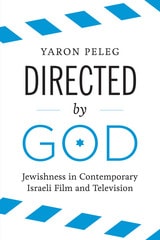
Directed by God
Jewishness in Contemporary Israeli Film and TelevisionBy Yaron Peleg
University of Texas Press, 2016
As part of its effort to forge a new secular Jewish nation, the nascent Israeli state tried to limit Jewish religiosity. However, with the steady growth of the ultraorthodox community and the expansion of the settler community, Israeli society is becoming increasingly religious. Although the arrival of religious discourse in Israeli politics has long been noticed, its cultural development has rarely been addressed. Directed by God explores how the country’s popular media, principally film and television, reflect this transformation. In doing so, it examines the changing nature of Zionism and the place of Judaism within it.
Once the purview of secular culture, Israel’s media initially promoted alternatives to traditional religious expression; however, using films such as Kadosh, Waltz with Bashir, and Eyes Wide Open, Yaron Peleg shows how Israel’s contemporary film and television programs have been shaped by new religious trends and how secular Israeli culture has processed and reflected on its religious heritage. He investigates how shifting cinematic visions of Jewish masculinity and gender track transformations in the nation’s religious discourse. Moving beyond the secular/religious divide, Directed by God explores changing film and television representations of different Jewish religious groups, assessing what these representations may mean for the future of Israeli society.
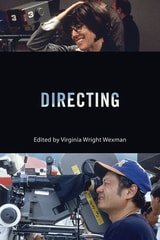
Directing
Virginia Wright Wexman
Rutgers University Press, 2017
The latest volume in the Behind the Silver Screen series, this collection provides the first comprehensive overview of how directing, as both an art and profession, has evolved in tandem with changing film industry practices. Each chapter is written by an expert on a different period of Hollywood, from the silent film era to today’s digital filmmaking, providing in-depth examinations of key trends like the emergence of independent production after World War II and the rise of auteurism in the 1970s. Challenging the myth of the lone director, these studies demonstrate how directors work with a multitude of other talented creative professionals, including actors, writers, producers, editors, and cinematographers.
Directing examines a diverse range of classic and contemporary directors, including Orson Welles, Tim Burton, Cecil B. DeMille, Steven Soderbergh, Spike Lee, and Ida Lupino, offering a rich composite picture of how they have negotiated industry constraints, utilized new technologies, and harnessed the creative contributions of their many collaborators throughout a century of Hollywood filmmaking.

Directory of World Cinema
American IndependentEdited by John Berra
Intellect Books, 2010
With high-profile Academy Award nominations and an increasing number of big-name actors eager to sign on to promising projects, independent films have been at the forefront in recent years like never before. But the roots of such critical and commercial successes as The Hurt Locker and Precious can be traced to the first boom of independent cinema in the 1960s, when a raft of talented filmmakers emergedto capture the attention of a rapidly growing audience of young viewers.
A thorough overview of a thriving area of cultural life, Directory of World Cinema: American Independent chronicles the rise of the independent sector as an outlet for directors who challenge the status quo, yet still produce accessible feature films that not only find wide audiences but enjoy considerable box office appeal—without sacrificing critical legitimacy. Key directors are interviewed and profiled, and a sizeable selection of films are referenced and reviewed. More than a dozen sub-genres—including African American cinema, queer cinema, documentary, familial dysfunction, and exploitation—are individually considered, with an emphasis on their ability to engage with tensions inherent in American society. Copious illustrations and a range of research resources round out the volume, making this a truly comprehensive guide.
At a time when independent films are enjoying considerable cultural cachet, this easy-to-use yet authoritative guide will find an eager audience in media historians, film studies scholars, and movie buffs alike.
Directory of World Cinema
American Independent 2Edited by John Berra
Intellect Books, 2013
Directory of World Cinema
Australia and New ZealandEdited by Ben Goldsmith and Geoff Lealand
Intellect Books, 2010
This addition to Intellect's Directory of World Cinema series turns the spotlight on Australia and New Zealand and offers an in-depth and exciting look at the cinema produced in these two countries since the turn of the twentieth century. Though the two nations share considerable cultural and economic connections, their film industries remain distinct, marked by differences of scale, level of government involvement and funding, and relations with other countries and national cinemas. Through essays about prominent genres and themes, profiles of directors, and comprehensive reviews of significant titles, this user-friendly guide explores the diversity and distinctiveness of films from Australia and New Zealand from Whale Rider to The Piano to Wolf Creek.
Directory of World Cinema
Australia and New Zealand 2Edited by Ben Goldsmith, Mark David Ryan and Geoff Lealand
Intellect Books, 2015
Directory of World Cinema
East EuropeEdited by Adam Bingham
Intellect Books, 2011
Since the 1970s, the works of filmmakers from the nations of Eastern Europe— among them, Krzysztof Kieslowski, Béla Tarr, István Szabó, and Jirí Menzel—have experienced an international upsurge in popularity. Charting the trends of the national cinemas of Poland, Hungary, and Yugoslavia, as well as the lesser-known industries of Serbia, Slovakia, and Romania, this new volume in the Directory of World Cinema series explores important genres in the cinema of Eastern Europe, including war films, new wave, comedies, and surrealist art cinema, with essays on the most prolific filmmakers, in-depth reviews of key titles, and suggested resources for further study. Fifty full-color stills round out this invaluable guide to the burgeoning cinema of Eastern Europe.
Directory of World Cinema
FinlandEdited by Pietari Kääpä
Intellect Books, 2012
Directory of World Cinema
GermanyEdited by Michelle Langford
Intellect Books, 2012
From bleak expressionist works to the edgy political works of the New German Cinema to the feel-good Heimat films of the postwar era, Directory of World Cinema: Germany aims to offer a wider film and cultural context for the films that have emerged from Germany—including some of the East German films recently made available to Western audiences for the first time. With contributions by leading academics and emerging scholars in the field, this volume explores the key directors, themes, and periods in German film history, and demonstrates how genres have been adapted over time to fit historical circumstances. Rounding out this addition to the Directory of World Cinema series are fifty full-color stills, numerous reviews and recommendations, and a comprehensive filmography.
Directory of World Cinema
IndiaEdited by Adam Bingham
Intellect Books, 2015
Directory of World Cinema
JapanEdited by John Berra
Intellect Books, 2010
From the revered classics of Akira Kurosawa to the modern marvels of Takeshi Kitano, the films that have emerged from Japan represent a national cinema that has gained worldwide admiration and appreciation. The Directory of World Cinema: Japan provides an insight into the cinema of Japan through reviews of significant titles and case studies of leading directors, alongside explorations of the cultural and industrial origins of key genres.
As the inaugural volume of an ambitious new series from Intellect documenting world cinema, the directory aims to play a part in moving intelligent, scholarly criticism beyond the academy by building a forum for the study of film that relies on a disciplined theoretical base. It takes the form of an A–Z collection of reviews, longer essays, and research resources, accompanied by fifty full-color film stills highlighting significant films and players. The cinematic lineage of samurai warriors, yakuza enforcers, and atomic monsters take their place alongside the politically charged works of the Japanese New Wave, making this a truly comprehensive volume.
Directory of World Cinema
SpainEdited by Lorenzo J. Torres Hortelano
Intellect Books, 2011
Though loved by moviegoers worldwide, Spanish cinema has thus far suffered from a relative lack of critical attention. Focusing on the vast corpus of films that have left their marks on generations of spectators, Directory of World Cinema: Spain returns the national cinema of Spain rightfully to the forefront with numerous full-color stills and essays establishing the key players and genres in their sociopolitical context, including civil war films, romances, comedies, and the cinema of the transition. From the award-winning big-budget productions of Pedro Almodóvar in Madrid to Pere Portabella’s experimental documentaries and the influential Barcelona School, reviews cover individual titles in considerable depth. Essential reading for aficionados of Spanish cinema at all levels, this volume provides an accessible overview of the main trends and issues in Spanish film.
Directory of World Cinema
TurkeyEdited by Eylem Atakav
Intellect Books, 2013
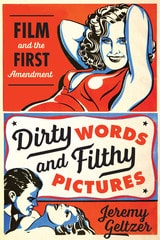
Dirty Words and Filthy Pictures
Film and the First AmendmentBy Jeremy Geltzer
University of Texas Press, 2015
From the earliest days of cinema, scandalous films such as The Kiss (1896) attracted audiences eager to see provocative images on screen. With controversial content, motion pictures challenged social norms and prevailing laws at the intersection of art and entertainment. Today, the First Amendment protects a wide range of free speech, but this wasn’t always the case. For the first fifty years, movies could be censored and banned by city and state officials charged with protecting the moral fabric of their communities. Once film was embraced under the First Amendment by the Supreme Court’s Miracle decision in 1952, new problems pushed notions of acceptable content even further.
Dirty Words & Filthy Pictures explores movies that changed the law and resulted in greater creative freedom for all. Relying on primary sources that include court decisions, contemporary periodicals, state censorship ordinances, and studio production codes, Jeremy Geltzer offers a comprehensive and fascinating history of cinema and free speech, from the earliest films of Thomas Edison to the impact of pornography and the Internet. With incisive case studies of risqué pictures, subversive foreign films, and banned B-movies, he reveals how the legal battles over film content changed long-held interpretations of the Constitution, expanded personal freedoms, and opened a new era of free speech. An important contribution to film studies and media law, Geltzer’s work presents the history of film and the First Amendment with an unprecedented level of detail.
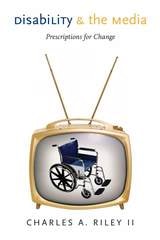
Disability and the Media
Prescriptions for ChangeCharles A. Riley
University Press of New England, 2005
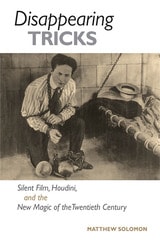
Disappearing Tricks
Silent Film, Houdini, and the New Magic of the Twentieth CenturyMatthew Solomon
University of Illinois Press, 2010
Disappearing Tricks revisits the golden age of theatrical magic and silent film to reveal how professional magicians shaped the early history of cinema. Where others have called upon magic as merely an evocative metaphor for the wonders of cinema, Matthew Solomon focuses on the work of the professional illusionists who actually made magic with moving pictures between 1895 and 1929.
The first to reveal fully how powerfully magic impacted the development of cinema, the book combines film and theater history to uncover new evidence of the exchanges between magic and filmmaking in the United States and France during the silent period. Chapters detailing the stage and screen work of Harry Houdini and Georges Méliès show how each transformed theatrical magic to create innovative cinematic effects and thrilling new exploits for twentieth-century mass audiences. The book also considers the previously overlooked roles of anti-spiritualism and presentational performance in silent film.
Highlighting early cinema's relationship to the performing body, visual deception, storytelling, and the occult, Solomon treats cinema and stage magic as overlapping practices that together revise our understanding of the origins of motion pictures and cinematic spectacle.
Discorrelated Images
Shane Denson
Duke University Press, 2020
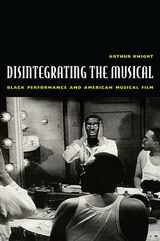
Disintegrating the Musical
Black Performance and American Musical FilmArthur Knight
Duke University Press, 2002
Arthur Knight focuses on American film’s classic sound era, when Hollywood studios made eight all-black-cast musicals—a focus on Afro-America unparalleled in any other genre. It was during this same period that the first black film stars—Paul Robeson, Louis Armstrong, Lena Horne, Harry Belafonte, Dorothy Dandridge—emerged, not coincidentally, from the ranks of musical performers. That these films made so much of the connection between African Americans and musicality was somewhat ironic, Knight points out, because they did so in a form (song) and a genre (the musical) celebrating American social integration, community, and the marriage of opposites—even as the films themselves were segregated and played before even more strictly segregated audiences.
Disintegrating the Musical covers territory both familiar—Show Boat, Stormy Weather, Porgy and Bess—and obscure—musical films by pioneer black director Oscar Micheaux, Lena Horne’s first film The Duke Is Tops, specialty numbers tucked into better-known features, and lost classics like the short Jammin’ the Blues. It considers the social and cultural contexts from which these films arose and how African American critics and audiences responded to them. Finally, Disintegrating the Musical shows how this history connects with the present practices of contemporary musical films like O Brother, Where Art Thou? and Bamboozled.
Disney Culture
Wills, John
Rutgers University Press, 2017
Disney Culture proposes that there is still a unifying Disney ethos, one that can be traced back to the corporate philosophy that Walt Disney himself developed back in the 1920s. Yet, as cultural historian John Wills demonstrates, Disney’s values have also adapted to changing social climates. At the same time, the world of Disney has profoundly shaped how Americans view the world.
Wills offers a nuanced take on the corporate ideologies running through animated and live-action Disney movies from Frozen to Fantasia, from Mary Poppins to Star Wars: The Force Awakens. But Disney Culture encompasses much more than just movies as it explores the intersections between Disney’s business practices and its cultural mythmaking. Welcome to “the Disney Way.”
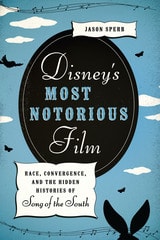
Disney's Most Notorious Film
Race, Convergence, and the Hidden Histories of Song of the SouthBy Jason Sperb
University of Texas Press, 2012
The Walt Disney Company offers a vast universe of movies, television shows, theme parks, and merchandise, all carefully crafted to present an image of wholesome family entertainment. Yet Disney also produced one of the most infamous Hollywood films, Song of the South. Using cartoon characters and live actors to retell the stories of Joel Chandler Harris, SotS portrays a kindly black Uncle Remus who tells tales of Brer Rabbit, Brer Fox, and the “Tar Baby” to adoring white children. Audiences and critics alike found its depiction of African Americans condescending and outdated when the film opened in 1946, but it grew in popularity—and controversy—with subsequent releases. Although Disney has withheld the film from American audiences since the late 1980s, SotS has an enthusiastic fan following, and pieces of the film—such as the Oscar-winning “Zip-a-Dee-Doo-Dah”—remain throughout Disney’s media universe.
Disney’s Most Notorious Film examines the racial and convergence histories of Song of the South to offer new insights into how audiences and Disney have negotiated the film’s controversies over the last seven decades. Jason Sperb skillfully traces the film’s reception history, showing how audience perceptions of SotS have reflected debates over race in the larger society. He also explores why and how Disney, while embargoing the film as a whole, has repurposed and repackaged elements of SotS so extensively that they linger throughout American culture, serving as everything from cultural metaphors to consumer products.
Disney's Star Wars
Forces of Production, Promotion, and ReceptionWilliam Proctor and Richard McCulloch
University of Iowa Press, 2019
Covering the period from Disney’s purchase through the release of The Force Awakens, the book reveals how fans anticipated, interpreted, and responded to the steady stream of production stories, gossip, marketing materials, merchandise, and other sources in the build-up to the movie’s release. From fears that Princess Leia would be turned into a “Disney princess” to collaborative brand management, the authors explore the shifting relationship between fans, texts, and media industries in the context of a crucial rebranding campaign. The result is a fascinating examination of a critical moment in the iconic series’ history.
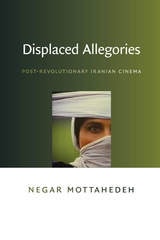
Displaced Allegories
Post-Revolutionary Iranian CinemaNegar Mottahedeh
Duke University Press, 2008
Mottahedeh asserts that, in response to the prohibitions against the desiring look, a new narrative cinema emerged as the displaced allegory of the constraints on the post-Revolutionary Iranian film industry. Allegorical commentary was not developed in the explicit content of cinematic narratives but through formal innovations. Offering close readings of the work of the nationally popular and internationally renowned Iranian auteurs Bahram Bayza’i, Abbas Kiarostami, and Mohsen Makhmalbaf, Mottahedeh illuminates the formal codes and conventions of post-Revolutionary Iranian films. She insists that such analyses of cinema’s visual codes and conventions are crucial to the study of international film. As Mottahedeh points out, the discipline of film studies has traditionally seen film as a medium that communicates globally because of its dependence on a (Hollywood) visual language assumed to be universal and legible across national boundaries. Displaced Allegories demonstrates that visual language is not necessarily universal; it is sometimes deeply informed by national culture and politics.
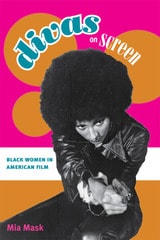
Divas on Screen
Black Women in American FilmMia Mask
University of Illinois Press, 2008
This insightful study places African American women's stardom in historical and industrial contexts by examining the star personae of five African American women: Dorothy Dandridge, Pam Grier, Whoopi Goldberg, Oprah Winfrey, and Halle Berry. Interpreting each woman's celebrity as predicated on a brand of charismatic authority, Mia Mask shows how these female stars have ultimately complicated the conventional discursive practices through which blackness and womanhood have been represented in commercial cinema, independent film, and network television.
Mask examines the function of these stars in seminal yet underanalyzed films. She considers Dandridge's status as a sexual commodity in films such as Tamango, revealing the contradictory discourses regarding race and sexuality in segregation-era American culture. Grier's feminist-camp performances in sexploitation pictures Women in Cages and The Big Doll House and her subsequent blaxploitation vehicles Coffy and Foxy Brown highlight a similar tension between representing African American women as both objectified stereotypes and powerful, self-defining icons. Mask reads Goldberg's transforming habits in Sister Act and The Associate as representative of her unruly comedic routines, while Winfrey's daily television performance as self-made, self-help guru echoes Horatio Alger narratives of success. Finally, Mask analyzes Berry's meteoric success by acknowledging the ways in which Dandridge's career made Berry's possible.
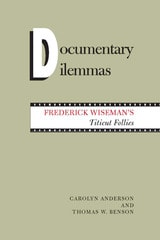
Documentary Dilemmas
Frederick Wiseman's Titicut FolliesCarolyn Anderson and Thomas W. Benson
Southern Illinois University Press, 1991
A case history of the only American film under court-imposed restrictions for reasons other than obscenity or national security.
Titicut Follies is an excoriating depiction of conditions in the Massachusetts Correctional Institution at Bridgewater, a prison-hospital for the criminally insane. The Commonwealth of Massachusetts took Wiseman to court, seeking to prevent the exhibition of Titicut Follies soon after its release in 1967.
This account of the Titicut Follies case is based on ten years of research and relies on interviews, journalistic accounts, and especially on the legal record, including the Commonwealth v. Wiseman transcript, to describe the entire process of independent documentary filmmaking. The trials of Titicut Follies raise crucial questions about the relation of social documentary to its subjects and audiences.
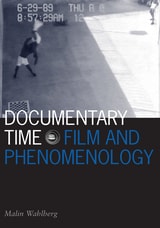
Documentary Time
Film and PhenomenologyMalin Wahlberg
University of Minnesota Press, 2008
Finding the theoretical space where cinema and philosophy meet, Malin Wahlberg’s sophisticated approach to the experience of documentary film aligns with attempts to reconsider the premises of existential phenomenology. The configuration of time is crucial in organizing the sensory affects of film in general but, as Wahlberg adroitly demonstrates, in nonfiction films the problem of managing time is writ large by the moving image’s interaction with social memory and historical figures.
Wahlberg discusses a thought-provoking corpus of classical and recent experiments in film and video (including Andy Warhol’s films) in which creative approaches to the time of the image and the potential archive memory of filmic representation illuminates meanings of temporality and time experience. She also offers a methodological account of film and brings Deleuze and Ricoeur into dialogue with Bazin and Mitry on the subject of cinema and phenomenology.
Drawing attention to the cultural significance of the images’ imprint as a trace of the past, Documentary Time brings to bear phenomenological inquiry on nonfiction film while at the same time reconsidering the existential dimensions of time that have always puzzled humans.
Malin Wahlberg is a research fellow in cinema studies at Stockholm University.
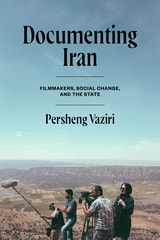
Documenting Iran
Filmmakers and Social ChangePersheng Vaziri
University of Texas Press, 2026
An ethnographic study of how Iranian documentary filmmakers navigate censorship and creativity to shape civic discourse.
Iranian filmmakers have overcome significant obstacles to create a distinctive, globally renowned cinema. Filmmaker and educator Persheng Vaziri explores how documentarians, in particular, have developed a dynamic and creative environment by negotiating limited resources and official constraints. Through their films, they share hard truths—and artful narratives—with fellow Iranians and viewers the world over.
Documenting Iran introduces key historical foundations of documentary filmmaking amid generations of political change—first under the shah and later the Islamic government—with a focus on contemporary filmmakers between 2000 and 2022. Drawing on interviews and ethnographic encounters, Vaziri describes the creative practices and pragmatic choices that provide documentarians relative independence from state censorship and other restrictions on artistic production. Relying on poetic aesthetics, observational filmmaking, international connections, and the accumulated knowledge of a tight-knit local community, filmmakers engage with controversial topics like women’s rights, marriage and divorce laws, environmental degradation, and encounters with Western culture. Documentarians have thus created an activist cinema both subtle and persuasive enough to challenge dogmatic rule and uphold progressive elements of Iranian society.
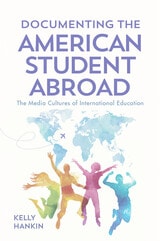
Documenting the American Student Abroad
The Media Cultures of International EducationKelly Hankin
Rutgers University Press, 2021
In Documenting the American Student Abroad, Kelly Hankin explores the documentary media cultures that shape these beliefs, drawing our attention to the broad range of stakeholders and documentary modes involved in defining the core values and practices of study abroad. From study abroad video contests and a F.B.I. produced docudrama about student espionage to reality television inspired educational documentaries and docudramas about Amanda Knox, Hankin shows how the institutional values of "global citizenship," "intercultural communication," and "cultural immersion" emerge in contradictory ways through their representation.
By bringing study abroad and media studies into conversation with one another, Documenting the American Student Abroad: The Media Cultures of International Education offers a much needed humanist contribution to the field of international education, as well as a unique approach to the growing scholarship on the intersection of media and institutions. As study abroad practitioners and students increase their engagement with moving images and digital environments, the insights of media scholars are essential for helping the field understand how the mediation of study abroad rhetoric shapes rather than reflects the field's central institutional ideals
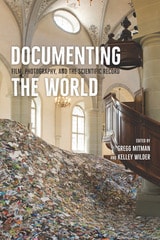
Documenting the World
Film, Photography, and the Scientific RecordEdited by Gregg Mitman and Kelley Wilder
University of Chicago Press, 2016
Documenting the World is about the material and social life of photographs and film made in the scientific quest to document the world. Drawing on scholars from the fields of art history, visual anthropology, and science and technology studies, the chapters in this book explore how this documentation—from the initial recording of images, to their acquisition and storage, to their circulation—has altered our lives, our ways of knowing, our social and economic relationships, and even our surroundings. Far beyond mere illustration, photography and film have become an integral, transformative part of the world they seek to show us.
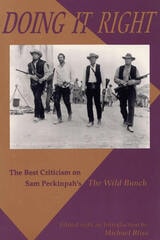
Doing It Right
The Best Criticism on Sam Peckinpah's The Wild BunchEdited with an Introduction by Michael Bliss
Southern Illinois University Press, 1994
Doing It Right brings together the very finest in reviews and criticism of The Wild Bunch since its release in 1969.
Often misinterpreted because of its graphic violence, the film initially generated considerable controversy. Sam Peckinpah, who made the film after a four-year forced hiatus in his career (he had been blacklisted), created it as a depiction of the savage behavior possible in the post– World War I era. However, the ensuing controversy was not restricted only to the explicit story and images. Producer Phil Feldman’s withdrawal of Peckinpah’s cut of the film drew tremendous sympathy for Peckinpah from American and European film critics alike.
This casebook should be read as a supplement to a viewing of the film, which is now available in its uncut form in video. Edited and with an introduction by Michael Bliss, the book explores the film’s production history, giving an overview of its release problems and highlighting its stylistic characteristics, classic structure, use of the widescreen frame, and innovative editing techniques. It also discusses in detail the film’s underlying moral message and its representation of camaraderie and loyalty. In addition to Bliss, essayists include Robert Culp, Paul Schrader, Stephen Farber, Paul Seydor, Jim Kitses, Cordell Strug, John L. Simons, Aljean Harmetz, and Michael Sragow. The book concludes with an appendix and an extensive bibliography.
Doing Women's Film History
Reframing Cinemas, Past and FutureEdited by Christine Gledhill and Julia Knight
University of Illinois Press, 2015
Don't Look Now
British Cinema in the 1970sEdited by Paul Newland
Intellect Books, 2010
While postwar British cinema and the British new wave have received much scholarly attention, the misunderstood period of the 1970s has been comparatively ignored. Don’t Look Now uncovers forgotten but richly rewarding films, including Nicolas Roeg’s Don’t Look Now and the films of Lindsay Anderson and Barney Platts-Mills. This volume offers insight into the careers of important filmmakers and sheds light on the genres of experimental film, horror, rock and punk films, as well as representations of the black community, shifts in gender politics, and adaptations of television comedies. The contributors ask searching questions about the nature of British film culture and its relationship to popular culture, television, and the cultural underground.
Double Exposure
How Social Psychology Fell in Love with the MoviesKathryn Millard
Rutgers University Press, 2022
Double Lives, Second Chances
The Cinema of Krzysztof KieslowskiAnnette Insdorf
Northwestern University Press, 2013
Double Negative
The Black Image and Popular CultureRacquel J. Gates
Duke University Press, 2018
Double Visions, Double Fictions
The Doppelgänger in Japanese Film and LiteratureBaryon Tensor Posadas
University of Minnesota Press, 2018
A fresh take on the dopplegänger and its place in Japanese film and literature—past and present
Since its earliest known use in German Romanticism in the late 1700s, the word Doppelgänger (double-walker) can be found throughout a vast array of literature, culture, and media. This motif of doubling can also be seen traversing historical and cultural boundaries. Double Visions, Double Fictions analyzes the myriad manifestations of the doppelgänger in Japanese literary and cinematic texts at two historical junctures: the interwar period of the 1920s and 1930s and the present day.
According to author Baryon Tensor Posadas, the doppelgänger marks the intersection of the historical impact of psychoanalytic theory, the genre of detective fiction in Japan, early Japanese cinema, and the cultural production of Japanese colonialism. He examines the doppelgänger’s appearance in the works of Edogawa Rampo, Tanizaki Jun’ichiro, and Akutagawa Ryunosuke, as well as the films of Tsukamoto Shin’ya and Kurosawa Kiyoshi, not only as a recurrent motif but also as a critical practice of concepts. Following these explorations, Posadas asks: What were the social, political, and material conditions that mobilized the desire for the doppelgänger? And how does the dopplegänger capture social transformations taking place at these historical moments?
Double Visions, Double Fictions ultimately reveals how the doppelgänger motif provides a fascinating new backdrop for understanding the enmeshment of past and present.
Downtown Film and TV Culture 1975-2001
Edited by Joan Hawkins
Intellect Books, 2015
Drawing the Iron Curtain
Jews and the Golden Age of Soviet AnimationMaya Balakirsky Katz
Rutgers University Press, 2016
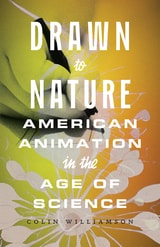
Drawn to Nature
American Animation in the Age of ScienceColin Williamson
University of Minnesota Press, 2025
How twentieth-century developments in science influenced the aesthetics of the burgeoning American cartoon
What do technical renderings of plant cells in trees have to do with Disney’s animated opus Fantasia? Quite a bit, as it turns out: such emergent scientific models and ideas about nature were an important inspiration for Disney’s groundbreaking animated realism. In Drawn to Nature, Colin Williamson presents a vivid portrait of how developments in biology, physics, and geology between 1900 and the long 1960s influenced not just Disney but the American cartoon industry as a whole.
Drawing on original research on the scientific appetites of animators and studios such as Winsor McCay, the Fleischer Brothers, Walt Disney, and United Productions of America, Williamson opens new avenues for understanding the history and aesthetics of cartoons. Interrogating the differences between art and science and reconsidering the realms of dream, magic, and fantasy as they pertain to pop culture, he yields novel proposals for bridging longstanding divides between animation, live-action cinema, and the history of science.
Drawn to Nature not only illuminates the extent to which animators have drawn on scientific insights, it also considers seriously how commercial animations themselves participate in scientific discourse. It revises and revitalizes our existing narratives about the history of American animation to uncover the many ways science informs our collective cultural imagination.

Dream Factories of a Former Colony
American Fantasies, Philippine CinemaJosé B. Capino
University of Minnesota Press, 2010
By tracking American fantasies in Philippine movies from the postindependence period to the present, José B. Capino offers an innovative account of cinema's cultural work in decolonization and globalization. Capino examines how a third world nation's daydreams both articulate empire and mobilize against it, provide imaginary maps and fables of identity for its migrant workers and diasporan subjects, pose challenges to the alibis of patriarchy and nationalism, and open up paths for participating in the cultures of globality.
Through close readings of more than twenty Philippine movies, Capino demonstrates the postcolonial imagination's vital role in generating pragmatic and utopian visions of living with empire. Illuminating an important but understudied cinema, he creates a model for understanding the U.S. image in the third world.
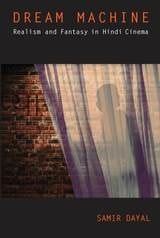
Dream Machine
Realism and Fantasy in Hindi CinemaSamir Dayal
Temple University Press, 2015
Popular Hindi films offer varied cinematic representations ranging from realistic portraits of patriotic heroes to complex fantasies that go beyond escapism. In Dream Machine, Samir Dayal provides a history of Hindi cinema starting with films made after India’s independence in 1947. He constructs a decade-by-decade consideration of Hindi cinema’s role as a site for the construction of “Indianness.”
Dayal suggests that Hindi cinema functions as both mirror and lamp, reflecting and illuminating new and possible representations of national and personal identity, beginning with early postcolonial films including Awaara and Mother India, a classic of the Golden Age. More recent films address critical social issues, such as My Name is Khan and Fire, which concern terrorism and sexuality, respectively. Dayalalso chronicles changes in the industry and in audience reception, and the influence of globalization, considering such films as Slumdog Millionaire.
Dream Machine analyzes the social and aesthetic realism of these films concerning poverty and work, the emergence of the middle class, crime, violence, and the law while arguing for their sustained and critical attention to forms of fantasy.
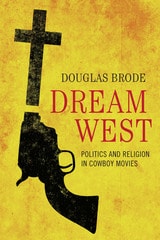
Dream West
Politics and Religion in Cowboy MoviesBy Douglas Brode
University of Texas Press, 2013
While political liberals celebrated the end of “cowboy politics” with the election of Barack Obama to the presidency, political conservatives in the Tea Party and other like-minded groups still vociferously support “cowboy” values such as small government, low taxes, free-market capitalism, and the right to bear arms. Yet, as Douglas Brode argues in this paradigm-shifting book, these supposedly cowboy or “Old West” values hail not so much from the actual American frontier of the nineteenth century as from Hollywood’s portrayal of it in the twentieth century. And a close reading of Western films and TV shows reveals a much more complex picture than the romanticized, simplistic vision espoused by the conservative right.
Examining dozens of Westerns, including Gunfight at the O.K. Corral, Red River, 3:10 to Yuma (old and new), The Wild Ones, High Noon, My Darling Clementine, The Alamo, and No Country for Old Men, Brode demonstrates that the genre (with notable exceptions that he fully covers) was the product of Hollywood liberals who used it to project a progressive agenda on issues such as gun control, environmental protection, respect for non-Christian belief systems, and community cohesion versus rugged individualism. Challenging us to rethink everything we thought we knew about the genre, Brode argues that the Western stands for precisely the opposite of what most people today—whether they love it or hate it—believe to be the essential premise of “the only truly, authentically, and uniquely American narrative form.”
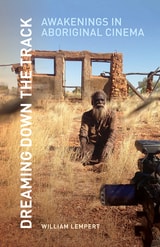
Dreaming Down the Track
Awakenings in Aboriginal CinemaWilliam Lempert
University of Minnesota Press, 2025
What can Aboriginal filmmaking reveal about Indigenous presence and futures?
The product of years of embedded fieldwork within Indigenous film crews in Northwestern Australia, Dreaming Down the Track delves deeply into Aboriginal cinema as a transformative community process. It follows the social lives of projects throughout their production cycles, from planning and editing to screening, broadcasting, and after-images. Across its narrative sweep, this ethnography engages the film career of Kukatja elder Mark Moora to demonstrate the impact of filmmaking on how Aboriginal futures are collectively imagined and called forth.
William Lempert highlights a series of awakenings through which Moora ultimately came to view cinema as a process for catalyzing his family’s return to their home country of Mangkayi. This biographical media journey paints an intimate portrait of the inspiring possibilities and sobering limitations of Indigenous envisioning within settler states. Lempert traces how Moora’s life and films convey a multiplicity of Aboriginal experiences across time and space, from colonial contact to contemporary life in communities like Balgo, including the continued governmental attempts to undermine them.
Amid ongoing negotiations to establish the first treaties between Indigenous nations and Australian states, Dreaming Down the Track illustrates what is at stake in how Aboriginal–State relations are represented and understood, both within communities and for the broader public. Lempert stays true to Moora’s insight that film can preserve community stories for generations to come, toward the aim of enacting sovereign futures.
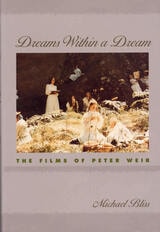
Dreams Within a Dream
The Films of Peter WeirMichael Bliss
Southern Illinois University Press, 2000
"What we see, and what we seem, are but a dream, a dream within a dream." Michael Bliss views Miranda's voice-over at the beginning of Picnic at Hanging Rock as so pivotal in explaining the films of Peter Weir that he borrows her words to create the title of his own study of the Australian filmmaker's work.
Bliss views Weir as an artist whose values are rooted in the realm of the dream, of the unconscious. Surrealistic in technique, Weir avoids the pedestrian assurances of a material realm in favor of an irresolution that, while potentially frustrating, is nonetheless for him a more truthful representation of what he considers reality. For Weir, as for Plato, Bliss demonstrates, "empirical reality is nothing more than a shadow of what is real."
Bliss also considers Weir's heritage. Australian cinema, Bliss explains, is characterized by melodramatic narratives born of a desire to see good and evil portrayed in striking opposition. Weir, for example, dramatizes the contradictory forces of light versus darkness, reason versus mystery, and rationality versus magic in such films as Picnic at Hanging Rock and The Last Wave. This melodramatic emphasis is evident as well in the polarized characterizations in such films as Witness, Dead Poets Society, and The Truman Show.
Bliss also discusses Weir's use of another staple of Australian cinema— "mateship," the celebration of the bond between male companions. But by making self-knowledge dependent on action involving one's friends, Weir gives mateship a new meaning. Moreover, like other Australian filmmakers, Weir emphasizes the starkness of the Australian landscape, which functions either as a hazard or a deadly challenge, at least until American mythology caused him to see nature in a more positive light. Also prominent in Weir's films is an Australian spirit of rebellion coupled with the Aussie ambivalence toward all aspects of British culture.
To help explain Weir's films, Bliss looks to Freud and Jung, whom Weir has studied, and also to two other prominent purveyors of myth and archetype, Northrop Frye and Joseph Campbell. Virtually all Weir characters struggle toward a new mode of awareness, a psychological awareness based on archetypal truths. Many of his films involve archetypal journeys heading through conflict to spiritual unity. Weir's quest is to find out what we really know and how we know what we know.
Dreams of Difference, Songs of the Same
The Musical Moment in FilmAmy Herzog
University of Minnesota Press, 2009
Musical spectacles are excessive and abstract, reconfiguring time and space and creating intense bodily responses. Amy Herzog's engaging work examines those instances where music and movement erupt from within more linear narrative frameworks. The representational strategies found in these films are often formulaic, repeating familiar story lines and stereotypical depictions of race, gender, and class. Yet she finds the musical moment contains a powerful disruptive potential.
Dreams of Difference, Songs of the Same investigates the tension and the fusion of difference and repetition in films to ask, How does the musical moment work? Herzog looks at an eclectic mix of works, including the Soundie and Scopitone jukebox films, the musicals of French director Jacques Demy, the synchronized swimming spectacles of Esther Williams, and an apocalyptic musical by Taiwanese director Tsai Ming-liang. Several refrains circulate among these texts: their reliance on clichés, their rewriting of cultural narratives, and their hallucinatory treatment of memory and history.
Drawing on the philosophical work of Gilles Deleuze, she explores all of these dissonances as productive forces, and in doing so demonstrates the transformative power of the unexpected.
Drive in Cinema
Essays on Film, Theory and PoliticsMarc James Léger
Intellect Books, 2015
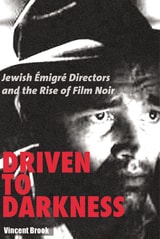
Driven to Darkness
Jewish Emigre Directors and the Rise of Film NoirBrook, Vincent
Rutgers University Press, 2009
Driven to Darkness explores the influence of Jewish TmigrT directors and the development of this genre. While filmmakers such as Fritz Lang, Billy Wilder, Otto Preminger, and Edward G. Ulmer have been acknowledged as crucial to the noir canon, the impact of their Jewishness on their work has remained largely unexamined until now. Through lively and original analyses of key films, Vincent Brook penetrates the darkness, shedding new light on this popular film form and the artists who helped create it.
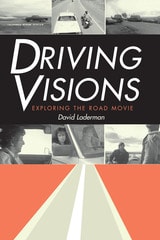
Driving Visions
Exploring the Road MovieBy David Laderman
University of Texas Press, 2002
From the visionary rebellion of Easy Rider to the reinvention of home in The Straight Story, the road movie has emerged as a significant film genre since the late 1960s, able to cut across a wide variety of film styles and contexts. Yet, within the variety, a certain generic core remains constant: the journey as cultural critique, as exploration beyond society and within oneself.
This book traces the generic evolution of the road movie with respect to its diverse presentations, emphasizing it as an "independent genre" that attempts to incorporate marginality and subversion on many levels. David Laderman begins by identifying the road movie's defining features and by establishing the literary, classical Hollywood, and 1950s highway culture antecedents that formatively influenced it. He then traces the historical and aesthetic evolution of the road movie decade by decade through detailed and lively discussions of key films. Laderman concludes with a look at the European road movie, from the late 1950s auteurs through Godard and Wenders, and at compelling feminist road movies of the 1980s and 1990s.
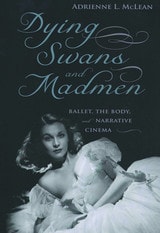
Dying Swans and Madmen
Ballet, the Body, and Narrative CinemaMcLean, Adrienne L
Rutgers University Press, 2008
Drawing on examples that range from musicals to tragic melodramas, she shows how commercial films have produced an image of ballet and its artists that is associated both with joy, fulfillment, fame, and power and with sexual and mental perversity, melancholy, and death. Although ballet is still received by many with a lack of interest or outright suspicion, McLean argues that these attitudes as well as ballet's popularity and its acceptability as a way of life and a profession have often depended on what audiences first learned about it from the movies.
Dying in Full Detail
Mortality and Digital DocumentaryJennifer Malkowski
Duke University Press, 2017