Results by title
1415 books match the query 'Medical' and 71 start with d
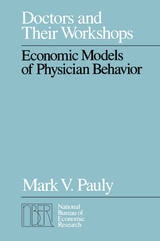
Doctors and Their Workshops
Economic Models of Physician BehaviorMark V. Pauly
University of Chicago Press, 1980
Doctors are obviously influential in determining the costs of their services. But even more important, many believe, is the influence physicians have over the use and cost of nonphysician health-care resources and services. Doctors and Their Workshops is the first comprehensive attempt to use economic analysis to understand some of the physician effects on nonphysician aspects of health care.

Doctors and the State
The Politics of Health Care in France and the United StatesDavid Wilsford
Duke University Press, 1991
In France, Wilsford shows, the state is strong in the health policy domain, while organized medicine is weak and divided. Consequently, physicians exercise little influence over health care policymaking. By contrast, in the United States the state is weak, the employers and insurers who pay for health care are fragmented, and organized medicine is strong and well financed. As a result, medical professionals are able to exert a greater influence on policymaking, thus making cost control more difficult.
Wilsford extends his comparison to health care systems in the United Kingdom, West Germany, Italy, Canada, and Japan. Whether the private or public sector finances health care, he discovers, there is now an important trend in all of the advanced industrial countries toward controlling escalating costs by curbing both the medical profession’s clinical autonomy and physicians’ incomes.

Doctors and the State
The Politics of Health Care in France and the United StatesDavid Wilsford
Duke University Press, 0
In France, Wilsford shows, the state is strong in the health policy domain, while organized medicine is weak and divided. Consequently, physicians exercise little influence over health care policymaking. By contrast, in the United States the state is weak, the employers and insurers who pay for health care are fragmented, and organized medicine is strong and well financed. As a result, medical professionals are able to exert a greater influence on policymaking, thus making cost control more difficult.
Wilsford extends his comparison to health care systems in the United Kingdom, West Germany, Italy, Canada, and Japan. Whether the private or public sector finances health care, he discovers, there is now an important trend in all of the advanced industrial countries toward controlling escalating costs by curbing both the medical profession’s clinical autonomy and physicians’ incomes.
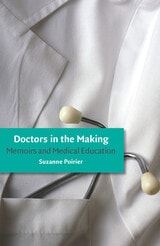
Doctors in the Making
Memoirs and Medical EducationSuzanne Poirier
University of Iowa Press, 2009
Through close readings of these accounts, Poirier draws attention to the complex nature of power in medicine, the rewards and hazards of professional and interpersonal relationships in all aspects of physicians’ lives, and the benefits to and threats from the vulnerability that medical students and residents experience.
Although most students emerge from medical education as well-trained, well-prepared professionals, few of them will claim that they survived the process unscathed. The authors of these accounts document—for better or for worse—the ways in which they have been changed. Based on their stories, Poirier recommends that medical education should make room for the central importance of personal relationships, the profound sense of isolation and powerlessness that can threaten the wellbeing of patients and physicians alike, and the physical and moral vulnerability that are part of every physician’s life.
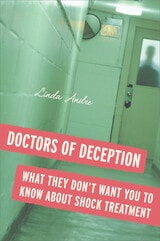
Doctors of Deception
What They Don't Want You to Know about Shock TreatmentAndre, Linda
Rutgers University Press, 2009
Doctors of Deception is a revealing history of ECT (or shock therapy) in the United States, told here for the first time. Through the examination of court records, medical data, FDA reports, industry claims, her own experience as a patient of shock therapy, and the stories of others, Andre exposes tactics used by the industry to promote ECT as a responsible treatment when all the scientific evidence suggested otherwise.
As early as the 1940s, scientific literature began reporting incidences of human and animal brain damage resulting from ECT. Despite practitioner modifications, deleterious effects on memory and cognition persisted. Rather than discontinue use of ECT, the $5-billion-per-year shock industry crafted a public relations campaign to improve ECT’s image. During the 1970s and 1980s, psychiatry’s PR efforts misled the government, the public, and the media into believing that ECT had made a comeback and was safe.
Andre carefully intertwines stories of ECT survivors and activists with legal, ethical, and scientific arguments to address issues of patient rights and psychiatric treatment. Echoing current debates about the use of psychopharmaceutical interventions shown to have debilitating side-effects, she candidly presents ECT as a problematic therapy demanding greater scrutiny, tighter control, and full disclosure about its long-term cognitive effects.
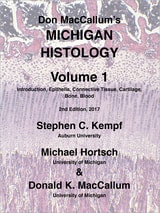
Don MacCallum's Michigan Histology Vol. 1
Stephen C. Kempf
Michigan Publishing Services, 2017
• 26 chapters covering all basic tissues and major organs/organ systems of human histology
• More than 1100 high quality histological images on 724 pages
• 236 image-based multiple choice review questions
• Volume 1: Introduction, Epithelia, Connective Tissue, Cartilage, Bone, Blood
• Volume 2: Muscle, Nervous System, Eye, Ear, Circulatory System, Lymphatic System
• Volume 3: Respiratory System, Integument, Oral Glands, Oral Cavity, Gastrointestinal Tract, Liver, Gall Bladder & Pancreas
• Volume 4: Endocrine Organs, Urinary System, Male Reproductive System, Female Reproductive System, Mammary Gland
“Don MacCallum’s Michigan Histology” is complemented by the Michigan Histology Virtual Slide Collection, which can be accessed for free via the Internet at http://histology.sites.uofmhosting.net
Volume 1 of this 4 Volume lab manual set is concerned with the Histology of human tissues. It covers Epithelia, General Connective Tissue, Cartilage, Bone and Blood with a descriptive text and pictures.
Don MacCallum's Michigan Histology Vol. 2
Stephen C. Kempf
Michigan Publishing Services, 2017
• 26 chapters covering all basic tissues and major organs/organ systems of human histology
• More than 1100 high quality histological images on 724 pages
• 236 image-based multiple choice review questions
• Volume 1: Introduction, Epithelia, Connective Tissue, Cartilage, Bone, Blood
• Volume 2: Muscle, Nervous System, Eye, Ear, Circulatory System, Lymphatic System
• Volume 3: Respiratory System, Integument, Oral Glands, Oral Cavity, Gastrointestinal Tract, Liver, Gall Bladder & Pancreas
• Volume 4: Endocrine Organs, Urinary System, Male Reproductive System, Female Reproductive System, Mammary Gland
“Don MacCallum’s Michigan Histology” is complemented by the Michigan Histology Virtual Slide Collection, which can be accessed for free via the Internet at http://histology.sites.uofmhosting.net
Volume 2 of this 4 Volume lab manual set is concerned with the Histology of human tissues. It covers Muscle, Nervous System, Eye, Ear, Circulatory System, and Lymphatic System with a descriptive text and pictures.
Don MacCallum's Michigan Histology Vol. 3
Stephen C. Kempf
Michigan Publishing Services, 2017
• 26 chapters covering all basic tissues and major organs/organ systems of human histology
• More than 1100 high quality histological images on 724 pages
• 236 image-based multiple choice review questions
• Volume 1: Introduction, Epithelia, Connective Tissue, Cartilage, Bone, Blood
• Volume 2: Muscle, Nervous System, Eye, Ear, Circulatory System, Lymphatic System
• Volume 3: Respiratory System, Integument, Oral Glands, Oral Cavity, Gastrointestinal Tract, Liver, Gall Bladder & Pancreas
• Volume 4: Endocrine Organs, Urinary System, Male Reproductive System, Female Reproductive System, Mammary Gland
“Don MacCallum’s Michigan Histology” is complemented by the Michigan Histology Virtual Slide Collection, which can be accessed for free via the Internet at http://histology.sites.uofmhosting.net
Volume 3 of this 4 Volume lab manual set is concerned with the Histology of human tissues. It covers Respiratory System, Integument, Oral Glands, Oral Cavity, Gastrointestinal Tract, Liver, Gall Bladder, and Pancreas with a descriptive text and pictures.

Don MacCallum's Michigan Histology Vol. 4
Stephen C. Kempf
Michigan Publishing Services, 2017
• 26 chapters covering all basic tissues and major organs/organ systems of human histology
• More than 1100 high quality histological images on 724 pages
• 236 image-based multiple choice review questions
• Volume 1: Introduction, Epithelia, Connective Tissue, Cartilage, Bone, Blood
• Volume 2: Muscle, Nervous System, Eye, Ear, Circulatory System, Lymphatic System
• Volume 3: Respiratory System, Integument, Oral Glands, Oral Cavity, Gastrointestinal Tract, Liver, Gall Bladder & Pancreas
• Volume 4: Endocrine Organs, Urinary System, Male Reproductive System, Female Reproductive System, Mammary Gland
“Don MacCallum’s Michigan Histology” is complemented by the Michigan Histology Virtual Slide Collection, which can be accessed for free via the Internet at http://histology.sites.uofmhosting.net
Volume 4 of this 4 Volume lab manual set is concerned with the Histology of human tissues. It covers Endocrine Organs, Urinary System, Male Reproductive System, Female Reproductive System, and the Mammary Gland with a descriptive text and pictures.
Don't Send Me Flowers When I'm Dead
Voices of Rural ElderlyEva J. Salber
Duke University Press, 1983
"They are men and women, blacks and whites, Dr. Salber's teachers. The North Carolinians in this book have no trouble giving us a good measure of open-eyed social comment, not to mention intelligent self-scrutiny and astute moral reflection. These pages glow with all that. . . . This book represents an intense and unyielding ethical as well as medical and literary commitment by a most impressive physician."—Robert Coles

Don’t Kill Your Baby
Public Health and the Decline of Breastfeeding in the Nineteenth and Twentieth CenturiesJacqueline H. Wolf
The Ohio State University Press, 2001
Dr. Golem
How to Think about MedicineHarry Collins and Trevor Pinch
University of Chicago Press, 2005
Dr. Golem explores some of the mysteries and complexities of medicine while untangling the inherent conundrums of scientific research and highlighting its vagaries. Driven by the question of what to do in the face of the fallibility of medicine, Dr. Golem encourages a more inquisitive attitude toward the explanations and accounts offered by medical science. In eight chapters devoted to case studies of modern medicine, Collins and Pinch consider the prevalence of tonsillectomies, the placebo effect and randomized control trials, bogus doctors, CPR, the efficacy of Vitamin C in fighting cancer, chronic fatigue syndrome, AIDS cures, and vaccination. They also examine the tension between the conflicting faces of medicine: medicine as science versus medicine as a source of succor; the interests of an individual versus the interests of a group; and the benefits in the short term versus success rates in the long term. Throughout, Collins and Pinch remind readers that medical science is an economic as well as a social consideration, encapsulated for the authors in the timeless struggle to balance the good health of the many—with vaccinations, for instance—with the good health of a few—those who have adverse reactions to the vaccine.
In an age when the deaths of research subjects, the early termination of clinical trials, and the research guidelines for stem cells are front-page news, Dr. Golem is a timely analysis of the limitations of medicine that never loses sight of its strengths.
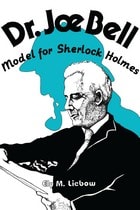
Dr. Joe Bell
Model for Sherlock HolmesEly M. Liebow
University of Wisconsin Press, 1982
A distinguished physician and professor of medicine at Edinburgh University, and a forensic expert for the British Crown, Joseph Bell was well known for his remarkable powers of observation and deduction. In what would become true Sherlockian fashion, he had the ability to deduce facts about his patients from otherwise unremarkable details. In one instance recounted by Arthur Conan Doyle himself—and similar to Sherlock Holmes's own observations in "The Greek Interpreter"—Bell took little time to determine that one of his patients had recently served in the army, a non-commissioned officer discharged from his Highland regiment stationed in Barbados:
“The man was a respectful man, but did not remove his hat. They do not in the army, but he would have learned civilian ways had he been long discharged. He has an air of authority and he is obviously Scottish. As to Barbados, his complaint is elephantitis, which is West Indian and not British.”
Based on extensive research into the life of Bell and including tantalizing accounts of the connections between Bell and Conan Doyle, this biography is required reading for anyone interested in Victorian medicine, in the history of detective fiction, and in Sherlock Holmes and Dr. Watson.
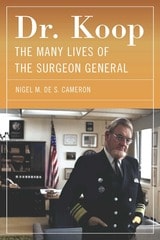
Dr. Koop
The Many Lives of the Surgeon GeneralNigel M. de S. Cameron
University of Massachusetts Press, 2025
The first full biography of Reagan's famous Surgeon General, who put science before politics—cutting smoking by 25%, leading the fight against AIDS, and shocking both liberals and conservatives on abortion.
When Ronald Reagan chose C. Everett Koop to be Surgeon General of the United States in 1981, liberal politicians, women's groups, and even the public health community opposed the nomination because of his conservative social views and strong anti-abortion beliefs. By the time he left office in 1989, the same people who had vilified him as “Dr. Kook” were singing his praises, and many conservative politicians and activists who had championed his nomination were criticizing him as a traitor. He had also become “the only surgeon general [who was] a household name,” according to the Associated Press, because of his ubiquitous media exposure around the HIV/AIDS crisis, his unique look, and his savvy with the press. How had Koop remade himself and this once major government office, which sounded grand but in the 1960s had been stripped to a minor advisory role?
As Nigel M. de S. Cameron shows, Koop was, above all, guided in his decisions by his unwavering physician’s commitment to saving lives. Even in the face of political pressures and what many expected to be his personal beliefs, he focused on science and public health. On smoking, abortion, and AIDS he openly defied Republican politicians and alienated New Right conservatives because his reading of the science did not support their ideologies. It was this adherence to science, health, and office that led him to refuse to campaign on abortion, seek compromise on the disabled “Baby Doe” case, relentlessly go after Big Tobacco, and finally reach out to the gay community as AIDS and fear of AIDS exploded. Both supporters and detractors consistently misjudged him.
This first full biography of Koop draws on thousands of documents and hundreds of interviews with family, friends, and colleagues to tell the story of the precocious boy from Brooklyn who was already the world’s most celebrated pediatric surgeon when he became Surgeon General and one of the most recognizable public figures in late-20th century America. Koop remains a sterling example—to both left and right—of how public officials should conduct themselves.
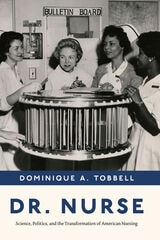
Dr. Nurse
Science, Politics, and the Transformation of American NursingDominique A. Tobbell
University of Chicago Press, 2022
Nurses represent the largest segment of the U.S. health care workforce and spend significantly more time with patients than any other member of the health care team. Dr. Nurse probes their history to examine major changes that have taken place in American health care in the second half of the twentieth century. The book reveals how federal and state health and higher education policies shaped education within health professions after World War II.
Starting in the 1950s, academic nurses sought to construct a science of nursing—distinct from that of the related biomedical or behavioral sciences—that would provide the basis for nursing practice. Their efforts transformed nursing’s labor into a valuable site of knowledge production and proved how the application of their knowledge was integral to improving patient outcomes. Exploring the knowledge claims, strategies, and politics involved as academic nurses negotiated their roles and nursing’s future, Dr. Nurse highlights how state-supported health centers have profoundly shaped nursing education and health care delivery.
Dr. Nurse
Science, Politics, and the Transformation of American NursingDominique A. Tobbell
University of Chicago Press, 2022
An analysis of the efforts of American nurses to establish nursing as an academic discipline and nurses as valued researchers in the decades after World War II.
Nurses represent the largest segment of the U.S. health care workforce and spend significantly more time with patients than any other member of the health care team. Dr. Nurse probes their history to examine major changes that have taken place in American health care in the second half of the twentieth century. The book reveals how federal and state health and higher education policies shaped education within health professions after World War II.
Starting in the 1950s, academic nurses sought to construct a science of nursing—distinct from that of the related biomedical or behavioral sciences—that would provide the basis for nursing practice. Their efforts transformed nursing’s labor into a valuable site of knowledge production and proved how the application of their knowledge was integral to improving patient outcomes. Exploring the knowledge claims, strategies, and politics involved as academic nurses negotiated their roles and nursing’s future, Dr. Nurse highlights how state-supported health centers have profoundly shaped nursing education and health care delivery.
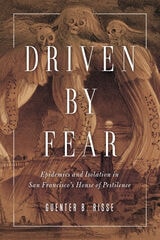
Driven by Fear
Epidemics and Isolation in San Francisco's House of PestilenceGuenter B. Risse
University of Illinois Press, 2015
Filling a significant gap in contemporary scholarship, Driven by Fear looks at the past to offer critical lessons for our age of bioterror threats and emerging infectious diseases.
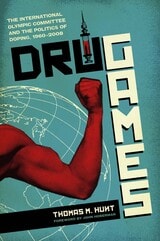
Drug Games
The International Olympic Committee and the Politics of Doping, 1960–2008By Thomas M. Hunt
University of Texas Press, 2011
On August 26, 1960, twenty-three-year-old Danish cyclist Knud Jensen, competing in that year's Rome Olympic Games, suddenly fell from his bike and fractured his skull. His death hours later led to rumors that performance-enhancing drugs were in his system. Though certainly not the first instance of doping in the Olympic Games, Jensen's death serves as the starting point for Thomas M. Hunt's thoroughly researched, chronological history of the modern relationship of doping to the Olympics. Utilizing concepts derived from international relations theory, diplomatic history, and administrative law, this work connects the issue to global political relations.
During the Cold War, national governments had little reason to support effective anti-doping controls in the Olympics. Both the United States and the Soviet Union conceptualized power in sport as a means of impressing both friends and rivals abroad. The resulting medals race motivated nations on both sides of the Iron Curtain to allow drug regulatory powers to remain with private sport authorities. Given the costs involved in testing and the repercussions of drug scandals, these authorities tried to avoid the issue whenever possible. But toward the end of the Cold War, governments became more involved in the issue of testing. Having historically been a combined scientific, ethical, and political dilemma, obstacles to the elimination of doping in the Olympics are becoming less restrained by political inertia.
Drugs for Life
How Pharmaceutical Companies Define Our HealthJoseph Dumit
Duke University Press, 2012
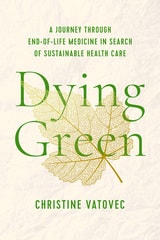
Dying Green
A Journey through End-of-Life Medicine in Search of Sustainable Health CareChristine Vatovec
Rutgers University Press, 2023
In Dying Green, award-winning educator Christine Vatovec offers an engaging study that asks us to consider the broader environmental sustainability of health care. Through a comparative analysis of the care provided to terminally ill patients in a conventional cancer ward, a palliative care unit, and an acute-care hospice facility, she shows how decisions made at a patient’s bedside govern the environmental footprint of the healthcare industry. Likewise, Dying Green offers insights on the many opportunities that exist for reducing the ecological impacts of medical practices in general, while also enhancing care for the dying in particular. By envisioning a more sustainable approach to care, this book offers a way forward that is better for both patients and the planet.

Dying to Count
Post-Abortion Care and Global Reproductive Health Politics in SenegalSiri Suh
Rutgers University Press, 2021