Results by title
1210 books match the query 'Mexico' and 55 start with d
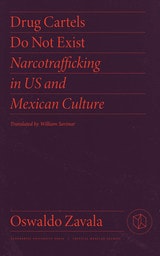
Drug Cartels Do Not Exist
Narcotrafficking in US and Mexican CultureOswaldo Zavala
Vanderbilt University Press, 2022
Yet the realities of violence in Mexico and along the border are obscured by the books, films, and TV series we consume. In truth, works like Sicario, The Queen of the South, and Narcos hide Mexico's political realities. Alongside these examples, Zavala discusses Charles Bowden, 2666 by Roberto Bolaño, and other important Latin American writers as examples of those who do capture the realities of the drug war.
Translated into English by William Savinar, Drug Cartels Do Not Exist will be useful for journalists, political scientists, philosophers, and writers of any kind who wish to break down the constructed barriers—physical and mental—created by those in power around the reality of the Mexican drug trade.
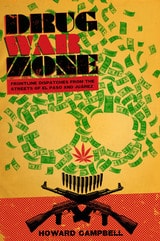
Drug War Zone
Frontline Dispatches from the Streets of El Paso and JuárezBy Howard Campbell
University of Texas Press, 2009
Winner, Southwest Book Award, Border Regional Library Association, 2011
Thousands of people die in drug-related violence every year in Mexico. Ciudad Juárez, Chihuahua, adjacent to El Paso, Texas, has become the most violent city in the Mexican drug war. Much of the cocaine, marijuana, and methamphetamine consumed in the United States is imported across the Mexican border, making El Paso/Juárez one of the major drug-trafficking venues in the world.
In this anthropological study of drug trafficking and anti-drug law enforcement efforts on the U.S.-Mexico border, Howard Campbell uses an ethnographic perspective to chronicle the recent Mexican drug war, focusing especially on people and events in the El Paso/Juárez area. It is the first social science study of the violent drug war that is tearing Mexico apart.
Based on deep access to the drug-smuggling world, this study presents the drug war through the eyes and lives of direct participants. Half of the book consists of oral histories from drug traffickers, and the other half from law enforcement officials. There is much journalistic coverage of the drug war, but very seldom are the lived experiences of traffickers and "narcs" presented in such vivid detail. In addition to providing an up-close, personal view of the drug-trafficking world, Campbell explains and analyzes the functioning of drug cartels, the corruption that facilitates drug trafficking, the strategies of smugglers and anti-narcotics officials, and the perilous culture of drug trafficking that Campbell refers to as the "Drug War Zone."
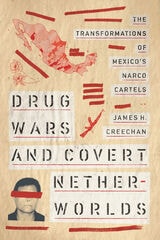
Drug Wars and Covert Netherworlds
The Transformations of Mexico's Narco CartelsJames H. Creechan
University of Arizona Press, 2021
In Drug Wars and Covert Netherworlds sociologist and criminologist James H. Creechan draws on decades of research to paint a much more nuanced picture of the transformation of Mexico’s narco cartels. Creechan details narco cartel history, focusing on the decades since Richard Nixon declared the War on Drugs. With sobering detail, Creechan unravels a web of government dependence, legitimate enterprises, covert connections, and violent infighting. He details how drug smuggling organizations have grown into powerful criminal mafias with the complicit involvement of powerful figures in civil society to create covert netherworlds.
Mexico is at a moment of change—a country on the verge of transition or perdition. It can only move forward by examining its history of narco-connections spun and re-spun over the last fifty years.
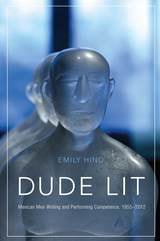
Dude Lit
Mexican Men Writing and Performing Competence, 1955–2012Emily Hind
University of Arizona Press, 2019
The makings of the “best” writers have to do with superficial aspects, like conformist wardrobes and unsmiling expressions, and more complex techniques, such as friendship networks, prizewinners who become judges, dropouts who become teachers, and the key tactic of being allowed to shift roles from rule maker (the civilizado) to rule breaker (the bárbaro). Certain writing habits also predict success, with the “high and hard” category reserved for men’s writing and even film directing. In both film and literature, critically respected artwork by men tends to rely on obscenity interpreted as originality, negative topics viewed as serious, and coolly inarticulate narratives about bullying understood as maximum literary achievement.
To build the case regarding “rebellion as conformity,” Dude Lit contemplates a wide set of examples while always returning to three figures, each born some two decades apart from the immediate predecessor: Juan Rulfo (with Pedro Páramo), José Emilio Pacheco (with Las batallas en el desierto), and Guillermo Fadanelli (with Mis mujeres muertas, as well as the range of his publications). Why do we believe Mexican men are competent performers of the role of intellectual? Dude Lit answers this question through a creative intersection of sources. Drawing on interviews, archival materials, and critical readings, this provocative book changes the conversation on literature and gendered performance.

Dune Country
A Naturalist's Look at the Plant Life of Southwestern Sand DunesJanice Emily Bowers
University of Arizona Press, 1998