Results by title
2817 books match the query 'Nature' and 95 start with d
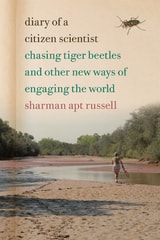
Diary of a Citizen Scientist
Chasing Tiger Beetles and Other New Ways of Engaging the WorldSharman Apt-Russell
Oregon State University Press, 2014
In the exploding world of citizen science, hundreds of thousands of volunteers are monitoring climate change, tracking bird migrations, finding stardust for NASA, and excavating mastodons. The sheer number of citizen scientists, combined with new technology, has begun to shape how research gets done. Non-professionals become acknowledged experts: dentists turn into astronomers and accountants into botanists.
Diary of a Citizen Scientist is a timely exploration of the phenomenon of citizen science, told through the lens of nature writer Sharman Apt Russell’s yearlong study of a little-known species, the Western red-bellied tiger beetle. In a voice both humorous and lyrical, Russell recounts her persistent and joyful tracking of an insect she calls “charismatic,” “elegant,” and “fierce.” Patrolling the Gila River in southwestern New Mexico, collector’s net in hand, she negotiates the realities of climate change even as she celebrates the beauty of a still-wild and rural landscape.
Russell’s self-awareness—of her occasionally-misplaced confidence, her quest to fill in “that blank spot on the map of tiger beetles,” and her desire to become newly engaged in her life—creates a portrait not only of the tiger beetle she tracks, but of the mindset behind self-driven scientific inquiry. Falling in love with the diversity of citizen science, she participates in crowdsourcing programs that range from cataloguing galaxies to monitoring the phenology of native plants, applauds the growing role of citizen science in environmental activism, and marvels at the profusion of projects around the world.
Diary of a Citizen Scientist offers its readers a glimpse into the transformative properties of citizen science—and documents the transformation of the field as a whole.
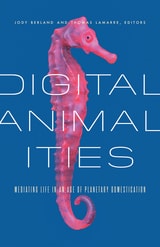
Digital Animalities
Mediating Life in an Age of Planetary DomesticationJody Berland
University of Minnesota Press, 2026
Exploring where animality meets digital media in the shadow of climate crisis
Digital Animalities is a groundbreaking investigation into the entanglements of animal life, media infrastructures, and digital technologies in a time of environmental precarity and digital saturation. Revealing the digital as a dynamic site where animal agency and technological systems collide, the contributors eschew simplistic binaries to emphasize complex mediations between animals and digital media.
From wildlife camera traps and virtual zoos to gaming environments and animation tools, these essays explore how animals are captured, played with, and consumed through digital technologies, elaborating their agency in these mediations of ecological and biopolitical processes. Rethinking animality as a fluid and contested terrain shaped by climate change, extinction pressures, and emerging ecopolitical paradigms, Digital Animalities shifts how we consider the impact of the digital on sentient lives and their futures.
Contributors: Giovanni Aloi, Art Institute of Chicago; Etienne S. Benson, Max Planck Institute for the History of Science, Berlin; Sarah Bezan, U College Cork; Michael Fisch, U of Chicago; Kate Galloway, Rensselaer Polytechnic Institute; Christine L. Marran, U of Minnesota; Brian McCormack; Jonathan Osborn; Hannah Tollefson, U of Toronto Scarborough; Tom Tyler, U of Leeds; Paul Wells, Loughborough U; Hang Wu.
Retail e-book files for this title are screen-reader friendly with images accompanied by short alt text and/or extended descriptions.
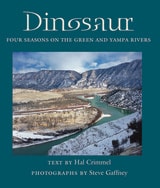
Dinosaur
Four Seasons on the Green and Yampa RiversHal Crimmel
University of Arizona Press, 2007
Gaffney’s reflective photographs emphasize the rough perfection of the landscape; Crimmel’s pensive meditations and his river expertise combine to create a rare point of view, one that ventures into places the guidebooks don’t go. But this narrative is more than tribute—it is a reminder of the fragile nature of desert places. Crimmel lyrically combines his descriptions with an examination of the complex issues relevant to managing public lands—invasive species, tourism, dams, endangered flora and fauna—to address the contradictions inherent in “managed wilderness.” Over four seasons and multiple trips, Crimmel and Gaffney have captured the rivers’ sense of place, creating a portrait of a dazzling high desert landscape that needs to be appreciated and protected.
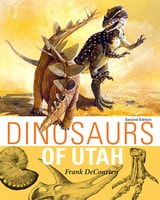
Dinosaurs Of Utah
Second EditionFrank DeCourten
University of Utah Press, 2013
Dinosaurs and Other Ancient Animals of Big Bend
Cindi Sirois Collins and Asher Elbein
University of Texas Press, 2023
A time-traveling field guide to the ancient version of Big Bend National Park.
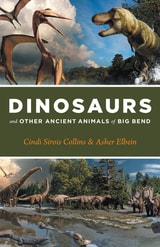
The sheer beauty of Big Bend National Park, along the shores of the Rio Grande in west Texas, never fails to astonish. Yet what lies beneath this natural treasure may be even more extraordinary than what meets the eye. Hidden in the rocks of Big Bend are the remains of giants: toothy sea lizards, enormous flying reptiles, and dinosaurs.
Dinosaurs and Other Ancient Animals of Big Bend is a field guide to what once was. Inspired by the latest research, Cindi Sirois Collins and Asher Elbein imagine what it was like to walk among the plants and animals whose fossil remains tell the story of evolution and geological transformation in this singular landscape. We glimpse the drama of Big Bend’s rugged landscape in creation—the desert’s emergence from retreating oceans and volcanic eruptions. Immersive vignettes introduce dinosaurs, giant fish, and saber-toothed cats. And the history of discovery in the park proves a gripping tale, as paleontologists sifted major scientific insights from the soils, rocks, and riverbeds. Complete with vivid illustrations, this is a wholly original sensory and narrative experience that will deepen any reader’s knowledge and sense of wonder.
Dirt
A Love StoryEdited by Barbara Richardson
University Press of New England, 2015
Disability, the Environment, and Colonialism
Edited by Tatiana Konrad
Temple University Press, 2024
The editor and contributors provide a careful analysis of the intersection of disability, the environment, and colonialism to understand issues such as eco-ableism, environmental degradation, homogenized approaches to environmentalism, and climate change. They also look at the body as a site of colonial oppression and environmental exploitation.
Contributors: Holly Caldwell, Matthew J. C. Cella, John Gulledge, Memona Hossain, Nancy J. Hirschmann, Iain Hutchison, Andrew B. Jenks, Suha Kudsieh, Gordon M. Sayre, Jessica A. Schwartz, Anna Stenning, Aubrey Tang, Alice Wexler, and the editor.

Disaster Anarchy
Mutual Aid and Radical ActionRhiannon
Pluto Press, 2022
As disasters become more commonplace, we need to think of alternatives for relief.
'Commendable - a book that prepares us to think about and react to system failures' - Peter Gelderloos
Anarchists have been central in helping communities ravaged by disasters, stepping in when governments wash their hands of the victims. Looking at Hurricane Sandy, Covid-19, and the social movements that mobilized relief in their wake, Disaster Anarchy is an inspiring and alarming book about collective solidarity in an increasingly dangerous world.
As climate change and neoliberalism converge, mutual aid networks, grassroots direct action, occupations, and brigades have sprung up in response to this crisis with considerable success. Occupy Sandy was widely acknowledged to have organized relief more effectively than federal agencies or NGOs, and following Covid-19 the term ‘mutual aid’ entered common parlance.
However, anarchist-inspired relief has not gone unnoticed by government agencies. Their responses include surveillance and co-option, extending at times to violent repression involving police brutality. Arguing that disaster anarchy is one of the most important political phenomena to emerge in the 21st century, Rhiannon Firth shows through her research on and within these movements that anarchist theory and practice are needed to protect ourselves from the disasters of our unequal and destructive economic system.
Discoveries in the Garden
James B. Nardi
University of Chicago Press, 2018
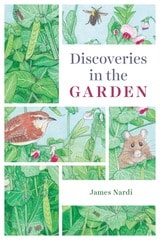
Leading us through the garden gate, Nardi reveals the extraordinary daily lives and life cycles of a quick-growing, widely available, and very accommodating group of study subjects: garden plants. Through close observations and simple experiments we all can replicate at home, we learn the hidden stories behind how these plants grow, flower, set seeds, and produce fruits, as well as the vital role dead and decomposing plants play in nourishing the soil. From pollinators to parasites, plant calisthenics to the wisdom of weeds, Nardi’s tale also introduces us to our fellow animal and microbial gardeners, the community of creatures both macro- and microscopic with whom we share our raised beds. Featuring a copse of original, informative illustrations that are as lush as the garden plants themselves, Discoveries in the Garden is an enlightening romp through the natural history, science, beauty, and wonder of these essential green places.
Diseases Have No Eyes
Valley Fever and Environmental Health JusticeSarah M. Rios
Temple University Press, 2026
Diseases Have No Eyes investigates how communities in Central Valley, California deal with Valley Fever, a painful illness caused by a soil fungus. The airborne disease’s symptoms can last from two months to a patient’s lifetime and may be fatal. Nearly a third of the national cases are reported in California, where those infected are disproportionately farmworkers and people incarcerated in the region. Poverty, pollution, and prison expose these groups to cumulative environmental and health risks that deny Valley Fever patients adequate medical treatment.
Sarah M. Rios examines how these populations face racial health disparities and develop strategies of care. She connects environmental justice activists as well as prison advocates and abolitionists who mobilize protests and issue calls to action to the past and ongoing efforts for medical autonomy and healthy communities. Diseases Have No Eyes emphasizes that vulnerable groups have developed an expertise and understanding of Valley Fever out of necessity. In the process, these community members offer an alternative public health response that extends beyond the individual body.
In the series Insubordinate Spaces
Displaying Death and Animating Life
Human-Animal Relations in Art, Science, and Everyday LifeJane C. Desmond
University of Chicago Press, 2016
Desmond, a pioneer in the field of animal studies, builds the book on a number of case studies. She conducts research on-site at major museums, taxidermy conventions, pet cemeteries, and even at a professional conference for writers of obituaries. She goes behind the scenes at zoos, wildlife clinics, and meetings of pet cemetery professionals. We journey with her as she meets Kanzi, the bonobo artist, and a host of other animal-artists—all of whom are preparing their artwork for auction. Throughout, Desmond moves from a consideration of the visual display of unindividuated animals, to mourning for known animals, and finally to the marketing of artwork by individual animals. The first book in the new Animal Lives series, Displaying Death and Animating Life is a landmark study, bridging disciplines and reaching across divisions from the humanities and social sciences to chart new territories of investigation.
Distant Fires
Duluth to Hudson BayScott Anderson
University of Minnesota Press, 2008
"Distant Fires, a true-life adventure, describes a 1,700-mile canoe trip from Duluth to York Factory on Hudson Bay. Anderson and a companion retraced the paddles taken by Eric Sevareid and a companion almost sixty years earlier. Their trials and tribulations, plus Anderson’s sense of humor, make the trip fun in book form. Pen-and-ink illustrations are by noted Minnesota wildlife artist Les Kouba." —Minneapolis Star Tribune
"Distant Fires is a voyage of discovery. Scott Anderson is an inquisitive traveler, and when he sees something that piques his interest, he stops for a chat. He also has a marvelous eye for the natural world that surrounds him in his summerlong journey. He is a natural-born writer." —Duluth News Tribune
"Some of [Anderson’s] phrasing is very happy indeed: ‘the resting place of the rivers.’ I wish I had written that." —Eric Sevareid
Distracted by Alabama
Tangled Threads of Natural History, Local History, and FolkloreJames Seay Brown Jr.
University of Alabama Press, 2022
Where rivers, railroads, and redhorse fish tell the story of Alabama’s soul.
A gateway to Alabama for the omnivorous mind, Distracted by Alabama is a collection of twelve captivating essays about Alabama and the South by Samford University writer and scholar Jim Brown, a former president of the Alabama Folklife Association.
During his decades living and teaching in Alabama, Brown followed his curiosity down myriad pathways about Alabama and the region, including the state’s majestic landscape, plants and animals found nowhere else, history, and rich folkways. In the tapestry of Alabama culture, Brown traces the threads of Native American, African slave, and European settler influences, woven over the centuries into novel patterns that surprise and fascinate.
Writing in the voice of a learned companion, Brown reveals insights and stories about unforgettable facets of Alabama culture, such as Sacred Harp singers and African American railroad callers, the use of handmade snares and stationary fishtraps to catch river redhorse and freshwater drum, white oak basketmaking and herbal medicine traditions, the evolution of the single-pen log cabin into the impressive two-story I-house, and a wealth of other engrossing stories.
An instant classic, Distracted by Alabama is a keepsake that readers who love, visit, or are curious about Alabama and Southern culture will return to again and again.

Distribution of Illinois Vascular Plants
Robert H. Mohlenbrock and Douglas M. Ladd
Southern Illinois University Press, 1978
There are 251 pages of distribution maps included in this book. The plants are arranged alphabetically by genus, and under each genus alphabetically by species. The nomenclature follows Mohlenbrock, Guide to the Vascular Flora of Illinois (1975).
In addition, a list of synonyms applied to Illinois taxa by Fernald (1950), Gleason (1952), and Jones (1963) follows the distribution maps.
Finally, in order to gain an understanding of relationships of the plants in the Illinois flora, all 3,001 taxa are arranged in a phylogenetic sequence at the end of the book.
Diverting the Gila
The Pima Indians and the Florence-Casa Grande Project, 1916–1928David H. DeJong
University of Arizona Press, 2021
Diverting the Gila explores the complex web of tension, distrust, and political maneuvering to divide and divert the scarce waters of the Gila River. Residents of Florence, Casa Grande, and the Pima Reservation fought for vital access to water rights. Into this political foray stepped Arizona’s freshman congressman Carl Hayden, who not only united the farming communities but also used Pima water deprivation to the advantage of Florence-Casa Grande and Upper Gila Valley growers. The result was the federal Florence-Casa Grande Project that, as legislated, was intended to benefit Pima growers on the Gila River Indian Reservation first and foremost. As was often the case in the West, well-heeled, nontribal political interests manipulated the laws at the expense of the Indigenous community.
Diverting the Gila is the sequel to David H. DeJong’s 2009 Stealing the Gila, and it continues to tell the story of the forerunner to the San Carlos Irrigation Project and the Gila River Indian Community’s struggle to regain access to their water.
Divided Waters
Bridging the U.S.-Mexico BorderHelen Ingram, Nancy K. Laney, and David M. Gillilan
University of Arizona Press, 1995
Do Bats Drink Blood?
Fascinating Answers to Questions about BatsSchmidt-French, Barbara A
Rutgers University Press, 2009
Highly beneficial animals, bats are critical to global ecological, economic, and public health. Do Bats Drink Blood? illuminates the role bats play in the ecosystem, their complex social behavior, and how they glide through the night sky using their acute hearing: echolocation skills that have helped in the development of navigational aids for the blind. Personal in voice with the perspective of a skilled bat researcher, this book explores wide-ranging topics as well as common questions people have about bats, providing a trove of fascinating facts.
Featuring rare color and black-and-white photographs, including some by renowned biologist, photographer, and author Merlin Tuttle, Do Bats Drink Blood? provides a comprehensive resource for general readers, students, teachers, zoo and museum enthusiasts, farmers and orchardists, or anyone who may encounter or be fascinated by these extraordinary animals.
Do Butterflies Bite?
Fascinating Answers to Questions about Butterflies and MothsDavies, Hazel
Rutgers University Press, 2008
Every year, thousands of people visit butterfly conservatories to stand in quiet awe of the simple beauty displayed by these magical creatures. Hazel Davies and Carol A. Butler capture the sense of wonderment and curiosity experienced by adults and children alike in this book about butterflies and their taxonomic cousins, the moths and the skippers. Beautifully illustrated with color and black and white photographs, and drawings by renowned artist William Howe, this book is an essential resource for parents, teachers, students, or anyone who has ever been entranced by these fascinating, fluttering creatures.
Covering everything from their basic biology to their complex behaviors at every stage of life to issues in butterfly conservation, Davies and Butler explore wide-ranging topics and supply a trove of intriguing facts. You'll find tips on how to attract more butterflies to your garden, how to photograph them, and even how to raise them in your own home. Arranged in a question and answer format, the book provides detailed information written in an accessible style that brings to life the science and natural history of these insects. In addition, sidebars throughout the book detail an assortment of butterfly trivia, while extensive appendices direct you to organizations, web sites, and more than 200 indoor and outdoor public exhibits, where you can learn more or connect with other lepidopterophiles (butterfly lovers).
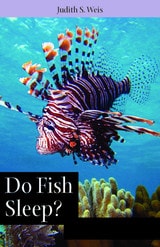
Do Fish Sleep?
Fascinating Answers to Questions about FishesWeis, Judith S
Rutgers University Press, 2011
From the fifty-one-foot whale shark Rhincodon typus to a less-than-one-half-inch fish in the minnow family--the tiny Paedocypris progenetica--fish certainly carry a lot of weight . . . or do they?
A fish's heft in water may vary, but these diverse aquatic animals certainly carry a lot of weight in our ecosystems and environment. From freshwater to ocean habitats, Judith S. Weis offers a fascinating look at these deceptively simple creatures. Fishes may appear to live a dull existence, but appearances change once we understand more about how they survive. These wonders actually possess attributes that would make us superpowers--they can change color, sex, produce light and electricity, regenerate injured fins, prevent themselves from sinking, and some can even walk on land.
Do Fish Sleep? is organized in an easy-to-read and accessible question-and-answer format, filled with more than 55 photographs and over 100 interesting facts from fish biology basics to the importance of preserving and restoring fish diversity and healthy populations. A captivating read for fish enthusiasts of all ages--naturalists, environmentalists, aquarists, scuba divers, and students--this is also the perfect primer for those just about to get their feet wet. Dive in!
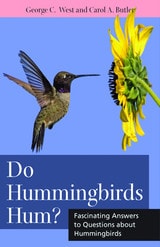
Do Hummingbirds Hum?
Fascinating Answers to Questions about HummingbirdsWest, George C
Rutgers University Press, 2010
These tiny, colorful birds have long fascinated birders, amateur naturalists, and gardeners. But, do they really hum?
In Do Hummingbirds Hum? George C. West, who has studied and banded over 13,500 hummingbirds in Arizona, and Carol A. Butler provide an overview of hummingbird biology for the general reader, and more detailed discussions of their morphology and behavior for those who want to fly beyond the basics. Enriched with beautiful and rare photography, including a section in vivid color, this engaging question and answer guide offers readers a wide range of information about these glorious pollinators as well as tips for attracting, photographing, and observing hummingbirds in the wild or in captivity.
Does the Earth Care?
Indifference, Providence, and Provisional EcologyMick Smith
University of Minnesota Press, 2022
Rethinking our relationship with Earth in a time of environmental emergency
The world is changing. Progress no longer has a future but any earlier sense of Earth as “providential” seems of merely historical interest. The apparent absence of Earthly solicitude is a symptom and consequence of these successive Western modes of engagement with the Earth, now exemplified in global capitalism. Within these constructs, Earth can only appear as constitutively indifferent to the fate of all its inhabitants. The “provisional ecology” outlined in Does the Earth Care?—drawing on a variety of literary and philosophical sources from Richard Jefferies and Robert Macfarlane to Martin Heidegger and Gaia theory—fundamentally challenges that assumption, while offering an Earthly alternative to either cold realism or alienated despair in the face of impending ecological disaster.
Forerunners is a thought-in-process series of breakthrough digital works. Written between fresh ideas and finished books, Forerunners draws on scholarly work initiated in notable blogs, social media, conference plenaries, journal articles, and the synergy of academic exchange. This is gray literature publishing: where intense thinking, change, and speculation take place in scholarship.
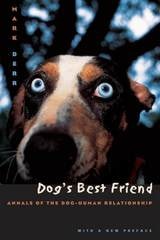
Dog's Best Friend
Annals of the Dog-Human RelationshipMark Derr
University of Chicago Press, 2004
Passionate about his subject and intent on sharing his zeal, Derr defends dogs with wit and flare, producing here a quirky, informative, and fitting tribute to our love affair with canines big and small.
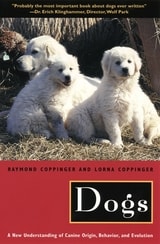
Dogs
A New Understanding of Canine Origin, Behavior and EvolutionRaymond Coppinger and Lorna Coppinger
University of Chicago Press, 2002
For both dogs and humans to get the most out of each other, we need to understand and adapt to the biological needs and dispositions of our canine companions, just as they have to ours.
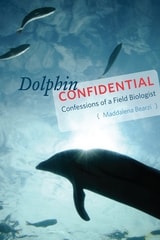
Dolphin Confidential
Confessions of a Field BiologistMaddalena Bearzi
University of Chicago Press, 2012
In this intimate narrative, Bearzi recounts her experiences at sea, tracing her own evolution as a woman and a scientist from her earliest travails to her transformation into an advocate for conservation and dolphin protection. These compelling, in-depth descriptions of her fieldwork also present a captivating look into dolphin social behavior and intelligence. The central part of the book is devoted to the metropolitan bottlenose dolphins of California, as Bearzi draws on her extensive experience to offer insights into the daily lives of these creatures—as well as the difficulties involved in collecting the data that transforms hunches into hypotheses and eventually scientific facts. The book closes by addressing the critical environmental and conservation problems facing these magnificent, socially complex, highly intelligent, and emotional beings.
An honest, down-to-earth analysis of what it means to be a marine biologist in the field today, Dolphin Confidential offers an entertaining, refreshingly candid, and always informative description of life among the dolphins.
Domestication Gone Wild
Politics and Practices of Multispecies RelationsHeather Anne Swanson, Gro B. Ween, and Marianne E. Lien, editors
Duke University Press, 2018
Contributors. Inger Anneberg, Natasha Fijn, Rune Flikke, Frida Hastrup, Marianne Elisabeth Lien, Knut G. Nustad, Sara Asu Schroer, Heather Anne Swanson, Anna Lowenhaupt Tsing, Mette Vaarst, Gro B. Ween, Jon Henrik Ziegler Remme
Don't Ask
Philip Levine
University of Michigan Press, 1981
Door County's Emerald Treasure
A History of Peninsula State ParkWilliam H. Tishler
University of Wisconsin Press, 2006
With its magnificent forests, bluffs, and shoreline and its breathtaking views of Green Bay and Lake Michigan, Door County’s Peninsula State Park is one of the Midwest’s most popular attractions. Established in 1909, it was Wisconsin’s second state park and a key to pioneering efforts to build a state park system that would be the envy of the nation.
Door County’s Emerald Treasure explores the rich history of the park land, from its importance to Native Americans and early European settlers through the twentieth century. Bill Tishler engagingly relates the role of conservationists and progressives in establishing the state park, its growing popularity for tourism and recreation, and efforts to protect the park’s resources from a variety of threats. Tishler also tells a larger story of Americans’ intimate relationship with the land around them and the challenge to create accessible public spaces that preserve the natural environment.
Downriver
Into the Future of Water in the WestHeather Hansman
University of Chicago Press, 2019
The Green River, the most significant tributary of the Colorado River, runs 730 miles from the glaciers of Wyoming to the desert canyons of Utah. Over its course, it meanders through ranches, cities, national parks, endangered fish habitats, and some of the most significant natural gas fields in the country, as it provides water for 33 million people. Stopped up by dams, slaked off by irrigation, and dried up by cities, the Green is crucial, overused, and at-risk, now more than ever.
Fights over the river’s water, and what’s going to happen to it in the future, are longstanding, intractable, and only getting worse as the West gets hotter and drier and more people depend on the river with each passing year. As a former raft guide and an environmental reporter, Heather Hansman knew these fights were happening, but she felt driven to see them from a different perspective—from the river itself. So she set out on a journey, in a one-person inflatable pack raft, to paddle the river from source to confluence and see what the experience might teach her. Mixing lyrical accounts of quiet paddling through breathtaking beauty with nights spent camping solo and lively discussions with farmers, city officials, and other people met along the way, Downriver is the story of that journey, a foray into the present—and future—of water in the West.
Dr. Eleanor's Book of Common Ants
Eleanor Spicer Rice, Alex Wild, and Rob Dunn
University of Chicago Press, 2017
No longer! In this witty, accessible, and beautifully illustrated guide, Eleanor Spicer Rice, Alex Wild, and Rob Dunn metamorphose creepy-crawly revulsion into myrmecological wonder. Emerging from Dunn’s ambitious citizen science project Your Wild Life (an initiative based at North Carolina State University), Dr. Eleanor’s Book of Common Ants provides an eye-opening entomological overview of the natural history of species most noted by project participants—and even offers tips on keeping ant farms in your home. Exploring species from the spreading red imported fire ant to the pavement ant, and featuring Wild’s stunning photography, this guide will be a tremendous resource for teachers, students, and scientists alike. But more than this, it will transform the way we perceive the environment around us by deepening our understanding of its littlest inhabitants, inspiring everyone to find their inner naturalist, get outside, and crawl across the dirt—magnifying glass in hand.
Dr. Eleanor's Book of Common Ants of California
Eleanor Spicer Rice, Alex Wild, and Rob Dunn
University of Chicago Press, 2017
No longer! In this witty, accessible, and beautifully illustrated guide, Eleanor Spicer Rice, Alex Wild, and Rob Dunn metamorphose creepy-crawly revulsion into myrmecological wonder. Emerging from Dunn’s ambitious citizen science project Your Wild Life (an initiative based at North Carolina State University) and the work of Brian Fisher with the California Academy of Sciences, Dr. Eleanor’s Book of Common Ants of California provides an eye-opening entomological overview of the natural history of California’s species most noted by project participants—and even offers tips on keeping ant farms in your home. Exploring species from the high noon and harvester ants to the honeypot and acrobat ants, and featuring Wild’s stunning photography, this guide will be a tremendous resource for teachers, students, and scientists alike. But more than this, it will transform the way Californians perceive the environment around them by deepening their understanding of its littlest inhabitants, inspiring everyone to find their inner naturalist, get outside, and crawl across the dirt—magnifying glass in hand.
Dr. Eleanor's Book of Common Ants of Chicago
Eleanor Spicer Rice, Alex Wild, and Rob Dunn
University of Chicago Press, 2017
No longer! In this witty, accessible, and beautifully illustrated guide, Eleanor Spicer Rice, Alex Wild, and Rob Dunn metamorphose creepy-crawly revulsion into myrmecological wonder. Emerging from Dunn’s ambitious citizen science project Your Wild Life (an initiative based at North Carolina State University), Dr. Eleanor’s Book of Common Ants of Chicago provides an eye-opening entomological overview of the natural history of Chicago’s species most noted by project participants—and even offers tips on keeping ant farms in your home. Exploring species from the hobbit ant to the tiny trapjaw ant, and featuring contributions from E. O. Wilson and Field Museum ant scientist Corrie Moreau as well as Wild’s stunning photography, this guide will be a tremendous resource for teachers, students, and scientists alike. But more than this, it will transform the way Chicagoans perceive the environment around them by deepening their understanding of its littlest inhabitants, inspiring everyone to find their inner naturalist, get outside, and crawl across the dirt—magnifying glass in hand.
Dr. Eleanor's Book of Common Ants of New York City
Eleanor Spicer Rice, Alex Wild, and Rob Dunn
University of Chicago Press, 2017
No longer! In this witty, accessible, and beautifully illustrated guide, Eleanor Spicer Rice, Alex Wild, and Rob Dunn metamorphose creepy-crawly revulsion into myrmecological wonder. Emerging from Dunn’s ambitious citizen science project Your Wild Life (an initiative based at North Carolina State University), Dr. Eleanor’s Book of Common Ants of New York City provides an eye-opening entomological overview of the natural history of New York’s species most noted by project participants—and even offers insight into the ant denizens of the city’s subways and Central Park. Exploring species from the honeyrump ant to the Japanese crazy ant, and featuring Wild’s stunning photography as well as tips on keeping ant farms in your home, this guide will be a tremendous resource for teachers, students, and scientists alike. But more than this, it will transform the way New Yorkers perceive the environment around them by deepening their understanding of its littlest inhabitants, inspiring everyone to find their inner naturalist, get outside, and crawl across the dirt—magnifying glass in hand.

Dr. Eleanor's Book of Common Spiders
Christopher M. Buddle and Eleanor Spicer Rice
University of Chicago Press, 2018
No longer! In this witty, accessible, and beautifully illustrated guide, Christopher M. Buddle and Eleanor Spicer Rice metamorphose creepy-crawly revulsion into spider wonder. Emerging from ambitious citizen science project Your Wild Life (an initiative based at North Carolina State University), Dr. Eleanor's Book of Common Spiders provides an eye-opening arachnological overview of the natural history of species most noted by project participants, showcasing some of the fascinating spiders found in our attics and tents, front lawns and forests—and even introducing us to spiders that fish. Exploring species from the tiny (but gymnastic) zebra jumping spider to the naturally shy and woefully misunderstood black widow, this guide will be a tremendous resource for teachers, students, and scientists alike. But more than this, it will transform the way we perceive the environment around us by deepening our understanding of its littlest inhabitants, inspiring all of us to find our inner naturalist, get outside, and crawl across the dirt—magnifying glass in hand.
Dragonflies and Damselflies in Your Pocket
A Guide to the Odonates of the Upper MidwestAnn Johnson
University of Iowa Press, 2009
Just as more and more people enjoy watching birds and butterflies, watching the many shimmering dragonflies and damselflies—collectively called odonates, from Odonata, the name of this order of aquatic insects—has become a popular pastime. Now Dragonflies and Damselflies in Your Pocket introduces us to 50 of the showiest odonates of the Upper Midwest.
Ann Johnson’s text is clear and informative and her photographs are stunning; it is impossible to look at them without wanting to head out for the nearest stream and search for the living insects. In addition to providing useful general information about broad-winged damsels, spreadwings, pond damsels, darners, clubtails, cruisers, emeralds, and skimmers, she includes common and scientific names, sizes, general flight seasons, and the best habitats in which to find each species: rocky rivers, wetlands, ponds, still waters, and so on.
With their extremely large eyes, elongated transparent wings, long and slender abdomens, and prehensile extendible jaws, dragonflies and damselflies are efficient hunters and quick, darting fliers. Their beauty and their behavior make them delightful subjects for birdwatchers and other nature lovers. Dragonflies and Damselflies in Your Pocket will greatly enhance your appreciation of these winged marvels.
Dragonflies of Texas
A Field GuideBy John C. Abbott
University of Texas Press, 2015
Dragonflies and damselflies (together known as Odonata) are among the most remarkably distinctive insects in their appearance and biology, and they have become some of the most popular creatures sought by avocational naturalists. Texas hosts 160 species of dragonflies, nearly half of the 327 species known in North America, making the state a particularly good place to observe dragonflies in their natural habitats.
Dragonflies of Texas is the definitive field guide to these insects. It covers all 160 species with in situ photographs and detailed anatomical images as needed. Each species is given a two-page spread that includes photographs of both sexes and known variations when possible, key features, a distribution map, identification, discussion of similar species, status in Texas, habitat, seasonality, and general comments. Many of the groups also have comparative plates that show anatomically distinctive characteristics. In addition to the species accounts, John Abbott discusses dragonfly anatomy, life history, conservation, names, and photography. He also provides information on species that may eventually be discovered in Texas, state and global conservation rankings, seasonality of all species in chronological order, and additional resources and publications on the identification of dragonflies.
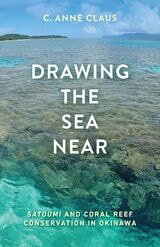
Drawing the Sea Near
Satoumi and Coral Reef Conservation in OkinawaC. Anne Claus
University of Minnesota Press, 2020
How Japanese coastal residents and transnational conservationists collaborated to foster relationships between humans and sea life
Drawing the Sea Near opens a new window to our understanding of transnational conservation by investigating projects in Okinawa shaped by a “conservation-near” approach—which draws on the senses, the body, and memory to collapse the distance between people and their surroundings and to foster collaboration and equity between coastal residents and transnational conservation organizations. This approach contrasts with the traditional Western “conservation-far” model premised on the separation of humans from the environment.
Based on twenty months of participant observation and interviews, this richly detailed, engagingly written ethnography focuses on Okinawa’s coral reefs to explore an unusually inclusive, experiential, and socially just approach to conservation. In doing so, C. Anne Claus challenges orthodox assumptions about nature, wilderness, and the future of environmentalism within transnational organizations. She provides a compelling look at how transnational conservation organizations—in this case a field office of the World Wide Fund for Nature in Okinawa—negotiate institutional expectations for conservation with localized approaches to caring for ocean life.
In pursuing how particular projects off the coast of Japan unfolded, Drawing the Sea Near illuminates the real challenges and possibilities of work within the multifaceted transnational structures of global conservation organizations. Uniquely, it focuses on the conservationists themselves: why and how has their approach to project work changed, and how have they themselves been transformed in the process?
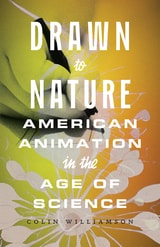
Drawn to Nature
American Animation in the Age of ScienceColin Williamson
University of Minnesota Press, 2025
How twentieth-century developments in science influenced the aesthetics of the burgeoning American cartoon
What do technical renderings of plant cells in trees have to do with Disney’s animated opus Fantasia? Quite a bit, as it turns out: such emergent scientific models and ideas about nature were an important inspiration for Disney’s groundbreaking animated realism. In Drawn to Nature, Colin Williamson presents a vivid portrait of how developments in biology, physics, and geology between 1900 and the long 1960s influenced not just Disney but the American cartoon industry as a whole.
Drawing on original research on the scientific appetites of animators and studios such as Winsor McCay, the Fleischer Brothers, Walt Disney, and United Productions of America, Williamson opens new avenues for understanding the history and aesthetics of cartoons. Interrogating the differences between art and science and reconsidering the realms of dream, magic, and fantasy as they pertain to pop culture, he yields novel proposals for bridging longstanding divides between animation, live-action cinema, and the history of science.
Drawn to Nature not only illuminates the extent to which animators have drawn on scientific insights, it also considers seriously how commercial animations themselves participate in scientific discourse. It revises and revitalizes our existing narratives about the history of American animation to uncover the many ways science informs our collective cultural imagination.
Dreaming the Mississippi
Katherine Fischer
University of Missouri Press, 2006
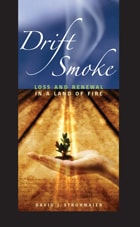
Drift Smoke
Loss and Renewal in a Land of FireDavid J. Strohmaier
University of Nevada Press, 2009
David Strohmaier’s long career as a firefighter has given him intimate knowledge of wildfire and its complex role in the natural world of the American West. It has also given him rare understanding of the painful losses that are a consequence of fire. Strohmaier addresses our ambivalence about fire and the realities of loss to it—of life, human and animal, of livelihoods, of beloved places. He also examines the process of renewal that is yet another consequence of fire, from the infusion of essential nutrients into the soil, to the sprouting of seeds that depend on fire for germination, to the renewal of species as the land restores itself. Ultimately, according to Strohmaier, living with fire is a matter of choices, of “seeing the connection between loss on a personal scale and loss on a landscape scale: in relationship with persons, and in relationship to and with the land.” We must cultivate a longer perspective, he says, accepting that loss is a part of life and that “humility and empathy and care are not only core virtues between humans but are also essential virtues in our attitudes and actions toward the earth.” Drift Smoke is a powerful and moving meditation on wildfire by someone who has seen it in all its terror and beauty, who has lost colleagues and beloved terrain to its ferocity, and who has also seen the miracle of new life sprouting in the ashes. The debate over the role and control of fire in the West will not soon end, but Strohmaier’s contribution to the debate will help all of us better appreciate both the complexity of the issues and the possibilities of hitherto unconsidered solutions that will allow us to inhabit a place where fire is a natural, and needed, part of life.
Drought, Water Law, and the Origins of California's Central Valley Project
Tim Stroshane
University of Nevada Press, 2016
Dry River
Stories of Life, Death, and Redemption on the Santa CruzKen Lamberton
University of Arizona Press, 2011
Here, Ken Lamberton finds his way through a lifetime of exploring southern Arizona’s Santa Cruz River. This river—dry, still, and silent one moment, a thundering torrent of mud the next—serves as a reflection of the desert around it: a hint of water on parched sand, a path to redemption across a thirsty landscape.
With his latest book, Lamberton takes us on a trek across the land of three nations—the United States, Mexico, and the Tohono O’odham Nation—as he hikes the river’s path from its source and introduces us to people who draw identity from the river—dedicated professionals, hardworking locals, and the author’s own family. These people each have their own stories of the river and its effect on their lives, and their narratives add immeasurable richness and depth to Lamberton’s own astute observations and picturesque descriptions.
Unlike books that detail only the Santa Cruz’s decline, Dry River offers a more balanced, at times even optimistic, view of the river that ignites hope for reclamation and offers a call to action rather than indulging in despair and resignation. At once a fascinating cultural history lesson and an important reminder that learning from the past can help us fix what we have damaged, Dry River is both a story about the amazing complexity of this troubled desert waterway and a celebration of one man’s lifelong journey with the people and places touched by it.

Dune Country
A Hiker's Guide to the Indiana DunesGlenda L. Daniel
Ohio University Press, 1984
Dune Country
A Naturalist's Look at the Plant Life of Southwestern Sand DunesJanice Emily Bowers
University of Arizona Press, 1998

Dwelling in Resistance
Living with Alternative Technologies in AmericaSchelly, Chelsea
Rutgers University Press, 2017
Schelly portrays a wide range of residential living alternatives utilizing renewable, small-scale, de-centralized technologies. These technologies considerably change how individuals and communities interact with the material world, their natural environment, and one another. Using in depth interviews and compelling ethnographic observations, the book offers an insightful look at different communities’ practices and principles and their successful endeavors in sustainability and self-sufficiency.