Results by title
1148 books match the query 'Political Ideologies' and 68 start with d
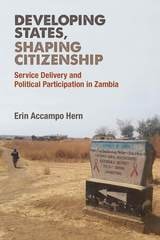
Developing States, Shaping Citizenship
Service Delivery and Political Participation in ZambiaErin Accampo Hern
University of Michigan Press, 2019
Erin Accampo Hern draws on original data from an original large-N survey, interviews, Afrobarometer data, and archival materials collected over 12 months in Zambia. The theory underlying this book’s framework is that of policy feedback, which argues that policies, once in place, influence the subsequent political participation of the affected population. This theory has predominantly been applied to advanced industrial democracies, and this book is the first explicit effort to adapt the theory to the developing country context.
Diaspora Identities
Exile, Nationalism and Cosmopolitanism in Past and PresentEdited by Susanne Lachenicht and Kirsten Heinsohn
Campus Verlag, 2009
Historical work on the late nineteenth and early twentieth centuries suggests that as nation-states were solidifying throughout Western Europe, exiled groups tended to develop rival national identities—an occurrence that had been fairly uncommon in the two preceding centuries. Diaspora Identities draws on eight case studies, ranging from the early modern period through the twentieth century, to explore the interconnectedness of exile, nationalism, and cosmopolitanism as concepts, ideals, attitudes, and strategies among diasporic groups.
Difference without Domination
Pursuing Justice in Diverse DemocraciesEdited by Danielle Allen and Rohini Somanathan
University of Chicago Press, 2020
Using examples from the United States, India, Germany, and Cameroon, the contributors offer paradigm-changing approaches to the concepts of justice, identity, and social groups while also taking a fresh look at the idea that the demographic make-up of institutions should mirror the make-up of a populace as a whole. After laying out the conceptual framework, the volume turns to a number of provocative topics, among them the pernicious tenacity of implicit bias, the logical contradictions inherent to the idea of universal human dignity, and the paradoxes and problems surrounding affirmative action. A stimulating blend of empirical and interpretive analyses, Difference without Domination urges us to reconsider the idea of representation and to challenge what it means to measure equality and inequality.
Digital Technology and Democratic Theory
Edited by Lucy Bernholz, Hélène Landemore, and Rob Reich
University of Chicago Press, 2021
To understand these transformations, this book brings together contributions by scholars from multiple disciplines to wrestle with the question of how digital technologies shape, reshape, and affect fundamental questions about democracy and democratic theory. As expectations have whiplashed—from Twitter optimism in the wake of the Arab Spring to Facebook pessimism in the wake of the 2016 US election—the time is ripe for a more sober and long-term assessment. How should we take stock of digital technologies and their promise and peril for reshaping democratic societies and institutions? To answer, this volume broaches the most pressing technological changes and issues facing democracy as a philosophy and an institution.

Direct Action
Radical Pacifism from the Union Eight to the Chicago SevenJames Tracy
University of Chicago Press, 1996
Taking us through the Vietnam war protests, this detailed treatment of radical pacifism reveals the strengths and limitations of American individualism in the modern era.
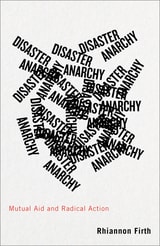
Disaster Anarchy
Mutual Aid and Radical ActionRhiannon
Pluto Press, 2022
As disasters become more commonplace, we need to think of alternatives for relief.
'Commendable - a book that prepares us to think about and react to system failures' - Peter Gelderloos
Anarchists have been central in helping communities ravaged by disasters, stepping in when governments wash their hands of the victims. Looking at Hurricane Sandy, Covid-19, and the social movements that mobilized relief in their wake, Disaster Anarchy is an inspiring and alarming book about collective solidarity in an increasingly dangerous world.
As climate change and neoliberalism converge, mutual aid networks, grassroots direct action, occupations, and brigades have sprung up in response to this crisis with considerable success. Occupy Sandy was widely acknowledged to have organized relief more effectively than federal agencies or NGOs, and following Covid-19 the term ‘mutual aid’ entered common parlance.
However, anarchist-inspired relief has not gone unnoticed by government agencies. Their responses include surveillance and co-option, extending at times to violent repression involving police brutality. Arguing that disaster anarchy is one of the most important political phenomena to emerge in the 21st century, Rhiannon Firth shows through her research on and within these movements that anarchist theory and practice are needed to protect ourselves from the disasters of our unequal and destructive economic system.

Dispatches from the Revolution
Russia 1916-1918Morgan Philips Price
Duke University Press, 1998
This collection includes Price’s pre-censored observations and comment, written for a range of British publications, as well as letters, postcards, and other writings. A foreword by Eric Hobsbawm and introductory material by Rose place Price’s observations in biographical and historical context. Dispatches from the Revolution offers an account of the Russian Revolution from an eyewitness whose political commitment, fluency in Russian, and extensive travel far beyond the cities permitted him to write, uniquely, not only of metropolitan news and politics, but also of the experiences and issues signficant to ordinary peasants, workers, and soldiers in remote areas of the Russian empire.
An important source to scholars of Russian history, this book will also appeal to general readers with interests in Russia, journalism, and world affairs.
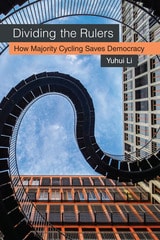
Dividing the Rulers
How Majority Cycling Saves DemocracyYuhui Li
University of Michigan Press, 2019
The election of populist politicians in recent years seems to challenge the commitment to democracy, if not its ideal. This book argues that majority rule is not the problem; rather, the institutions that stabilize majorities are responsible for the suppression of minority interests. Despite the popular notion that social choice instability (or “cycling”) makes it impossible for majorities to make sound legislation, Yuhui Li argues that the best part of democracy is not the large number of people on the winning side; it is that the winners can be easily divided and realigned with the losers in the cycling process. He shows that minorities’ bargaining power depends on their ability to exploit division within the winning coalition and induce its members to defect, an institutionalized uncertainty that is missing in one-party authoritarian systems.
Dividing the Rulers theorizes why such division within the majority is important and what kind of institutional features can help a democratic system maintain such division, which is crucial in preventing the “tyranny of the majority.” These institutional solutions point to a direction of institutional reform that academics, politicians, and voters should collectively pursue.
Documentary History of the Ratification of the Constitution, Volume 23
Ratification of the Constitution by the States: New York, No. 5Edited by John P. Kaminski and Gaspare J. Saladino; Senior Associate Editor: Richard Leffler; Associate Editor: Charles H. Schoenleber; Assistant Editor: Margaret A. Hogan
Wisconsin Historical Society Press, 2009
Documentary History of the Ratification of the Constitution, Volume 24
Ratification of the Constitution by the States: Rhode Island, No. 1Kaminski
Wisconsin Historical Society Press, 2011
This is the first of three volumes documenting Rhode Island's public and private debates about the Constitution. This documentary series is a research tool of remarkable power, an unrivaled reference work for historical and legal scholars, librarians, and students of the Constitution. The volumes are encyclopedic, consisting of manuscript and printed documents-contemporary newspapers, broadsides, and pamphlets-compiled from hundreds of sources, copiously annotated, thoroughly indexed, and often accompanied by microfiche supplements. Pulitzer Prize-winning historian Michael Kammen has noted that The Documentary History of the Ratification of the Constitution series "will be of enduring value centuries hence" and described it as "one of the most interesting documentary publications we have ever had." The American Bar Association Journal has stated, "Each new volume now fills another vital part of the mosaic of national history."
Domestic Perspectives on Contemporary Democracy
Edited by Peter F. Nardulli
University of Illinois Press, 2007
In looking at the remarkable proliferation of democracies since 1974, this volume offers important insight into the challenges and opportunities that democracy faces in the twenty-first century. Distinguished contributors detail difficulties that democracies face from within and how they deal with them. Among the contemporary threats to democracy emanating from internal sources are tensions arising over technology and its uses; ethnic, religious, and racial distinctions; and disparate access to resources, education, and employment. A democratically elected government can behave more or less democratically, even when controlling access to information, using legal authority to aid or intimidate, and applying resources to shape the conditions for the next election. With elections recently disputed in the United States, Mexico, Lebanon, and the Ukraine, debates about the future of democracy are inescapably debates about what kind of democracy is desired.
Contributors are W. Lance Bennett, Bruce Bimber, Jon Fraenkel, Brian J. Gaines, Bernard Grofman, Wayne V. McIntosh, Peter F. Nardulli, Mark Q. Sawyer, Stephen Simon, Paul M. Sniderman, and Jack Snyder.
Drama of Democracy
Political Representation in MumbaiLisa Björkman
University of Minnesota Press, 2025
The performative arts of political communication and representation in Mumbai
In an era of global political passions, many have wondered whether some sort of natural affinity exists between political style and substance. Does liberal democracy speak the language of rationality and sincerity while political emotion, imagery, and embodiment properly belong to authoritarianism? Taking an ethnographic approach to the relationship between political form and political content, Drama of Democracy explores the material substance of representations (things like heady crowds and rousing images) together with language-based forms of political communication, such as public oration and community meetings.
Drawing on a decade of research in the city of Mumbai, Lisa Björkman shows that embodied performance is the very site and substance of representation and demonstrates how Mumbaikars evaluate performative bids to represent. The ethnographic accounts demonstrate the extraordinary fluency in this evaluative work in Mumbai, where people from all walks of life are remarkably astute at navigating and assessing political signs and representations, endlessly discussing and debating possible meanings of the city’s dense material-semiotic ecologies—whether words or images, cash or crowds, flyers or flowers.
In Mumbai, Björkman argues, the evaluative criterion of representation is not whether something is sign or substance, or even whether people are deemed to utter truths or falsehoods. Rather, what matters is whether and how a performance activates and actuates the social relations and political subjectivities that it professes to display. Drama of Democracy highlights Mumbaikars’ communicative fluency and theatrical acumen to offer a conceptual toolbox through which contemporary political churnings around the globe might be understood.
Durkheim
A Critical IntroductionKieran Allen and Brian O'Boyle
Pluto Press, 2017
This critical introduction argues that Durkheim's defence of Republican France in the 1890s had a considerable influence on his sociology, which cannot be fully understood when removed from its historical and political context. His dismissal of economic factors in suicide rates, the influence of his anti-feminist position on his findings on marriage rates, and the idealism behind his claim that religion is the key determinant in shaping society are all discussed.
Through analysing his writings, including The Division of Labour in Society, Suicide and The Elementary Forms of Religious Life, this book provides a fascinating, critical counterpoint to the existing works on this key figure of sociology.
Dynamic Democracy
Public Opinion, Elections, and Policymaking in the American StatesDevin Caughey and Christopher Warshaw
University of Chicago Press, 2022
Scholars of American politics have long been skeptical of ordinary citizens’ capacity to influence, let alone control, their governments. Drawing on over eight decades of state-level evidence on public opinion, elections, and policymaking, Devin Caughey and Christopher Warshaw pose a powerful challenge to this pessimistic view. Their research reveals that although American democracy cannot be taken for granted, state policymaking is far more responsive to citizens’ demands than skeptics claim.
Although governments respond sluggishly in the short term, over the long term, electoral incentives induce state parties and politicians—and ultimately policymaking—to adapt to voters’ preferences. The authors take an empirical and theoretical approach that allows them to assess democracy as a dynamic process. Their evidence across states and over time gives them new leverage to assess relevant outcomes and trends, including the evolution of mass partisanship, mass ideology, and the relationship between partisanship and ideology since the mid-twentieth century; the nationalization of state-level politics; the mechanisms through which voters hold incumbents accountable; the performance of moderate candidates relative to extreme candidates; and the quality of state-level democracy today relative to state-level democracy in other periods.
Dynamic Partisanship
How and Why Voter Loyalties ChangeKen Kollman and John E. Jackson
University of Chicago Press, 2021
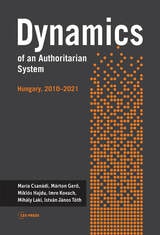
Dynamics of an Authoritarian System
Hungary, 2010–2021Mária Csanádi
Central European University Press, 2022
This conceptually synthetic and empirically rich book demonstrates the vulnerability of democratic settings to authoritarianism and populism. Six scholars from various professional fields explore here the metamorphosis of a political party into a centralized authoritarian system. Viktor Orbán and his Fidesz party needed less than ten years to accomplish this transformation in Hungary. In 2010, after winning a majority that could make changes in the constitution – two-thirds of the parliamentary seats, they evolved and stabilized the system, which produced again the two-thirds majority in 2014 and 2018.
The authors reveal how a democratic setting can be used as a device for political capture. They show how a political entity managed to penetrate almost all sub-fields of the economy to arrive at institutionalized corruption, and how the centralized power structure reproduces itself. With the help of a powerful empirical apparatus—among others analyses of more than 220,000 public tenders, redistributions of state subsidies, and the interconnectedness of those privileged with the political elite — the authors detail the functioning of a crony system and the network aspects of political connections in the rapid enrichment of politically-linked businesses. Their studies demonstrate the role of political capture in this redistribution and how this capture leads to a new social stratification.
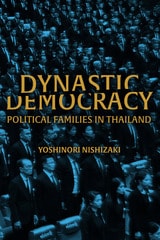
Dynastic Democracy
Political Families of ThailandYoshinori Nishizaki
University of Wisconsin Press, 2022
Drawing extensively on Thai-language primary sources, including assets documents and cremation volumes for deceased politicians and their kin, Nishizaki traces the intricate blood and marriage connections among Thailand’s political families. These families may fall into two categories: influential commoner families that have held parliamentary seats since 1932 and form the core of Thailand’s dynastic democracy; and upper-class families that are kin to or aligned ideologically with the royal family and have repeatedly challenged dynastic democracy through coups, constitutional changes, and other political maneuvers. Nishizaki’s exploration of dynastic democracy illustrates how democratic pluralism in Thailand has been consistently stifled, to the detriment of ordinary citizens. Dynastic Democracy fleshes out a widely acknowledged yet heretofore empirically unsubstantiated facet of Thai political history—that in Thai politics, family matters.