Results by title
4155 books match the query 'State & Local' and 137 start with d
Dividing the Union
Jesse Burgess Thomas and the Making of the Missouri CompromiseMatthew W. Hall
Southern Illinois University Press, 2015
In 1820 the Missouri controversy erupted over the issue of slavery in the newly acquired lands of the Louisiana Purchase. It fell to Jesse Burgess Thomas (1777–1853), a junior U.S. senator from the new state of Illinois, to handle the delicate negotiations that led to the Missouri Compromise. Thomas’s maturity, good judgment, and restraint helped pull the country back from the brink of disunion and created a compromise that held for thirty-four years. In Dividing the Union, Matthew W. Hall examines the legal issues underlying the controversy and the legislative history of the Missouri Compromise while focusing on the aspects of Thomas’s life and character that gave him such influence. The first in-depth biography of Thomas, Hall’s work demonstrates how the legislative battle over the Compromise reflected the underlying nuances of the larger struggle over slavery.
The text of the Missouri Compromise originated from the Northwest Ordinance. Article VI of the Ordinance purported to prohibit slavery in the Northwest Territory, but paradoxically, a provision that assured property rights in another article was used to protect slavery. People in some parts of the Northwest sought to circumvent Article VI by formulating indenture laws and various state constitutional provisions addressing slavery. Pro- and antislavery activists eventually developed quite different interpretations of the relevant language in these documents, making negotiations over slavery in the new territory extremely complicated.
As Hall demonstrates, Thomas was perfectly situated geographically, politically, and ideologically to navigate the Missouri controversy. He was the first speaker of the Indiana Territorial General Assembly, one of the first territorial judges in the Illinois Territory, and the president of the Illinois State Constitutional Convention in 1818. Because the drive for statehood in Illinois was strong, the convention managed to skirt the divisive issue of slavery, due in large part to Thomas’s efforts. That he was never required to clearly articulate his own views on slavery allowed Thomas to maintain a degree of neutrality, and his varied political career gave him the experience necessary to craft a compromise.
Thomas’s final version of the Compromise included shrewdly worded ambiguities that supported opposing interests in the matter of slavery. These ambiguities secured the passage of the Compromise and its endurance until the Kansas-Nebraska Act of 1854. By weaving Thomas’s life story into the history of the Missouri Compromise, Hall offers new insight into both a pivotal piece of legislation and an important, previously overlooked figure in nineteenth-century American politics.
Dixie Diaspora
An Anthology of Southern Jewish HistoryMark K. Bauman
University of Alabama Press, 2006
Dixie Heretic
The Civil Rights Odyssey of Renwick C. KennedyTennant McWilliams
University of Alabama Press, 2023
A life-and-times biography of the minister and social reformer Renwick C. Kennedy
Drawn from some 5,000 letters, six decades of daily-diary writings, and extensive interviews, Dixie Heretic: The Civil Rights Odyssey of Renwick C. Kennedy offers a life-and-times biography of the Alabama Black Belt minister, Renwick C. Kennedy (1900–1985). Here, Tennant McWilliams gives an unvarnished account of Kennedy’s tortuous efforts to make his congregants and other southern whites “better Christians.”
Kennedy came from “upcountry” South Carolina, a place rife with Scotch-Irish Associate Reformed Presbyterians—people of biblical infallibility and individual piety and salvation. In 1927, after a life-changing theology education at Princeton, he moved to Camden, Alabama, county seat of Wilcox County. There, he came to believe that God had a mandate for him: to change the “Half Christian” conservative, and the often violent, racial behaviors around him. As a neo-orthodox Protestant, Kennedy never rejected literal approaches to the Bible. Still, out of the “Full Christian” Social Gospel, he urged changed racial behavior. Ultimately this led him to publish confrontational short stories and essays in Christian Century and New Republic—most set in fictitious “Yaupon County.”
In World War II, Kennedy served as a chaplain with the famed 102nd Evacuation Hospital. He came home hoping the Allied victory would spur Americans to fight racial segregation just as they had fought racial fascism in Europe. The 1948 Dixiecrat movement dashed these hopes, turning much of his neo-orthodox optimism to cynicism. His hope found fleeting resurgence in the civil rights movement, and saw Kennedy quietly leading desegregation of Troy University, where he was an administrator. But the era’s assassinations, combined with George Wallace and the rise of southern white Republicans, regularly returned him to the frustrated hopes of 1948 and fostered a pessimism about truly changed hearts that he took to his grave in 1985.
Dixie's Great War
World War I and the American SouthEdited by John M. Giggie and Andrew J. Huebner
University of Alabama Press, 2021
Examining the First World War through the lens of the American South
How did World War I affect the American South? Did southerners experience the war in a particular way? How did regional considerations and, more generally, southern values and culture impact the wider war effort? Was there a distinctive southern experience of WWI?
Scholars considered these questions during “Dixie’s Great War,” a symposium held at the University of Alabama in October 2017 to commemorate the centenary of the American intervention in the war. With the explicit intent of exploring iterations of the Great War as experienced in the American South and by its people, organizers John M. Giggie and Andrew J. Huebner also sought to use historical discourse as a form of civic engagement designed to facilitate a community conversation about the meanings of the war.
Giggie and Huebner structured the panels thematically around military, social, and political approaches to the war to encourage discussion and exchanges between panelists and the public alike. Drawn from transcriptions of the day’s discussions and lightly edited to preserve the conversational tone and mix of professional and public voices, Dixie’s Great War: World War I and the American South captures the process of historians at work with the public, pushing and probing general understandings of the past, uncovering and reflecting on the deeper truths and lessons of the Great War—this time, through the lens of the South.
This volume also includes an introduction featuring a survey of recent literature dealing with regional aspects of WWI and a discussion of the centenary commemorations of the war. An afterword by noted historian Jay Winter places “Dixie’s Great War”—the symposium and this book—within the larger framework of commemoration, emphasizing the vital role such forums perform in creating space and opportunity for scholars and the public alike to assess and understand the shifting ground between cultural memory and the historical record.

Dixiecrats and Democrats
Alabama PoliticsWilliam D. Barnard
University of Alabama Press, 1984
A pivotal in the study of history and politics, not only in Alabama but in the other states of the South
Barnard’s account is elegantly concise, the labor of conspicuous scholarship. In an effort to analyze Alabama’s political bedrock, the author has tapped virtually every source. What results is a cogent and harmonious theme.

Doc
The Story of a Birmingham Jazz ManFrank "Doc" Adams and Burgin Mathews
University of Alabama Press, 2012
Autobiography of jazz elder statesman Frank “Doc” Adams, highlighting his role in Birmingham, Alabama’s, historic jazz scene and tracing his personal adventure that parallels, in many ways, the story and spirit of jazz itself.
Doc tells the story of an accomplished jazz master, from his musical apprenticeship under John T. “Fess” Whatley and his time touring with Sun Ra and Duke Ellington to his own inspiring work as an educator and bandleader.
Central to this narrative is the often-overlooked story of Birmingham’s unique jazz tradition and community. From the very beginnings of jazz, Birmingham was home to an active network of jazz practitioners and a remarkable system of jazz apprenticeship rooted in the city’s segregated schools. Birmingham musicians spread across the country to populate the sidelines of the nation’s bestknown bands. Local musicians, like Erskine Hawkins and members of his celebrated orchestra, returned home heroes. Frank “Doc” Adams explores, through first-hand experience, the history of this community, introducing readers to a large and colorful cast of characters—including “Fess” Whatley, the legendary “maker of musicians” who trained legions of Birmingham players and made a significant mark on the larger history of jazz. Adams’s interactions with the young Sun Ra, meanwhile, reveal life-changing lessons from one of American music’s most innovative personalities.
Along the way, Adams reflects on his notable family, including his father, Oscar, editor of the Birmingham Reporter and an outspoken civic leader in the African American community, and Adams’s brother, Oscar Jr., who would become Alabama’s first black supreme court justice. Adams’s story offers a valuable window into the world of Birmingham’s black middle class in the days before the civil rights movement and integration. Throughout, Adams demonstrates the ways in which jazz professionalism became a source of pride within this community, and he offers his thoughts on the continued relevance of jazz education in the twenty-first century.

Doctoring the West
Women Physicians and the Politics and Practice of MedicineJacqueline D. Antonovich
Rutgers University Press, 2027
In the late nineteenth century, women physicians began migrating to the American West in remarkable numbers. Drawn by early suffrage laws and a booming population of health seekers, they settled across states such as California, Colorado, and Oregon—places where they might finally practice medicine and participate in politics as full and equal citizens. Over the next several decades, these women became central figures in shaping the region's health landscape. They built hospitals and clinics, championed public health reform, and positioned themselves at the center of the era's defining debates over birth control, abortion, and eugenics. Their legacy is as complex as it is consequential. Doctoring the West tells the stories of these women: the power they wielded, the choices they made, the people they cared for—and those they harmed. Their work transformed the health of the American West and defined the medical politics of the nation.
Dog and Gun
A Few Loose Chapters on Shooting, Among Which Will Be Found Some Anecdotes and IncidentsJohnson J. Hooper, with an Introduction by Philip D. Beidler
University of Alabama Press, 1992
A classic portrait of hunting, sport, and gentlemanly culture in the antebellum South.
The least well known of Johnson Jones Hooper’s works, Dog and Gun was first published as a newspaper series, then appeared in six book editions between 1856 and 1871. Hooper is Alabama’s most celebrated antebellum author, and here he gives insight into the meaning of a culture where every male hunts – and a man who shoots as a gentleman will be assumed a gentleman. Beidler’s introduction to this reprint edition explores the social, literary, and technical dimensions of Dog and Gun, which he sees as an important commentary on class distinctions in the antebellum South, as well as a straightforward treatise on hunting.
Although the book is a manual for the hunter, with characteristic humor and a certain disdain, Hooper gives a full picture of the gentlemanly sport of hunting – clearly distinct from hunting for food – in all aspects including hunter, weaponry, and sporting dogs. He takes us back to an autumnal ritual of the hunt, where one is always a boy with his first gun – to the natural mystery of quest, competition, predation, pursuit, survival, bravery, endurance, and eventual defeat, called the mystery of the hunt.
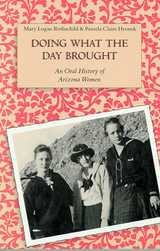
Doing What the Day Brought
An Oral History of Arizona WomenMary Logan Rothschild and Pamela Claire Hronek
University of Arizona Press, 1992
Drawing on interviews with twenty-nine individuals, Doing What the Day Brought examines the everyday lives of women from the late nineteenth century to the present day and demonstrates the role they have played in shaping the modern Arizona community.
Focusing on "ordinary" women, the book crosses race, ethnic, religious, economic, and marital lines to include Arizona women from diverse backgrounds. Rather than simply editing each woman's words, Rothschild and Hronek have analyzed these oral histories for common themes and differences and have woven portions into a narrative that gives context to the individual lives. The resulting life-course format moves naturally from childhood to home life, community service, and participation in the work force, and concludes with reflections on changes witnessed in the lifetimes of these women.
For the women whose lives are presented here, it may have been common to gather dead saguaro cactus ribs to make outdoor fires to boil laundry water, or to give birth on a dirt floor. Their stories capture not only changes in a state where history has overlooked the role of women, but the changing roles of American women over the course of this century.

Dolly and Zane Grey
Letters from a MarriageCandace C. Kant
University of Nevada Press, 2011
Popular western writer Zane Grey was a literary celebrity during his lifetime and the center of a huge enterprise based on his writing, which included books, magazine serials, film and stage versions of his stories, even comic strips. His wife, Dolly, closely guided Grey's career almost from its beginning, editing and sometimes revising his work, negotiating with publishers and movie studios, and skillfully managing the considerable fortune derived from these activities.
Dolly maintained the facade of a conventional married life that was essential to Grey's public image and the traditional middle-class values his work reflected. This facade was constantly threatened by Grey's numerous affairs with other women. The stress of hiding these dalliances placed a huge strain on their relationship, and much of Zane and Dolly's union was sustained largely by correspondence. Their letters--thousands of them--reveal the true nature of this complex partnership. As edited by Candace Kant, the letters offer an engrossing portrait of an extremely unorthodox marriage and its times.
Dominguez Escalante Journal
Their Expedition Through Colorado Utah Az & N Mex 1776Ted J. Warner
University of Utah Press, 1995
Translated by Fray Angelico Chavez, Edited by Ted J. Warner
Western History
The chronicle of Fray Francisco Atanasio Domínguez and Fray Silvestre Vélez de Escalante’s most remarkable 1776 expedition through the Rocky Mountains, the eastern Great Basin, and the Colorado Plateau to inventory new lands for the Spanish crown and to find a route from Santa Fe to Monterey, California.
Escalante’s journal wonderfully describes every detail of the rugged and scenic country through which they journeyed, along the qualities and customs of its inhabitants. Working as far north as present-day Provo, Utah, the expedition finally returned south. An approaching severe winter and mishaps among the maze of the Grand Canyon forced the party to return to Santa Fe by way of the Hopi pueblos.
This journal provides a fascinating account of over a thousand miles of wilderness exploration.

Door County's Emerald Treasure
A History of Peninsula State ParkWilliam H. Tishler
University of Wisconsin Press, 2006
With its magnificent forests, bluffs, and shoreline and its breathtaking views of Green Bay and Lake Michigan, Door County’s Peninsula State Park is one of the Midwest’s most popular attractions. Established in 1909, it was Wisconsin’s second state park and a key to pioneering efforts to build a state park system that would be the envy of the nation.
Door County’s Emerald Treasure explores the rich history of the park land, from its importance to Native Americans and early European settlers through the twentieth century. Bill Tishler engagingly relates the role of conservationists and progressives in establishing the state park, its growing popularity for tourism and recreation, and efforts to protect the park’s resources from a variety of threats. Tishler also tells a larger story of Americans’ intimate relationship with the land around them and the challenge to create accessible public spaces that preserve the natural environment.
Down Ballot
How a Local Campaign Became a National Referendum on AbortionPatrick Wohl
University of Illinois Press, 2024
In 1990, a suburban Chicago race for the Republican Party nomination for state representative unexpectedly became a national proxy battle over abortion in the United States. But the hard-fought primary also illustrated the overlooked importance of down-ballot contests in America’s culture wars. Patrick Wohl offers the dramatic account of a rollercoaster campaign that, after attracting political celebrities and a media circus, came down to thirty-one votes, a coin toss to determine the winner, and a recount fight that set a precedent for how to count dimpled chads. As the story unfolds, Wohl provides a rare nuts-and-bolts look at an election for state office from its first days through the Illinois Supreme Court decision that decided the winner--and set the stage for a decisive 1992 rematch.
A compelling political page-turner, Down Ballot takes readers behind the scenes of a legendary Illinois election.

Down The Jersey Shore
Russell Roberts and Rich Youmans
Rutgers University Press, 1993
Summer visitors and year-round residents alike are sure to discover Jersey Shore lore that captures their fancy in this entertaining account of the people, places, and events that have shaped New Jersey’s famous shoreline.
From ghost stories and the comic misadventures of the early Miss America Pageant to the dynamics of the changing coastline and poignant portraits of traditional crafts workers, Russell Roberts and Rich Youmans have chronicled the fascinating history and heritage of the New Jersey Shore. In this book you’ll meet the luminaries who’ve frequented the Shore—from President Ulysses Grant strolling through Long Branch to Grace Kelly learning to surf at Ocean City. You’ll find out why the boardwalk was invented, and also why early ones were removable. Join the authors as they pay tribute to the Shore’s forgotten inventors, including Simon Lake, who some consider the true father of the modern submarine. Relive the Jersey Shore’s role in wartime and learn the story of the mysterious Nazi submarine sunken off of Point Pleasant Beach. Read about Lucy the Margate Elephant, as a well as her two long-gone “cousins.”
Discover all this and more as Roberts and Youmans explore the vast uncharted heritage of the New Jersey Shore.
Down on Mahans Creek
A History of an Ozarks NeighborhoodBenjamin G. Rader
University of Arkansas Press, 2017
In Down on Mahans Creek, Benjamin Rader provides a fascinating look at a neighborhood in the Missouri Ozarks from the early nineteenth to the mid-twentieth century. He explores the many ways in which Mahans Creek, though remote, was never completely isolated or self-sufficient. The residents were deeply affected by the Civil War, and the arrival of the railroad and the timber boom in the 1890s propelled the community into modern times, creating a more fast-paced and consumer-oriented way of life and a new moral sensibility. During the Great Depression the creek’s residents returned to some of the older values for survival. After World War II, modern technology changed their lives again, causing a movement away from the countryside and to the nearby small towns.
Down on Mahans Creek tells the dynamic story of this distinctive neighborhood navigating the push and pull of the old and new ways of life.

Down the River
or Practical Lessons Under The Code DuelloGeorge W Hooper
University of Alabama Press, 2007
Downriver Detroit
The Working Class, the Environment, and the Bonds of PlaceLisa M. Fine
University of Illinois Press, 2026
Lisa M. Fine examines important moments in the ongoing efforts of the area’s citizens to create a humane and habitable environment. Her analysis shows how people preserved wetlands and the river by working through sportsmen’s organizations, appealing to state agencies, and forming grassroots movements. Fueled by enduring connections to place, local unions fought a proposed nuclear power plant in the 1950s. Years later, steel workers facing the steamroller of deindustrialization tried to preserve their communities by purchasing their own company. The ties that bind gave a unique character to activism in the Downriver region, challenging stereotypes of working-class attitudes toward the environment.
A creative merger of labor and environmental history, Downriver Detroit shows that working people have a right to live in and protect the places they love.
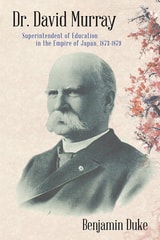
Dr. David Murray
Superintendent of Education in the Empire of Japan, 1873-1879Duke, Benjamin
Rutgers University Press, 2018
Benjamin Duke has compiled this comprehensive biography of David Murray to showcase Murray’s work, both in assisting around 100 samurai students in their studies at Rutgers, and in his unprecedented role in early Japanese-American relations. This fascinating story uncovers a little-known link between Rutgers University and Japan, and it is the only book to conclude that Rutgers made a greater contribution to the development of modern education in the early Meiji Era than any other non-Japanese college or university in the world.

Dr. Kate’s Courageous Calling
Rebecca Hogue Wojahn
Wisconsin Historical Society Press, 2027
Meet the trailblazing doctor whose determination, compassion, and vision helped to save lives and inspired a generation to make history.
As a child in the late 1800s, young Kate Pelham knew she wanted to have a career when she grew up, even though that wasn’t expected of women at the time. After losing her mother and then her fiancée at a young age, she decided to dedicate her life to becoming a doctor—a career path then largely closed to women. But Kate would not be deterred, and before long she was known throughout the Wisconsin Northwoods as, simply, Dr. Kate.
Written for ages 8–11, Dr. Kate’s Courageous Calling shares the remarkable story of a woman who challenged expectations, transformed her community, and inspired thousands through a lifetime of service. Readers will journey alongside Kate Pelham-Newcomb as she traverses snowy back roads—sometimes on snowshoes—to care for patients. They will discover how, as the local health officer, she established community health standards and helped improve water and milk sanitation throughout the Northwoods region.
The story reaches an unforgettable climax with the extraordinary Million Penny Campaign, led by local high school students—many of whom Dr. Kate had delivered as babies—to raise money for a desperately needed hospital. Their efforts attracted contributions from tens of thousands of people around the world, bringing in more than enough to build the Lakeland Memorial Hospital in Woodruff, Wisconsin.
Dr. Kate’s Courageous Calling is a story of perseverance, leadership, sacrifice, and a community that joined together to make a difference. Combining women’s history, local history, and a remarkable true story of civic engagement, this book celebrates a pioneering physician who healed her neighbors and inspired the world.
Dr. Radway's Sarsaparilla Resolvent
Beth Kephart
Temple University Press, 2013
Flavored by the oddities of historic personalities and facts, Dr. Radway’s Sarsaparilla Resolvent is set in Bush Hill, Philadelphia, 1871—home to the Baldwin Locomotive Works and a massive, gothic prison. Acclaimed writer Beth Kephart captures the rhythms and smells of an extraordinary era as William Quinn and his Ma, Essie, grapple with life among terrible accidents, miraculous escapes, and shams masquerading as truth.
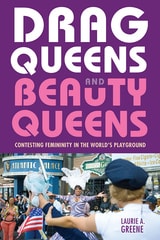
Drag Queens and Beauty Queens
Contesting Femininity in the World's PlaygroundLaurie Greene
Rutgers University Press, 2021
Drag Queens and Beauty Queens presents a vivid ethnography of the Miss’d America pageant and the gay neighborhood from which it emerged in the early 1990s as a moment of campy celebration in the midst of the AIDS crisis. It examines how the pageant strengthened community bonds and activism, as well as how it has changed now that Rupaul’s Drag Race has brought many of its practices into the cultural mainstream. Comparing the Miss’d America pageant with its glitzy cisgender big sister, anthropologist Laurie Greene discovers how the two pageants have influenced each other in unexpected ways.
Drag Queens and Beauty Queens deepens our understanding of how femininity is performed at pageants, exploring the various ways that both the Miss’d America and Miss America pageants have negotiated between embracing and critiquing traditional gender roles. Ultimately, it celebrates the rich tradition of drag performance and the community it engenders.
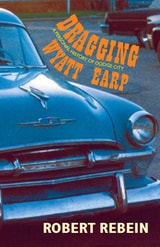
Dragging Wyatt Earp
A Personal History of Dodge CityRobert Rebein
Ohio University Press, 2013
In Dragging Wyatt Earp essayist Robert Rebein explores what it means to grow up in, leave, and ultimately return to the iconic Western town of Dodge City, Kansas. In chapters ranging from memoir to reportage to revisionist history, Rebein contrasts his hometown’s Old West heritage with a New West reality that includes salvage yards, beefpacking plants, and bored teenagers cruising up and down Wyatt Earp Boulevard.
Along the way, Rebein covers a vast expanse of place and time and revisits a number of Western myths, including those surrounding Francisco Vasquez de Coronado, the Cheyenne chief Black Kettle, George Armstrong Custer, and of course Wyatt Earp himself. Rebein rides a bronc in a rodeo, spends a day as a pen rider at a local feedlot, and attempts to “buck the tiger” at Dodge City’s new Boot Hill Casino and Resort.
Funny and incisive, Dragging Wyatt Earp is an exciting new entry in what is sometimes called the nonfiction of place. It is a must- read for anyone interested in Western history, contemporary memoir, or the collision of Old and New West on the High Plains of Kansas.
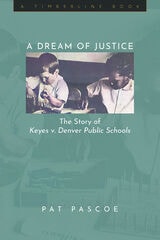
Dream of Justice
The Story of Keyes v. Denver Public Schoolsby Pat Pascoe
University Press of Colorado, 2023
Pascoe details Denver’s desegregation battle, beginning with the citizen studies that exposed the inequities of segregated schools and Rachel Noel’s resolution to integrate the system, followed by the momentous pro-integration Benton-Pascoe campaign of Ed Benton and Monte Pascoe for the school board in 1969. When segregationists won that election and reversed the integration plan for northeast Denver, Black, white, and Latino parents filed Keyes v. School District No. 1. This book follows the arguments in the case through briefs, transcripts, and decisions from district court to the Supreme Court of the United States and back, to its ultimate order to desegregate all Denver schools “root and branch.” It was the first northern city desegregation suit to be brought before the Supreme Court. However, with the end of court-ordered busing in 1995, schools quickly resegregated and are now more segregated than before Keyes was filed.
Pascoe asserts that school integration is a necessary step toward eliminating systemic racism in our country and should be the objective of every school board. A Dream of Justice will appeal to students, scholars, and readers interested in the history of civil rights in America, Denver history, and the history of US education.

Drift Smoke
Loss and Renewal in a Land of FireDavid J. Strohmaier
University of Nevada Press, 2009
David Strohmaier’s long career as a firefighter has given him intimate knowledge of wildfire and its complex role in the natural world of the American West. It has also given him rare understanding of the painful losses that are a consequence of fire. Strohmaier addresses our ambivalence about fire and the realities of loss to it—of life, human and animal, of livelihoods, of beloved places. He also examines the process of renewal that is yet another consequence of fire, from the infusion of essential nutrients into the soil, to the sprouting of seeds that depend on fire for germination, to the renewal of species as the land restores itself. Ultimately, according to Strohmaier, living with fire is a matter of choices, of “seeing the connection between loss on a personal scale and loss on a landscape scale: in relationship with persons, and in relationship to and with the land.” We must cultivate a longer perspective, he says, accepting that loss is a part of life and that “humility and empathy and care are not only core virtues between humans but are also essential virtues in our attitudes and actions toward the earth.” Drift Smoke is a powerful and moving meditation on wildfire by someone who has seen it in all its terror and beauty, who has lost colleagues and beloved terrain to its ferocity, and who has also seen the miracle of new life sprouting in the ashes. The debate over the role and control of fire in the West will not soon end, but Strohmaier’s contribution to the debate will help all of us better appreciate both the complexity of the issues and the possibilities of hitherto unconsidered solutions that will allow us to inhabit a place where fire is a natural, and needed, part of life.

Drop Dead
Performance in Crisis, 1970s New YorkHillary Miller
Northwestern University Press, 2016
Winner, 2017 American Theater and Drama Society John W. Frick Book Award
Winner, 2017 ASTR Barnard Hewitt Award for Outstanding Research in Theater History
Hillary Miller’s Drop Dead: Performance in Crisis, 1970s New York offers a fascinating and comprehensive exploration of how the city’s financial crisis shaped theater and performance practices in this turbulent decade and beyond.
New York City’s performing arts community suffered greatly from a severe reduction in grants in the mid-1970s. A scholar and playwright, Miller skillfully synthesizes economics, urban planning, tourism, and immigration to create a map of the interconnected urban landscape and to contextualize the struggle for resources. She reviews how numerous theater professionals, including Ellen Stewart of La MaMa E.T.C. and Julie Bovasso, Vinnette Carroll, and Joseph Papp of The Public Theater, developed innovative responses to survive the crisis.
Combining theater history and close readings of productions, each of Miller’s chapters is a case study focusing on a company, a production, or an element of New York’s theater infrastructure. Her expansive survey visits Broadway, Off-, Off-Off-, Coney Island, the Brooklyn Academy of Music, community theater, and other locations to bring into focus the large-scale changes wrought by the financial realignments of the day.
Nuanced, multifaceted, and engaging, Miller’s lively account of the financial crisis and resulting transformation of the performing arts community offers an essential chronicle of the decade and demonstrates its importance in understanding our present moment.

Dubious Alliance
The Making of Minnesota’s DFL PartyJohn Earl Haynes
University of Minnesota Press, 1984
Dubious Alliance was first published in 1984. Minnesota Archive Editions uses digital technology to make long-unavailable books once again accessible, and are published unaltered from the original University of Minnesota Press editions.
The formation of the Democratic-Farmer-Labor party of Minnesota took place in a context of intense factional struggle that lasted from the death of Governor Floyd B. Olson in 1936 to the election of Hubert Humphrey to the U.S. Senate in 1948. Dubious Alliance, the first full account of this critical chapter in the state's political history, has wider significance not only because many of the leading figures in the story have played a role in national politics, but also because it deals with issues—chief among them, the origins of Cold War liberalism— that matter far beyond the boundaries of a single state.
John Haynes follows the struggle from its inception to the postwar battle within the new DFL between Popular Front adherents and anti-Communist liberals led by Minneapolis Mayor Hubert Humphrey. He makes clear that the struggle with the Popular Front was the formative political experience of Humphrey's generation; those who fought with him, and who became active in national politics—Orville Freeman, Eugene McCarthy, Walter Mondale, Donald Fraser—did not seriously question Cold War foreign policy till well into the Vietnam era.
Thorough and dispassionate, this book will help today's readers better understand the DFL's birth and the struggle that surrounded it—complex events long obscured by Cold War fears and political myth-making.
John Earl Haynes is a historian by training—he earned his Ph.D. at the University of Minnesota—and also a specialist in tax policy. He was an adviser to Governor Wendell Anderson and later served as a congressional aide to Anderson and to Representative Martin Sabo. Haynes is now Director of Tax and Credit Analysis for the state of Minnesota.
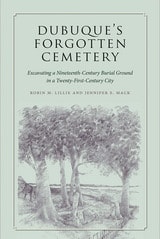
Dubuque's Forgotten Cemetery
Excavating a Nineteenth-Century Burial Ground in a Twenty-first Century CityRobin M. Lillie and Jennifer E. Mack
University of Iowa Press, 2015
The excavation fieldwork was just the beginning. Once the digging was done each summer, skeletal biologist Robin M. Lillie and archaeologist Jennifer E. Mack still faced the enormous task of teasing out life histories from fragile bones, disintegrating artifacts, and the decaying wooden coffins the families had chosen for the deceased. Poring over scant documents and sifting through old newspapers, they pieced together the story of the cemetery and its residents, a story often surprising and poignant. Weaving together science, history, and local mythology, the tale of the Third Street Cemetery provides a fascinating glimpse into Dubuque’s early years, the hardships its settlers endured, and the difficulties they did not survive.
While they worked, Lillie and Mack also grappled with the legal and ethical obligations of the living to the dead. These issues are increasingly urgent as more and more of America’s unmarked (and marked) cemeteries are removed in the name of progress. Fans of forensic crime shows and novels will find here a real-world example of what can be learned from the fragments left in time’s wake.

Duchess of Palms
A MemoirBy Nadine Eckhardt
University of Texas Press, 2009
A “fifties girl” tells the fascinating story of her marriages to novelist Billy Lee Brammer and Congressman Bob Eckhardt, and how these relationships propelled her into the multifaceted life she led on her own terms.
Child of the Great Depression, teenage "Duchess of Palms" beauty queen, wife of an acclaimed novelist and later of a brilliant U.S. congressman, and ultimately a successful single working woman and mother, Nadine Eckhardt has lived a fascinating life. In this unique, funny, and honest memoir, she recounts her journey from being a "fifties girl" who lived through the men in her life to becoming a woman in her own right, working toward her own goals.
Eckhardt's first marriage to writer Billy Lee Brammer gave her entrée to liberal political and literary circles in Austin and Washington, where she and Brammer both worked for Senator Lyndon B. Johnson. She describes the heady excitement of LBJ's world—a milieu that Brammer vividly captured in his novel The Gay Place. She next recalls her second marriage to Bob Eckhardt, whom she helped get elected to the U.S. House of Representatives, as well as her growing involvement with the counterculture of social protest, sexual revolution, and drug use. Eckhardt honestly recounts how the changing times changed her perception of herself, recalling that "I didn't know how to achieve for myself, only for others, and I felt ripped off and empty." This painful realization opened the door to a new life for Eckhardt. Her memoir concludes with a joyful description of her multifaceted later life as a restaurateur, assistant to Molly Ivins, writer, and center of a wide circle of friends.

Duffy's Iowa Caucus Cartoons
Watch 'Em RunBrian Duffy
University of Iowa Press, 2015
Whether you’re anticipating or dreading the onset of another caucus season in 2016, this book will put it all into perspective. From Jimmy Carter’s innovative 1976 effort to Barack Obama’s come-from-behind win in 2008, from George H. W. Bush’s storming to victory in 1980 to George W. Bush’s coasting to his win in 2000, from Gary Hart’s peccadillos in 1988 to John Edwards’s missteps in 2008, from Elizabeth Dole’s determination to breach the White House boys’ club in 2000 to Hillary Clinton’s fall from frontrunner to third place in 2008, here is American presidential campaigning in all its glory. With pigs.
Duncan Upshaw Fletcher
Dixie’s Reluctant ProgressiveWayne Flynt
University of Alabama Press, 2026
A Southern senator at the crossroads of change.
Duncan Upshaw Fletcher: Dixie’s Reluctant Progressive is the definitive portrait of one of Florida’s most influential yet overlooked political figures. Serving in the U.S. Senate from 1909 to 1936, Fletcher bridged the gap between Wilsonian progressivism and Roosevelt’s New Deal, shaping landmark legislation such as the Federal Farm Loan Act, the Shipping Act, and major banking reforms. Far from a demagogue, Fletcher was a methodical, pragmatic leader who championed moderation, urban progressivism, and economic development while resisting racial and religious extremism.
Wayne Flynt’s deeply researched biography illuminates Fletcher’s paradoxical career—a Unitarian in a fundamentalist state, a reformer who later embraced conservatism, and a Southern Democrat who became a loyal New Dealer. Through vivid analysis of Florida’s turbulent political landscape, the book explores themes of coalition-building, economic modernization, and the South’s evolving role in national politics. This work will captivate readers interested in Southern history, political biography, and the roots of modern progressivism. Scholars of the New Deal, reform movements, and Florida history will find it indispensable, while general readers will appreciate its lucid style and insights into a leader whose story resonates with today’s debates over moderation, governance, and social change.

Durham County
A History of Durham County, North CarolinaJean Bradley Anderson
Duke University Press, 2011
During Wind and Rain
The Jones Family Farm in the Arkansas Delta 1848-2006Margaret Jones Bolsterli
University of Arkansas Press, 2008
Dust Bowl, USA
Depression America and the Ecological Imagination, 1929–1941Brad D. Lookingbill
Ohio University Press, 2001
Whether romantic or tragic, accounts of the dramatic events surrounding the North American Dust Bowl of the “dirty thirties” unearthed anxieties buried deep in America’s ecological imagination. Moreover, the images of a landscape of fear remain embedded in the national consciousness today. In vivid form, the aesthetic of suffering captured in Dorothea Lange’s photographs and Woody Guthrie’s folk songs created the myths and memories of the Depression generation.
Dust Bowl, USA is a critical examination of the stories that grew out of the Dust Bowl experience. Across the nation, newspapers, magazines, books, films, and songs produced imagery of blight for local and mass audiences. As new technology, irrigation innovations, and conservation programs were introduced on a wide scale during the 1930s, the saga of the frontier continued to unfold through accounts of dust, drought, and desertification.
In piercing the myths brought forth in legends, lore, allegories, and anecdotes, Brad Lookingbill provides a revelatory insight into the history of the cultural narratives that have come to define an era.

Dusty, Deek, and Mr. Do-Right
High School Football in IllinoisTaylor Bell
University of Illinois Press, 2010
Dutch in Michigan
Larry Ten Harmsel
Michigan State University Press, 2002
Even though they are historically one of the smaller immigrant streams, nineteenth-century Dutch migrants and their descendants have made parts of West Michigan their own. The first Dutch in Michigan were religious dissenters whose commitment to Calvinism had long-reaching effects on their communities, even in the face of later waves of radicalized industrial immigrants and the challenges of modern life. From Calvin College to Meijer Thrifty Acres and the Tulip Festival, the Dutch presence has enriched and informed people throughout the state. Larry ten Harmsel skillfully weaves together the strands of history and modern culture to create a balanced and sensitive portrayal of this vibrant community.

Dutton's Dirty Diggers
Bertha P. Dutton and the Senior Girl Scout Archaeological Camps in the American Southwest, 1947–1957Catherine S. Fowler
University of Utah Press, 2020
Catherine Fowler chronicles a significant yet little-known program for Girl Scouts in post–WWII America. At a time when women were just beginning to enter fields traditionally dominated by men, these two-week camping caravans and archaeological excavations introduced teenage girls not only to the rich cultural and scientific heritage of the American Southwest but to new career possibilities. Dr. Bertha Dutton, curator at the Museum of New Mexico, served as trip leader.
While on the road and in camp, Dutton and other experts in anthropology, archaeology, geology, natural history, and more helped the campers appreciate what they were seeing and learning. This book details the history of the program, sharing trip itineraries and selected memories from the nearly three hundred girls who attended the camps. It also serves as a mini-biography and tribute to Bertha Dutton, who, through her knowledge, teaching, and strong persona, provided a role model for these young women, many of whom later pursued careers in anthropology and related fields.
Dyed in Crimson
Football, Faith, and Remaking Harvard's AmericaZev Eleff
University of Illinois Press, 2023
Zev Eleff tells the story of two immigrants’ sons shaped by a vision of an America that rewarded any person of virtue. As a player, the Chicago-born Horween had led Harvard to its 1920 Rose Bowl victory. As a coach, he faced intractable opposition from powerful East Coast alumni because of his values and Midwestern, Jewish background. Eleff traces Bingham and Horween’s careers as student-athletes and their campaign to wrest control of the football program from alumni. He also looks at how Horween undermined stereotypes of Jewish masculinity and dealt with the resurgent antisemitism of the 1920s.