Results by title
3283 books match the query 'art' and 128 start with d
Doris Salcedo
Edited by Julie Rodrigues Widholm and Madeleine Grynsztejn
University of Chicago Press, 2015
Published to accompany Salcedo’s first retrospective exhibition and the American debut of her major work Plegaria muda, Doris Salcedo is the most comprehensive survey of her sculptures and installations to date. In addition to featuring new contributions by respected scholars and curators, the book includes over one hundred color illustrations highlighting many pieces from Salcedo’s thirty-year career. Offering fresh perspectives on a vital body of work, Doris Salcedo is a testament to the power of one of today’s most important international artists.

Down and Dirty Down South
Politics and the Art of RevengeRoger Glasgow
Butler Center for Arkansas Studies, 2016
While pursuing a race for district prosecutor in the 1970s, Glasgow had run afoul of the local political machine. The machine later decided to teach Glasgow a lesson even though he’d lost the race. Down and Dirty Down South is Glasgow’s story of how he attempted to clear his name and also track down the people who had set him up for charges of smuggling illegal drugs into the United States.
Dragging Away
Queer Abstraction in Contemporary ArtLex Morgan Lancaster
Duke University Press, 2022

Drama-based Pedagogy
Activating Learning Across the CurriculumKathryn Dawson and Bridget Kiger Lee
Intellect Books, 1995
Kathryn Dawson and Bridget Kiger Lee provide an extensive range of tried and tested strategies, planning processes, and learning experiences, in order to create a uniquely accessible manual for those who work, think, train, and learn in educational and/or artistic settings. It is the perfect companion for professional development and university courses, as well as for already established educators who wish to increase student engagement and ownership of learning.
Dramaturgy
An IntroductionCock Dieleman
Amsterdam University Press, 2021
'Dramaturgy. An Introduction' provides a broad overview of the concept of dramaturgy and the profession of the dramaturg. It is intended for students and teachers of theatre and performance studies, but also for directors, scenographers, actors and for all lovers of theatre.
Drawing -- The Process
Edited by Jo Davies and Leo Duff
Intellect Books, 2005
Drawing - The Process is a collection of papers, theories and interviews based on the conference and exhibition of the same name held at Kingston University in 2003.
Much debate and research is currently undertaken in this area and it is the intention of the book to galvanize this, while providing a vehicle for deep enquiry. The publication will firstly comprise a collection of refereed papers representing a breadth of activity and research around the issues of drawing within the broad context of art and design activity. The second dimension of the book will be an examination of the drawing processes of high profile practitioners.
The publication will encompass the best contemporary investigation of a subject pivotal to art and design activity, and should be recognized as a fundamental text for students at both undergraduate and postgraduate levels.
Drawing Processes of Life
Molecules, Cells, OrganismsEdited by Gemma Anderson-Tempini and John Dupré
Intellect Books, 2023
An artist sketching cell division faces a problem: what is the best way to visually represent a dynamic process? This anthology, edited by an artist and a philosopher of science, explores drawing as a way of inquiring into living processes at the molecular, cellular, and organismal scale. In doing so, drawing emerges as a tool for relaying and uncovering knowledge—a pathway for research, not an end result.
Incorporating drawing studies and contributions from scholars in the humanities and life sciences, Drawing Processes of Life addresses epigenetics, epistemology, and metamorphosis in insects, proteins, and other ever-shifting biological systems. A foreword by Scott F. Gilbert, a renowned evolutionary biologist and historian of science, affirms the promise of interdisciplinary collaboration between artists and scientists.
Drawing as a Way of Knowing in Art and Science
Gemma Anderson
Intellect Books, 2017
Inspired and informed by collaboration with contemporary scientists and Goethe’s studies of morphology, as well as the work of artist Paul Klee, this book presents drawing as a means of developing and disseminating knowledge, and of understanding and engaging with the diversity of natural and theoretical forms, such as animal, vegetable, mineral, and four dimensional shapes. Anderson shows that drawing can offer a means of scientific discovery and can be integral to the creation of new knowledge in science as well as in the arts.
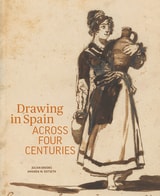
Drawing in Spain Across Four Centuries
Julian Brooks
J. Paul Getty Trust, The, 0
A revealing exploration of four centuries of Spanish drawings—from Murillo and Ribera to Goya and Sorolla—through the themes of religion, power, and daily life.
Spanish drawing has long been viewed through the lens of a few celebrated artists. Drawing in Spain Across Four Centuries brings together more than 60 works on paper from the complementary collections of the J. Paul Getty Museum and the Meadows Museum to tell a broader and more dynamic story. Essays trace the evolution of Spanish drawing from the Renaissance to modernity, showing how artists used drawing as a tool for training in workshops and academies, a means of circulating ideas across Europe and the Americas, and a medium for expression and experimentation. Organized around the themes of faith, politics, and everyday experience, the volume reveals a vibrant and diverse tradition that spans centuries and geography.
- Introduces readers to Spanish drawing, a field long overshadowed by Italian, French, German, and Dutch schools.
- Widens our view of the field by examining drawing and printmaking in Mexico City and other locations in Spain’s global empire.
- Features works by well-known artists like Bartolomé Esteban Murillo, Jusepe de Ribera, Francisco de Goya, Mariano Fortuny y Marsal, and Joaquín Sorolla y Bastida, alongside lesser-known figures whose compositions open new perspectives on the field.
Bringing together masterpieces and surprising discoveries, this volume offers readers an engaging and accessible introduction to the rich tradition of drawing in Spain and beyond.
This volume is published to accompany an exhibition on view at the Meadows Museum from September 19, 2027, to January 9, 2028, and at the J. Paul Getty Museum at the Getty Center from February 15 to June 4, 2028.
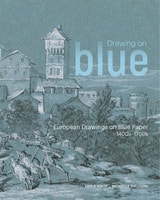
Drawing on Blue
European Drawings on Blue Paper, 1400s–1700sEdina Adam
J. Paul Getty Trust, The, 2024
The rich history of blue paper, from the late fifteenth to the mid-eighteenth centuries, illuminates themes of transcultural interchange, international trade, and global reach. Through the examination of significant works, this volume investigates considerations of supply, use, economics, and innovative creative practice. How did the materials necessary for the production of blue paper reach artistic centers? How were these materials produced and used in various regions? Why did they appeal to artists, and how did they impact artistic practice and come to be associated with regional artistic identities? How did commercial, political, and cultural relations, and the mobility of artists, enable the dispersion of these materials and related techniques? Bringing together the work of the world’s leading specialists, this striking publication is destined to become essential reading on the history, materials, and techniques of drawings executed on blue paper.
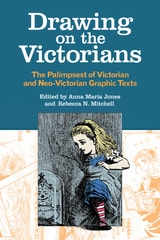
Drawing on the Victorians
The Palimpsest of Victorian and Neo-Victorian Graphic TextsAnna Maria Jones
Ohio University Press, 2017
Late nineteenth-century Britain experienced an unprecedented explosion of visual print culture and a simultaneous rise in literacy across social classes. New printing technologies facilitated quick and cheap dissemination of images—illustrated books, periodicals, cartoons, comics, and ephemera—to a mass readership. This Victorian visual turn prefigured the present-day impact of the Internet on how images are produced and shared, both driving and reflecting the visual culture of its time.
From this starting point, Drawing on the Victorians sets out to explore the relationship between Victorian graphic texts and today’s steampunk, manga, and other neo-Victorian genres that emulate and reinterpret their predecessors. Neo-Victorianism is a flourishing worldwide phenomenon, but one whose relationship with the texts from which it takes its inspiration remains underexplored.
In this collection, scholars from literary studies, cultural studies, and art history consider contemporary works—Alan Moore’s League of Extraordinary Gentlemen, Moto Naoko’s Lady Victorian, and Edward Gorey’s Gashlycrumb Tinies, among others—alongside their antecedents, from Punch’s 1897 Jubilee issue to Alice in Wonderland and more. They build on previous work on neo-Victorianism to affirm that the past not only influences but converses with the present.
Contributors: Christine Ferguson, Kate Flint, Anna Maria Jones, Linda K. Hughes, Heidi Kaufman, Brian Maidment, Rebecca N. Mitchell, Jennifer Phegley, Monika Pietrzak-Franger, Peter W. Sinnema, Jessica Straley
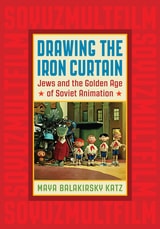
Drawing the Iron Curtain
Jews and the Golden Age of Soviet AnimationMaya Balakirsky Katz
Rutgers University Press, 2016

Drawing with Great Needles
Ancient Tattoo Traditions of North AmericaEdited by Aaron Deter-Wolf and Carol Diaz-Granados
University of Texas Press, 2013
For thousands of years, Native Americans throughout the Eastern Woodlands and Great Plains used the physical act and visual language of tattooing to construct and reinforce the identity of individuals and their place within society and the cosmos. The act of tattooing served as a rite of passage and supplication, while the composition and use of ancestral tattoo bundles was intimately related to group identity. The resulting symbols and imagery inscribed on the body held important social, civil, military, and ritual connotations within Native American society. Yet despite the cultural importance that tattooing held for prehistoric and early historic Native Americans, modern scholars have only recently begun to consider the implications of ancient Native American tattooing and assign tattooed symbols the same significance as imagery inscribed on pottery, shell, copper, and stone.
Drawing with Great Needles is the first book-length scholarly examination into the antiquity, meaning, and significance of Native American tattooing in the Eastern Woodlands and Great Plains. The contributors use a variety of approaches, including ethnohistorical and ethnographic accounts, ancient art, evidence of tattooing in the archaeological record, historic portraiture, tattoo tools and toolkits, gender roles, and the meanings that specific tattoos held for Dhegiha Sioux and other Native speakers, to examine Native American tattoo traditions. Their findings add an important new dimension to our understanding of ancient and early historic Native American society in the Eastern Woodlands and Great Plains.
Drawing
The Enactive Evolution of the PractitionerPatricia Cain
Intellect Books, 2010
Despite recent technological changes that have digitized many forms of artistic creation, the practice of drawing, in the traditional sense, has remained constant. However, many publications about this subject rely on discipline-dependent distinctions to discuss the activity’s function. Drawing: The Enactive Evolution of the Practitioner redefines drawing more holistically as an enactive phenomenon, one reliant on motor responses, and makes connections between a variety of disciplines in order to find out what happens when we draw. Instead of the finite event of producing an artifact, drawing is a process and an end in itself. By synthesizing enactive thinking and the practice of drawing, this volume provides valuable insights into the creative mind, and will appeal to scholars and practitioners alike.
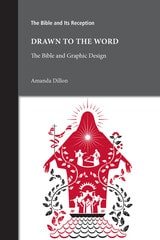
Drawn to the Word
The Bible and Graphic DesignAmanda Dillon
SBL Press, 2021
A unique study of lectionaries and graphic design as a site of biblical reception
How artists portrayed the Bible in large canvas paintings is frequently the subject of scholarly exploration, yet the presentation of biblical texts in contemporary graphic designs has been largely ignored. In this book Amanda Dillon engages multimodal analysis, a method of semiotic discourse, to explore how visual composition, texture, color, directionality, framing, angle, representations, and interactions produce potential meanings for biblical graphic designs. Dillon focuses on the artworks of two American graphic designers—the woodcuts designed by Meinrad Craighead for the Roman Catholic Sunday Missal and Nicholas Markell’s illustrations for the worship books of the Evangelical Lutheran Church in America—to present the merits of multimodal analysis for biblical reception history.
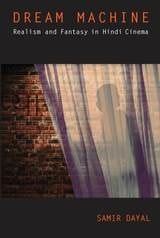
Dream Machine
Realism and Fantasy in Hindi CinemaSamir Dayal
Temple University Press, 2015
Popular Hindi films offer varied cinematic representations ranging from realistic portraits of patriotic heroes to complex fantasies that go beyond escapism. In Dream Machine, Samir Dayal provides a history of Hindi cinema starting with films made after India’s independence in 1947. He constructs a decade-by-decade consideration of Hindi cinema’s role as a site for the construction of “Indianness.”
Dayal suggests that Hindi cinema functions as both mirror and lamp, reflecting and illuminating new and possible representations of national and personal identity, beginning with early postcolonial films including Awaara and Mother India, a classic of the Golden Age. More recent films address critical social issues, such as My Name is Khan and Fire, which concern terrorism and sexuality, respectively. Dayalalso chronicles changes in the industry and in audience reception, and the influence of globalization, considering such films as Slumdog Millionaire.
Dream Machine analyzes the social and aesthetic realism of these films concerning poverty and work, the emergence of the middle class, crime, violence, and the law while arguing for their sustained and critical attention to forms of fantasy.
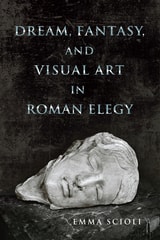
Dream, Fantasy, and Visual Art in Roman Elegy
Emma Scioli
University of Wisconsin Press, 2015
By treating dreams as a mode for viewing, an analogy suggested by diverse ancient authors, Emma Scioli extracts new information from the poetry of Propertius, Tibullus, and Ovid about the Roman concept of “seeing” dreams. Through comparison with other visual modes of description, such as ekphrasis and simile, as well as with related types of visual experience, such as fantasy and voyeurism, Scioli demonstrates similarities between artist, dreamer, and poet as creators, identifying the dreamer as a particular type of both viewer and narrator.

Dreamland of Humanists
Warburg, Cassirer, Panofsky, and the Hamburg SchoolEmily J. Levine
University of Chicago Press, 2013
In Dreamland of Humanists, Emily J. Levine considers not just these men, but the historical significance of the time and place where their ideas took form. Shedding light on the origins of their work on the Renaissance and the Enlightenment, Levine clarifies the social, political, and economic pressures faced by German-Jewish scholars on the periphery of Germany’s intellectual world. By examining the role that context plays in our analysis of ideas, Levine confirms that great ideas—like great intellectuals—must come from somewhere.
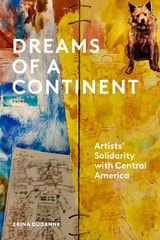
Dreams of a Continent
Artists' Solidarity with Central AmericaErina Duganne
University of Texas Press, 2026
A biography of Artists Call, an influential 1980s artist group that protested US intervention in Latin America.
The 1980s saw the flourishing of neoliberalism in all realms of culture. In the fine arts, libertarian individualism, media sensationalism, and profit motive converged in million-dollar auctions—and a widespread insistence that activism had no place in the arts. Yet even some participants of this elite New York art world resisted. Dreams of a Continent tells the forgotten story of a diverse collective that defied culture-industry norms by condemning Reagan-era imperialism in Latin America while building transnational solidarity.
Drawing on fresh archival discoveries, Erina Duganne reconstructs the political imagination of Artists Call Against U.S. Intervention in Central America. A network with more than a thousand members in New York City, Artists Call produced thirty-one exhibitions in its brief life, along with poetry readings and performances that brought together US and Latin American cultural workers in support of self-determination throughout the hemisphere. This richly illustrated volume shows how the aesthetics of Artists Call emphasized historical contingency in order to envision radically alternative futures. In the process, its activism fostered a global community that overcame stark North-South power imbalances.
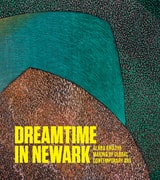
Dreamtime in Newark
Aljira and the Making of Global Contemporary ArtAlliyah Allen
Rutgers University Press, 2026
Dreamtime in Newark surveys the transition of Aljira from an artist-led studio space to a major arts institution in Newark, New Jersey, that abruptly closed in 2018 due to gentrification and financial pressure. Exploring the origins and milestones of the gallery, the book examines how Aljira became a space for the marginalized artist and curator and aligned with the trend of artists-led “alternative-art-spaces”—contributing to the rise of diverse art markets and breakthroughs in representation throughout the museum collections, exhibitions, and the broader art world. This volume offers a historical analysis of the relationship between Aljira and the Newark Museum of Art, given the many collaborations on exhibitions, residencies, and shared curatorial strategies. Along with providing a wider historicity, the book amplifies the museum’s role in preserving Aljira’s legacy—especially as the city’s arts ecosystem evolves. The book underscores the museum’s role in preserving Aljira’s history and legacy. Bringing together contributions from the extended community of artists, curators, critics, and art historians, the project works against the erasure of a vital part of contemporary art and cultural history. Before conversations of decolonizing the art world were commonplace, Aljira forged a free and open vision for the art world that cross-pollinated with the Newark Museum of Art’s egalitarian and populist roots and global collections.
The book, which accompanies an exhibition, October 15, 2026–June 20, 2027, also considers the impact of Aljira, founded in the aftermath of the 1967 Newark Rebellion, on the city of Newark and how its thirty-five-year tenure driven by social engagement and community practice helped to crystalize Newark’s visual arts scene.
Artists in the exhibition: Manuel Acevedo, Derrick Adams, David Ambrose, El Anatsui, Luis Cruz Azaceta, Firelei Báez, Amiri Baraka, Hugo X. Bastidas, Dawoud Bey, Camille Billops, Frank Bowling, Michael Paul Britto, Andy Brown, Nanette Carter, Willie Cole, Cicely Cottingham, Victor Davson, David Driskell, Dahlia Elsayed, Adama Delphine Fawundu, Chitra Ganesh, Jerry Gant, Jeffrey Gibson, Grace Graupe-Pillard, Carl E. Hazlewood, Duron Jackson, Ben Jones, Jayson Keeling, Donald Locke, Hew Locke, Franco Mondini-Ruiz, Olu Oguibe, Joe Overstreet, Nell Painter, Jaune Quick-to-See Smith, Judy Blum Reddy, Freddy Rodriguez, Kevin Sampson, Dread Scott, Fausto Sevila, Nyugen Smith, Helen Stummer, Mickalene Thomas, Noelle Lorraine Williams, Philemona Williamson
Drive in Cinema
Essays on Film, Theory and PoliticsMarc James Léger
Intellect Books, 2015
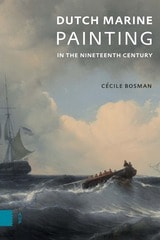
Dutch Marine Painting in the Nineteenth Century
Cécile Bosman
Amsterdam University Press, 2026
It turns out that throughout the nineteenth century, marine painting was seen in Dutch art circles as a vehicle for patriotism. This kind of cultural nationalism was rooted in the country's historical connection with the water and, in particular, the glorification of the Netherlands as a seafaring nation. An enduring myth that is now the subject of intense public debate. This beautifully illustrated book fills a gap in art and cultural-historical knowledge of marine painting, while offering an insightful look at the still influential nineteenth century.
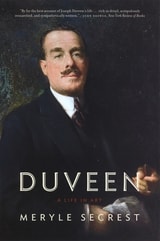
Duveen
A Life in ArtMeryle Secrest
University of Chicago Press, 2005
The first major biography of Duveen in more than fifty years and the first to make use of his enormous archive—only recently opened to the public—Meryle Secrest's Duveen traces the rapid ascent of the tirelessly enterprising dealer, from his humble beginnings running his father's business to knighthood and eventually apeerage. The eldest of eight sons of Jewish-Dutch immigrants, Duveen inherited an uncanny ability to spot a hidden treasure from his father, proprietor of a prosperous antiques business. After his father's death, Duveen moved the company into the riskier but lucrative market of paintings and quickly became one of the world's leading art dealers. The key to Duveen's success was his simple observation that while Europe had the art, America had the money; Duveen made his fortune by buying art from declining European aristocrats and selling them to the "squillionaires" in the United States.
"By far the best account of Joseph Duveen's life in a biography that is rich in detail, scrupulously researched, and sympathetically written. [Secrest's] inquiries into early-twentieth-century collecting whet our appetite for a more general history of the art market in the first half of the twentieth century."—John Brewer, New York Review of Books
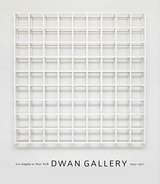
Dwan Gallery
Los Angeles to New York, 1959–1971James Meyer
University of Chicago Press, 2016
Alongside lush full-color images of one hundred leading artworks, the book deepens our understanding of the artistic exchanges Dwan facilitated during this age of mobility, when air travel and the interstate highway system linked the two coasts and transformed the making of art and the sites of its exhibition. James Meyer, the curator of the exhibition and the foremost authority on minimal art, contributes an essay that is a sophisticated and broad-ranging analysis of Dwan’s legacy.
Honoring Dwan’s significant influence and impact on postwar art, Dwan Gallery is a rich and informative collection that will be treasured by fans of contemporary art.

Dyeing with the Earth
Textiles, Tradition, and Sustainability in Contemporary JapanCharlotte Linton
Duke University Press, 2025
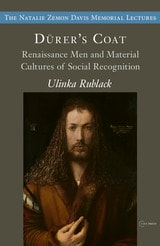
Dürer's Coats
Renaissance Men and Material Cultures of Social RecognitionUlinka Rublack
Central European University Press, 2025
documenta 12 education 2
Between Critical Practice and Visitor Services Results of a Research ProjectEdited by Carmen Mörsch
Diaphanes, 2009
Education is situated in tension between public sphere and institution, amateur and professional, artist and audience. Its development needs felicitous examples as well as rigor in discussing problems towards identifying practical solutions.
»documenta 12 education« presents in two illustrated volumes the education formats with concomitant research, providing a basis for developing theory and praxis of gallery education.
These volumes are an ideal resource for people working in the fields of curating exhibitions, gallery education, youth work and cultural policy. People less familiar with cultural work will find in these books a valuable introduction to the field of gallery education.
Volume 2 focuses on a theory of gallery education, its methods and contexts, and reflects theoretically on examples presented in Volume 1. It is addressed to professionals from the field of gallery education, cultural education and formal education.
documenta 12 education I
Engaging audiences, opening institutions Methods and strategies in education at documenta 12Edited by Ayse Güleç, Claudia Hummel, Ulrich Schötker, and Wanda Wieczorek
Diaphanes, 2009
Education is situated in tension between public sphere and institution, amateur and professional, artist and audience. Its development needs felicitous examples as well as rigor in discussing problems towards identifying practical solutions.
»documenta 12 education« presents in two illustrated volumes the education formats with concomitant research, providing a basis for developing theory and praxis of gallery education.
These volumes are an ideal resource for people working in the fields of curating exhibitions, gallery education, youth work and cultural policy. People less familiar with cultural work will find in these books a valuable introduction to the field of gallery education.
Volume 1 gives a comprehensive and richly illustrated survey of formats and models of education and collaboration with the public at documenta 12.