Results by title
168 books match the query '1989-' and 5 start with e
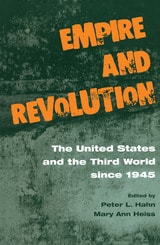
EMPIRE REVOLUTION
THE UNITED STATES AND THE THIRD WORLD SIPETER L. & MARY ANN HAHN & HEISS
The Ohio State University Press, 2000
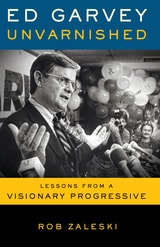
Ed Garvey Unvarnished
Lessons from a Visionary ProgressiveRob Zaleski
University of Wisconsin Press, 2019
Shortly before he died, Garvey expressed his views on everything in a series of detailed, no-holds-barred interviews with journalist Rob Zaleski. In his trademark witty, blunt, and often abrasive style, he offered his impressions of the political climate, worries about the environment, and Act 10 protests on Capitol Square. Garvey's candor during these conversations provides deeper insight into the personal highs and lows he experienced over his rich life. Diehard followers will fondly remember his energetic campaigns, but they may be surprised to learn of his long-simmering disappointment after those losses. Ever timely and meaningful, Garvey's words offer a path for how the Democratic Party, both within Wisconsin and nationally, can regain its soul.
End of the Nation-State
Jean-Marie Guehenno
University of Minnesota Press, 2000
Envisioning Eastern Europe
Postcommunist Cultural StudiesMichael D. Kennedy, Editor
University of Michigan Press, 1994
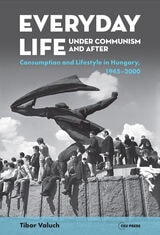
Everyday Life under Communism and After
Lifestyle and Consumption in Hungary, 1945–2000Tibor Valuch
Central European University Press, 2022
By providing a survey of consumption and lifestyle in Hungary during the second half of the twentieth century, this book shows how common people lived during and after tumultuous regime changes. After an introduction covering the late 1930s, the study centers on the communist era, and goes on to describe changes in the post-communist period with its legacy of state socialism.
Tibor Valuch poses a series of questions. Who could be called rich or poor and how did they live in the various periods? How did living, furnishings, clothing, income, and consumption mirror the structure of the society and its transformations? How could people accommodate their lifestyles to the political and social system? How specific to the regime was consumption after the communist takeover, and how did consumption habits change after the demise of state socialism? The answers, based on micro-histories, statistical data, population censuses and surveys help to understand the complexities of daily life, not only in Hungary, but also in other communist regimes in east-central Europe, with insights on their antecedents and afterlives.