Results by title
8642 books match the query '20th century' and 236 start with e

E. W. Scripps and the Business of Newspapers
Gerald Baldasty
University of Illinois Press, 1999
Edward Willis Scripps revolutionized the newspaper industry by applying modern business practices. His press empire grew to more than forty newspapers supported by a telegraphic news service and an illustrated news features syndicate. Convinced that big business was corrupting the American press, Scripps resisted supporting his newspapers through advertising. He also aimed them at the working class, an audience virtually ignored by most newspaper publishers of his era.
Drawing on Scripps's business correspondence, Gerald Baldasty provides a portrait of a long-neglected entrepreneurial giant. Maintaining that the press should support the democratic endeavor by informing its largest constituency, Scripps succeeded in creating a string of small, one-penny newspapers that advocated for the common people by crusading for lower streetcar fares, free textbooks for public school children, municipal ownership of utilities, and pure food legislation, among many other causes.

E.B. White
The Emergence of an EssayistRobert L., Jr. Root
University of Iowa Press, 1999
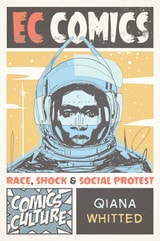
EC Comics
Race, Shock, and Social ProtestQiana Whitted
Rutgers University Press, 2019
Entertaining Comics Group (EC Comics) is perhaps best-known today for lurid horror comics like Tales from the Crypt and for a publication that long outlived the company’s other titles, Mad magazine. But during its heyday in the early 1950s, EC was also an early innovator in another genre of comics: the so-called “preachies,” socially conscious stories that boldly challenged the conservatism and conformity of Eisenhower-era America.
EC Comics examines a selection of these works—sensationally-titled comics such as “Hate!,” “The Guilty!,” and “Judgment Day!”—and explores how they grappled with the civil rights struggle, antisemitism, and other forms of prejudice in America. Putting these socially aware stories into conversation with EC’s better-known horror stories, Qiana Whitted discovers surprising similarities between their narrative, aesthetic, and marketing strategies. She also recounts the controversy that these stories inspired and the central role they played in congressional hearings about offensive content in comics.
The first serious critical study of EC’s social issues comics, this book will give readers a greater appreciation of their legacy. They not only served to inspire future comics creators, but also introduced a generation of young readers to provocative ideas and progressive ideals that pointed the way to a better America.
ELUSIVE CHILDHOOD
IMPOSSIBLE REPRESENTATIONS IN MODERN FICTIONSusan Honeyman
The Ohio State University Press, 2005

EMBASSY GIRLS
JULIA DAVIS
West Virginia University Press, 1992
EMPIRE REVOLUTION
THE UNITED STATES AND THE THIRD WORLD SIPETER L. & MARY ANN HAHN & HEISS
The Ohio State University Press, 2000
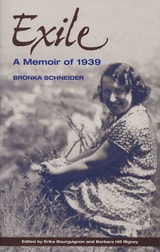
EXILE
A MEMOIR OF 1939Bronka Schneider Edited with forewords by Erika Bourguignon and Barbara Hill Rigney
The Ohio State University Press, 1998
Bronka Schneider and her husband, Joseph, were two of the thirty thousand Austrian Jews admitted as refugees to Great Britain between March 1938 and 2 September 1939. It was not until 1960, however, that Schneider wrote her memoir about the year she spent as a housekeeper, with Joseph as a butler, in a Scottish castle.
Schneider tells of daily encounters—with her employers, the English lady and her husband, a retired British civil servant who had spent many years in India; the village locals; other refugees; and a family of evacuees from the slums of Glasgow.
The editors have divided this memoir into chapters, adding headlines from the London Times as epigraphs. These headlines, reporting the escalating events of World War II, are in stark contrast to daily activities of the residents of this isolated region of Scotland. A commentary by Erika Bourguignon provides historical, political, and cultural background of this period.
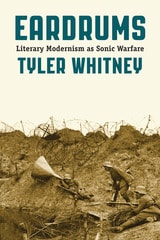
Eardrums
Literary Modernism as Sonic WarfareTyler Whitney
Northwestern University Press, 2019
Eardrums is the first book-length study to explore the relationship between acoustical modernity and German modernism, charting a literary and cultural history written in and around the eardrum. The result is not only a new way of understanding the sonic impulses behind key literary texts from the period. It also outlines an entirely new approach to the study of literature as as the interaction of text and sonic practice, voice and noise, which will be of interest to scholars across literary studies, media theory, sound studies, and the history of science.
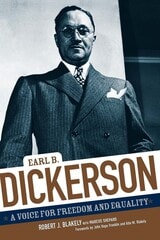
Earl B. Dickerson
A Voice for Freedom and EqualityRobert J. Blakely
Northwestern University Press, 2006
At fifteen, Earl Burrus Dickerson stowed away on a train in Canton, Mississippi, fleeing the racial oppression of his native South. But Chicago, the boy's destination, was no haven of racial fairness and equality. His flight north was in fact the beginning of a journey that would last a lifetime--and would forever pit Dickerson against the forces of racial injustice. Earl B. Dickerson's story, told here for the first time, is one of courage and character, of remarkable accomplishment in the face of terrible odds; it is also emblematic of the twentieth-century struggle for civil rights--a crucial chapter of African American history as it was lived by one uncompromising individual.
In this book, Robert J. Blakely tells how Dickerson (1891-1986) worked his way through preparatory schools and college, a segregated officer's training school, and law school at the University of Chicago. The story follows Dickerson's career as general counsel to the first insurance company owned and operated by African Americans; the first African American Democratic alderman elected to the Chicago City Council; a member of FDR's first Fair Employment Practices Committee; leader of the movement that broke the color barrier to membership in the Illinois Bar Association; and, perhaps most famously, the power behind Hansberry v. Lee, the U.S. Supreme Court case that marked the beginning of the end of restrictive real estate covenants--one of the most pernicious legal tools of segregation in the North. Blakely gives us a sense of the man behind the achievements, the life that defied conventions and statistics, and the world in which "the dean of Chicago's black lawyers" became a pioneering architect for equal opportunity in American life.
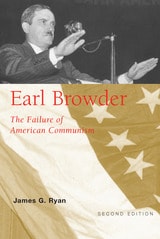
Earl Browder
The Failure of American CommunismJames G. Ryan
University of Alabama Press, 2005
Earl Browder, the preeminent 20th-century Communist party leader in the United States, steered the CPUSA through the critical years of the Great Depression and World War II. A Kansas native and veteran of numerous radical movements, he was peculiarly fitted by circumstance and temperament to head the cause during its heyday.
Serving as a bridge between American Communism’s secret and public worlds, Browder did more than anyone to attempt to explain the Soviet Union’s shifting policies to the American people in a way that would serve the interests of the CPUSA. A proud and loyal follower of Joseph Stalin, Browder nevertheless sought to move the party into the U.S. political mainstream. He used his knowledge of domestic politics to persuade the Communist International to modify Popular Front (1935-1939) tactics for the United States.
Despite his rise in the hierarchy, he possessed an independent streak that ultimately proved his undoing. Imprisonment as he neared age 50 left permanent psychological damage. After being released with the approval of President Franklin D. Roosevelt, Browder lost his perspective and began entertaining delusions of grandeur about his status in American politics and in the world Communist movement. Still, he could never quite bring legitimacy to the CPUSA because he lacked the vision and moral courage to separate himself totally from the Soviet Union. Ryan concludes that Browder was not so much insincere as deluded. His failure contributed to the demise of the popularity of the Communist party in the United States.
In preparation for this book, the author consulted the Browder Papers at Syracuse University and U.S. Government documents, particularly the F.B.I. files. In addition, he traveled to Russia for research in the Soviet Archives when recently opened to Western scholars, including the records of the former Communist International and a collection of American Communist party files, 1919-1944, shipped secretly to Moscow long ago. Indeed, until 1992, the existence of the CPUSA collection was only rumored.

Earline's Pink Party
The Social Rituals and Domestic Relics of a Southern WomanElizabeth Findley Shores
University of Alabama Press, 2017
A compelling, genre-bending page-turner, Earline’s Pink Party: The Social Rituals and Domestic Relics of a Southern Woman analyzes the life of a small-city matron in the Deep South. A combination of biography, material culture analysis, social history, and memoir, this volume offers a new way of thinking about white racism through Shores’s conclusion that Earline’s earliest childhood experiences determined her worldview.
Set against a fully drawn background of geography and culture and studded with detailed investigations of social rituals (such as women’s parties) and objects (such as books, handwritten recipes, and fabric scraps), Earline’s Pink Party tells the story of an ordinary woman, the grandmother Shores never knew. Looking for more than the details and drama of bourgeois Southern life, however, the author digs into generations of family history to understand how Earline viewed the racial terror that surrounded her during the Jim Crow years in this fairly typical southern town.
Shores seeks to narrow a gap in the scholarship of the American South, which has tended to marginalize and stereotype well-to-do white women who lived after Emancipation. Exploring her grandmother’s home and its contents within the context of Tuscaloosa society and historical events, Shores evaluates the belief that women like Earline consciously engaged in performative rituals in order to sustain the “fantastical” view of the white nobility and the contented black underclass. With its engaging narrative, illustrations, and structure, this fascinating book should interest scholars of memory, class identity, and regional history, as well as sophisticated lay readers who enjoy Southern history, foodways, genealogy, and material culture.
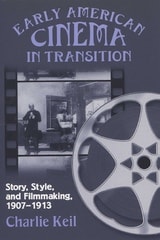
Early American Cinema in Transition
Story, Style, and Filmmaking, 1907–1913Charlie Keil
University of Wisconsin Press, 2001
The period 1907–1913 marks a crucial transitional moment in American cinema. As moving picture shows changed from mere novelty to an increasingly popular entertainment, fledgling studios responded with longer running times and more complex storytelling. A growing trade press and changing production procedures also influenced filmmaking. In Early American Cinema in Transition, Charlie Keil looks at a broad cross-section of fiction films to examine the formal changes in cinema of this period and the ways that filmmakers developed narrative techniques to suit the fifteen-minute, one-reel format.
Keil outlines the kinds of narratives that proved most suitable for a single reel’s duration, the particular demands that time and space exerted on this early form of film narration, and the ways filmmakers employed the unique features of a primarily visual medium to craft stories that would appeal to an audience numbering in the millions. He underscores his analysis with a detailed look at six films: The Boy Detective; The Forgotten Watch; Rose O’Salem-Town; Cupid’s Monkey Wrench; Belle Boyd, A Confederate Spy; and Suspense.
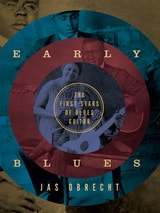
Early Blues
The First Stars of Blues GuitarJas Obrecht
University of Minnesota Press, 2015
Winner of the 2016 Living Blues Award for Blues Book of the Year
The complete history of early blues guitar, with portraits of its first stars—now in paperback
Since the early 1900s, blues and the guitar have traveled side by side. This book tells the story of their pairing from the first reported sightings of blues musicians, to the rise of nationally known stars, to the onset of the Great Depression, when blues recording virtually came to a halt.
Like the best music documentaries, Early Blues: The First Stars of Blues Guitar interweaves musical history, quotes from celebrated musicians (B.B. King, John Lee Hooker, Ry Cooder, and Johnny Winter, to name a few), and a spellbinding array of life stories to illustrate the early days of blues guitar in rich and resounding detail. In these chapters, you’ll meet Sylvester Weaver, who recorded the world’s first guitar solos, and Paramount Records artists Papa Charlie Jackson, Blind Lemon Jefferson, and Blind Blake, the “King of Ragtime Blues Guitar.” Blind Willie McTell, the Southeast’s superlative twelve-string guitar player, and Blind Willie Johnson, street-corner evangelist of sublime gospel blues, also get their due, as do Lonnie Johnson, the era’s most influential blues guitarist; Mississippi John Hurt, with his gentle, guileless voice and syncopated fingerpicking style; and slide guitarist Tampa Red, “the Guitar Wizard.”
Drawing on a deep archive of documents, photographs, record company ads, complete discographies, and up-to-date findings of leading researchers, this is the most comprehensive and complete account ever written of the early stars of blues guitar—an essential chapter in the history of American music.
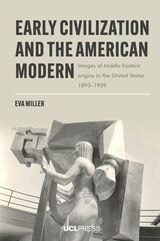
Early Civilization and the American Modern
Images of Middle Eastern Origins in the United States, 1893–1939Eva Miller
University College London, 2024
Early Civilization and the American Modern explores how the teleological narrative that civilization and its benefits—science, law, writing, art, and architecture—began in Egypt and Mesopotamia addressed anxieties about the United States’ unique role in the long march of progress. To tackle this phenomenon, author Eva Miller highlights central collaborators of the creation of progressive visual narratives in key institutions, world’s fairs, and popular media such as Orientalist James Henry Breasted, astronomer George Ellery Hale, architect Bertram Grosvenor Goodhue, and decorative artists Lee Lawrie and Hildreth Meière.
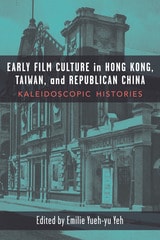
Early Film Culture in Hong Kong, Taiwan, and Republican China
Kaleidoscopic HistoriesEmilie Yueh-yu Yeh, Editor
University of Michigan Press, 2018
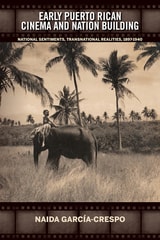
Early Puerto Rican Cinema and Nation Building
National Sentiments, Transnational Realities, 1897-1940Naida García-Crespo
Bucknell University Press, 2019
Published by Bucknell University Press. Distributed worldwide by Rutgers University Press.
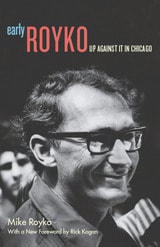
Early Royko
Up Against It in ChicagoMike Royko
University of Chicago Press, 2010
Combining the incisive pen of a newspaperman and the compassionate soul of a poet, Mike Royko became a Chicago institution—in Jimmy Breslin’s words, "the best journalist of his time." Early Royko: Up Against It in Chicago will restore to print the legendary columnist’s earliest writings, which chronicle 1960s Chicago with the moral vision, ironic sense, and razor-sharp voice that would remain Royko’s trademark.
This collection of early columns from the Chicago Daily News ranges from witty social commentary to politically astute satire. Some of the pieces are falling-down funny and others are tenderly nostalgic, but all display Royko’s unrivaled skill at using humor to tell truth to power. From machine politicians and gangsters to professional athletes, from well-heeled Chicagoans to down-and-out hoodlums, no one escapes Royko’s penetrating gaze—and resounding judgment. Early Royko features a memorable collection of characters, including such well-known figures as Hugh Hefner, Mayor Richard J. Daley, and Dr. Martin Luther King. But these boldfaced names are juxtaposed with Royko’s beloved lesser knowns from the streets of Chicago: Mrs. Peak, Sylvester "Two-Gun Pete" Washington, and Fats Boylermaker, who gained fame for leaning against a corner light pole from 2 a.m. Saturday until noon Sunday, when his neighborhood tavern reopened for business.
Accompanied by a foreword from Rick Kogan, this new edition will delight Royko’s most ardent fans and capture the hearts of a new generation of readers. As Kogan writes, Early Royko "will remind us how a remarkable relationship began—Chicago and Royko, Royko and Chicago—and how it endures."
Early Stories by Tennessee Williams
Tennessee Williams
University of Iowa Press, 2025
In notes for each story, additional context is provided regarding locations, occupations, and individuals. All of this enriches a critical understanding of Tennessee Williams’s major works such as The Glass Menagerie, A Streetcar Named Desire, Cat on a Hot Tin Roof, Night of the Iguana, and Suddenly Last Summer.
Earth Abideth
George Dell
The Ohio State University Press, 1999
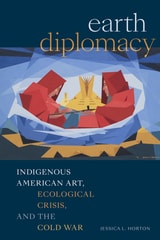
Earth Diplomacy
Indigenous American Art, Ecological Crisis, and the Cold WarJessica L. Horton
Duke University Press, 2024
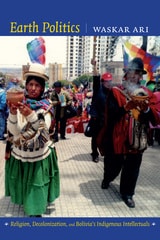
Earth Politics
Religion, Decolonization, and Bolivia's Indigenous IntellectualsWaskar Ari
Duke University Press, 2014
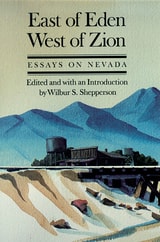
East Of Eden, West Of Zion
Essays On NevadaWilbur S. Shepperson
University of Nevada Press, 1989
A collection of essays in which a dozen historians and novelists present their impressions and concerns about "end of the century Nevada." Human expectations and illusions are seen as a backdrop for today's Nevada as a new human frontier. As an overview of Nevada society, this study deals with culture as well as economics, with tradition as well as rapid population growth. The essayists inquire whether the friction between acquisition and preservation, quick wealth and refined sensitivity, will build a more humane and enlightened society.

Eastern Figures
Orient and Empire in British WritingDouglas Kerr
Hong Kong University Press, 2008

Easy Living
The Rise of the Home OfficeElizabeth A Patton
Rutgers University Press, 2020

Eating Right in America
The Cultural Politics of Food and HealthCharlotte Biltekoff
Duke University Press, 2013
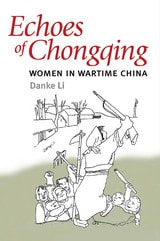
Echoes of Chongqing
Women in Wartime ChinaDanke Li
University of Illinois Press, 2010
This collection of annotated oral histories records the personal stories of twenty Chinese women who lived in the wartime capital of Chongqing during China's War of Resistance against Japan during World War II. By presenting women's remembrances of the war, this study examines the interplay between oral history and traditional historical narrative, public discourse, and private memories. The women interviewed came from differing social, economic, and educational backgrounds and experienced the war in a variety of ways, some of them active in the communist resistance and others trying to support families or pursue educations in the face of wartime upheaval. Their stories demonstrate that the War of Resistance had two faces: one presented by official propaganda and characterized by an upbeat unified front against Japan, the other a record of invisible private stories and a sobering national experience of death and suffering. The accounts of how women coped, worked, and lived during the war years in the Chongqing region recast historical understanding of the roles played by ordinary people in wartime and give women a public voice and face that, until now, have been missing from scholarship on the war.
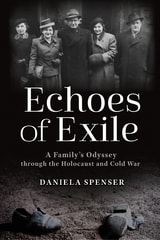
Echoes of Exile
A Family’s Odyssey through the Holocaust and Cold WarDaniela Spenser
University of Alabama Press, 2025
A sweeping exploration of survival, resilience, and the fate of one family amid Europe’s most turbulent century.
Echoes of Exile reveals the seismic disruptions of twentieth-century European history through the intimate lens of one family’s struggle to survive. Setting out to record the life of her mother, Ruth, Daniela Spenser unearthed personal facts and stories that additionally illuminate the shared traumas and experiences of millions of Czech, Polish, and German Jews who died in the Holocaust, as well as the stories of those who survived and lived under Communism and the Cold War. Her resulting work is a fascinating hybrid that combines family letters and interviews with deeply researched political history spanning from the collapse of the Austro-Hungarian Empire to the fall of the Berlin Wall.
Spenser’s fascinating work reveals the difficult choices her mother and family faced, the tests to their loves and loyalties, and the lingering scars of exile. More than a family history, it weaves personal and historical narratives with mundane and momentous threads to create a fresh, distinctive fabric. Spenser recovers fragments of the past that contribute to a map of the present and possibilities for the future. An engrossing account of survival, resilience, and the enduring human spirit amid the maelstrom of Europe’s savage twentieth century, Echoes of Exile will interest readers who value firsthand accounts of significant events and who seek to understand the complexities of survival, identity, and political change through intimate, lived experiences.
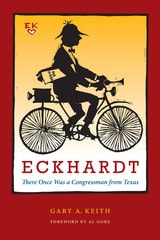
Eckhardt
There Once Was a Congressman from TexasBy Gary A. Keith
University of Texas Press, 2007
Runner-up, Violet Crown Award, Writer's League of Texas, 2008
Renowned for his "brilliant legislative mind" and political oratory—as well as for bicycling to Congress in a rumpled white linen suit and bow tie—U.S. Congressman Bob Eckhardt was a force to reckon with in Texas and national politics from the 1940s until 1980. A liberal Democrat who successfully championed progressive causes, from workers' rights to consumer protection to environmental preservation and energy conservation, Eckhardt won the respect of opponents as well as allies. Columnist Jack Anderson praised him as one of the most effective members of Congress, where Eckhardt was a national leader and mentor to younger congressmen such as Al Gore.
In this biography of Robert Christian Eckhardt (1913-2001), Gary A. Keith tells the story of Eckhardt's colorful life and career within the context of the changing political landscape of Texas and the rise of the New Right and the two-party state. He begins with Eckhardt's German-American family heritage and then traces his progression from labor lawyer, political organizer, and cofounder of the progressive Texas Observer magazine to Texas state legislator and U.S. congressman. Keith describes many of Eckhardt's legislative battles and victories, including the passage of the Open Beaches Act and the creation of the Big Thicket National Preserve, the struggle to limit presidential war-making ability through the War Powers Act, and the hard fight to shape President Carter's energy policy, as well as Eckhardt's work in Texas to tax the oil and gas industry.
The only thorough recounting of the life of a memorable, important, and flamboyant man, Eckhardt also recalls the last great era of progressive politics in the twentieth century and the key players who strove to make Texas and the United States a more just, inclusive society.

Economic & Social Origins of Mau Mau, 1945–1953
Eastern African StudiesDavid Throup
Ohio University Press, 1990
This story of Kenya in the decade before the outbreak of the Mau Mau emergency presents an integrated view of imperial government as well as examining the social and economic causes of the Kikuyu revolt. Dr. Throup combines traditional Imperial History with its emphasis on the high politics of “The Official Mind” in the Colonial Office or in Government House with the new African historiography that concentrates on the people themselves.
Sir Philip Mitchell was the proconsul chosen to reassert metropolitan authority. Under Kenyatta’s leadership the Kenya African Union mobilized a popular constituency among the peasantry. In Nairobi the Kikuyu street gangs linked up with the militant Kikuyu trade unions, led by Fred Kubai and Bildad Kaggia, to challenge Kenyatta’s leadership.
The Mau Mau movement, as it was called by the government, was an alliance between three groups of discontented Kikuyu: the urban unemployed and destitute, the dispossessed squatters from the White Highlands and the tenants and members of the junior clans in the Kikuyu reserves.
The revolt was a dominating factor in convincing the conservative imperial government that the cost of repression in the African colonies was not worth the troops and resources.

Economic Knowledge in Socialism, 1945–1989
Till Düppe and Ivan Boldyrev, issue editors
Duke University Press, 0
Contributors. Oleg Ananyin, Johanna Bockman, Ivan Boldyrev, Till Düppe, Richard Ericson, Yakov Feygin, Olessia Kirtchik, Martha Lampland, Adam Leeds, Denis Melnik, Chris Miller, György Peteri, Eglė Rindzevičiūtė, Vítězslav Sommer, Joachim Zweynert
Ecopoetics
Essays in the FieldAngela Hume and Gillian Osborne
University of Iowa Press, 2018
Ecopoetics: Essays in the Field makes a formidable intervention into the emerging field of ecopoetics. The volume’s essays model new and provocative methods for reading twentieth and twenty-first century ecological poetry and poetics, drawing on the insights of ecocriticism, contemporary philosophy, gender and sexuality studies, black studies, Native studies, critical race theory, and disability studies, among others.
Contributors offer readings of a diverse range of poets, few of whom have previously been read as nature writers—from midcentury Beat poet Michael McClure, Objectivist poet George Oppen, and African American poets Melvin Tolson and Robert Hayden; to contemporary writers such as Diné poet Sherwin Bitsui, hybrid/ collage poets Claudia Rankine and Evelyn Reilly, emerging QPOC poet Xandria Phillips, and members of the Olimpias disability culture artists’ collective. While addressing preconceptions about the categories of nature writing and ecopoetics, contributors explore, challenge, and reimagine concepts that have been central to environmental discourse, from apocalypse and embodiment to toxicity and sustainability.
This collection of essays makes the compelling argument that ecopoetics should be read as “coextensive with post-1945 poetry and poetics,” rather than as a subgenre or movement within it. It is essential reading for any student or scholar working on contemporary literature or in the environmental humanities today.
Contributors: Joshua Bennett, Rob Halpern, Matt Hooley, Angela Hume, Lynn Keller, Petra Kuppers, Michelle Niemann, Gillian Osborne, Samia Rahimtoola, Joan Retallack, Joshua Schuster, Jonathan Skinner.
Ecopoetics
The Language of Nature, the Nature of LanguageScott Knickerbocker
University of Massachusetts Press, 2012
Ecopoetics probes the complex relationship between artifice and the natural world in the work of modern American poets—in particular Wallace Stevens, Elizabeth Bishop, Richard Wilbur, and Sylvia Plath. These poets relate to nature as a deep wellspring of meaning, although they all avoid using language the way most nature writers do, merely to reflect or refer directly to the world. Each of these poets, in his or her own distinct way, employs instead what Knickerbocker terms sensuous poesis, the process of rematerializing language through sound effects and other formal devices as a sophisticated response to nonhuman nature.
Rather than attempt to erase the artifice of their own poems, to make them seem more natural and thus supposedly closer to nature, the poets in this book unapologetically embrace artifice—not for its own sake but in order to perform and enact the natural world. Indeed, for them, artifice is natural. In examining their work, Knickerbocker charts a new direction for ecocriticism.

Ecospatiality
A Place-Based Approach to American LiteratureLowell Wyse
University of Iowa Press, 2021
Ecospatiality explores modern and contemporary American prose literature through the lens of place, showing how authors like William Least Heat-Moon, Willa Cather, Richard Wright, and Leslie Marmon Silko represent and reimagine real places in the world and the human-environment relationships therein. Building on the work of scholars in geography, sociology, ecocriticism, and geocriticism, this book articulates the theory of ecospatiality: an understanding of place as simultaneously spatial, ecological, and historical.
In our current historical moment, which is characterized by ongoing ecological collapse and a not-unrelated increase in social disorder, few issues are more urgent than the human relationship with our environments. Whether we characterize this new epoch as the climate change era or the Anthropocene, we can no longer ignore the fact that the places we live are rapidly changing in response to economic and environmental pressures. Rather than thinking of place as a neutral site for social interaction, we should recognize how it underpins and intertwines with human experience.
Fortunately, literature can help us think through how place operates. Lowell Wyse shows that texts can be understood as works of literary cartography. Focusing on works of nonfiction and fiction whose primary settings are on the North American continent, Ecospatiality demonstrates how these narratives rely on realistic literary geography to invoke, and sometimes retell, important aspects of environmental history within particular communities and bioregions.

Ed Ruscha's Streets of Los Angeles
Artist, Image, Archive, CityAndrew Perchuk
J. Paul Getty Trust, The, 2025
In 1966, Ed Ruscha drove a car rigged with a motorized camera to capture Los Angeles’ most iconic street: Sunset Boulevard. He created a time capsule of its famed facades, beginning a sixty-year-long commitment to documenting the changing urban landscape of postwar Los Angeles. The Streets of Los Angeles project that comprises these photographs is likely the most comprehensive artistic record of any city, with over 900,000 images of major thoroughfares. Ruscha’s photographs constitute an unparalleled visual chronicle of both iconic and everyday sites in L.A., including popular music venues, neighborhood restaurants, and billboards promoting Hollywood’s latest blockbusters.
In this volume, scholars from disciplines such as urban planning, cultural geography, architecture, art history, and musicology explore the Streets of Los Angeles Archive as a rich repository for analyzing Ruscha’s practice and the city’s visual culture. Using his photographs and new data visualizations, the authors consider what it means to interpret an archive mostly accessible through digital technologies, and they demonstrate how histories of art have been indelibly reshaped since the advent of the information age in the 1960s.
This publication was created using Quire™, a multiformat publishing tool from Getty. The free online edition of this open-access publication is available at www.getty.edu/publications/ruscha/ and includes video, data visualizations, and zoomable illustrations. Free PDF and EPUB downloads of the book are also available.
Edgar Gardner Murphy
Gentle ProgressiveHugh C. Bailey
University of Alabama Press, 2002
The definitive biography of a visionary reformer who sought to guide the South into the modern age.
Edgar Gardner Murphy: Gentle Progressive by Hugh C. Bailey is the definitive biography of one of the most influential reform-minded leaders of the New South. Focusing on the life and public career of Edgar Gardner Murphy, an Episcopal clergyman, author, and social reform advocate, the book explores his efforts to promote education, civic responsibility, racial moderation, child welfare reform, and economic modernization during the Progressive Era. Bailey presents a nuanced portrait of a man whose ideas helped shape public discourse in the South at a time of profound social and political change.
Drawing on extensive research, Bailey examines Murphy's leadership in regional reform movements and his attempts to reconcile traditional Southern values with the demands of a modernizing society. The biography places Murphy within the broader context of Progressive Era America, illuminating the challenges reformers faced as they sought to address issues of poverty, education, labor, and governance while navigating the complex realities of race relations in the post-Reconstruction South.
Both scholarly and accessible, this volume highlights Murphy's achievements, limitations, and enduring legacy as a public intellectual and advocate for change. It offers valuable insight into the development of Southern Progressivism and remains an important resource for understanding the social, religious, and political evolution of the modern South.
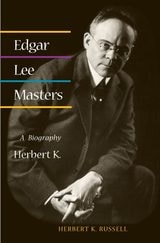
Edgar Lee Masters
A BIOGRAPHYHerbert K. Russell
University of Illinois Press, 2001
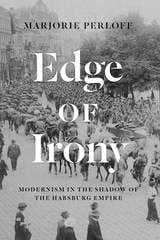
Edge of Irony
Modernism in the Shadow of the Habsburg EmpireMarjorie Perloff
University of Chicago Press, 2016
Perloff explores works ranging from Karl Kraus’s drama The Last Days of Mankind and Elias Canetti’s memoir The Tongue Set Free to Ludwig Wittgenstein’s notebooks and Paul Celan’s lyric poetry. Throughout, she shows that Austro-Modernist literature is characterized less by the formal and technical inventions of a modernism familiar to us in the work of Joyce and Pound, Dada and Futurism, than by a radical irony beneath a seemingly conventional surface, an acute sense of exile, and a sensibility more erotic and quixotic than that of its German contemporaries. Skeptical and disillusioned, Austro-Modernism prefers to ask questions rather than formulate answers.
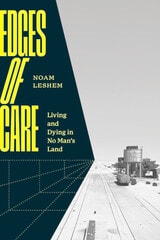
Edges of Care
Living and Dying in No Man’s LandNoam Leshem
University of Chicago Press, 2025
“No man’s land” invokes stretches of barren landscape, twisted barbed wire, desolation, and the devastation of war. But this is not always the reality. According to Noam Leshem in Edges of Care, the term also reveals radical abandonment by the state. From the Northern Sahara to the Amazon rainforests, people around the world find themselves in places that have been stripped of sovereign care. Leshem is committed to defining these spaces and providing a more intimate understanding of this urgent political reality.
Based on nearly a decade of research in some of the world’s most challenging conflict zones, Edges of Care offers a profound account of abandoned lives and lands, and how they endure and sometimes thrive once left to fend for themselves. Leshem interrogates no man’s land as a site of radical uncaring: abandoned by a sovereign power in a relinquishment of responsibility for the space or anyone inside it. To understand the ramifications of such uncaring, Leshem takes readers through a diverse series of abandoned places, including areas in Palestine, Syria, Colombia, Sudan, and Cyprus. He shows that no man’s land is not empty of life, but almost always inhabited and, in fact, often generative of new modes of being. Beautifully written and evocative, Edges of Care reveals the unexamined complexities and political dynamics hidden within and around places governed by callous indifference.

Edith Stein
Philosopher and MysticJosephine Koeppel O.C.D.
University of Scranton Press, 2007
The twentieth anniversary of the beatification of Edith Stein (1891–1942), the accomplished Jewish philosopher who made a spiritual journey from atheism to agnosticism before eventually converting to Catholicism, will be celebrated in 2007. In Edith Stein: Philosopher and Mystic, Josephine Koeppel chronicles the life of this influential saint from her secular youth and entrance into a German monastery to her tragic death at Auschwitz. This accessible work will reward readers of all faiths interested in the life of a remarkable woman who changed the modern conception of sainthood.
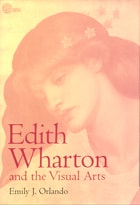
Edith Wharton and the Visual Arts
Emily J. Orlando
University of Alabama Press, 2008
An insightful look at representations of women’s bodies and female authority.
This work explores Edith Wharton's career-long concern with a 19th-century visual culture that limited female artistic agency and expression. Wharton repeatedly invoked the visual arts--especially painting—as a medium for revealing the ways that women's bodies have been represented (as passive, sexualized, infantalized, sickly, dead). Well-versed in the Italian masters, Wharton made special use of the art of the Pre-Raphaelite Brotherhood, particularly its penchant for producing not portraits of individual women but instead icons onto whose bodies male desire is superimposed.
Emily Orlando contends that while Wharton's early work presents women enshrined by men through art, the middle and later fiction shifts the seat of power to women. From Lily Bart in The House of Mirth to Undine Spragg in The Custom of the Country and Ellen Olenska in The Age of Innocence, women evolve from victims to vital agents, securing for themselves a more empowering and satisfying relationship to art and to their own identities.
Orlando also studies the lesser-known short stories and novels, revealing Wharton’s re-workings of texts by Browning, Poe, Balzac, George Eliot, Sir Joshua Reynolds, and, most significantly, Dante Gabriel Rossetti. Edith Wharton and the Visual Arts is the first extended study to examine the presence in Wharton's fiction of the Pre-Raphaelite poetry and painting of Rossetti and his muses, notably Elizabeth Siddall and Jane Morris. Wharton emerges as one of American literature's most gifted inter-textual realists, providing a vivid lens through which to view issues of power, resistance, and social change as they surface in American literature and culture.
Edith Wharton in Context
Essays on IntertextualityAdeline R. Tintner
University of Alabama Press, 1999
Tintner provides a detailed analysis of the complex interplay between Wharton and James—how they influenced each other and how some of their writings operate as homages or personal jokes. So deeply was James in Wharton’s confidence, Tintner argues, that he provided her with source models for a number of her characters. In addition, Wharton found in his fiction structures for her own, especially for The Age of Innocence.
Tintner also brings her considerable knowledge of art history to bear in her study of art allusions in Wharton’s work. Wharton’s response both to the Italian painters active before Raphael and to the English Pre-Raphaelites of a generation before her own is analyzed here in three essays. These pieces demonstrate Wharton’s sensibility to changes in art tastes and collecting, the inheritance of Rossetti’s revolutionary paintings in the unfinished novel, The Buccaneers, and the importance of home in The Glimpses of the Moon, as demonstrated by Wharton’s use of Tiepolo’s fresco in the church of Scalzi.
Tintner concludes by considering Wharton’s literary legacy and who Wharton has figured in the imaginations of recent writers, including Richard Howard, Louis Auchincloss, and Cathleen Schine. Tintner finds some part of Wharton’s personality or work evoked in a number of contemporary works and argues that this presence signals the beginning of an increasing influence.
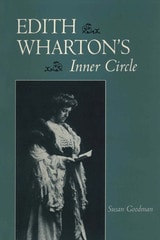
Edith Wharton's Inner Circle
By Susan Goodman
University of Texas Press, 1994
When Edith Wharton became friends with Henry James, she joined a group of men who became her "inner circle." This group included both well-known figures, such as James, Percy Lubbock, and Bernard Berenson, and several now forgotten, including John Hugh Smith, Walter Berry, Gaillard Lapsley, Robert Norton, and Howard Sturgis.
Drawing on unpublished archival material by and about members of the circle, Susan Goodman here presents an intimate view of this American expatriate community, as well as the larger transatlantic culture it mirrored. She explores how the group, which began forming around 1904 and lasted until Wharton's death in 1937, defined itself against the society its founders had left in the United States, while simultaneously criticizing and accommodating the one it found in Europe. Tracing Wharton's individual relationships with these men and their relationships with one another, she examines literary kinships and movements in the biographical and feminist context of gender, exile, and aesthetics. She also relates the group to other literary circles, such as the Bloomsbury group and Gertrude Stein's salon.
Edith and Winnifred Eaton
Chinatown Missions and Japanese RomancesDominika Ferens
University of Illinois Press, 2002
Arguing that Edith as much as Winnifred constructed her persona along with her pen name, Ferens considers the fiction of both Eaton sisters as ethnography. Edith and Winnifred Eaton suggests that both authors wrote through the filter of contemporary ethnographic discourse on the Far East and also wrote for readers hungry for "authentic" insight into the morals, manners, and mentality of an exotic other.
Ferens traces two distinct discursive traditions–-missionary and travel writing–-that shaped the meanings of "China" and "Japan" in the nineteenth century. She shows how these traditions intersected with the unconventional literary careers of the Eaton sisters, informing the sober, moralistic tone of Edith's stories as well as Winnifred's exotic narrative style, plots, settings, and characterizations.
Bringing to the Eatons' writings a contemporary understanding of the racial and textual politics of ethnographic writing, this important account shows how these two very different writers claimed ethnographic authority, how they used that authority to explore ideas of difference, race, class and gender, and how their depictions of nonwhites worked to disrupt the process of whites' self-definition.
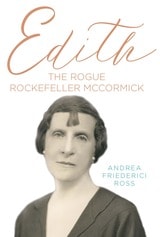
Edith
The Rogue Rockefeller McCormickAndrea Friederici Ross
Southern Illinois University Press, 2021
WINNER, 2021 Chicago Writers Association Book of the Year in Traditional Nonfiction!
Chicago’s quirky patron saint
This thrilling story of a daughter of America’s foremost industrialist, John D. Rockefeller, is complete with sex, money, mental illness, and opera divas—and a woman who strove for the independence to make her own choices. Rejecting the limited gender role carved out for her by her father and society, Edith Rockefeller McCormick forged her own path, despite pushback from her family and ultimate financial ruin.
Young Edith and her siblings had access to the best educators in the world, but the girls were not taught how to handle the family money; that responsibility was reserved for their younger brother. A parsimonious upbringing did little to prepare Edith for life after marriage to Harold McCormick, son of the Reaper King Cyrus McCormick. The rich young couple spent lavishly. They purchased treasures like the jewels of Catherine the Great, entertained in grand style in a Chicago mansion, and contributed to the city’s cultural uplift, founding the Chicago Grand Opera. They supported free health care for the poor, founding and supporting the John R. McCormick Memorial Institute for Infectious Diseases. Later, Edith donated land for what would become Brookfield Zoo.
Though she lived a seemingly enviable life, Edith’s disposition was ill-suited for the mores of the time. Societal and personal issues—not least of which were the deaths of two of her five children—caused Edith to experience phobias and panic attacks. Dissatisfied with rest cures, she ignored her father’s expectations, moved her family to Zurich, and embarked on a journey of education and self-examination. Edith pursued analysis with then-unknown Carl Jung. Her generosity of spirit led Edith to become Jung’s leading patron. She also supported up-and-coming musicians, artists, and writers, including James Joyce as he wrote Ulysses.
While Edith became a Jungian analyst, her husband, Harold, pursued an affair with an opera star. After returning to Chicago and divorcing Harold, Edith continued to deplete her fortune. She hoped to create something of lasting value, such as a utopian community and affordable homes for the middle class. Edith’s goals caused further difficulties in her relationship with her father and are why he and her brother cut her off from the family funds even after the 1929 stock market crash ruined her. Edith’s death from breast cancer three years later was mourned by thousands of Chicagoans.
Respectful and truthful, Andrea Friederici Ross presents the full arc of this amazing woman’s life and expertly helps readers understand Edith’s generosity, intelligence, and fierce determination to change the world
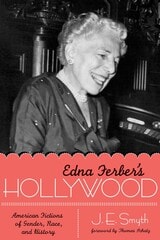
Edna Ferber's Hollywood
American Fictions of Gender, Race, and HistoryBy J. E. Smyth
University of Texas Press, 2009
Edna Ferber's Hollywood reveals one of the most influential artistic relationships of the twentieth century—the four-decade partnership between historical novelist Edna Ferber and the Hollywood studios. Ferber was one of America's most controversial popular historians, a writer whose uniquely feminist, multiracial view of the national past deliberately clashed with traditional narratives of white masculine power. Hollywood paid premium sums to adapt her novels, creating some of the most memorable films of the studio era—among them Show Boat, Cimarron, and Giant. Her historical fiction resonated with Hollywood's interest in prestigious historical filmmaking aimed principally, but not exclusively, at female audiences.
In Edna Ferber's Hollywood, J. E. Smyth explores the research, writing, marketing, reception, and production histories of Hollywood's Ferber franchise. Smyth tracks Ferber's working relationships with Samuel Goldwyn, Leland Hayward, George Stevens, and James Dean; her landmark contract negotiations with Warner Bros.; and the controversies surrounding Giant's critique of Jim-Crow Texas. But Edna Ferber's Hollywood is also the study of the historical vision of an American outsider—a woman, a Jew, a novelist with few literary pretensions, an unashamed middlebrow who challenged the prescribed boundaries among gender, race, history, and fiction. In a masterful film and literary history, Smyth explores how Ferber's work helped shape Hollywood's attitude toward the American past.
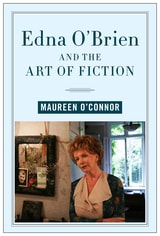
Edna O'Brien and the Art of Fiction
Maureen O'Connor
Bucknell University Press, 2022
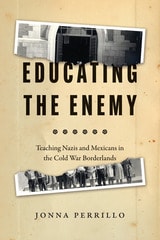
Educating the Enemy
Teaching Nazis and Mexicans in the Cold War BorderlandsJonna Perrillo
University of Chicago Press, 2022
Educating the Enemy begins with the 144 children of Nazi scientists who moved to El Paso, Texas, in 1946 as part of the military program called Operation Paperclip. These German children were bused daily from a military outpost to four El Paso public schools. Though born into a fascist enemy nation, the German children were quickly integrated into the schools and, by proxy, American society. Their rapid assimilation offered evidence that American public schools played a vital role in ensuring the victory of democracy over fascism.
Jonna Perrillo not only tells this fascinating story of Cold War educational policy, but she draws an important contrast with another, much more numerous population of children in the El Paso public schools: Mexican Americans. Like everywhere else in the Southwest, Mexican American children in El Paso were segregated into “Mexican” schools, where the children received a vastly different educational experience. Not only were they penalized for speaking Spanish—the only language all but a few spoke due to segregation—they were tracked for low-wage and low-prestige careers, with limited opportunities for economic success. Educating the Enemy charts what two groups of children—one that might have been considered the enemy, the other that was treated as such—reveal about the ways political assimilation has been treated by schools as an easier, more viable project than racial or ethnic assimilation.
Listen to an interview with the author here and read an interview in Time and a piece based on the book in the Boston Review.
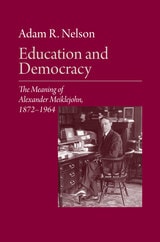
Education and Democracy
The Meaning of Alexander Meiklejohn, 1872–1964Adam R. Nelson
University of Wisconsin Press, 2001
This definitive biography of the charismatic Alexander Meiklejohn tracks his turbulent career as an educational innovator at Brown University, Amherst College, and Wisconsin’s “Experimental College” in the early twentieth century and his later work as a civil libertarian in the Joe McCarthy era. The central question Meiklejohn asked throughout his life’s work remains essential today: How can education teach citizens to be free?
Education and the Cult of Efficiency
Raymond E. Callahan
University of Chicago Press, 1964
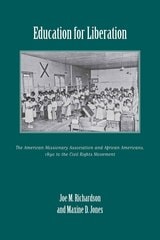
Education for Liberation
The American Missionary Association and African Americans, 1890 to the Civil Rights MovementJoe M. Richardson
University of Alabama Press, 2009
Even after the optimism of Reconstruction was shattered by violence, fraud, and intimidation and the white South relegated African Americans to segregated and disfranchised second-class citizenship, the AMA never abandoned its claim that blacks were equal in God’s sight, that any “backwardness” was the result of circumstance rather than inherent inferiority, and that blacks could and should become equal citizens with other Americans. The organization went farther in recognition of black ability, humanity, and aspirations than much of 19th and 20th century white America by publicly and consistently opposing lynching, segregation, disfranchisement, and discrimination.