Results by title
196 books match the query 'Activism & Social Justice' and 2 start with e
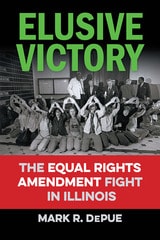
Elusive Victory
The Equal Rights Amendment Fight in IllinoisMark R. DePue
Southern Illinois University Press, 2026
Inside the Illinois showdown that derailed the Equal Rights Amendment
In this gripping account of one of the most consequential political battles of the twentieth century, Mark R. DePue takes readers inside the fight that halted the Equal Rights Amendment. Drawing upon hundreds of hours of original oral history interviews, DePue reconstructs the drama, strategy, and emotion of the ERA showdown in Illinois, the state that became the amendment’s most critical battleground.
First introduced in Congress in 1923, the Equal Rights Amendment has endured for more than a century as one of the most debated yet still unratified proposals in American constitutional history. Its ratification seemed closer than ever when Congress passed the ERA in 1972 and sent it to the states with a seven-year deadline, but in Illinois, a constitutional quirk stalled its momentum. Optimism faltered, and what followed was a political war like no other the state had ever seen. Illinois’ state legislature in Springfield became the epicenter of a national struggle over gender, power, and the future of the Constitution.
At the center of the storm stood Phyllis Schlafly, the formidable conservative activist from Alton, Illinois, whose STOP ERA movement transformed a faltering amendment into a rallying cry for the New Right. Opposing her and her allies was an array of feminist organizers, legislators, celebrities, clergy, union members, and grassroots activists—often divided among themselves—who believed that equality under the law was within reach. Bringing creativity, passion, and persistence to the cause, they staged inventive demonstrations, lobbied relentlessly, and fought for every vote.
What sets this book apart are its extraordinary cast of characters and the chance DePue gives them to speak for themselves. Through vivid first-person testimony gathered at the Abraham Lincoln Presidential Library and the University of Illinois Springfield, supporters and opponents alike reflect on their motivations, fears, strategies, and regrets. Their voices bring to life the packed committee hearings, late-night strategy sessions, and personal sacrifices behind the headlines.
By 1982, the amendment fell three states short of ratification nationwide. Illinois never delivered the votes that might have changed history.
More than a political chronicle, this is a story of conviction and conflict, ambition and compromise. It is the story of how a century-old amendment came tantalizingly close to becoming law—and how, in one state capitol, the battle over women’s equality reshaped a movement and left a constitutional promise still unfinished.
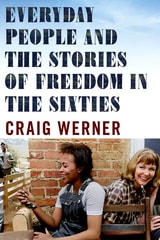
Everyday People and the Stories of Freedom in the Sixties
Craig Werner
University of Massachusetts Press, 2027
Showing that the most important figures of the 1960s were not always the most famous ones
Just weeks back from Vietnam, guitarist Larry Lee stood on stage at Woodstock alongside Jimi Hendrix, but he isn’t given more than a glance in the festival’s documentary. In Selma, Alabama, in March 1965, an eight-year-old girl named Sheyann Webb wrote her own obituary before joining the march across the Edmund Pettus Bridge. She survived Bloody Sunday, swept off the bridge in the arms of Hosea Williams as state troopers on horseback swung bullwhips and clubs. These are just a couple of the regular people at the heart of Craig Werner’s sweeping, mosaic history of the 1960s; it is their stories, not those of the icons, that give the era its deeper meaning.
In Everyday People and the Stories of Freedom in the Sixties, Werner assembles a rich and kaleidoscopic portrait of a decade in which Americans across the entire political spectrum claimed freedom as their cause. Moving beyond familiar myths and simplified narratives, he reveals a period defined by three interlocking realities: everything was open to change, everything seemed to happen at once, and everyone believed their vision of freedom was the one worth fighting for.
Bringing together stories too often told in isolation—the Civil Rights Movement, Vietnam, the global Cold War, the women’s movement, and the intertwined worlds of sex, drugs, and rock 'n' roll—Werner integrates the experiences of African Americans, women, Native Americans, Latinx communities, LGBTQ people, and immigrants into a single, propulsive narrative. Music, film, art, and fashion are not treated as colorful backdrops but as central forces in the making of political and social change. This book illuminates the economic, political, technological, and cultural forces that shaped the 1960s and continue to influence the present. It is a history of a decade told not from the top down, but from the ground up, by the people who lived it.
Supplemental materials for readers, students, and instructors are available on the publisher’s website, including full citations, playlists, images, and thematic sections on the Global Sixties, science and technology, religion, literature, music, film, visual art, and major figures and events.