Results by title
471 books match the query 'Aesthetics' and 13 start with e
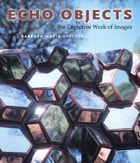
Echo Objects
The Cognitive Work of ImagesBarbara Maria Stafford
University of Chicago Press, 2007
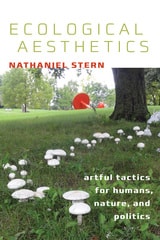
Ecological Aesthetics
artful tactics for humans, nature, and politicsNathaniel Stern
Dartmouth College Press, 2018
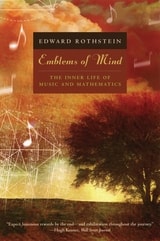
Emblems of Mind
The Inner Life of Music and MathematicsEdward Rothstein
University of Chicago Press, 2006
Jacques Barzun called this book “splendid.” Martin Gardner said it was “beautifully written, marvelous and entertaining.” It will provoke all serious readers to think in new ways about the grand patterns in art and life.
“Lovely, wistful. . . . Rothstein is a wonderful guide to the architecture of musical space, its tensions and relations, its resonances and proportions. . . . His account of what is going on in the music is unfailingly felicitous.”—New Yorker
“Provocative and exciting. . . . Rothstein writes this book as a foreign correspondent, sending dispatches from a remote and mysterious locale as a guide for the intellectually adventurous. The remarkable fact about his work is not that it is profound, as much of the writing is, but that it is so accessible.”—Christian Science Monitor
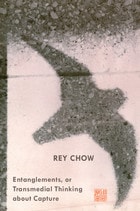
Entanglements, or Transmedial Thinking about Capture
Rey Chow
Duke University Press, 2012
These questions are dispersively heterologous yet mutually implicated. This paradoxical character of their discursive relations is what Rey Chow intends with the word "entanglements," by which she means, first, an enmeshment of topics: the mediatized image in modernist reflexivity; captivation and identification; victimhood; the place of East Asia in globalized Western academic study. Beyond enmeshment, she asks, can entanglements be phenomena that are not defined by affinity or proximity? Might entanglements be about partition and disparity rather than about conjunction and similarity?
Across medial forms (including theater, film, narrative, digitization, and photographic art), and against more popular trends of declaring things and people to be in flux, Chow proposes conceptual frames that foreground instead aesthetic, ontological, and sentient experiences of force, dominance, submission, fidelity, antagonism, masochism, letting-go, and the attraction to self-annihilation. Boundary, trap, capture, captivation, sacrifice, and mimesis: these riveting terms serve as analytic pressure points in her readings, articulating perversity, madness, and terror to pursuits of freedom.

Entry Points
The Vera List Center Field Guide on Art and Social Justice No. 1Carin Kuoni and Chelsea Haines, editors
Duke University Press, 2016
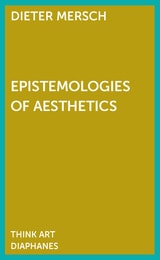
Epistemologies of Aesthetics
Dieter Mersch
Diaphanes, 2015
In Epistemologies of Aesthetics, Dieter Mersch deconstructs and displaces the terminology that typically accompanies the question of the relationship between art and scientific truth. Identifying artistic practices as modes of thought that do not make use of language in a way that can easily be translated into scientific discourse, Mersch advocate for an aesthetic mode of thought beyond the “linguistic turn,” a way of thinking that cannot be substituted by any other disciplinary system. A sophisticated reflection on the epistemological status of the aesthetic by one of Germany’s leading philosophers, Epistemologies of Aesthetics will be of great interest within this growing field of study.
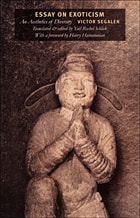
Essay on Exoticism
An Aesthetics of DiversityVictor Segalen
Duke University Press, 2002
Written over the course of fourteen years between 1904 and 1918, at the height of the age of imperialism, Essay on Exoticism encompasses Segalen’s attempts to define “true Exoticism.” This concept, he hoped, would not only replace nineteenth-century notions of exoticism that he considered tawdry and romantic, but also redirect his contemporaries’ propensity to reduce the exotic to the “colonial.” His critique envisions a mechanism that appreciates cultural difference—which it posits as an aesthetic and ontological value—rather than assimilating it: “Exoticism’s power is nothing other than the ability to conceive otherwise,” he writes.
Segalen’s pioneering work on otherness anticipates and informs much of the current postcolonial critique of colonial discourse. As such Essay on Exoticism is essential reading for both cultural theorists or those with an interest in the politics of difference and diversity.
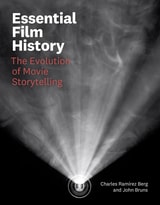
Essential Film History
The Evolution of Movie StorytellingCharles Ramírez Berg and John Bruns
University of Texas Press, 2026
A guide to the fundamentals of understanding film history, filmmaking, and film appreciation.
Film is not just a medium; it is also a language—and a global one at that. Essential Film History describes how this language emerged and how it has matured over the course of more than 125 years. Beginning with the experiments of the late nineteenth century, and tracking the development of cinematic storytelling, commercial distribution, and audience reception into the era of digital recording, Charles Ramírez Berg and John Bruns offer a comprehensive course in both the history and artistry of film.
Essential Film History breaks cinematic language into three core components: image, sound, and narrative. Between the 1890s and 1940s, this audiovisual language both consolidated and spread, becoming comprehensible worldwide. Since then, filmmakers have adapted and extended the language of cinema to suit an ever-growing range of aesthetic and narrative projects, from documentaries and full-length animation to avant-garde and made-for-TV movies. Covering major figures, studios, and events as well as key technological and sociopolitical developments, Essential Film History is an indispensable guide to the evolution of cinematic style.
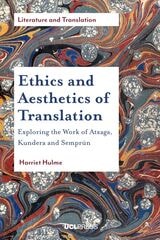
Ethics and Aesthetics of Translation
Exploring the Works of Atxaga, Kundera and SemprúnHarriet Hulme
University College London, 2018
Evacuation
The Politics and Aesthetics of Movement in EmergencyPeter Adey
Duke University Press, 2024
Evaluating Art
George Dickie
Temple University Press, 1989
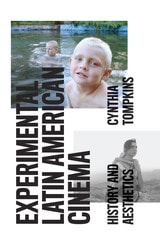
Experimental Latin American Cinema
History and AestheticsBy Cynthia Tompkins
University of Texas Press, 2013
While there are numerous film studies that focus on one particular grouping of films—by nationality, by era, or by technique—here is the first single volume that incorporates all of the above, offering a broad overview of experimental Latin American film produced over the last twenty years.
Analyzing seventeen recent films by eleven different filmmakers from Argentina, Brazil, Cuba, Mexico, Paraguay, and Peru, Cynthia Tompkins uses a comparative approach that finds commonalities among the disparate works in terms of their influences, aesthetics, and techniques. Tompkins introduces each film first in its sociohistorical context before summarizing it and then subverting its canonical interpretation. Pivotal to her close readings of the films and their convergences as a collective cinema is Tompkins’s application of Deleuzian film theory and the concept of the time-image as it pertains to the treatment of time and repetition. Tompkins also explores such topics as the theme of decolonization, the consistent use of montage, paratactically structured narratives, and the fusion of documentary conventions and neorealism with drama. An invaluable contribution to any dialogue on the avant-garde in general and to filmmaking both in and out of Latin America, Experimental Latin American Cinema is also a welcome and insightful addition to Latin American studies as a whole.
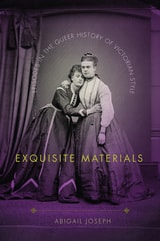
Exquisite Materials
Episodes in the Queer History of Victorian StyleAbigail Joseph
University of Delaware Press, 2011
Published by University of Delaware Press. Distributed worldwide by Rutgers University Press.