Results by title
314 books match the query 'African' and 11 start with e

Echoes of the Sunbird
An Anthology of Contemporary African PoetryDon Burness
Ohio University Press, 1993
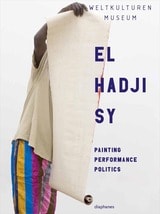
El Hadji Sy
Painting, Performance, PoliticsEdited by Clémentine Deliss, Yvette Mutumba, and the Weltkulturen Museum
Diaphanes, 2015
With newly commissioned essays and interviews by Hans Belting, Clémentine Deliss, Mamadou Diouf, Julia Grosse, Yvette Mutumba, Philippe Pirotte, and Manon Schwich, the book is presented in a bilingual English-German edition and also contains unique archival material, including manifestos, documents, and over four hundred illustrations.

Ending Gender-Based Violence
Justice and Community in South AfricaHannah E. Britton
University of Illinois Press, 2020
Hannah E. Britton examines the reasons gendered violence persists in relationship to social inequalities even after women assume political power. Venturing into South African communities, Britton invites service providers, religious and traditional leaders, police officers, and medical professionals to address gender-based violence in their own words. Britton finds the recent turn toward carceral solutions—with a focus on arrests and prosecutions—fails to address the complexities of the problem and looks at how changing specific community dynamics can defuse interpersonal violence. She also examines how place and space affect the implementation of policy and suggests practical ways policymakers can support street level workers.
Clear-eyed and revealing, Ending Gender-Based Violence offers needed tools for breaking cycles of brutality and inequality around the world.
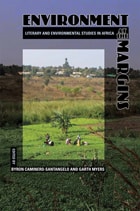
Environment at the Margins
Literary and Environmental Studies in AfricaByron Caminero-Santangelo
Ohio University Press, 2011
Environment at the Margins brings literary and environmental studies into a robust interdisciplinary dialogue, challenging dominant ideas about nature, conservation, and development in Africa and exploring alternative narratives offered by writers and environmental thinkers. The essays bring together scholarship in geography, anthropology, and environmental history with the study of African and colonial literatures and with literary modes of analysis. Contributors analyze writings by colonial administrators and literary authors, as well as by such prominent African activists and writers as Ngugi wa Thiong’o, Mia Couto, Nadine Gordimer, Wangari Maathai, J. M. Coetzee, Zakes Mda, and Ben Okri. These postcolonial ecocritical readings focus on dialogue not only among disciplines but also among different visions of African environments. In the process, Environment at the Margins posits the possibility of an ecocriticism that will challenge and move beyond marginalizing, limiting visions of an imaginary Africa.
Contributors:
Jane Carruthers
Mara Goldman
Amanda Hammar
Jonathan Highfield
David McDermott Hughes
Roderick P. Neumann
Rob Nixon
Anthony Vital
Laura Wright
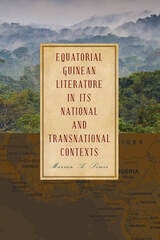
Equatorial Guinean Literature in its National and Transnational Contexts
Marvin A. Lewis
University of Missouri Press, 2017
Equatorial Guinea, a former Spanish colony, is the only African country in which Spanish is an official language and which has a tradition of literature in Spanish. This is a study of the literature produced by the nation’s writers from 2007 to 2013. Since its independence in 1968, Equatorial Guinea has been ruled by dictators under whom ethnic differences have been exacerbated, poverty and violence have increased, and critical voices have been silenced. The result has been an exodus of intellectuals—including writers who express their national and exile experiences in their poems, plays, short stories, and novels. The writers discussed include Juan Tomás Ávila Laurel, Donato Ndongo-Bidyogo, and Guillermina Mekuy, among others.
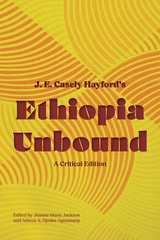
Ethiopia Unbound
A Critical EditionJ. E. Casely Hayford
Michigan State University Press, 2024
Ethnic Federalism
The Ethiopian Experience in Comparative PerspectiveDavid Turton
Ohio University Press, 2006
Since 1991, Ethiopia has gone further than any other country in using ethnicity as the fundamental organizing principle of a federal system of government. And yet this pioneering experiment in “ethnic federalism” has been largely ignored in the growing literature on democratization and ethnicity in Africa and on the accommodation of ethnic diversity in democratic states. Ethnic Federalism brings a much-needed comparative dimension to the discussion of this experiment in Ethiopia.
Ethnic Federalism closely examines aspects of the Ethiopean case and asks why the use of territorial decentralism to accommodate ethnic differences has been generally unpopular in Africa, while it is growing in popularity in the West.
The book includes case studies of Nigerian and Indian federalism and suggests how Ethiopia might learn from both the failures and successes of these older federations. In the light of these broader issues and cases, it identifies the main challenges facing Ethiopia in the next few years, as it struggles to bring political practice into line with constitutional theory and thereby achieve a genuinely federal division of powers.
Ethnicity and Democracy in Africa
Bruce Berman
Ohio University Press, 2004
The politics of identity and ethnicity will remain a fundamental characteristic of African modernity. For this reason, historians and anthropologists have joined political scientists in a discussion about the ways in which democracy can develop in multicultural societies. In Ethnicity and Democracy in Africa, the contributors address why ethnicity represents a political problem, how the problem manifests itself, and which institutional models offer ways of ameliorating the challenges that ethnicity poses to democratic nation-building.
Exhibiting Blackness
African Americans and the American Art MuseumBridget R. Cooks
University of Massachusetts Press, 2011
In Exhibiting Blackness, art historian Bridget R. Cooks analyzes the curatorial strategies, challenges, and critical receptions of the most significant museum exhibitions of African American art. Tracing two dominant methodologies used to exhibit art by African Americans—an ethnographic approach that focuses more on artists than their art, and a recovery narrative aimed at correcting past omissions—Cooks exposes the issues involved in exhibiting cultural difference that continue to challenge art history, historiography, and American museum exhibition practices. By further examining the unequal and often contested relationship between African American artists, curators, and visitors, she provides insight into the complex role of art museums and their accountability to the cultures they represent.
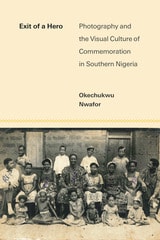
Exit of a Hero
Photography and the Visual Culture of Commemoration in Southern NigeriaOkechukwu Nwafor
University of Michigan Press, 2026
In Exit of a Hero, Okechukwu Nwafor explores the cultural, political, and socioeconomic implications of photography in commemorative practices in southern Nigeria from the nineteenth century to the present. Focusing on obituary and commemorative photographs of late nineteenth and early twentieth-century Lagos to contemporary funeral posters, booklets, and social media posts, Nwafor tracks the historical evolution of the iconic and heroic image. He argues that the quest to produce an ideal memorial body is not just a personal aesthetic choice but a deliberate photographic project that resonates with the Igbo aspirations for heroic achievement.
Exit of a Hero asserts that the visual canonization transforms the deceased from a fallible being to an unimpeachable character who transcends underachievement, imperfection, and failed social performance to emerge as a saintly icon of the Igbo public sphere. In seeking an alternative, hyper-visible public self, social media reclaims the lost hero image of the deceased, reconstituting the contested Igbo public space as a lived reality where heroes and icons are actively and eternally commemorated. Nwafor unveils the creative imaginations of colonial subjects and postcolonial citizens as memorialization has become entangled within the intersecting discursive spaces of print culture and the public sphere.

Experiments in the Dark
Visualizing Capital Art Studio, ZanzibarPamila Gupta
University of Michigan Press, 2027
What kind of history are photographs? Experiments in the Dark explores this question through the lens of a twentieth-century East African Indian Ocean photo studio collection, Capital Arts Studio (CAS), and its proprietors Ranchhod and Rohit Oza in Stone Town, Zanzibar. Pamila Gupta gathers and reads a range of photographs and genres from the studio, exploring how they relate to Zanzibar’s vibrant visual cultures during the Omani sultanate, British colonial, and postrevolution periods. Gupta’s reading of this little-known photographic archive brings the work into a broader historical context of the Indian Ocean in a visual archive that has endured despite the forces of history.
Through a blend of archival reconstruction and curation, personal reflection, and interviews with Rohit Oza, the son of the studio’s founder Ranchhod Oza, Gupta focuses on the construction and curation of the CAS collection and what this archive can tell us about the South Asian and Goan diasporas, the wider Indian Ocean world, African fashion, urban lives, and image making in Zanzibar from 1930 to 2024.