Results by title
1563 books match the query 'African American & Black Studies' and 26 start with e
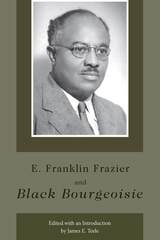
E. Franklin Frazier and Black Bourgeoisie
E. Franklin Frazier
University of Missouri Press, 2002
When E. Franklin Frazier was elected the first black president of the American Sociological Association in 1948, he was established as the leading American scholar on the black family and was also recognized as a leading theorist on the dynamics of social change and race relations. By 1948 his lengthy list of publications included over fifty articles and four major books, including the acclaimed Negro Family in the United States. Frazier was known for his thorough scholarship and his mastery of skills in both history and sociology.
With the publication of Bourgeoisie Noire in 1955 (translated in 1957 as Black Bourgeoisie), Frazier apparently set out on a different track, one in which he employed his skills in a critical analysis of the black middle class. The book met with mixed reviews and harsh criticism from the black middle and professional class. Yet Frazier stood solidly by his argument that the black middle class was marked by conspicuous consumption, wish fulfillment, and a world of make-believe. While Frazier published four additional books after 1948, Black Bourgeoisie remained by far his most controversial.
Given his status in American sociology, there has been surprisingly little study of Frazier's work. In E. Franklin Frazier and Black Bourgeoisie, a group of distinguished scholars remedies that lack, focusing on his often-scorned Black Bourgeoisie.
This in-depth look at Frazier's controversial publication is relevant to the growing concerns about racism, problems in our cities, the limitations of affirmative action, and the promise of self-help.
Each Hour Redeem
Time and Justice in African American LiteratureDaylanne K. English
University of Minnesota Press, 2013
Each Hour Redeem advances a major reinterpretation of African American literature from the late eighteenth century to the present by demonstrating how its authors are centrally concerned with racially different experiences of time. Daylanne K. English argues that, from Phillis Wheatley to Suzan-Lori Parks, African American writers have depicted distinctive forms of temporality to challenge racial injustices supported by dominant ideas of time. The first book to explore the representation of time throughout the African American literary canon, Each Hour Redeem illuminates how the pervasive and potent tropes of timekeeping provide the basis for an overarching new understanding of the tradition.
Combing literary, historical, legal, and philosophical approaches, Each Hour Redeem examines a wide range of genres, including poetry, fiction, drama, slave narratives, and other forms of nonfiction. English shows that much of African American literature is characterized by “strategic anachronism,” the use of prior literary forms to investigate contemporary political realities, as seen in Walter Mosley’s recent turn to hard-boiled detective fiction. By contrast, “strategic presentism” is exemplified in the Black Arts Movement and the Harlem Renaissance and their investment in contemporary political potentialities, for example, in Langston Hughes and Amiri Baraka’s adaptation of the jazz of their eras for poetic form and content. Overall, the book effectively demonstrates how African American writers have employed multiple and complex conceptions of time not only to trace racial injustice but also to help construct a powerful literary tradition across the centuries.
Eagles on Their Buttons
A Black Infantry Regiment in the Civil WarVersalle F. Washington
University of Missouri Press, 1999
Eagles on Their Buttons is a fascinating examination of the Fifth Regiment of Infantry, United States Colored Troops—the Union Army's first black regiment from Ohio. Although the Fifth USCT was one of more than 150 regiments of black troops making up more than 10 percent of the Union Army at the end of the war, it was unique. The majority of USCT regiments were made up of freed men who viewed the army as an escape from slavery and a chance to take up arms against their former masters. The men serving in the 5th USCT, however, were freemen who were raised in a northern state and saw serving in the army both as a way to gain equal rights under the law and as an opportunity to prove their worth as men.
Because historians have written little on this subject, many Americans believe that African Americans simply received their freedom with the Emancipation Proclamation. They know nothing about the struggles these courageous people endured to gain their independence. Now, by incorporating personal documents, letters, diaries, and official records, Eagles on Their Buttons sheds important new light on this unfamiliar aspect of the Civil War. Versalle Washington shows what caused the soldiers in the Fifth USCT to join their regiment, what sort of men they were, and how they fought and lived as African American soldiers under white officers. He discusses the regiment's service, addressing its role in the siege of Petersburg, the battle of Chapin's Farm, and the capture of Fort Fisher and the port of Wilmington. Washington also looks at what effects the soldiers' service had in terms of societal changes following the Civil War.
Eagles on Their Buttons is a fresh contribution to Civil War scholarship and will be welcomed by professional historians and amateur Civil War buffs alike.
This book is part of the University of Missouri Press' Shades of Blue and Gray series.
Ebony Magazine and Lerone Bennett Jr.
Popular Black History in Postwar AmericaE. James West
University of Illinois Press, 2020
E. James West's fresh and fascinating exploration of Ebony’s political, social, and historical content illuminates the intellectual role of the iconic magazine and its contribution to African American scholarship. He also uncovers a paradox. Though Ebony provided Bennett with space to promote a militant reading of black history and protest, the magazine’s status as a consumer publication helped to mediate its representation of African American identity in both past and present.
Mixing biography, cultural history, and popular memory, West restores Ebony and Bennett to their rightful place in African American intellectual, commercial, and political history.
Ellington Uptown
Duke Ellington, James P. Johnson, and the Birth of Concert JazzJohn Howland
University of Michigan Press, 2009
Elusive Jannah
The Somali Diaspora and a Borderless Muslim IdentityCawo M. Abdi
University of Minnesota Press, 2015
As a Somali working since high school in the United Arab Emirates, Osman considers himself “blessed” to be in a Muslim country, though citizenship, with the security it offers, remains elusive. For Ardo, smuggled out of Somalia to join her husband in South Africa, insecurities are of a more immediate, physical kind, and her economic prospects and legal status are more uncertain. Adam, in the United States—a destination often imagined as an earthly Eden, or jannah, by so many of his compatriots—now sees heaven in a return to Somalia.
The stories of these three people are among the many that emerge from mass migration triggered by the political turmoil and civil war plaguing Somalia since 1988. And they are among the diverse collection presented in eloquent detail in Elusive Jannah, a remarkable portrait of the very different experiences of Somali migrants in the UAE, South Africa, and the United States. Somalis in the UAE, a relatively closed Muslim nation, are a minority within a large South Asian population of labor migrants. In South Africa, they are part of a highly racialized and segregated postapartheid society. In the United States they find themselves in a welfare state with its own racial, socioeconomic, and political tensions. A comparison of Somali settlements in these three locations clearly reveals the importance of immigration policies in the migrant experience.
Cawo M. Abdi’s nuanced analysis demonstrates that a full understanding of successful migration and integration must go beyond legal, economic, and physical security to encompass a sense of religious, cultural, and social belonging. Her timely book underscores the sociopolitical forces shaping the Somali diaspora, as well as the roles of the nation-state, the war on terror, and globalization in both constraining and enabling their search for citizenship and security.
Emancipation without Equality
Pan-African Activism and the Global Color LineThomas E. Smith
University of Massachusetts Press, 2018
At the Pan–African Conference in London in 1900, W. E. B. Du Bois famously prophesied that the problem of the twentieth century would be the global color line, the elevation of “whiteness” that created a racially divided world. While Pan-Africanism recognized the global nature of the color line in this period, Thomas E. Smith argues that it also pushed against it, advocating for what Du Bois called "opportunities and privileges of modern civilization" to open up to people of all colors.
Covering a period roughly bookended by two international forums, the 1884–1885 Berlin Conference and the 1911 Universal Races Congress, Emancipation without Equality chronicles how activists of African descent fought globally for equal treatment and access to rights associated with post-emancipated citizenship. While Euro-American leaders created a standard to guide the course of imperialism at the Berlin Conference, the proceedings of the Universal Races Congress demonstrated that Pan-Africanism had become a visible part of a growing, global, anti-imperialist protest.
Embodying American Slavery in Contemporary Culture
Lisa Woolfork
University of Illinois Press, 2008
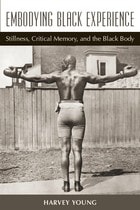
Embodying Black Experience
Stillness, Critical Memory, and the Black BodyHarvey Young
University of Michigan Press, 2010
"Young's linkage between critical race theory, historical inquiry, and performance studies is a necessary intersection. Innovative, creative, and provocative."
---Davarian Baldwin, Paul E. Raether Distinguished Professor of American Studies, Trinity College
In 1901, George Ward, a lynching victim, was attacked, murdered, and dismembered by a mob of white men, women, and children. As his lifeless body burned in a fire, enterprising white youth cut off his toes and, later, his fingers and sold them as souvenirs. In Embodying Black Experience, Harvey Young masterfully blends biography, archival history, performance theory, and phenomenology to relay the experiences of black men and women who, like Ward, were profoundly affected by the spectacular intrusion of racial violence within their lives. Looking back over the past two hundred years---from the exhibition of boxer Tom Molineaux and Saartjie Baartman (the "Hottentot Venus") in 1810 to twenty-first century experiences of racial profiling and incarceration---Young chronicles a set of black experiences, or what he calls, "phenomenal blackness," that developed not only from the experience of abuse but also from a variety of performances of resistance that were devised to respond to the highly predictable and anticipated arrival of racial violence within a person's lifetime.
Embodying Black Experience pinpoints selected artistic and athletic performances---photography, boxing, theater/performance art, and museum display---as portals through which to gain access to the lived experiences of a variety of individuals. The photographs of Joseph Zealy, Richard Roberts, and Walker Evans; the boxing performances of Jack Johnson, Joe Louis, and Muhammad Ali; the plays of Suzan-Lori Parks, Robbie McCauley, and Dael Orlandersmith; and the tragic performances of Bootjack McDaniels and James Cameron offer insight into the lives of black folk across two centuries and the ways that black artists, performers, and athletes challenged the racist (and racializing) assumptions of the societies in which they lived.
Blending humanistic and social science perspectives, Embodying Black Experience explains the ways in which societal ideas of "the black body," an imagined myth of blackness, get projected across the bodies of actual black folk and, in turn, render them targets of abuse. However, the emphasis on the performances of select artists and athletes also spotlights moments of resistance and, indeed, strength within these most harrowing settings.
Harvey Young is Associate Professor of Theatre, Performance Studies, and Radio/Television/Film at Northwestern University.
A volume in the series Theater: Theory/Text/Performance
Embracing Queer Students’ Diverse Identities at Historically Black Colleges and Universities
A Primer for Presidents, Administrators, and FacultySteve D. Mobley Jr.
Rutgers University Press, 2025

Emotional Signals
Auto-Tune, Melodyne, and the Cultural Politics of Pitch CorrectionCatherine Provenzano
University of Michigan Press, 2027
An ethnographic account of the history, development, and cultural impacts of digital tuning software
Empire of Defense
Race and the Cultural Politics of Permanent WarJoseph Darda
University of Chicago Press, 2019
From the formation of the DOD to the long wars of the twenty-first century, the United States rebranded war as the defense of Western liberalism from first communism, then crime, authoritarianism, and terrorism. Officials learned to frame state violence against Asians, Black and brown people, Arabs, and Muslims as the safeguarding of human rights from illiberal beliefs and behaviors. Through government documents, news media, and the writing and art of Joseph Heller, June Jordan, Trinh T. Minh-ha, I. F. Stone, and others, Darda shows how defense remade and sustained a weakened color line with new racial categories (the communist, the criminal, the authoritarian, the terrorist) that cast the state’s ideological enemies outside the human of human rights. Amid the rise of anticolonial and antiracist movements the world over, defense secured the future of war and white dominance.
Empowering Men of Color on Campus
Building Student Community in Higher EducationBrooms, Derrick R.
Rutgers University Press, 2018
Empowerment and Black Deaf Persons
Lindsay Moeletsi Dunn
Gallaudet University Press, 2024
This is the inaugural volume in the Early Papers in Deaf Studies series, which will consist of reissued works originally published by the Gallaudet University College for Continuing Education but long out of print. The aim of this series is to restore these foundational papers to the scholarly community. Empowerment and Black Deaf Persons is available in both print and open digital formats, ensuring broad access to this important contribution to the literature.
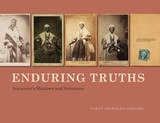
Enduring Truths
Sojourner's Shadows and SubstanceDarcy Grimaldo Grigsby
University of Chicago Press, 2015
Featuring the largest collection of Truth’s photographs ever published, Enduring Truths is the first book to explore how she used her image, the press, the postal service, and copyright laws to support her activism and herself. Darcy Grimaldo Grigsby establishes a range of important contexts for Truth’s portraits, including the strategic role of photography and copyright for an illiterate former slave; the shared politics of Truth’s cartes de visite and federal banknotes, which were both created to fund the Union cause; and the ways that photochemical limitations complicated the portrayal of different skin tones. Insightful and powerful, Enduring Truths shows how Truth made her photographic portrait worth money in order to end slavery—and also became the strategic author of her public self.
Energy Never Dies
Afro-Optimism and Creativity in ChicagoAyana Contreras
University of Illinois Press, 2021
Passionate and enlightening, Energy Never Dies uses the power of storytelling to show how optimism and courage fuel the dreams of Black Chicago.

Environmental Inequality
Explaining Variation in Environmental Justice Efforts in the Mid-Atlantic StatesKimberly P. Fields
Temple University Press, 2027
The Mid-Atlantic region is often overlooked in environmental justice scholarship, but as Kimberly Fields argues, it provides insights into broadly applicable patterns of state policymaking. Focusing on Pennsylvania, Delaware, Maryland, and Virginia, Fields examines how state governments respond to claims of environmental racism—deliberate decisions about whose neighborhoods should host environmental burdens—and to sustained pressure from community activists.
Environmental Inequality examines how these states develop their environmental justice policies and approaches as a way to understand why they vary in form and focus despite similar issues and demands. Fields reviews the institutional and structural factors that shape environmental justice policymaking. She pays particular attention to how the relevant policy-formulating bodies are organized and how they engage—or fail to engage—with affected communities. She considers race-conscious and race-dismissive models, as well as open versus closed approaches to deliberations with engaged local activists. By analyzing these processes, Fields uncovers profound implications of policymaking and institutional design choices, showing how differing arrangements produce variation in states’ policy focus and enactment.
Drawing on extensive original research, Environmental Inequality offers a nuanced and detailed explanation for the variation in state-level environmental justice efforts
Equal Time
Television and the Civil Rights MovementAniko Bodroghkozy
University of Illinois Press, 2013
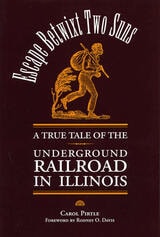
Escape Betwixt Two Suns
A True Tale of the Underground Railroad in IllinoisCarol Pirtle. Foreword by Rodney O. Davis
Southern Illinois University Press, 2000
Although the northern Illinois chapters of the story of Susan “Sukey” Richardson’s escape from slavery on the Underground Railroad are documented, the part played by southern Illinois in that historic episode has remained obscure. Carol Pirtle changes that with her investigation into the 1843 suit Andrew Borders lodged against William Hayes, charging his neighbor with helping slaves from the Borders estate escape to Galesburg. In conjunction with her probe into the past, Pirtle also discovered the Hayes correspondence.
Pirtle documents Hayes’s involvement in the Illinois Underground Railroad through approximately two hundred letters received by Hayes from the early 1820s until his death in 1849. Many of these letters specifically corroborate his participation in the escape of slaves from the Borders estate. One such letter came from T. A. Jones in 1843: “You Dear Sir are to me an unknown friend, yet I believe you are a friend to the poor down trodden Slave. This is as good an introduction as I want from any man. My brother, our cause is a holy one.” Letters written by Galesburg residents show that several prominent citizens of that community also assisted in the affair, proving that Knox College administrators and trustees were active in the Underground Railroad.
Pirtle also includes excerpts from the trial transcript from the 1844 civil case against Hayes, which was tried in Pinckneyville, Illinois. She researched newspaper accounts of the event, most notably those in the Western Citizen and the Sparta Herald. Records of the Covenanter Presbyterian church of which Hayes was a member provide partial explanations of Hayes’s motives.
Telling the story of Hayes and his involvement with Susan Richardson and the Underground Railroad, Pirtle provides insight into the work of abolitionists in Illinois. Escape Betwixt Two Suns, in fact, is one of the few books to substantiate the legends of the Underground Railroad. She tells the story of a quiet man who made a difference, of a man deserving the accolades of a hero.
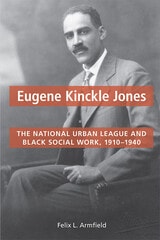
Eugene Kinckle Jones
The National Urban League and Black Social Work, 1910-1940Felix L. Armfield
University of Illinois Press, 2014
Drawing on interviews with Jones's colleagues and associates, as well as recently opened family and Urban League archives, Felix L. Armfield blends biography with an in-depth discussion of the roles of black institutions and organizations. The result is a work that offers new details on the growth of African American communities, the evolution of African American life, and the role of black social workers in the years before the civil rights era.
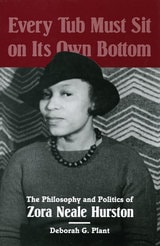
Every Tub Must Sit on Its Own Bottom
The Philosophy and Politics of Zora Neale HurstonDeborah G. Plant
University of Illinois Press, 1995
needed at this point in the evolving critical assessment of Hurston. It
is a paradigm for the study of individual African American women writers."
-- Alice Deck, University of Illinois at Urbana-Champaign
In a ground-breaking study
of Zora Neale Hurston, Deborah Plant takes issue with current notions
of Hurston as a feminist and earlier impressions of her as an intellectual
lightweight who disregarded serious issues of race in American culture.
Instead, Plant calls Hurston a "writer of resistance" who challenged
the politics of domination both in her life and in her work. One of the
great geniuses of the Harlem Renaissance, Hurston stands out as a strong
voice for African-American women. Her anthropological inquiries as well
as her evocative prose provide today's readers with a rich history of
African American folk culture, a folk culture through which Hurston expressed
her personal and political strategy of resistance and self-empowerment.
Through readings of Hurston's
fiction and autobiographical writings, Plant offers one of the first book-length
discussions of Hurston's personal philosophy of individualism and self-preservation.
From a discussion of Hurston's preacher father and influential mother,
whose guiding philosophy is reflected in the title of this book, to the
influence of Spinoza and Nietzsche, Plant puts into perspective the driving
forces behind Hurston's powerful prose.
This fresh look at one of
the most important writers of the twentieth century is sure to shape future
study of Hurston and her work.
Everything Man
The Form and Function of Paul RobesonShana L. Redmond
Duke University Press, 2020
Evidence of Being
The Black Gay Cultural Renaissance and the Politics of ViolenceDarius Bost
University of Chicago Press, 2018
Excited Delirium
Race, Police Violence, and the Invention of a DiseaseAisha M. Beliso-De Jesús
Duke University Press, 2024
Exporting Jim Crow
Blackface Minstrelsy in South Africa and BeyondChinua Thelwell
University of Massachusetts Press, 2020
Chinua Thelwell brings blackface minstrelsy and performance culture into the discussion of apartheid's nineteenth-century origins and afterlife, employing a broad archive of South African newspapers and magazines, memoirs, minstrel songs and sketches, diaries, and interview transcripts. Exporting Jim Crow highlights blackface minstrelsy's cultural and social impact as it became a dominant form of entertainment, moving from its initial appearances on music hall stages to its troubling twentieth-century resurgence on movie screens and at public events. This carefully researched and highly original study demonstrates that the performance of race in South Africa was inherently political, contributing to racism and shoring up white racial identity.
EyeMinded
Living and Writing Contemporary ArtKellie Jones
Duke University Press, 2011