210 books match the query 'African Studies' and 9 start with e

cover of Echoes of the Sunbird: An Anthology of Contemporary African Poetry

Echoes of the Sunbird

An Anthology of Contemporary African Poetry

Don Burness

Ohio University Press, 1993
This volume presents a broad overview of the work of seven of Africa’s leading poets. Five of them have received international recognition: Niyi Osundare and Chinua Achebe, the Commonwealth Poetry Prize; Osundare and Antonio Jacinto, the Noma Prize; and Jose Craveirinha, the Camoes Prize. The poems concern political, personal, and social themes and are written with aesthetic simplicity and lyricism. The contributors believe that poets, rather than being exiles from their communities, are prophets, seers, and singers and have a place in everyday life. Most of the poems have been published previously. Several, however, are new, and their appearance in this volume along with an introductory essay written by each poet, makes this anthology important, original, and fresh.
[more]
cover of Elites and the Politics of Accountability in Africa

Elites and the Politics of Accountability in Africa

Wale Adebanwi and Rogers Orock, Editors

University of Michigan Press, 2021

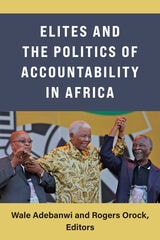
Elites and the Politics of Accountability in Africa examines the ways that accountability offers an effective interpretive lens to the social, cultural, and institutional struggles of both the elites and ordinary citizens in Africa. Each chapter investigates questions of power, its public deliberation, and its negotiation in Africa by studying elites through the framework of accountability. The book enters conversations about political subjectivity and agency, especially from ongoing struggles around identities and belonging, as well as representation and legitimacy. Who speaks to whom? And on whose behalf do they speak? The contributors to this volume offer careful analyses of how such concerns are embedded in wider forms of cultural, social, and institutional discussions about transparency, collective responsibility, community, and public decision-making processes. These concerns affect prospects for democratic oversight, as well as questions of alienation, exclusivity, privilege and democratic deficit. The book situates our understanding of the emergence, meaning, and conceptual relevance of elite accountability, to study political practices in Africa. It then juxtaposes this contextualization of accountability in relation to the practices of African elites. Elites and the Politics of Accountability in Africa offers fresh, dynamic, and multifarious accounts of elites and their practices of accountability and locally plausible self-legitimation, as well as illuminating accounts of contemporary African elites in relation to their socially and historicallysituated outcomes of contingency, composition, negotiation, and compromise.
[more]
cover of Elusive Histories: Mozambican Migrant Laborers in Rhodesia, ca. 1900-1980

Elusive Histories

Mozambican Migrant Laborers in Rhodesia, ca. 1900-1980

Allen F. Isaacman, Joy M. Chadya, and Barbara S. Isaacman

Ohio University Press, 2025

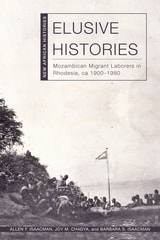
At the heart of Elusive Histories is a long-neglected story of the clandestine journeys of Mozambican migrant laborers and their families to Rhodesia. Drawing from oral histories, court records, archives, newspapers, and popular magazines, the authors chronicle Mozambican migration, work experiences, and settlement in Rhodesia. Thousands of men, women, and children traveled long distances, often on foot, to reach Rhodesia. Starting with a trickle of workers seeking to avoid chibharo, a Mozambican agricultural forced-labor system, the number of migrants peaked in the 1950s.

In 1958, the Rhodesian government passed legislation to bar new Mozambican migrants from entering large cities, redirecting them toward agriculture and mining. When Black Rhodesian laborers began to complain about losing jobs to Mozambicans, the restrictions became an outright ban to prevent further migrants from entering the country.

Contrary to previous assumptions, Mozambican labor in Rhodesia was not contract labor derived from bilateral negotiations between the Mozambican colonial and Rhodesian governments. In fact, many Mozambicans who came to work and live in Rhodesia arrived as illegal migrants. The book also demystifies the widely held notion that all foreign migrant workers in Rhodesia who spoke Nyanja were Nyasalanders. Because Nyanja is widely spoken at the confluence of Malawi, Zambia, and Mozambique, many Mozambicans who came to work in Rhodesia were fluent. Despite the national, racial, and cultural differences and the discrimination in job placement, promotion, and housing, Mozambican migrant laborers creatively adapted and made Rhodesia home for the duration of their lives.
[more]
cover of Empire in Africa: Angola and Its Neighbors

Empire in Africa

Angola and Its Neighbors

David Birmingham

Ohio University Press, 2006
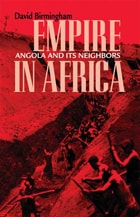
The dark years of European fascism left their indelible mark on Africa. As late as the 1970s, Angola was still ruled by white autocrats, whose dictatorship was eventually overthrown by black nationalists who had never experienced either the rule of law or participatory democracy. Empire in Africa takes the long view of history and asks whether the colonizing ventures of the Portuguese can bear comparison with those of the Mediterranean Ottomans or those experienced by Angola’s neighbors in the Belgian Congo, French Equatorial Africa, or the Dutch colonies at the Cape of Good Hope and in the Transvaal. David Birmingham takes the reader through Angola’s troubled past, which included endemic warfare for the first twenty-five years of independence, and examines the fact that in the absence of a viable neocolonial referee such as Britain or France, the warring parties turned to Cold War superpowers for a supply of guns. For a decade Angola replaced Vietnam as a field in which an international war by proxy was conducted. Empire in Africa explains how this African nation went from colony to independence, how in the 1990s the Cold War legacy turned to civil war, and how peace finally dawned in 2002.
[more]
cover of Enduring Polygamy: Plural Marriage and Social Change in an African Metropolis

Enduring Polygamy

Plural Marriage and Social Change in an African Metropolis

Bruce Whitehouse

Rutgers University Press, 2023

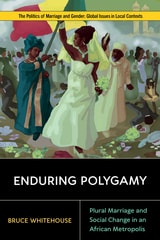
Why hasn’t polygamous marriage died out in African cities, as experts once expected it would? Enduring Polygamy considers this question in one of Africa’s fastest-growing cities: Bamako, the capital of Mali, where one in four wives is in a polygamous marriage. Using polygamy as a lens through which to survey sweeping changes in urban life, it offers ethnographic and demographic insights into the customs, gender norms and hierarchies, kinship structures, and laws affecting marriage, and situates polygamy within structures of inequality that shape marital options, especially for young Malian women. Through an approach of cultural relativism, the book offers an open-minded but unflinching perspective on a contested form of marriage. Without shying away from questions of patriarchy and women’s oppression, it presents polygamy from the everyday vantage points of Bamako residents themselves, allowing readers to make informed judgments about it and to appreciate the full spectrum of human cultural diversity.
[more]
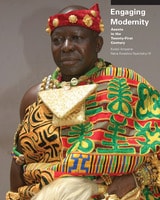
cover of Engaging Modernity: Asante in the Twenty-First Century

Engaging Modernity

Asante in the Twenty-First Century

Kwasi Ampene. Nana Kwadwo Nyantakyi III

Michigan Publishing Services, 2016
Engaging Modernity is the definitive history of Asante royal regalia and music ensembles. This second edition includes an ethnographical account of the 2014 Asanteman Grand Adae festival that prominently features the complex heritage of the visual and the performing arts in motion. Ampene’s contextual account illuminates the historical narratives the regalia objects render as they move through space and time, as well as the metalanguage embodied in the objects and the symbolic language they convey in Akanland. The book combines text with over three hundred color photographs to construct subtle and nuanced views of the material culture associated with Asante royal court in the twenty-first century. Engaging Modernity is an essential and a vast transdisciplinary resource for the humanities and beyond.

 
[more]
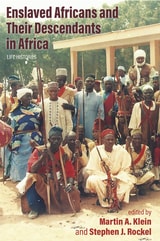
cover of Enslaved Africans and Their Descendants in Africa: Life Histories

Enslaved Africans and Their Descendants in Africa

Life Histories

Martin A. Klein and Stephen J. Rockel

Ohio University Press, 2025

An exploration of the resilient lives and legacies of enslaved Africans in Africa

Unlike narratives focused on enslaved people in the Americas, Europe, or the Middle East, this edited collection highlights the lives of African slaves and their descendants who remained in Africa. The contributors chronicle lives spanning the continent, from Sierra Leone, Burkina Faso, Nigeria, Chad, and Cameroon to Egypt, Ethiopia, Tanzania, and South Africa.

The collection explores various forms of slavery and diverse personal trajectories, with many stories beginning in childhood enslavement and evolving into adulthood with limited chances for education or personal advancement. Notably, the accounts include figures who managed to achieve prominent roles, such as a slave who became a general and administrator, a female slave who rose to be a village chief, and a woman who became a successful obstetrician in Muslim Africa.

The narratives underscore the resilience and agency of the enslaved individuals, many of whom created meaningful lives despite the constraints and stigma of both slavery and post-slavery. Some, like a medical missionary in Tanganyika and a slave convert who helped grow the Catholic Church in Burkina Faso, contributed significantly to their communities and religious institutions.

Accessing these stories required rigorous research due to limited documentation, social silence surrounding slavery, and stigma associated with slave ancestry. The contributors’ extensive research brings together fragmented knowledge and oral histories to provide an invaluable perspective and insight into the complex identities, struggles, and achievements of African slaves and their descendants.

Contributors:

Richard Anderson
Dadda Astabarka
Abdourahman Halirou
Martin A. Klein
George Michael La Rue
Adam Mahamat
Ricardo Marquez Garcia
Stephen J. Rockel
Ute Röschenthaler
Mohammed Bashir Salau
Moris Samen
Sandra Rowoldt Shell
Joseph Jules Sinang
[more]
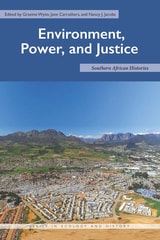
cover of Environment, Power, and Justice: Southern African Histories

Environment, Power, and Justice

Southern African Histories

Graeme Wynn

Ohio University Press, 2022
Spanning the colonial, postcolonial, and postapartheid eras, these historical and locally specific case studies analyze and engage vernacular, activist, and scholarly efforts to mitigate social-environmental inequity. This book highlights the ways poor and vulnerable people in South Africa, Lesotho, and Zimbabwe have mobilized against the structural and political forces that deny them a healthy and sustainable environment. Spanning the colonial, postcolonial, and postapartheid eras, these studies engage vernacular, activist, and scholarly efforts to mitigate social-environmental inequity. Some chapters track the genealogies of contemporary activism, while others introduce positions, actors, and thinkers not previously identified with environmental justice. Addressing health, economic opportunity, agricultural policy, and food security, the chapters in this book explore a range of issues and ways of thinking about harm to people and their ecologies. Because environmental justice is often understood as a contemporary phenomenon framed around North American examples, these fresh case studies will enrich both southern African history and global environmental studies. Environment, Power, and Justice expands conceptions of environmental justice and reveals discourses and dynamics that advance both scholarship and social change. Contributors: Christopher Conz Marc Epprecht Mary Galvin Sarah Ives Admire Mseba Muchaparara Musemwa Matthew A. Schnurr Cherryl Walker
[more]
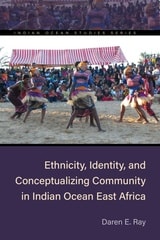
cover of Ethnicity, Identity, and Conceptualizing Community in Indian Ocean East Africa

Ethnicity, Identity, and Conceptualizing Community in Indian Ocean East Africa

Daren E. Ray

Ohio University Press, 2023

This volume explores how the people of littoral East Africa imagined and reimagined their communities over two millennia of engagement with Indian Ocean transformations—from the settlement of Bantu speakers near the coast around the first century CE to their participation in transoceanic commerce, imperial rivalries, colonial projects, and decolonization movements in the mid-twentieth century. Like other histories of the Indian Ocean, it emphasizes the circulation of people and ideas, but its cis-oceanic approach demonstrates how these littoral communities continued to integrate strategies from those in Africa’s interior as well as from people who traveled the ocean. The book also clarifies the precise relationship between ethnicity and other kinds of identities by expanding the conventional focus on Swahili people to speakers of Sabaki Bantu languages, as well as to Mijikenda, Pokomo, and Elwana communities, whom Indian Ocean scholars often overlook. By examining all these groups’ shared linguistic heritage, the book outlines their forebears’ innovation and transformation of lineages, clans, confederations, councils, title societies, age sets, moieties, religious sects, and tribes. Drawing together evidence from linguistics, archaeology, ethnography, oral traditions, travelers’ accounts, and colonial records, the book explores how the speakers of Sabaki languages continuously reconceptualized their identities in littoral East Africa as the political topography of the Indian Ocean world changed around them. Moving seamlessly across multiple precolonial and colonial eras and beyond, this deep history of collaboration and political imagination leads readers through the transitions of identity that mattered to littoral East Africans. The book fills the need for an updated synthesis of East Africans’ engagements with diasporic communities in Indian Ocean and world history courses. In addition, since most African history publications for classroom use in recent years have focused exclusively on modern times, it satisfies the demand for works that span the early and modern eras. Beyond the classroom, the book will interest specialists in the history of the Indian Ocean, Africa, Islam, imperialism, and ethnohistory. A major contribution of this multidisciplinary work is to present the research of archaeologists, anthropologists, linguists, and historians to one another in an accessible, jargon-free manner. While Africanists will appreciate how the book expands the boundaries of the Indian Ocean to include oft-ignored communities, Indian Ocean specialists will find models for investigating the construction of ethnicity and other collective identities across multiple centuries.
[more]