239 books match the query 'Agriculture' and 11 start with e
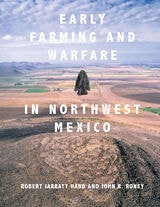
cover of Early Farming and Warfare in Northwest Mexico

Early Farming and Warfare in Northwest Mexico

Robert J. Hard and John R. Roney

University of Utah Press, 2019

This volume presents the multiyear archaeological investigations of Cerro Juanaqueña and related sites in northwestern Chihuahua, Mexico. These remarkable terraced hilltop settlements represent a series of watershed developments, including substantial dependence on agriculture and early experiments with village living, fortified settlements, collective labor, and communal architecture. Part of a larger, regional development, they parallel changes in northern Sonora and southern Arizona. The emergence of large fortified agricultural villages at 1300 BC—before the use of ceramics—was an unexpected discovery that changed how archaeologists view early agriculture in this region.
 
The authors place their work in a regional and theoretical context, providing detailed analyses of radiocarbon dates, structures, features, and artifacts. Authors Hard and Roney, and their contributors, present innovative analyses of plant and animal remains, ground stone, chipped stone, and landscape evolution. Through comparisons with a global cross-cultural probe of hilltop sites and a detailed examination of the features and artifacts of Cerro Juanaqueña, Hard and Roney argue that these cerros de trincheras sites are the earliest fortified defensive sites in the region. Readers with interests in ancient agriculture, warfare, village formation, and material culture will find this to be a foundational volume.
[more]
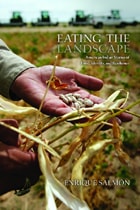
cover of Eating the Landscape: American Indian Stories of Food, Identity, and Resilience

Eating the Landscape

American Indian Stories of Food, Identity, and Resilience

Enrique Salmón

University of Arizona Press, 2012

"Eating is not only a political act, it is also a cultural act that reaffirms one’s identity and worldview," Enrique Salmón writes in Eating the Landscape. Traversing a range of cultures, including the Tohono O’odham of the Sonoran Desert and the Rarámuri of the Sierra Tarahumara, the book is an illuminating journey through the southwest United States and northern Mexico. Salmón weaves his historical and cultural knowledge as a renowned indigenous ethnobotanist with stories American Indian farmers have shared with him to illustrate how traditional indigenous foodways—from the cultivation of crops to the preparation of meals—are rooted in a time-honored understanding of environmental stewardship.

In this fascinating personal narrative, Salmón focuses on an array of indigenous farmers who uphold traditional agricultural practices in the face of modern changes to food systems such as extensive industrialization and the genetic modification of food crops. Despite the vast cultural and geographic diversity of the region he explores, Salmón reveals common themes: the importance of participation in a reciprocal relationship with the land, the connection between each group’s cultural identity and their ecosystems, and the indispensable correlation of land consciousness and food consciousness. Salmón shows that these collective philosophies provide the foundation for indigenous resilience as the farmers contend with global climate change and other disruptions to long-established foodways. This resilience, along with the rich stores of traditional ecological knowledge maintained by indigenous agriculturalists, Salmón explains, may be the key to sustaining food sources for humans in years to come.

As many of us begin to question the origins and collateral costs of the food we consume, Salmón’s call for a return to more traditional food practices in this wide-ranging and insightful book is especially timely. Eating the Landscape is an essential resource for ethnobotanists, food sovereignty proponents, and advocates of the local food and slow food movements.
[more]
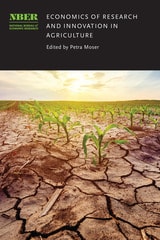
cover of Economics of Research and Innovation in Agriculture

Economics of Research and Innovation in Agriculture

Edited by Petra Moser

University of Chicago Press, 2021
Feeding the world’s growing population is a critical policy challenge for the twenty-first century. With constraints on water, arable land, and other natural resources, agricultural innovation is a promising path to meeting the nutrient needs for future generations. At the same time, potential increases in the variability of the world’s climate may intensify the need for developing new crops that can tolerate extreme weather. Despite the key role for scientific breakthroughs, there is an active discussion on the returns to public and private spending in agricultural R&D, and many of the world’s wealthier countries have scaled back the share of GDP that they devote to agricultural R&D. Dwindling public support leaves universities, which historically have been a major source of agricultural innovation, increasingly dependent on industry funding, with uncertain effects on the nature and direction of agricultural research. All of these factors create an urgent need for systematic empirical evidence on the forces that drive research and innovation in agriculture. This book aims to provide such evidence through economic analyses of the sources of agricultural innovation, the challenges of measuring agricultural productivity, the role of universities and their interactions with industry, and emerging mechanisms that can fund agricultural R&D. 
[more]
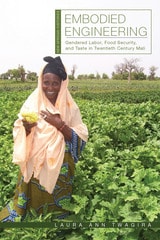
cover of Embodied Engineering: Gendered Labor, Food Security, and Taste in Twentieth-Century Mali

Embodied Engineering

Gendered Labor, Food Security, and Taste in Twentieth-Century Mali

Laura Ann Twagira

Ohio University Press, 2021
Foregrounding African women’s ingenuity and labor, this pioneering case study shows how women in rural Mali have used technology to ensure food security through the colonial period, environmental crises, and postcolonial rule. By advocating for an understanding of rural Malian women as engineers, Laura Ann Twagira rejects the persistent image of African women as subjects without technological knowledge or access and instead reveals a hidden history about gender, development, and improvisation. In so doing, she also significantly expands the scope of African science and technology studies. Using the Office du Niger agricultural project as a case study, Twagira argues that women used modest technologies (such as a mortar and pestle or metal pots) and organized female labor to create, maintain, and reengineer a complex and highly adaptive food production system. While women often incorporated labor-saving technologies into their work routines, they did not view their own physical labor as the problem it is so often framed to be in development narratives. Rather, women’s embodied techniques and knowledge were central to their ability to transform a development project centered on export production into an environmental resource that addressed local taste and consumption needs.
[more]
cover of Empty Pastures: Confined Animals and the Transformation of the Rural Landscape

Empty Pastures

Confined Animals and the Transformation of the Rural Landscape

Terence J. Centner

University of Illinois Press, 2004

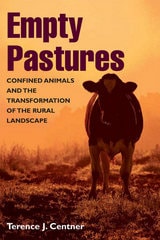
Over the past century American agriculture has shifted dramatically with small, commercial farms finding it increasingly difficult to compete with large-scale (mostly indoor) animal feeding operations (AFOs). In this book, Terence J. Centner investigates the environmental, social, economic, and political impact of the rise of the so-called factory farm, exposing the ramifications of the contemporary trend toward industrial-scale food production.
 
Just as Rachel Carson's landmark Silent Spring used the disappearance of songbirds as a jumping-off point for a work that raised public awareness of pesticides' devastating environmental impact, Empty Pastures sees the dwindling numbers of livestock in the American countryside as a symptom of a broader transformation, one with serious consequences for the rural landscape and its inhabitants--animal as well as human.
 
After outlining the rise of the AFO, Centner examines the troubling consequences of consolidation in animal farming and suggests a number of remedies. The issues he tackles include groundwater contamination, the loss of biodiversity, animal welfare, concentrated odors and other nuisances, soil erosion, and the economic effects of the disappearance of the small family farm.
 
Inspired by largely abandoned traditional practices rather than a radical and unrealistic vision of a return to an idealized past, Centner proposes a series of pragmatic reforms for regulating factory farms to halt ecological degradation and revitalize rural communities.
 
[more]
cover of Enduring Seeds: Native American Agriculture and Wild Plant Conservation

Enduring Seeds

Native American Agriculture and Wild Plant Conservation

Gary Paul Nabhan; Forewords by Wendell Berry and Miguel Altieri

University of Arizona Press, 2002

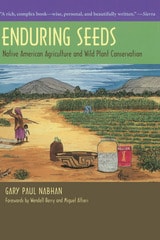
As biological diversity continues to shrink at an alarming rate, the loss of plant species poses a threat seemingly less visible than the loss of animals but in many ways more critical. In this book, one of America's leading ethnobotanists warns about our loss of natural vegetation and plant diversity while providing insights into traditional Native agricultural practices in the Americas.

Gary Paul Nabhan here reveals the rich diversity of plants found in tropical forests and their contribution to modern crops, then tells how this diversity is being lost to agriculture and lumbering. He then relates "local parables" of Native American agriculture—from wild rice in the Great Lakes region to wild gourds in Florida—that convey the urgency of this situation and demonstrate the need for saving the seeds of endangered plants. Nabhan stresses the need for maintaining a wide gene pool, not only for the survival of these species but also for the preservation of genetic strains that can help scientists breed more resilient varieties of other plants.

Enduring Seeds is a book that no one concerned with our environment can afford to ignore. It clearly shows us that, as agribusiness increasingly limits the food on our table, a richer harvest can be had by preserving ancient ways.

This edition features a new foreword by Miguel Altieri, one of today's leading spokesmen for sustainable agriculture and the preservation of indigenous farming methods.
[more]
cover of Energy Solutions for Aquaponics: Using the agricultural energy internet

Energy Solutions for Aquaponics

Using the agricultural energy internet

Xueqian Fu

The Institution of Engineering and Technology, 2026
In line with the increasing electrification of agricultural production, aquaculture systems are becoming an important type of agricultural energy load. This book discusses key energy issues in aquaculture systems, and explains how agricultural energy internet technologies can support the development of modern aquaculture.
[more]
cover of Environmental Ethics in the Midwest: Interdisciplinary Approaches

Environmental Ethics in the Midwest

Interdisciplinary Approaches

Ian Smith

Michigan State University Press, 2022
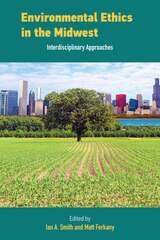
The American Midwest is environmentally rich and complex, home to some of the world’s largest freshwater lakes and streams as well as cities, prairies, forests, and farmlands. Nevertheless, the unique environmental opportunities and challenges the region presents have been left underappreciated and underexplored by environmental ethicists. The close integration of the natural and built environments of the Midwest prompts interdisciplinary inquiry in a particularly pointed way. To remedy the lack of scholarly attention to this area, this volume attends to the way that the broad concerns of environmental ethics manifest in the region. These eight original essays cover a wide range of topics, including agrarian ethics and Stoicism; the Dakota access pipeline and Indigenous women’s activism; philosophy of law and species classification; environmental justice and the Flint water crisis; hog farming and antimicrobial drug resistance; science education standards and climate change education; virtue ethics and ecological restoration; environmental pragmatism and the Clean Water Act; and more. Each accessibly written chapter brings multidisciplinary complexity to bear on this complex region. The authors include philosophers working in environmental ethics and other subfields of philosophy, and together with scholars in fields such as environmental sociology, American Indian studies, and environmental studies, they provide a fresh and necessary perspective on the American Midwest.
[more]
cover of Environmental Safety of Genetically Engineered Crops

Environmental Safety of Genetically Engineered Crops

Rebecca Grumet

Michigan State University Press, 2010

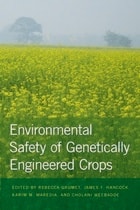
Since the mid-1990s, when the technology was first introduced, the cultivation of genetically engineered (GE) crops has grown exponentially. In the U.S. alone, adoption rates for transgenic cotton, corn, and soybeans are between 70–90%. Across the globe, 14 million farmers grow GE crops in more than twenty countries. Yet many countries are discussing and debating the use and adoption of GE technology because of concerns about their impact on the environment and human health. Now, in this comprehensive handbook, a team of international experts present the scientific basis for GE crops, placing them in the context of current agricultural systems, and examining the potential environmental risks posed by their deployment. An integrated approach to an increasingly hot and globally debated topic, the book considers the past, present, and future of GE crops, and offers an invaluable perspective for regulation and policy development.
[more]
cover of Evolution Made to Order: Plant Breeding and Technological Innovation in Twentieth-Century America

Evolution Made to Order

Plant Breeding and Technological Innovation in Twentieth-Century America

Helen Anne Curry

University of Chicago Press, 2016

Plant breeders have long sought technologies to extend human control over nature. Early in the twentieth century, this led some to experiment with startlingly strange tools like x-ray machines, chromosome-altering chemicals, and radioactive elements. Contemporary reports celebrated these mutation-inducing methods as ways of generating variation in plants on demand. Speeding up evolution, they imagined, would allow breeders to genetically engineer crops and flowers to order. Creating a new food crop or garden flower would soon be as straightforward as innovating any other modern industrial product. 

In Evolution Made to Order, Helen Anne Curry traces the history of America’s pursuit of tools that could intervene in evolution. An immersive journey through the scientific and social worlds of midcentury genetics and plant breeding and a compelling exploration of American cultures of innovation, Evolution Made to Order provides vital historical context for current worldwide ethical and policy debates over genetic engineering.
[more]
cover of Evolution of the Agricultural Energy Internet: Modeling, simulation and engineering practice

Evolution of the Agricultural Energy Internet

Modeling, simulation and engineering practice

Xueqian Fu

The Institution of Engineering and Technology, 2026

In smart agriculture, core functions such as agricultural machinery automation, intelligent environmental sensing, and precision crop management rely heavily on continuous, high-quality energy supply. Intelligent power systems tailored to agricultural scenarios are essential to realizing unmanned farms. Moreover, as a result of rural revitalization strategies and national programmes such as China's dual carbon goals, rural areas and agriculture are no longer merely energy consumers. Agricultural and rural zones are increasingly becoming important providers of distributed renewable energy and suitable deployment sites for energy infrastructure. As such, the agricultural energy internet is now entering a critical stage of rapid development and engineering transformation.
[more]