Results by title
702 books match the query 'America' and 26 start with e
Early Images of the Americas
Transfer and InventionEdited by Jerry M. Williams and Robert E. Lewis
University of Arizona Press, 1993
Eating Right in America
The Cultural Politics of Food and HealthCharlotte Biltekoff
Duke University Press, 2013
Ecospeak
Rhetoric and Environmental Politics in AmericaM. Jimmie Killingsworth and Jacqueline S. Palmer
Southern Illinois University Press, 1992
In this book, M. Jimmie Killingsworth and Jacqueline S. Palmer have a twofold purpose: to analyze the patterns of rhetoric used in written discourse about environmental politics and to make a practical contribution to the art of rhetorical criticism through the study of rhetoric in use.
The language, professional objectivity, and research programs of scientists insulate these best-informed citizens in enclaves of specialization, limiting access to crucial information and hindering effective reformative action. Science, the authors stress, is not merely a database to rely upon but a view of the world that must be broadened in order to affect social morality. Science-based activism must arise to ensure the care and future of the environment.
Killingsworth and Palmer argue that for grassroots activism to be tied to this globally conscious philosophy, a rhetoric of sustainability must be cultivated.
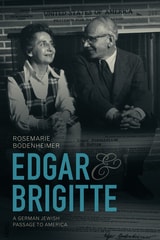
Edgar and Brigitte
A German Jewish Passage to AmericaRosemarie Bodenheimer
University of Alabama Press, 2016
The couple’s encounters with the strange new dynamics of race, religion, and the workplace in their new American home offer a compelling account of the struggles that faced many immigrants with deep German roots. It is also an intimate portrait of a now-vanished German Jewish culture as it played out in the lives of Bodenheimer’s parents and her grandparents from the 1920s to the late 1960s, a story of emigration, assimilation, and the private struggles that accompany those forced shifts in orientation.
The Bodenheimers’ letters and journals offer engaging perspectives into their personal lives that retrospective memories cannot match. Braiding intimate biography together with history and memoir, Edgar and Brigitte will appeal both to historians of the European Jewish diaspora and to readers interested in the struggles and resilience of people whose lives were upended by Hitler.
Education and Democratic Citizenship in America
Norman H. Nie, Jane Junn, and Kenneth Stehlik-Barry
University of Chicago Press, 1996
Norman H. Nie, Jane Junn, and Kenneth Stehlik-Barry provide answers by uncovering the causal relationship between education and democratic citizenship. They argue that citizenship encompasses both political engagement in pursuit of interests and commitment to democratic values that temper what citizens can do to win in politics. Education affects the two dimensions in distinct ways. Especially significant is the influence of education on political engagement through occupational prominence and position in social networks. Formal education orders the distribution of social position and connections and creates an uneven political playing field.
Empire of Neglect
The West Indies in the Wake of British LiberalismChristopher Taylor
Duke University Press, 2018

Empires to Nations
Expansion in America, 1713-1824Max Savelle
University of Minnesota Press, 1976
Empires to Nations was first published in 1974. Minnesota Archive Editions uses digital technology to make long-unavailable books once again accessible, and are published unaltered from the original University of Minnesota Press editions.
This history traces the growth of the Euroamerican societies in the Western Hemisphere during the eighteenth-century period of European expansion. Professor Savelle reviews the continuation and completion of the exploration of the American continent and describes the evolution of the New World empires of the English, French, Spanish, Portuguese, and Dutch, He devotes separate chapters to the development of the political structures of the colonies and the rivalries, wars, and diplomatic exchanges among the empires. He also reviews and analyzes the economic history of the colonial societies in their three-way relationships – with their mother countries, with each other, and within themselves as regional or local entities. Final chapters are devoted to the birth and growth of national self-consciousness among the new societies.
Emptiness
Feeling Christian in AmericaJohn Corrigan
University of Chicago Press, 2015
Corrigan examines different kinds of emptiness essential to American Christianity, such as the emptiness of deep longing, the emptying of the body through fasting or weeping, the emptiness of the wilderness, and the emptiness of historical time itself. He argues, furthermore, that emptiness is closely connected to the ways Christian groups differentiate themselves: many groups foster a sense of belonging not through affirmation, but rather avowal of what they and their doctrines are not. Through emptiness, American Christians are able to assert their identities as members of a religious community.
Drawing much-needed attention to a crucial aspect of American Christianity, Emptiness expands our understanding of historical and contemporary Christian practices.
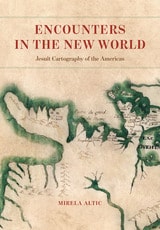
Encounters in the New World
Jesuit Cartography of the AmericasMirela Altic
University of Chicago Press, 2022
In 1540, in the wake of the tumult brought on by the Protestant Reformation, Saint Ignatius of Loyola founded the Society of Jesus, also known as the Jesuits. The Society’s goal was to revitalize the faith of Catholics and to evangelize to non-Catholics through charity, education, and missionary work. By the end of the century, Jesuit missionaries were sent all over the world, including to South America. In addition to performing missionary and humanitarian work, Jesuits also served as cartographers and explorers under the auspices of the Spanish, Portuguese, and French crowns as they ventured into remote areas to find and evangelize to native populations.
In Encounters in the New World, Mirela Altic analyzes more than 150 of their maps, most of which have never previously been published. She traces the Jesuit contribution to mapping and mapmaking from their arrival in the New World into the post-suppression period, placing it in the context of their worldwide undertakings in the fields of science and art. Altic’s analysis also shows the incorporation of indigenous knowledge into the Jesuit maps, effectively making them an expression of cross-cultural communication—even as they were tools of colonial expansion. This ambiguity, she reveals, reflects the complex relationship between missions, knowledge, and empire. Far more than just a physical survey of unknown space, Jesuit mapping of the New World was in fact the most important link to enable an exchange of ideas and cultural concepts between the Old World and the New.
Enduring Motives
The Archaeology of Tradition and Religion in Native AmericaLinea Sundstrom
University of Alabama Press, 2012
Wesley Bernardini / James S. Brown Jr. / Cheryl Claassen / John E. Clark / ArleneColman / Warren DeBoer /
Engraving the Savage
The New World and Techniques of CivilizationMichael Gaudio
University of Minnesota Press, 2008
In 1585, the British painter and explorer John White created images of Carolina Algonquian Indians. These images were collected and engraved in 1590 by the Flemish publisher and printmaker Theodor de Bry and were reproduced widely, establishing the visual prototype of North American Indians for European and Euro-American readers.
In this innovative analysis, Michael Gaudio explains how popular engravings of Native American Indians defined the nature of Western civilization by producing an image of its “savage other.” Going beyond the notion of the “savage” as an intellectual and ideological construct, Gaudio examines how the tools, materials, and techniques of copperplate engraving shaped Western responses to indigenous peoples. Engraving the Savage demonstrates that the early visual critics of the engravings attempted-without complete success-to open a comfortable space between their own “civil” image-making practices and the “savage” practices of Native Americans-such as tattooing, bodily ornamentation, picture-writing, and idol worship. The real significance of these ethnographic engravings, he contends, lies in the traces they leave of a struggle to create meaning from the image of the American Indian.
The visual culture of engraving and what it shows, Gaudio reasons, is critical to grasping how America was first understood in the European imagination. His interpretations of de Bry’s engravings describe a deeply ambivalent pictorial space in between civil and savage-a space in which these two organizing concepts of Western culture are revealed in their making.
Michael Gaudio is assistant professor of art history at the University of Minnesota.

Errands into the Metropolis
New England Dissidents in Revolutionary LondonJonathan Beecher Field
Dartmouth College Press, 2012
Esalen
America and the Religion of No ReligionJeffrey J. Kripal
University of Chicago Press, 2007
“An impressive new book. . . . [Kripal] has written the definitive intellectual history of the ideas behind the institute.”—San Francisco Chronicle
“Kripal examines Esalen’s extraordinary history and evocatively describes the breech birth of Murphy and Price’s brainchild. His real achievement, though, is effortlessly synthesizing a dizzying array of dissonant phenomena (Cold War espionage, ecstatic religiosity), incongruous pairings (Darwinism, Tantric sex), and otherwise schizy ephemera (psychedelic drugs, spaceflight) into a cogent, satisfyingly complete narrative.”—Atlantic Monthly
Essays in French Colonial History
Proceedings of the 21st Annual Meeting of the French Colonial Historical SocietyA.J.B. Johnston
Michigan State University Press, 1997
On 31 May - 3 June 1995, more than 200 participants gathered in Sydney and at Fortress Louisbourg, Nova Scotia, for the 21st annual conference of the French Colonial Historical Society. Essays in French Colonial History contains seventeen of the best articles presented at this meeting. It is a wide-ranging collection that explores many new and innovative facets of the French experience outre mer. The contributors, a mix of established experts and younger scholars, examine French activity in North America, the West Indies, Africa, and South America and focus on issues military, social, cultural, native, and political history.
Among the subject areas explored are: the 16th century French colonies in Brazil and Florida; Victor Hugues and the Reign of Terror on Guadeloupe; commerce and the distinctiveness of Louisbourg; the importance of letter-writing and compagnonnage; unresolved territory of the Creek Nation; case studies in the area of transition patrimonial; French colonial interests and policies in Atlantic Canada, Africa, and South America; attitudes among African Americans in post-French St. Louis; and a research report on the Historical Atlas of Quebec.
Eugene O'Neill's America
Desire Under DemocracyJohn Patrick Diggins
University of Chicago Press, 2007
In the face of seemingly relentless American optimism, Eugene O’Neill's plays reveal an America many would like to ignore, a place of seething resentments, aching desires, and family tragedy, where failure and disappointment are the norm and the American dream a chimera. Though derided by critics during his lifetime, his works resonated with audiences, won him the Nobel Prize and four Pulitzer, and continue to grip theatergoers today. Now noted historian John Patrick Diggins offers a masterly biography that both traces O’Neill’s tumultuous life and explains the forceful ideas that form the heart of his unflinching works.
Diggins paints a richly detailed portrait of the playwright’s life, from his Irish roots and his early years at sea to his relationships with his troubled mother and brother. Here we see O’Neill as a young Greenwich Village radical, a ravenous autodidact who attempted to understand the disjunction between the sunny public face of American life and the rage that he knew was simmering beneath. According to Diggins, O’Neill mined this disjunction like no other American writer. His characters burn with longing for an idealized future composed of equal parts material success and individual freedom, but repeatedly they fall back to earth, pulled by the tendrils of family and the insatiability of desire. Drawing on thinkers from Emerson to Nietzsche, O’Neill viewed this endlessly frustrated desire as the problematic core of American democracy, simultaneously driving and undermining American ideals of progress, success, and individual freedom.
Melding a penetrating assessment of O’Neill’s works and thought with a sensitive re-creation of his life, Eugene O’Neill’s America offers a striking new view of America’s greatest playwright—and a new picture of American democracy itself.
Evangelicals and Democracy in America
Religion and PoliticsSteven G. Brint
Russell Sage Foundation, 2009
Evangelicals and Democracy in America
Religion and SocietySteven G. Brint
Russell Sage Foundation, 2009
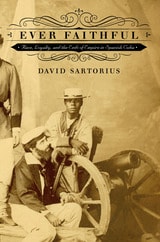
Ever Faithful
Race, Loyalty, and the Ends of Empire in Spanish CubaDavid Sartorius
Duke University Press, 2013
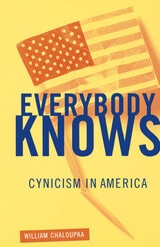
Everybody Knows
Cynicism in AmericaWilliam Chaloupka
University of Minnesota Press, 2001
A witty take on what’s wrong--and right--with cynicism today, now in paperback!
We are now living in the midst of the most cynical era in American history. Disaffection from government institutions is at an all-time high. Ordinary citizens perceive political leaders to be more manipulative and jaded than ever. Skepticism pervades our cultural and social attitudes and interactions, and is prominently featured in the films we see, the books we read, and the media we experience. In this biting and controversial analysis, William Chaloupka scrutinizes the cynicism that is our common condition, examining both its uses in the politics of backlash and resentment and its surprisingly positive aspects.
Everybody Knows traces cynicism from its classical origins but emphasizes its recent emergence in American culture and politics, following a trajectory from H. L. Mencken to Richard Nixon to Bill Clinton to Fargo. Cutting neatly across ideological divisions, Chaloupka discusses the ways in which cynicism is rooted in all democratic politics and analyzes the role of the media-in particular, television news, political ads and speeches, and books such as E. J. Dionne’s Why Americans Hate Politics and William Bennett’s The Book of Virtues-in dissecting and encouraging cynicism.Chaloupka describes mass cynicism, which permeates popular culture; outsider cynicism, capable of cranky, even violent disruption; and the cynicism of those in power. He argues that those who issue broad pleas for civility or a renewal of community spirit usually misunderstand the cynicism they wish to treat. He also discusses the value of a cheeky, subversive “kynicism” to evoke the lively democratic practice American society must foster.Early reviews call Everybody Knows “original and compelling,” “pithy, engaging, and funny,” and “the best book on American politics in quite a while.” Sure to be widely read and debated, this entertaining book will inspire readers to take a new look at the cynicism prevalent in contemporary American society.
Everyday Nature
Knowledge of the Natural World in Colonial New YorkGronim, Sara S
Rutgers University Press, 2007
In the modern world, the public looks to scientists and scholars for their expertise on issues ranging from the effectiveness of vaccines to the causes of natural disasters. But for early Americans, whose relationship to nature was more intimate and perilous than our own, personal experience, political allegiances, and faith in God took precedence over the experiments of the learned.
In Everyday Nature, Sara Gronim shows how scientific advances were received in the early modern world, from the time Europeans settled in America until just before the American Revolution. Settlers approached a wide range of innovations, such as smallpox inoculation, maps and surveys, Copernican cosmology, and Ben Franklin’s experiments with electricity, with great skepticism. New Yorkers in particular were distrustful because of the chronic political and religious factionalism in the colony. Those discoveries that could be easily reconciled with existing beliefs about healing the sick, agricultural practices, and the revolution of the planets were more readily embraced.
A fascinating portrait of colonial life, this book traces a series of innovations that were disseminated throughout the Atlantic world during the Enlightenment, and shows how colonial New Yorkers integrated new knowledge into their lives.
Everything Was Better in America
Print Culture in the Great DepressionDavid Welky
University of Illinois Press, 2007
Executing Democracy
Volume One: Capital Punishment & the Making of America, 1683-1807Stephen J. Hartnett
Michigan State University Press, 2010
Executing Democracy: Capital Punishment & the Making of America, 1683-1807 is the first volume of a rhetorical history of public debates about crime, violence, and capital punishment in America. This examination begins in 1683, when William Penn first struggled to govern the rowdy indentured servants of Philadelphia, and continues up until 1807, when the Federalists sought to impose law-and-order upon the New Republic.
This volume offers a lively historical overview of how crime, violence, and capital punishment influenced the settling of the New World, the American Revolution, and the frantic post-war political scrambling to establish norms that would govern the new republic.
By presenting a macro-historical overview, and by filling the arguments with voices from different political camps and communicative genres, Hartnett provides readers with fresh perspectives for understanding the centrality of public debates about capital punishment to the history of American democracy.
Executing Democracy
Volume Two: Capital Punishment and the Making of America, 1835-1843Stephen Hartnett
Michigan State University Press, 2024
This eye-opening and well-researched companion to the first volume of Executing Democracy enters the death-penalty discussion during the debates of 1835 and 1843, when pro-death penalty Calvinist minister George Barrell Cheever faced off against abolitionist magazine editor John O’Sullivan. In contrast to the macro-historical overview presented in volume 1, volume 2 provides micro-historical case studies, using these debates as springboards into the discussion of the death penalty in America at large. Incorporating a wide range of sources, including political poems, newspaper editorials, and warring manifestos, this second volume highlights a variety of perspectives, thus demonstrating the centrality of public debates about crime, violence, and punishment to the history of American democracy. Hartnett’s insightful assessment bears witness to a complex national discussion about the political, metaphysical, and cultural significance of the death penalty.
Exemplary Violence
Rewriting History in Colonial ColombiaAlberto Villate-Isaza
Bucknell University Press, 2021
Experiencing Nature
The Spanish American Empire and the Early Scientific RevolutionBy Antonio Barrera-Osorio
University of Texas Press, 2006
As Spain colonized the Americas during the sixteenth century, Spanish soldiers, bureaucrats, merchants, adventurers, physicians, ship pilots, and friars explored the natural world, gathered data, drew maps, and sent home specimens of America's vast resources of animals, plants, and minerals. This amassing of empirical knowledge about Spain's American possessions had two far-reaching effects. It overturned the medieval understanding of nature derived from Classical texts and helped initiate the modern scientific revolution. And it allowed Spain to commodify and control the natural resources upon which it built its American empire.
In this book, Antonio Barrera-Osorio investigates how Spain's need for accurate information about its American colonies gave rise to empirical scientific practices and their institutionalization, which, he asserts, was Spain's chief contribution to the early scientific revolution. He also conclusively links empiricism to empire-building as he focuses on five areas of Spanish activity in America: the search for commodities in, and the ecological transformation of, the New World; the institutionalization of navigational and information-gathering practices at the Spanish Casa de la Contratación (House of Trade); the development of instruments and technologies for exploiting the natural resources of the Americas; the use of reports and questionnaires for gathering information; and the writing of natural histories about the Americas.
Extreme-Occident
French Intellectuals and AmericaJean-Philippe Mathy
University of Chicago Press, 1993
Western site that gives historical reality to the utopias of the Renaissance and the Enlightenment?
Jean-Philippe Mathy offers the first systematic examination of French texts that address the question of America. He shows how prominent French intellectuals have represented America as myth and metaphor, covering the entire ideological spectrum from Maurras to Duhamel, and from Sartre to Aron. The texts themselves range from novels and poems to travel narratives and philosophical essays by Claudel, Sartre, de Beauvoir, Lyotard, Baudrillard, Kristeva, and many others.
Mathy deftly situates these discourses on America against the background of French intellectual and political history since 1789. The judgments on American culture that originate in France, he contends, are also statements about France itself. Widespread condemnation of American
materialism and pragmatism cuts across deep ideological and political divides in France, primarily because French intellectuals still operate within a framework of critical and aesthetic models born in the late Middle Ages and the Renaissance and elaborated in the age of French classicism.
Mathy engages issues central to interpreting the American experience, such as the current controversies over multiculturalism and Eurocentrism. Although Mathy deals mainly with French authors, he does not limit himself to them. Rather, he uses a comparative, cross-cultural approach that also takes in accounts of America by Nietzsche, Heidegger, Junger, Gramsci, and other Europeans, as well as American self-interpretations from Emerson and Dewey to Cornel West and Christopher Lasch.
Because debates on American modernity have played a crucial intellectual role in France, Extrême-Occident is a major contribution to modern French cultural
history. It will be essential reading for anyone wishing to understand the main currents of twentieth-century French thought.