Results by title
133 books match the query 'Argentina' and 5 start with e
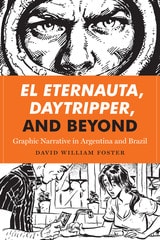
El Eternauta, Daytripper, and Beyond
Graphic Narrative in Argentina and BrazilBy David William Foster
University of Texas Press, 2016
El Eternauta, Daytripper, and Beyond examines the graphic narrative tradition in the two South American countries that have produced the medium’s most significant and copious output. Argentine graphic narrative emerged in the 1980s, awakened by Héctor Oesterheld’s groundbreaking 1950s serial El Eternauta. After Oesterheld was “disappeared” under the military dictatorship, El Eternauta became one of the most important cultural texts of turbulent mid-twentieth-century Argentina. Today its story, set in motion by an extraterrestrial invasion of Buenos Aires, is read as a parable foretelling the “invasion” of Argentine society by a murderous tyranny. Because of El Eternauta, graphic narrative became a major platform for the country’s cultural redemocratization. In contrast, Brazil, which returned to democracy in 1985 after decades of dictatorship, produced considerably less analysis of the period of repression in its graphic narratives. In Brazil, serious graphic narratives such as Fábio Moon and Gabriel Bá’s Daytripper, which explores issues of modernity, globalization, and cross-cultural identity, developed only in recent decades, reflecting Brazilian society’s current and ongoing challenges.
Besides discussing El Eternauta and Daytripper, David William Foster utilizes case studies of influential works—such as Alberto Breccia and Juan Sasturain’s Perramus series, Angélica Freitas and Odyr Bernardi’s Guadalupe, and others—to compare the role of graphic narratives in the cultures of both countries, highlighting the importance of Argentina and Brazil as anchors of the production of world-class graphic narrative.
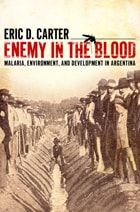
Enemy in the Blood
Malaria, Environment, and Development in ArgentinaEric D. Carter
University of Alabama Press, 2012
Tracing the Fight Against Malaria and the Making of Modern Argentina.
Enemy in the Blood: Malaria, Environment, and Development in Argentina examines the dramatic yet mostly forgotten history of malaria control in northwest Argentina. Carter traces the evolution of malaria science and policy in Argentina from the disease’s emergence as a social problem in the 1890s to its effective eradication by 1950. Malaria-control proponents saw the campaign as part of a larger project of constructing a modern identity for Argentina. Insofar as development meant building a more productive, rational, and hygienic society, the perceptions of a culturally backwards and disease-ridden interior prevented Argentina from joining the ranks of “modern” nations. The path to eradication, however, was not easy due to complicated public health politics, inappropriate application of foreign malaria control strategies, and a habitual misreading of the distinctive ecology of malaria in the northwest, especially the unique characteristics of the local mosquito vector. Homegrown scientific expertise, a populist public health agenda, and an infusion of new technologies eventually brought a rapid end to malaria’s scourge, if not the cure for regional underdevelopment.
Enemy in the Blood sheds light on the often neglected history of northwest Argentina’s interior, adds to critical perspectives on the history of development and public health in modern Latin America, and demonstrates the merits of integrative social-environmental research.
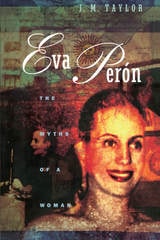
Eva Perón
The Myths of a WomanJulie Taylor
University of Chicago Press, 1981
"Taylor shows that she is remembered by different classes and political factions as saint, a revolutionary, or a whore, depending on whether she was interpreted as an embodiment or as a violation of the Argentine feminine ideal."—Booklist
"Highly commendable . . . it deliberately eschews the sensationalism that characterizes earlier [biographies]. . . . Taylor instead concentrates on the myths that have lingered since her death. . . . [This book] transcends biography."—Gentlemen's Quarterly
"[A] concise and brilliant examination of the legends that arose in Argentina during the lifetime . . . of a woman who broke with Argentine tradition and became a political figure in her own right."—New Yorker

Everyday Anarchism
Prefiguring Utopia in Spain and Argentina, 1890-1930Nathaniel Andrews
University of Illinois Press, 2027
In Spain and Argentina during the late nineteenth and early twentieth centuries, anarchists sought to build their ideal society in the present rather than wait for the revolution. These radicals built their daily lives around their beliefs—a far-sighted cultural project that shaped education, family life, leisure time, and moral values.
Nathaniel Andrews looks at life in four communities to explore how anarchists fused radical politics with the everyday. As Andrews shows, anarchists created networks across the Atlantic that not only shared people and ideas, but practices, too. Small actions—picnics, childrearing, using time differently—became a part of pursuing larger political goals. But these practices also revealed tensions within the movement by highlighting the gap separating ideas and actions, particularly in matters of gender.
Vivid and surprising, <i>Everyday Anarchism</i> reveals a daring program to model a radical society within the very world anarchism hoped to transform.

Evita, Inevitably
Performing Argentina's Female Icons Before and After Eva PerónJean Graham-Jones
University of Michigan Press, 2014