Results by title
109 books match the query 'Astronomy' and 4 start with e

Edwin Hubble
Mariner of the NebulaeGale E. Christianson
University of Chicago Press, 1996
In 1923 Edwin Hubble confirmed the existence of other galaxies. By the
end of the decade, he proved that the universe is expanding, thus laying
the very cornerstone of the big bang theory. A revealing portrait of a
scientific genius at work, this book also offers an incisive narrative
of the history of astronomy, and an evocation of what we see when gazing
at the stars.
"Highly entertaining. . . . Hubble may have been the most important
astronomer since Galileo. Perhaps since Copernicus."—Dick Teresi,
New York Times Book Review
"Hubble's own story has not been adequately told until now. . . . A
riveting portrait of a great scientist and a haunted man, and the best
look we are likely to have of the real Hubble."—Dennis Overby, Los
Angeles Times Book Review
"Displays remarkable strength in its steadfast balance and scrupulous
honesty. The greatness of the discoveries is set off against the
contrasting pettiness of the man."—Hans Christian von Baeyer,
Boston Sunday Globe
"Fascinating. . . . This is one of the most impressive scientific
biographies of recent years."—Kirkus Review, starred review
— "Notable Books for the Year 1995" selection, New York Times Book
Review
—"Best Books of 1995" selection, Library Journal
—Selected as one of the five best science books in 1995 by Carl Sagen,
Washington Post
[more]
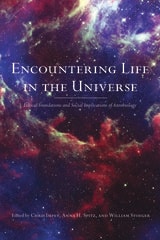
Encountering Life in the Universe
Ethical Foundations and Social Implications of AstrobiologyEdited by Chris Impey, Anna H. Spitz, and William Stoeger
University of Arizona Press, 2013
Are we alone in the universe? Are the planets our playground to treat as we will, or do we have a responsibility to other creatures who may inhabit or use them? Do we have a right to dump trash in space or leave vehicles on Mars or the moon? How should we interact with other life forms?
Encountering Life in the Universe examines the intersection of scientific research and society to further explore the ethics of how to behave in a universe where much is unknown. Taking contributions from notable experts in several fields, the editors skillfully introduce and develop a broad look at the moral questions facing humans on Earth and beyond.
Major advances in biology, biotechnology, and medicine create an urgency to ethical considerations in those fields. Astrobiology goes on to debate how we might behave as we explore new worlds, or create new life in the laboratory, or interact with extraterrestrial life forms. Stimulated by new technologies for scientific exploration on and off the Earth, astrobiology is establishing itself as a distinct scientific endeavor.
In what way can established philosophies provide guidance for the new frontiers opened by astrobiology research? Can the foundations of ethics and moral philosophy help answer questions about modifying other planets? Or about how to conduct experiments to create life in the lab or about? How to interact with organisms we might discover on another world?
While we wait for the first echo that might indicate life beyond Earth, astobiologists, along with philosophers, theologians, artists, and the general public, are exploring how we might behave—even before we know for sure they are there. Encountering Life in the Universe is a remarkable resource for such philosophical challenges.
[more]
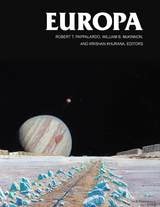
Europa
Edited by Robert T. Pappalardo, William B. McKinnon, and Krishan Khurana
University of Arizona Press, 2009
Few worlds are as tantalizing and enigmatic as Europa, whose complex icy surface intimates the presence of an ocean below. Europa beckons for our understanding and future exploration, enticing us with the possibilities of a water-rich environment and the potential for life beyond Earth. This volume in the Space Science Series, with more than 80 contributing authors, reveals the discovery and current understanding of Europa’s icy shell, subsurface ocean, presumably active interior, and myriad inherent interactions within the Jupiter environment. Europa is the foundation upon which the coming decades of scientific advancement and exploration of this world will be built, making it indispensable for researchers, students, and all who hold a passion for exploration.
[more]
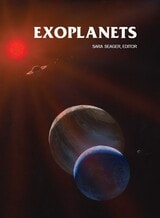
Exoplanets
Edited by Sara Seager
University of Arizona Press, 2010
For the first time in human history, we know for certain the existence of planets around other stars. Now the fastest-growing field in space science, the time is right for this fundamental source book on the topic which will lay the foundation for its continued growth.
Exoplanets serves as both an introduction for the non-specialist and a foundation for the techniques and equations used in exoplanet observation by those dedicated to the field.
Exoplanets serves as both an introduction for the non-specialist and a foundation for the techniques and equations used in exoplanet observation by those dedicated to the field.
[more]