Results by title
235 books match the query 'Books and reading' and 10 start with e
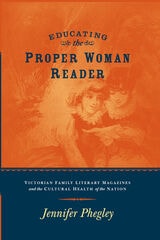
EDUCATING THE PROPER WOMAN READER
VICTORIAN FAMILY LITERARY MAGAZINES & CULTURAL HEALTH OF THE NATIONJennifer Phegley
The Ohio State University Press, 2004
Jennifer Phegley presents an examination of four mid-Victorian magazines that middle-class women read widely. Educating the Proper Woman Reader reevaluates prevailing assumptions about the vexed relationship between nineteenth-century women readers and literary critics.
While many scholars have explored the ways nineteenth-century critics expressed their anxiety about the dangers of women’s unregulated and implicitly uncritical reading practices, which were believed to threaten the sanctity of the home and the cultural status of the nation, Phegley argues that family literary magazines revolutionized the position of women as consumers of print by characterizing them as educated readers and able critics. Her analysis of images of influential women readers (in Harper’s), intellectual women readers (in The Cornhill), independent women readers (in Belgravia), and proto-feminist women readers/critics (in Victoria) indicates that women played a significant role in determining the boundaries of literary culture within these magazines. She argues that these publications supported women’s reading choices, inviting them to define literary culture rather than to consume it passively.
Not only does this book revise our understanding of nineteenth-century attitudes toward women readers, but it also takes a fresh look at the transatlantic context of literary production. Further, Phegley demonstrates the role these publications played in improving cultural literacy among women of the middle classes as well as the interplay between fiction and essays of the time by writers such as Mary Braddon, Charles Dickens, George Eliot, Elizabeth Gaskell, G. H. Lewes, Harriet Martineau, Margaret Oliphant, George Sala, William Thackeray, and Anthony Trollope.

Early Literacy Storytimes @ your library®
Partnering with Caregivers for SuccessSaroj Nadkarni Ghoting
American Library Association, 2006
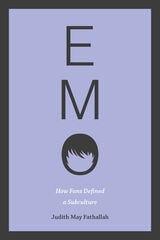
Emo
How Fans Defined a SubcultureJudith May Fathallah
University of Iowa Press, 2020
For many, the word “emo” calls to mind angsty teenagers, shaggy black haircuts, and skinny jeans. A popular music phenomenon in the early 2000s, emo is short for “emotional hardcore,” and refers to both a music genre and a youth scene notable for its androgynous style. Judith May Fathallah pushes beyond the stereotypes and social stigma to explore how online fandom has shaped the definition of emo, with significant implications both for millennial constructs of gender and for contemporary fan studies.
First laying out the debate over what emo is, Fathallah walks superfans and newcomers through the culture surrounding thegenre’s major bands, including the emo holy trinity: My Chemical Romance, Fall Out Boy, and Panic! At the Disco. Next she examines fans’ main mode of participation in the emo subculture—online communities such as LiveJournal, Tumblr, MySpace, and band websites. Taking a hard look at the gender politics that dominated those spaces, she unearths a subculture that simultaneously defines itself by its sensitivity and resistance to traditional forms of masculinity, yet ruthlessly enforces homophobic and sexist standards. Fathallah demonstrates fandom’s key role in defining emo as a concept and genre after 2001, with probing insight into its implications for gender constructions through popular music.
Empirical Ecocriticism
Environmental Narratives for Social ChangeMatthew Schneider-Mayerson
University of Minnesota Press, 2023
Finalist for the 2025 ASLE Ecocritical Book Award
A groundbreaking book that combines the environmental humanities and social sciences to study the impact of environmental stories
There is a growing consensus that environmental narratives can help catalyze the social change necessary to address today’s environmental crises; however, surprisingly little is known about their impact and effectiveness. In Empirical Ecocriticism, Matthew Schneider-Mayerson, Alexa Weik von Mossner, W. P. Malecki, and Frank Hakemulder combine an environmental humanities perspective with empirical methods derived from the social sciences to study the influence of environmental stories on our affects, attitudes, and actions.
Empirical Ecocriticism provides an approachable introduction to this growing field’s main methods and demonstrates their potential through case studies on topics ranging from the impact of climate fiction on readers’ willingness to engage in activism to the political empowerment that results from participating in environmental theater. Part manifesto, part toolkit, part proof of concept, and part dialogue, this introductory volume is divided into three sections: methods, case studies, and reflections. International in scope, it points toward a novel and fruitful synthesis of the environmental humanities and social sciences.
Contributors: Matthew Ballew, Yale U; Helena Bilandzic, U of Augsburg; Rebecca Dirksen, Indiana U; Greg Garrard, UBC Okanagan; Matthew H. Goldberg, Yale U; Abel Gustafson, U of Cincinnati; David I. Hanauer, Indiana U of Pennsylvania; Ursula K. Heise, UCLA; Jeremy Jimenez, SUNY Cortland; Anthony Leiserowitz, Yale U; David M. Markowitz, U of Oregon; Marcus Mayorga; Jessica Gall Myrick, Penn State U; Mary Beth Oliver, Penn State U; Yan Pang, Point Park U; Mark Pedelty, U of Minnesota; Seth A. Rosenthal, Yale U; Elja Roy, U of Memphis; Nicolai Skiveren, Aarhus U; Paul Slovic, U of Oregon; Scott Slovic, U of Idaho; Nicolette Sopcak, U of Alberta; Paul Sopcak, MacEwan U; Sara Warner, Cornell U.
Every Child Ready for School
Helping Adults Inspire Young Children to LearnDorothy Stoltz
American Library Association, 2013
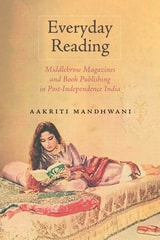
Everyday Reading
Middlebrow Magazines and Book Publishing in Post-Independence IndiaAakriti Mandhwani
University of Massachusetts Press, 2024
Finalist for the 2025 SHARP Book History Book Prize
During the two difficult decades immediately following the 1947 Indian Independence, a new, commercially successful print culture emerged that articulated alternatives to dominant national narratives. Through what Aakriti Mandhwani defines as middlebrow magazines—like Delhi Press’s Saritā—and the first paperbacks in Hindi—Hind Pocket Books—North Indian middle classes cultivated new reading practices that allowed them to reimagine what it meant to be a citizen. Rather than focusing on individual sacrifices and contributions to national growth, this new print culture promoted personal pleasure and other narratives that enabled readers to carve roles outside of official prescriptions of nationalism, austerity, and religion.
Utilizing a wealth of previously unexamined print culture materials, as well as paying careful attention to the production of commercial publishing companies and the reception of ordinary reading practices—particularly those of women—Everyday Reading offers fresh perspectives into book history, South Asian literary studies, and South Asian gender studies.
Everyday Reading
Print Culture and Collective Identity in the Rio de la Plata, 1780-1910William Garrett Acree
Vanderbilt University Press, 2011
Starting in the late nineteenth century, the region of South America known as the Rio de la Plata (containing modern-day Uruguay and Argentina) boasted the highest literacy rates in Latin America. In Everyday Reading, William Acree explores the history, events, and culture that gave rise to the region's remarkable progress. With a specific focus on its print culture, in the form of newspapers, political advertisements and documents, schoolbooks, and even stamps and currency, Acree creates a portrait of a literary culture that permeated every aspect of life.
Everyday Reading argues that the introduction of the printing press into the Rio de la Plata in the 1780s hastened the collapse of Spanish imperial control and played a major role in the transition to independence some thirty years later. After independence, print culture nurtured a new identity and helped sustain the region through the tumult of civil war in the mid-1800s. Acree concludes by examining the role of reading in formal education, which had grown exponentially by the early twentieth century as schoolchildren were taught to fulfill traditional roles in society.
Ultimately, Everyday Reading humanizes literary culture, demonstrating its unrecognized and unexpected influence in everyday lives.
Excellent Books for Early and Eager Readers
Kathleen T. Isaacs
American Library Association, 2016
Expanding the American Mind
Books and the Popularization of KnowledgeBeth Luey
University of Massachusetts Press, 2010
Expanding the American Mind begins by comparing fiction and nonfiction—their relative respectability in the eyes of reading experts and in the opinions of readers themselves. It then traces the roots of popularization from the Middle Ages to the present, examining changes in literacy, education, and university politics. Focusing on the period since World War II, it examines the ways that curricular reform has increased interest in popularization as well as the impact of specialization and professionalization among the faculty. It looks at the motivations of academic authors and the risks and rewards that come from writing for a popular audience. It also explains how experts write for nonexperts—the rhetorical devices they use and the voices in which they communicate.
Beth Luey also looks at the readers of popularizations—their motivations for reading, the ways they evaluate nonfiction, and how they choose what to read. This is the first book to use surveys and online reader responses to study nonfiction reading. It also compares the experience of reading serious nonfiction with that of reading other genres.
Using publishers' archives and editor-author correspondence, Luey goes on to examine what editors, designers, and marketers in this very competitive business do to create and sell popularizations to the largest audience possible. In a brief afterword she discusses popularization and the Web. The result is a highly readable and engaging survey of this distinctive genre of writing.
Experiencing America's Story through Fiction
Historical Novels for Grades 7-12Hilary Susan Crew
American Library Association, 2014