335 books match the query 'Caribbean & Latin American Studies' and 10 start with e
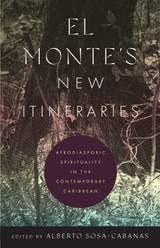
cover of El Monte's New Itineraries: Afrodiasporic Spirituality in the Contemporary Caribbean

El Monte's New Itineraries

Afrodiasporic Spirituality in the Contemporary Caribbean

Alberto Sosa-Cabanas

Rutgers University Press, 2025

El Monte's New Itineraries is the first book fully devoted to the study of Cuban author and ethnographer Lydia Cabrera’s El Monte (1954), one of the most influential books in Caribbean cultural history. Highly referenced, if understudied, El Monte is a comprehensive work that intertwines ethnobotany, popular orality, and Afro-Cuban traditions. Its pages have enjoyed a transnational influence, enriching domains such as ethnography, politics, theater, and even science fiction literature in the Caribbean, and the knowledge contained in it lies at the heart of Afrodiasporic spirituality and ethnomedicinal practices across Hispanic Caribbean cultures and beyond.
[more]
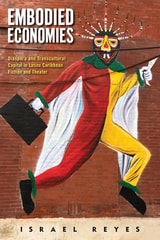
cover of Embodied Economies: Diaspora and Transcultural Capital in Latinx Caribbean Fiction and Theater

Embodied Economies

Diaspora and Transcultural Capital in Latinx Caribbean Fiction and Theater

Israel Reyes

Rutgers University Press, 2022

How do upwardly mobile Latinx Caribbean migrants leverage their cultural heritage to buy into the American Dream? In the neoliberal economy of the United States, the discourse of white nationalism compels upwardly mobile immigrants to trade in their ties to ethnic and linguistic communities to assimilate to the dominant culture. For Latinx Caribbean immigrants, exiles, and refugees this means abandoning Spanish, rejecting forms of communal inter-dependence, and adopting white, middle-class forms of embodiment to mitigate any ethnic and racial identity markers that might hinder their upwardly mobile trajectories. This transactional process of acquiring and trading in various kinds of material and embodied practices across traditions is a phenomenon author Israel Reyes terms “transcultural capital,” and it is this process he explores in the contemporary fiction and theater of the Latinx Caribbean diaspora.

In chapters that compare works by Lin-Manuel Miranda, Nilo Cruz, Edwin Sánchez, Ángel Lozada, Rita Indiana Hernández, Dolores Prida, and Mayra Santos Febres, Reyes examines the contradictions of transcultural capital, its potential to establish networks of support in Latinx enclaves, and the risks it poses for reproducing the inequities of power and privilege that have always been at the heart of the American Dream. Embodied Economies shares new perspectives through its comparison of works written in both English and Spanish, and the literary voices that emerge from the US and the Hispanic Caribbean.
[more]
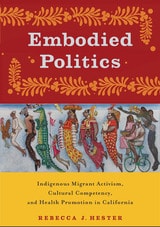
cover of Embodied Politics: Indigenous Migrant Activism, Cultural Competency, and Health Promotion in California

Embodied Politics

Indigenous Migrant Activism, Cultural Competency, and Health Promotion in California

Rebecca J. Hester

Rutgers University Press, 2022
Embodied Politics illuminates the influential force of public health promotion in indigenous migrant communities by examining the Indigenous Health Project (IHP), a culturally and linguistically competent initiative that uses health workshops, health messages, and social programs to mitigate the structural vulnerability of Oaxacan migrants in California. Embodied Politics reconstructs how this initiative came to exist and describes how it operates. At the same time, it points out the conflicts, resistances, and counter-acts that emerge through the IHP’s attempts to guide the health behaviors and practices of Triqui and Mixteco migrants. Arguing for a structurally competent approach to migrant health, Embodied Politics shows how efforts to promote indigenous health may actually reinforce the same social and political economic forces, namely structural racism and neoliberalism, that are undermining the health of indigenous Oaxacans in Mexico and the United States.
[more]
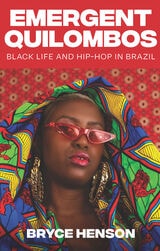
cover of Emergent Quilombos: Black Life and Hip-Hop in Brazil

Emergent Quilombos

Black Life and Hip-Hop in Brazil

Bryce Henson

University of Texas Press, 2023

2024 Best Book Award, National Communication Association, Ethnography Division
2024 Roberto Reis Book Prize, First Book category, Brazilian Studies Association
2024 Outstanding Book Award, National Communication Association, Critical and Cultural Studies Division
2024 International and Intercultural Best Book Award, National Communication Association, International and Intercultural Division

How disenfranchised Black Brazilians use hip-hop to reinvigorate the Black radical tradition.

Known as Black Rome, Salvador da Bahia, Brazil, is a predominantly Black city. The local art, food, and dance are closely linked to the population’s African roots. Yet many Black Brazilian residents are politically and economically disenfranchised. Bryce Henson details a culture of resistance and activism that has emerged in response, expressed through hip-hop and the social relations surrounding it.

Based on years of ethnographic research, Emergent Quilombos illuminates how Black hip-hop artists and their circles contest structures of anti-Black racism by creating safe havens and alternative social, cultural, and political systems that serve Black people. These artists valorize and empower marginalized Black peoples through song, aesthetics, media, visual art, and community action that emphasize diasporic connections, ancestrality, and Black identifications in opposition to the anti-Black Brazilian nation. In the process, Henson argues, the Salvador hip-hop scene has reinvigorated and reterritorialized a critical legacy of Black politicocultural resistance: the quilombo, maroon communities of Black fugitives who refused slavery as a way of life, gathered away from the spaces of their oppression, protected their communities, and nurtured Black life in all its possibilities.
[more]
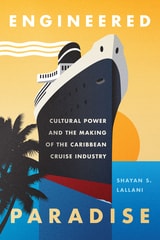
cover of Engineered Paradise: Cultural Power and the Making of the Caribbean Cruise Industry

Engineered Paradise

Cultural Power and the Making of the Caribbean Cruise Industry

Shayan S. Lallani

University of Illinois Press, 2027

We celebrate cruise ships as gateways to new cultures. However, over the past half a century, the mass-market cruise industry has increasingly relied on global supply chains, exploited maritime labor, and corporate control over the consumer experience to turn cultural contact into profit.

Shayan S. Lallani uncovers the historical scaffolding behind the cruise industry’s strategic co-opting of global cultures. Tracing the evolution of the modern mega-ship from its roots in postwar ocean liners to the floating cities of the twenty-first century, Lallani demonstrates how cruise lines paired commodified cultural referents with immersive spatial design and international labor to maximize guest spending. This corporate grip extended to Caribbean destinations, where companies steadily gained control of port enclaves and vetted shore excursions to manage contact with local communities while retaining the profits.

A sobering look at a vacation mainstay, <i>Engineered Paradise</i> explores where leisure becomes entangled with culture, capitalism, and power.
[more]
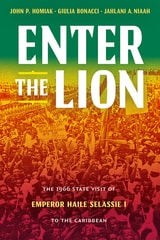
cover of Enter the Lion: The 1966 State Visit of Emperor Haile Selassie I to the Caribbean

Enter the Lion

The 1966 State Visit of Emperor Haile Selassie I to the Caribbean

John P. Homiak, Giulia Bonacci, and Jahlani A. Niaah

Duke University Press, 2026

On April 21, 1966, tens of thousands of Jamaicans exuberantly greeted Ethiopia’s Emperor Haile Selassie I in Kingston, Jamaica. The emperor came to express gratitude for the peoples’ support during the Italo-Ethiopian War and bolster the ongoing struggle for liberation in Rhodesia. This state visit repositioned Rastafari in Jamaican society and ignited widespread cultural, social, and political transformations across the Caribbean. Enter the Lion assembles a vital archive of this landmark event, gathering British colonial records, newspaper reportage from the Caribbean and Ethiopia, the official records of the Ethiopian Ministry of Information, and oral history. The authors paint an illuminating picture of the diverse political interests at play, exploring how the visit reshaped the Rastafari movement, Jamaican society, the wider Caribbean, and their Pan-African connections.
[more]
cover of Entrepreneurial Selves: Neoliberal Respectability and the Making of a Caribbean Middle Class

Entrepreneurial Selves

Neoliberal Respectability and the Making of a Caribbean Middle Class

Carla Freeman

Duke University Press, 2014
Entrepreneurial Selves is an ethnography of neoliberalism. Bridging political economy and affect studies, Carla Freeman turns a spotlight on the entrepreneur, a figure saluted across the globe as the very embodiment of neoliberalism. Steeped in more than a decade of ethnography on the emergent entrepreneurial middle class of Barbados, she finds dramatic reworkings of selfhood, intimacy, labor, and life amid the rumbling effects of political-economic restructuring. She shows us that the déjà vu of neoliberalism, the global hailing of entrepreneurial flexibility and its concomitant project of self-making, can only be grasped through the thickness of cultural specificity where its costs and pleasures are unevenly felt. Freeman theorizes postcolonial neoliberalism by reimagining the Caribbean cultural model of 'reputation-respectability.' This remarkable book will allow readers to see how the material social practices formerly associated with resistance to capitalism (reputation) are being mobilized in ways that sustain neoliberal precepts and, in so doing, re-map class, race, and gender through a new emotional economy.
[more]
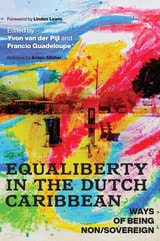
cover of Equaliberty in the Dutch Caribbean: Ways of Being Non/Sovereign

Equaliberty in the Dutch Caribbean

Ways of Being Non/Sovereign

Yvon van der Pijl

Rutgers University Press, 2022
Equaliberty in the Dutch Caribbean is a collection of essays that explores fundamental questions of equality and freedom on the non-sovereign islands of the Dutch Caribbean. Drawing on in-depth ethnographic research, historical and media analysis, the study of popular culture, and autoethnographic accounts, the various contributions challenge conventional assumptions about political non/sovereignty. While the book recognizes the existence of nationalist independence movements, it opens a critical space to look at other forms of political articulation, autonomy, liberty, and a good life. Focusing on all six different islands and through a multitude of voices and stories, the volume engages with the everyday projects, ordinary imaginaries, and dreams of equaliberty alongside the work of independistas and traditional social movements aiming for more or full self-determination. As such, it offers a rich and powerful telling of the various ways of being in and belonging to our contemporary postcolonial world.
[more]
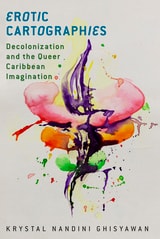
cover of Erotic Cartographies: Decolonization and the Queer Caribbean Imagination

Erotic Cartographies

Decolonization and the Queer Caribbean Imagination

Krystal Nandini Ghisyawan

Rutgers University Press, 2022
Erotic Cartographies uses subjective mapping, a participatory data collection technique, to demonstrate how Trinidadian same-sex-loving women use their gender performance, erotic autonomy, and space-making practices to reinforce and resist colonial ascriptions on subject bodies. The women strategically embody their sexual identities to challenge imposed subject categories and to contest their invisibility and exclusion from discourses of belonging. Erotic Cartographies refers to the processes of mapping territories of self-knowing and self-expression, both cognitively in the imagination and on paper during the mapping exercise, exploring how meaning is given to space, and how it is transformed. Using the women’s quotes and maps, the book focuses on the false binary of public-private, the practices of home and family, and religious nationalism and spiritual self-seeking, to demonstrate the women’s challenges to the structural, symbolic, and interpersonal violence of colonial discourses and practices related to gender, knowledge, and power in Trinidadian society.
[more]
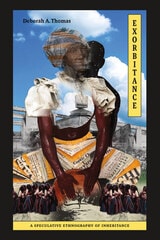
cover of Exorbitance: A Speculative Ethnography of Inheritance

Exorbitance

A Speculative Ethnography of Inheritance

Deborah A. Thomas

Duke University Press, 2025

In Exorbitance, Deborah A. Thomas calls for new approaches to political sovereignty grounded in the embodied forms of autonomy and relation created in daily life. Rather than rooting sovereignty in the violence of the state and its institutions, Thomas conceives of sovereignty as the embodied refusal of law and dominion. Drawing on the insights of Caribbeanist thought and studies of Jamaican social, political, and spiritual life, Thomas proposes an exorbitant sovereignty enacted through a phenomenological notion of inheritance. Such a sovereignty emerges from alternative genealogies of governance, community, and ceremony that exceed Enlightenment expectations of political life. Thomas contends that the articulations of exorbitant sovereignty are emergent, ephemeral, and ultimately, relational. By outlining the perils and promises of our inheritance of colonial logics and the tools to refuse them, Thomas models a collaborative and collective anthropology oriented toward improvisational experimentation rather than ethnographic extraction.
[more]