282 books match the query 'Caribbean & West Indies' and 13 start with e
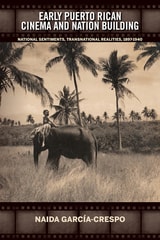
cover of Early Puerto Rican Cinema and Nation Building: National Sentiments, Transnational Realities, 1897-1940

Early Puerto Rican Cinema and Nation Building

National Sentiments, Transnational Realities, 1897-1940

Naida García-Crespo

Bucknell University Press, 2019

Early Puerto Rican Cinema and Nation Building focuses on the processes of Puerto Rican national identity formation as seen through the historical development of cinema on the island between 1897 and 1940. Anchoring her work in archival sources in film technology, economy, and education, Naida García-Crespo argues that Puerto Rico’s position as a stateless nation allows for a fresh understanding of national cinema based on perceptions of productive cultural contributions rather than on citizenship or state structures. This book aims to contribute to recently expanding discussions of cultural networks by analyzing how Puerto Rican cinema navigates the problems arising from the connection and/or disjunction between nation and state. The author argues that Puerto Rico’s position as a stateless nation puts pressure on traditional conceptions of national cinema, which tend to rely on assumptions of state support or a bounded nation-state. She also contends that the cultural and business practices associated with early cinema reveal that transnationalism is an integral part of national identities and their development. García-Crespo shows throughout this book that the development and circulation of cinema in Puerto Rico illustrate how the “national” is built from transnational connections.  

Published by Bucknell University Press. Distributed worldwide by Rutgers University Press.
[more]
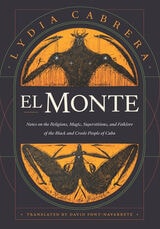
cover of El Monte: Notes on the Religions, Magic, and Folklore of the Black and Creole People of Cuba

El Monte

Notes on the Religions, Magic, and Folklore of the Black and Creole People of Cuba

Lydia Cabrera

Duke University Press, 2023
First published in Cuba in 1954 and appearing here in English for the first time, Lydia Cabrera’s El Monte is a foundational and iconic study of Afro-Cuban religious and cultural traditions. Drawing on conversations with elderly Afro-Cuban priests who were one or two generations away from the transatlantic slave trade, Cabrera combines ethnography, history, folklore, literature, and botany to provide a panoramic account of the multifaceted influence of Afro-Atlantic cultures in Cuba. Cabrera details the natural and spiritual landscape of the Cuban monte (forest, wilderness) and discusses hundreds of herbs and the constellations of deities, sacred rites, and knowledge that envelop them. The result is a complex spiritual and medicinal architecture of Afro-Cuban cultures. This new edition of what is often referred to as “the Santería bible” includes a new foreword, introduction, and translator notes. As a seminal work in the study of the African diaspora that has profoundly impacted numerous fields, Cabrera’s magnum opus is essential for scholars, activists, and religious devotees of Afro-Cuban traditions alike.
[more]
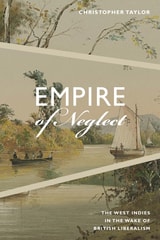
cover of Empire of Neglect: The West Indies in the Wake of British Liberalism

Empire of Neglect

The West Indies in the Wake of British Liberalism

Christopher Taylor

Duke University Press, 2018

Following the publication of Adam Smith’s The Wealth of Nations, nineteenth-century liberal economic thinkers insisted that a globally hegemonic Britain would profit only by abandoning the formal empire. British West Indians across the divides of race and class understood that, far from signaling an invitation to nationalist independence, this liberal economic discourse inaugurated a policy of imperial “neglect”—a way of ignoring the ties that obligated Britain to sustain the worlds of the empire’s distant fellow subjects. In Empire of Neglect Christopher Taylor examines this neglect’s cultural and literary ramifications, tracing how nineteenth-century British West Indians reoriented their affective, cultural, and political worlds toward the Americas as a response to the liberalization of the British Empire. Analyzing a wide array of sources, from plantation correspondence, political economy treatises, and novels to newspapers, socialist programs, and memoirs, Taylor shows how the Americas came to serve as a real and figurative site at which abandoned West Indians sought to imagine and invent postliberal forms of political subjecthood.
[more]
cover of Energy without Conscience: Oil, Climate Change, and Complicity

Energy without Conscience

Oil, Climate Change, and Complicity

David McDermott Hughes

Duke University Press, 2017
In Energy without Conscience David McDermott Hughes investigates why climate change has yet to be seen as a moral issue. He examines the forces that render the use of fossil fuels ordinary and therefore exempt from ethical evaluation. Hughes centers his analysis on Trinidad and Tobago, which is the world's oldest petro-state, having drilled the first continuously producing oil well in 1866. Marrying historical research with interviews with Trinidadian petroleum scientists, policymakers, technicians, and managers, he draws parallels between Trinidad's eighteenth- and nineteenth-century slave labor energy economy and its contemporary oil industry. Hughes shows how both forms of energy rely upon a complicity that absolves producers and consumers from acknowledging the immoral nature of each. He passionately argues that like slavery, producing oil is a moral choice and that oil is at its most dangerous when it is accepted as an ordinary part of everyday life. Only by rejecting arguments that oil is economically, politically, and technologically necessary, and by acknowledging our complicity in an immoral system, can we stem the damage being done to the planet.
[more]
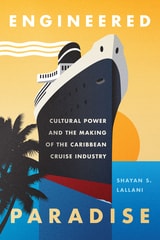
cover of Engineered Paradise: Cultural Power and the Making of the Caribbean Cruise Industry

Engineered Paradise

Cultural Power and the Making of the Caribbean Cruise Industry

Shayan S. Lallani

University of Illinois Press, 2027

We celebrate cruise ships as gateways to new cultures. However, over the past half a century, the mass-market cruise industry has increasingly relied on global supply chains, exploited maritime labor, and corporate control over the consumer experience to turn cultural contact into profit.

Shayan S. Lallani uncovers the historical scaffolding behind the cruise industry’s strategic co-opting of global cultures. Tracing the evolution of the modern mega-ship from its roots in postwar ocean liners to the floating cities of the twenty-first century, Lallani demonstrates how cruise lines paired commodified cultural referents with immersive spatial design and international labor to maximize guest spending. This corporate grip extended to Caribbean destinations, where companies steadily gained control of port enclaves and vetted shore excursions to manage contact with local communities while retaining the profits.

A sobering look at a vacation mainstay, <i>Engineered Paradise</i> explores where leisure becomes entangled with culture, capitalism, and power.
[more]
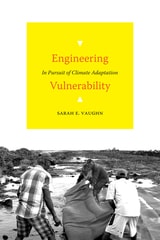
cover of Engineering Vulnerability: In Pursuit of Climate Adaptation

Engineering Vulnerability

In Pursuit of Climate Adaptation

Sarah E. Vaughn

Duke University Press, 2022

In Engineering Vulnerability Sarah E. Vaughn examines climate adaptation against the backdrop of ongoing processes of settler colonialism and the global climate change initiatives that seek to intervene in the lives of the world’s most vulnerable. Her case study is Guyana in the aftermath of the 2005 catastrophic flooding that ravaged the country’s Atlantic coastal plain. The country’s ensuing engineering projects reveal the contingencies of climate adaptation and the capacity of flooding to shape Guyanese expectations about racial (in)equality. Analyzing the coproduction of race and vulnerability, Vaughn details why climate adaptation has implications for how we understand the past and the continued human settlement of a place. Such understandings become particularly apparent not only through experts’ and ordinary citizens’ disputes over resources but in their attention to the ethical practice of technoscience over time. Approaching climate adaptation this way, Vaughn exposes the generative openings as well as gaps in racial thinking for theorizing climate action, environmental justice, and, more broadly, future life on a warming planet.

Duke University Press Scholars of Color First Book Award recipient
[more]
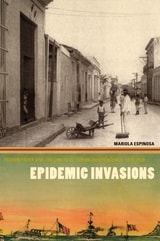
cover of Epidemic Invasions: Yellow Fever and the Limits of Cuban Independence, 1878-1930

Epidemic Invasions

Yellow Fever and the Limits of Cuban Independence, 1878-1930

Mariola Espinosa

University of Chicago Press, 2009

In the early fall of 1897, yellow fever shuttered businesses, paralyzed trade, and caused tens of thousand of people living in the southern United States to abandon their homes and flee for their lives. Originating in Cuba, the deadly plague inspired disease-control measures that not only protected U.S. trade interests but also justified the political and economic domination of the island nation from which the pestilence came. By focusing on yellow fever, Epidemic Invasions uncovers for the first time how the devastating power of this virus profoundly shaped the relationship between the two countries.

Yellow fever in Cuba, Mariola Espinosa demonstrates, motivated the United States to declare war against Spain in 1898, and, after the war was won and the disease eradicated, the United States demanded that Cuba pledge in its new constitution to maintain the sanitation standards established during the occupation. By situating the history of the fight against yellow fever within its political, military, and economic context, Espinosa reveals that the U.S. program of sanitation and disease control in Cuba was not a charitable endeavor. Instead, she shows that it was an exercise in colonial public health that served to eliminate threats to the continued expansion of U.S. influence in the world.
[more]
cover of Equaliberty in the Dutch Caribbean: Ways of Being Non/Sovereign

Equaliberty in the Dutch Caribbean

Ways of Being Non/Sovereign

Yvon van der Pijl

Rutgers University Press, 2022
Equaliberty in the Dutch Caribbean is a collection of essays that explores fundamental questions of equality and freedom on the non-sovereign islands of the Dutch Caribbean. Drawing on in-depth ethnographic research, historical and media analysis, the study of popular culture, and autoethnographic accounts, the various contributions challenge conventional assumptions about political non/sovereignty. While the book recognizes the existence of nationalist independence movements, it opens a critical space to look at other forms of political articulation, autonomy, liberty, and a good life. Focusing on all six different islands and through a multitude of voices and stories, the volume engages with the everyday projects, ordinary imaginaries, and dreams of equaliberty alongside the work of independistas and traditional social movements aiming for more or full self-determination. As such, it offers a rich and powerful telling of the various ways of being in and belonging to our contemporary postcolonial world.
[more]
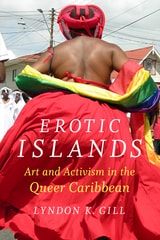
cover of Erotic Islands: Art and Activism in the Queer Caribbean

Erotic Islands

Art and Activism in the Queer Caribbean

Lyndon K. Gill

Duke University Press, 2018
In Erotic Islands, Lyndon K. Gill maps a long queer presence at a crossroads of the Caribbean. This transdisciplinary book foregrounds the queer histories of Carnival, calypso, and HIV/AIDS in the Republic of Trinidad and Tobago. At its heart is an extension of Audre Lorde's use of the erotic as theory and methodology. Gill turns to lesbian/gay artistry and activism to insist on eros as an intertwined political-sensual-spiritual lens through which to see self and society more clearly. This analysis juxtaposes revered musician Calypso Rose, renowned mas man Peter Minshall, and resilient HIV/AIDS organization Friends For Life. Erotic Islands traverses black studies, queer studies, and anthropology toward an emergent black queer diaspora studies.
[more]
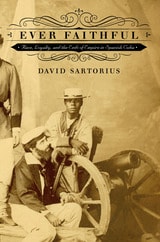
cover of Ever Faithful: Race, Loyalty, and the Ends of Empire in Spanish Cuba

Ever Faithful

Race, Loyalty, and the Ends of Empire in Spanish Cuba

David Sartorius

Duke University Press, 2013

Known for much of the nineteenth century as "the ever-faithful isle," Cuba did not earn its independence from Spain until 1898, long after most American colonies had achieved emancipation from European rule. In this groundbreaking history, David Sartorius explores the relationship between political allegiance and race in nineteenth-century Cuba. Challenging assumptions that loyalty to the Spanish empire was the exclusive province of the white Cuban elite, he examines the free and enslaved people of African descent who actively supported colonialism. By claiming loyalty, many black and mulatto Cubans attained some degree of social mobility, legal freedom, and political inclusion in a world where hierarchy and inequality were the fundamental lineaments of colonial subjectivity. Sartorius explores Cuba's battlefields, plantations, and meeting halls to consider the goals and limits of loyalty. In the process, he makes a bold call for fresh perspectives on imperial ideologies of race and on the rich political history of the African diaspora.
 
[more]
cover of Everyday Harm: Domestic Violence, Court Rites, and Cultures of Reconciliation

Everyday Harm

Domestic Violence, Court Rites, and Cultures of Reconciliation

Mindie Lazarus-Black

University of Illinois Press, 2007

Exposing the powerful contradictions between empowering rights and legal rites

By investigating the harms routinely experienced by the victims and survivors of domestic violence, both inside and outside of law, Everyday Harm studies the limits of what domestic violence law can--and cannot--accomplish. Combining detailed ethnographic research and theoretical analysis, Mindie Lazarus-Black illustrates the ways persistent cultural norms and ingrained bureaucratic procedures work to unravel laws designed to protect the safety of society’s most vulnerable people.

Lazarus-Black’s fieldwork in Trinidad traces a story with global implications about why and when people gain the right to ask the court for protection from violence, and what happens when they pursue those rights in court. Why is itthat, in spite of laws designed to empower subordinated people, so little results from that legislation? What happens in and around courts that makes it so difficult for people to obtain their legally available rights and protections? In the case of domestic violence law, what can such legislation mean for women’s empowerment, gender equity, and protection? How do cultural norms and practices intercept the law?
[more]
cover of Exceptional Violence: Embodied Citizenship in Transnational Jamaica

Exceptional Violence

Embodied Citizenship in Transnational Jamaica

Deborah A. Thomas

Duke University Press, 2011
Exceptional Violence is a sophisticated examination of postcolonial state formation in the Caribbean, considered across time and space, from the period of imperial New World expansion to the contemporary neoliberal era, and from neighborhood dynamics in Kingston to transnational socioeconomic and political fields. Deborah A. Thomas takes as her immediate focus violence in Jamaica and representations of that violence as they circulate within the country and abroad. Through an analysis encompassing Kingston communities, Jamaica’s national media, works of popular culture, notions of respectability, practices of punishment and discipline during slavery, the effects of intensified migration, and Jamaica’s national cultural policy, Thomas develops several arguments. Violence in Jamaica is the complicated result of a structural history of colonialism and underdevelopment, not a cultural characteristic passed from one generation to the next. Citizenship is embodied; scholars must be attentive to how race, gender, and sexuality have been made to matter over time. Suggesting that anthropologists in the United States should engage more deeply with history and political economy, Thomas mobilizes a concept of reparations as a framework for thinking, a rubric useful in its emphasis on structural and historical lineages.
[more]
cover of Exporting Revolution: Cuba's Global Solidarity

Exporting Revolution

Cuba's Global Solidarity

Margaret Randall

Duke University Press, 2017

In her new book, Exporting Revolution, Margaret Randall explores the Cuban Revolution's impact on the outside world, tracing Cuba's international outreach in health care, disaster relief, education, literature, art, liberation struggles, and sports. Randall combines personal observations and interviews with literary analysis and examinations of political trends in order to understand what compels a small, poor, and underdeveloped country to offer its resources and expertise. Why has the Cuban health care system trained thousands of foreign doctors, offered free services, and responded to health crises around the globe? What drives Cuba's international adult literacy programs? Why has Cuban poetry had an outsized influence in the Spanish-speaking world? This multifaceted internationalism, Randall finds, is not only one of the Revolution's most central features; it helped define Cuban society long before the Revolution.
[more]