Results by title
152 books match the query 'Childhood and youth' and 4 start with e
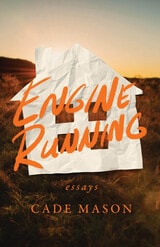
Engine Running
EssaysCade Mason
The Ohio State University Press, 2022
Engine Running explores debut author Cade Mason’s gradual distancing from home and old selves alongside an increasingly fractured family doing the same. Starting at the beginning of his parents’ love and working past its end, he combs through memory to piece together a portrait of a family then and now: of a father, reeling after a blindsiding divorce; of a mother, anxious to move on; of a sister, caught in the crossfire; and of a son, learning to embrace his sexuality even as he fears that his own loves may have deepened the rift between his parents.
Lush and innovative, these essays contemplate childhood memories and family secrets, religion and queerness in the rural South, and the ways rituals and contours of manhood are passed through generations. Most of all, we feel with Mason what it is to grapple with and love a place even as you yearn to leave.
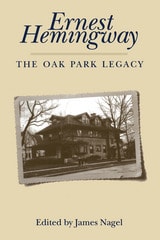
Ernest Hemingway
The Oak Park LegacyJames Nagel
University of Alabama Press, 1996
Ernest Hemingway: The Oak Park Legacy is the first extensive examination of the relationship of Hemingway to his hometown, Oak Park, Illinois, and the influence its people, places, and underlying values had on his early work. In this volume, 11 leading Hemingway scholars explore various aspects of these issues, from the migration of the Hemingway family from Connecticut to Illinois in the 1850s, to Hemingway's high-school stories and the dramatic breakthrough of In Our Time and The Sun Also Rises. With these books, Hemingway suddenly became one of the most influential writers of the 20th century. The essays in this collection explore the social and family background that provided the material and sensibility for these literary masterpieces.
In these essays, James Nagel provides the first account ever published of the move of the Hemingway family from Connecticut to Illinois. Writing his account after the discovery of a lost diary by one of Hemingway's ancestors, Nagel explores dates and places, the motivation for the move to the Midwest, and the tragedies that awaited the family there, including the death of two young men in the Civil War. Michael Reynolds, the premiere biographer of Ernest Hemingway, describes the culture of the village of Oak Park at the turn of the century, and Larry E. Grimes presents an important new assessment of the religious training the Hemingway children received. David Marut discusses the short stories Hemingway published while still a highschool student, and Carlos Azevedo, Mary Anne O'Neal, Abby H. P. Werlock, and George Monteiro examine the early stories about Nick Adams. In an insightful afterword, Morris Buske, the Historian of the Ernest Hemingway Foundation of Oak Park, reflects on the differing values of Ernest Hemingway's parents, the artistic, cultured Hall family as opposed to the scientific, more practical Hemingways, charting the influence the two traditions had on the young Ernest.
Ever the Winds of Chance
POEMSCarl Sandburg
University of Illinois Press, 1983
Ever the Winds of Chance opens in 1898 when the twenty-year-old Sandburg, recently returned from the Spanish-American war, enrolls at Lombard College in his native Galesburg, Illinois. Sandburg writes about his job at the fire station; his teachers, inspired or otherwise; his classmates and their camaraderie; his observations on great literary works and writers; and his own writings for the school newspaper, literary review, and yearbook and for the Galesburg Mail. But he also includes much about life between school years and after college, recounting his various brief careers as a fireman, salesman of stereoscopic views, advertising copywriter, vagabond, "jailbird," and budding poet and socialist. Together these reminiscences provide an intimate look at the formative years of a preeminent figure in American letters.
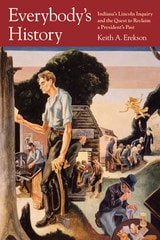
Everybody's History
Indiana's Lincoln Inquiry and the Quest to Reclaim a President's PastKeith A. Erekson
University of Massachusetts Press, 2012
Revered by the public, respected by scholars, and imitated by politicians, Abraham Lincoln remains influential more than two hundred years after his birth. His memory has inspired books, monuments, and museums and also sparked controversies, rivalries, and forgeries. That so many people have been interested in Lincoln for so long makes him an ideal subject for exploring why history matters to ordinary Americans as well as to academic specialists.
In Everybody's History, Keith A. Erekson focuses on the Southwestern Indiana Historical Society—an organization composed of lawyers, historians, collectors, genealogists, teachers, college presidents, and newspaper editors—who joined together during the 1920s and 1930s to recover a part of Lincoln's life his biographers had long ignored: the years from age seven to twenty-one when he lived on the Indiana frontier. Participants in the “Lincoln Inquiry,” as it was commonly known, researched old records, interviewed aging witnesses, hosted pageants, built a historical village, and presented their findings in public and in print. Along the way they defended their methods and findings against competitors in the fields of public history and civic commemoration, and rescued some of Indiana's own history by correcting a forgotten chapter of Lincoln's.
Everybody's History traces the development of popular interest in Lincoln to uncover the story of an extensive network of nonprofessional historians who contested old authorities and advanced new interpretations. In so doing, the book invites all who are interested in the past to see history as both vital to public life and meaningful to everybody.