208 books match the query 'Christian Church' and 9 start with e

cover of Early Letters to the Crown and Council of the Indies, 1516-1531: Primeras cartas para Las Indias

Early Letters to the Crown and Council of the Indies, 1516-1531

Primeras cartas para Las Indias

Bartolome de la Casas

Catholic University of America Press, 2026
Bartolomé de las Casas began his transatlantic career in 1502. Experiences of conquest and penitential discipline led him to renounce his Indian slaves and holdings. He dedicated his life to reforming Spain’s colonial project, eventually joining the Dominicans, and later serving as bishop. His works are foundational for our understanding of early colonialism. This volume’s seven letters—all but one in English for the first time—span the initial stage of his long career as “Protector of the Indians.” Las Casas harangues corrupt officials, denounces perverse incentives, and lays out detailed plans for Spain’s presence in the Americas. He calls for direct crown control with moral oversight by mendicant bishops, proposes alternatives to Indian labor, and demands restitution for stolen property. These letters led to legal changes in the Indies, influencing later Jesuit reducciones in the Río de la Plata and Franciscan missions in California. They also reveal an entrepreneurial Las Casas with moral reflection on early global trade and commerce. The watershed “Carta al Consejo”—a critical source for Latin American theology— concentrates all the force of his later writings into a figuratively rich, biblically saturated, theologically and philosophically sophisticated call to repentance and reform. His web of biblical allusions and dialogue with the Iberian Thomist renaissance are abundantly annotated. A lively introduction and copious notes carefully situate Las Casas within broader trends, including Europe’s nascent religious reformations. These letters also bridge his dramatic entry into the Dominican Order, documenting his transformation from temporal reformer to eschatological prophet. Students of law, theology, Christian mission, human rights, cultural and colonial history, and commerce, will find here rhetorical and theological treasures. While Las Casas is known chiefly for his polemical Brief Account of the Destruction of the Indies, these earliest letters suggest a far broader intellectual biography.
[more]
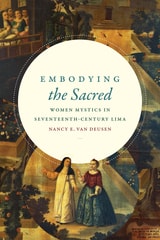
cover of Embodying the Sacred: Women Mystics in Seventeenth-Century Lima

Embodying the Sacred

Women Mystics in Seventeenth-Century Lima

Nancy E. van Deusen

Duke University Press, 2018
In seventeenth-century Lima, pious Catholic women gained profound theological understanding and enacted expressions of spiritual devotion by engaging with a wide range of sacred texts and objects, as well as with one another, their families, and ecclesiastical authorities. In Embodying the Sacred, Nancy E. van Deusen considers how women created and navigated a spiritual existence within the colonial city's complex social milieu. Through close readings of diverse primary sources, van Deusen shows that these women recognized the divine—or were objectified as conduits of holiness—in innovative and powerful ways: dressing a religious statue, performing charitable acts, sharing interiorized spiritual visions, constructing autobiographical texts, or offering their hair or fingernails to disciples as living relics. In these manifestations of piety, each of these women transcended the limited outlets available to them for expressing and enacting their faith in colonial Lima, and each transformed early modern Catholicism in meaningful ways.
[more]
cover of Equal in Monastic Profession: Religious Women in Medieval France

Equal in Monastic Profession

Religious Women in Medieval France

Penelope D. Johnson

University of Chicago Press, 1991

In this study of the manner in which medieval nuns lived, Penelope Johnson challenges facile stereotypes of nuns living passively under monastic rule, finding instead that collectively they were empowered by their communal privileges and status to think and act without many of the subordinate attitudes of secular women. In the words of one abbess comparing nuns with monks, they were "different as to their sex but equal in their monastic profession."

Johnson researched more than two dozen nunneries in northern France from the eleventh century through the thirteenth century, balancing a qualitative reading of medieval monastic documents with a quantitative analysis of a lengthy thirteenth-century visitation record which allows an important comparison of nuns and monks. A fascinating look at the world of medieval spirituality, this work enriches our understanding of women's role in premodern Europe and in church history.


[more]
cover of Espana Pontifica: Papal Letters to Spain 1198-1303

Espana Pontifica

Papal Letters to Spain 1198-1303

Peter Linehan

Catholic University of America Press, 2022
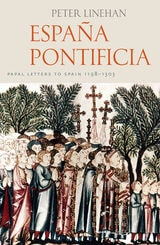
Peter Linehan (+2020) followed his survey of original papal letters in Portugal, Portugalia pontifica 1198-1417 (2013) with the present volume, España Pontifica, that covers papal letters to Spanish recipients from Pope Innocent II (1198-1216) to Pope Boniface VIII (+1303). This volume will provide students of the medieval papacy and the Spanish church with an invaluable research tool to explore the relationship between Rome and Spain during the crucial period of the Spanish Reconquistà after the battles of Navas de Tolosa (1212) to the capture of Seville (1248). Linehan spent his career cataloguing papal letters from more than sixty Spanish repositories. For the past sixty years the Vatican has also been engaged in publishing surveys of original papal letters preserved from various European archives. However, this volume includes material that has not been included in these surveys.
[more]
cover of Evagrius's Kephalaia Gnostika: A New Translation of the Unreformed Text from the Syriac

Evagrius's Kephalaia Gnostika

A New Translation of the Unreformed Text from the Syriac

Ilaria L.E. Ramelli

SBL Press, 2015

A new English translation for scholars and students of church history

Evagrius exerted a striking impact on the development of spirituality, of Origenism, and of the spiritual interpretation of the Bible in Greek, Syriac, and Latin Christianity. This English translation of the most complete Syriac version of Kephalaia Gnostika makes Evagrius Ponticus's thoughts concerning reality, God, protology, eschatology, anthropology, and allegorical exegesis of Scripture widely available.

Features:

  • English translation of the longer Syriac version discovered by Antoine Guillaumont
  • Commentary provides an integrated analysis of Evagrius's ascetic and philosophical writings
  • Extensive introduction on the importance of Evagrius and the context of his writings
[more]
cover of Exegetical Epistles

Exegetical Epistles

Thomas P. Jerome

Catholic University of America Press, 2023
The Nicene and Post-Nicene Fathers series of the 19th century rendered into English many of Jerome’s treatises and letters while bypassing his biblical commentaries as well as some of his most important exegetical letters. This omission, which was not helpful to scholarship, was probably due to the great length of these works. Although the problem was partly remedied by some new English translations of the 20th century, the present volume fills a significant lacuna by translating into English the Scriptural exegesis that Jerome conveyed in his relatively unknown epistles, many of which were composed in response to queries he had received from various correspondents. Many of these letters are presented here for the first time in English. Based on the Hilberg edition, this volume contains new translations, introduced and annotated, of Jerome’s Epistles 18-21, 25-30, 34-37, 42, 53, 55-56, 59, 64-65, 72-74, 78, 85, 106, 112, 119-121, 129, 130, and 140. Two newly translated letters from the famous exchange with Augustine over the meaning of Galatians 2:11-14 are included (Epp. 56 and 112), as well as a new rendering of Ep. 130 to Demetrias (which technically is not an “exegetical” letter but does present important information about the Pelagian controversy). Overall, this collection hopes to serve as a useful introduction to Jerome’s approach to biblical interpretation, of both the Old and the New Testament. Some letters focus on the historical meaning of Pauline and Gospel texts, while others contain allegorical expositions of Old Testament passages. Jerome’s competence as a Hebrew scholar will become evident to the reader of this volume as well as his thorough acquaintance with the antecedent Greek and Latin Christian exegetical traditions.
[more]
cover of Exegetical Epistles, Volume 2

Exegetical Epistles, Volume 2

Thomas P. St. Jerome

Catholic University of America Press, 2024
This is the second of a two-volume set that includes Thomas Scheck’s new translations of several of St. Jerome’s previously untranslated exegetical letters. Epistle 85 to St. Paulinus of Nola contains Jerome’s answers to two questions: how Exodus 7.13 and Romans 9.16 can be reconciled with free will, and what 1 Corinthians 7.14 means. Epistle 106 to Sunnias and Fretela, which deals with textual criticism of the Septuagint, consists of a meticulous defense of Jerome’s new translation of the Latin Psalter. Epistle 112 is a response to three letters from St. Augustine: Ep. 56 (contained in the previous volume), Ep. 67, and Ep 104. In the face of Augustine’s criticisms, Jerome defends his own endeavor to translate the Old Testament directly from the Hebrew text. He also vindicates his own ecclesiastical interpretation of Galatians 2.4-11, as he had set this forth in his Commentary on Galatians, and along the way he accuses Augustine of advocating the heresy of Judaizing. Epistle 119 to Minervius and Alexander contains Jerome’s answers to some eschatological questions regarding the interpretation of 1 Corinthians 15.51 and 1 Thessalonians 4.17. In Epistle 120 to Hedibia, Jerome tackles twelve exegetical questions that focus on reconciling the discrepant Resurrection accounts in the Gospels, as well as questions about Romans 9.14-29, 2 Corinthians 2.16, and 1 Thessalonians 5.23. In Epistle 121 to Algasia, Jerome clarifies eleven exegetical questions dealing with passages in the Gospels and Paul’s letters (Romans 5.7; 7.7-25; 9.3-5; Colossians 2.18-19; 2 Thessalonians 2.3). This letter also contains an exposition of the parable of the unjust steward (Luke 16.1-10), in which Jerome translates material from a commentary attributed to Theophilus of Antioch. In Epistle 129 to Dardanus, Jerome interprets “the promised land” and discusses the alleged crimes of the Jews. Epistle 130 to Demetrias is not an exegetical letter but an exhortation to the newly consecrated virgin on how to live out her vocation. In this letter Jerome reflects on Origenism and Pelagianism. Finally, in Epistle 140 to Cyprian the presbyter, Jerome expounds Psalm 90.
[more]
cover of Exhibiting Evangelicalism: Commemoration and Religion’s Presence of the Past

Exhibiting Evangelicalism

Commemoration and Religion’s Presence of the Past

Devin C. Manzullo-Thomas

University of Massachusetts Press, 2022

Religion is a subject often overlooked or ignored by public historians. Whether they are worried about inadvertent proselytizing or fearful of contributing to America’s ongoing culture wars, many heritage professionals steer clear of discussing religion’s formative role in the past when they build collections, mount exhibits, and develop educational programming. Yet religious communities have long been active contributors to the nation’s commemorative landscape.

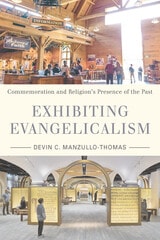
Exhibiting Evangelicalism provides the first account of the growth and development of historical museums created by white evangelical Christians in the United States over the twentieth and twenty-first centuries. Exploring the histories of the Museum of the Bible, the Billy Graham Center Museum, the Billy Sunday Home, and Park Street Church, Devin C. Manzullo-Thomas illustrates how these sites enabled religious leaders to develop a coherent identity for their fractious religious movement and to claim the centrality of evangelicalism to American history. In their zeal to craft a particular vision of the national past, evangelicals engaged with a variety of public history practices and techniques that made them major players in the field—including becoming early adopters of public history’s experiential turn.
[more]
cover of Exploring the Nature of Law: Thomistic Juridical Realism and the Elements of Law's Ontology

Exploring the Nature of Law

Thomistic Juridical Realism and the Elements of Law's Ontology

Petar Popovic

Catholic University of America Press, 2025

This is a book about the nature of the reality or the phenomenon referred to as “law” by lawyers and legal officials, but also by members of communities living under law, to the extent that they conceptualize the realm of “law” as something sufficiently distinguishable from other different or broader realities and phenomena. The book belongs to the legal-philosophical field dedicated to the study of the very nature of law, that is, to the most basic or abstract part of the philosophy of law, which is sometimes referred to as “the philosophy of philosophy of law” or “general jurisprudence.” The scope of the book is to explore the essential features of law’s nature, namely, all those realities that pertain to law’s essence, the properties that make law into what it is. Despite the fact of plurality of legal-philosophical conceptions of law circulating in legal theory today, the book is optimistic about the very prospect of exploring the nature of law. It maintains that law has an essence and that it is possible to explore and describe this unique essence in an intelligible and reasonably detailed fashion, by identifying the basic elements of law’s ontology. The book advances the claim that Aquinas’s account of legal ontology denotes the most accurate understanding of the phenomenon that we call “law”—which the Angelic Doctor referred to as ius, constituted as such on the basis of the various manifestations of lex. Aquinas’s approach to understanding law’s nature that can be labeled “Thomistic juridical realism” and it may be categorized as a version of a natural-law theory of law. The book argues that a contemporary reading of Aquinas may indeed fruitfully contribute to an improved understanding of our present-day legal-philosophical analyses and discussions on the nature of law.
[more]