Results by title
205 books match the query 'City' and 4 start with e
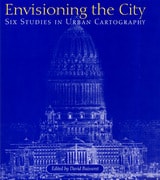
Envisioning the City
Six Studies in Urban CartographyEdited by David Buisseret
University of Chicago Press, 1998
Whether a Chinese vertical city plan from the first millennium B.C. or a bird's-eye view appended to a fifteenth-century edition of Ptolemy's Geography, the type of plan chosen and its focus reflected the aspects of a city that the map's creators wished to highlight. For instance, maps of seventeenth-century cities emphasized impregnable fortifications as a deterrent to potential attackers. And Daniel Burnham's famous 1909 Plan of Chicago used a distinct representational style to "sell" his version of the new Chicago.
Although city plans are among the oldest maps known, few books have been devoted to them. Historians of cartography and geography, architects, and urban planners will all enjoy this profusely illustrated volume.

Equality in the City
Imaginaries of the Smart FutureEdited by Susan Flynn and Graham Cairns
Intellect Books, 2022
Equality in the City engenders a timely debate about what future cities might look like and what their concerns should be. Using a multi-disciplinary perspective, it features acclaimed scholars whose work investigates the proposed networked, digital technologies that ostensibly affect planning policies, control infrastructures, and deliver and manage city services and systems. The contributors offer insights into how future cities might be envisaged, planned, and executed in order to be more equal.
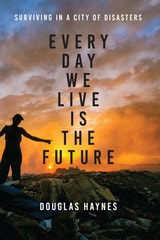
Every Day We Live Is the Future
Surviving in a City of DisastersBy Douglas Haynes
University of Texas Press, 2017
When she was only nine, Dayani Baldelomar left her Nicaraguan village with nothing more than a change of clothes. She was among tens of thousands of rural migrants to Managua in the 1980s and 1990s. After years of homelessness, Dayani landed in a shantytown called The Widows, squeezed between a drainage ditch and putrid Lake Managua. Her neighbor, Yadira Castellón, also migrated from the mountains. Driven by hope for a better future for their children, Dayani, Yadira, and their husbands invent jobs in Managua’s spreading markets and dumps, joining the planet’s burgeoning informal economy. But a swelling tide of family crises and environmental calamities threaten to break their toehold in the city.
Dayani’s and Yadira’s struggles reveal one of the world’s biggest challenges: by 2050, almost one-third of all people will likely live in slums without basic services, vulnerable to disasters caused by the convergence of climate change and breakneck urbanization. To tell their stories, Douglas Haynes followed Dayani’s and Yadira’s families for five years, learning firsthand how their lives in the city are a tightrope walk between new opportunities and chronic insecurity. Every Day We Live Is the Future is a gripping, unforgettable account of two women’s herculean efforts to persevere and educate their children. It sounds a powerful call for understanding the growing risks to new urbanites, how to help them prosper, and why their lives matter for us all.
Exiles in the City
Hannah Arendt and Edward W. Said in CounterpointWilliam V. Spanos
The Ohio State University Press, 2012