100 books match the query 'Commentary' and 3 start with e

cover of Ecclesiastical Latin: An Answer Key and Commentary

Ecclesiastical Latin

An Answer Key and Commentary

Charles G. Kim Jr.

Catholic University of America Press, 2026
This supplemental guide to Ecclesiastical Latin: a Primer on the Language of the Church includes provides important aids to both the instructor and those using the book for self-study. Within the book, the reader will find some thoughts on the nature of translation and how best to approach translating the Latin sentences found in the main book. Many of the translations given of the fabulae fictae, sententiae interpretandae, and sententiae fictae include additional explanations and guides as to why the sentences are translated in the way they are. Moreover, the translations provided help clarify in the mind of the student of Latin what is happening in the Latin on the other side of the translation. In sum, this guide contains an introduction to translation, translations of the stories and answers to the questions in Latin, in addition to translation of all the exercises of the main book. It also has many additional comments on the translations themselves.
[more]
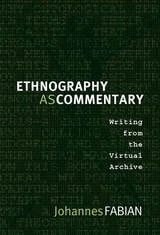
cover of Ethnography as Commentary: Writing from the Virtual Archive

Ethnography as Commentary

Writing from the Virtual Archive

Johannes Fabian

Duke University Press, 2008

The Internet allows ethnographers to deposit the textual materials on which they base their writing in virtual archives. Electronically archived fieldwork documents can be accessed at any time by the writer, his or her readers, and the people studied. Johannes Fabian, a leading theorist of anthropological practice, argues that virtual archives have the potential to shift the emphasis in ethnographic writing from the monograph to commentary. In this insightful study, he returns to the recording of a conversation he had with a ritual healer in the Congolese town of Lubumbashi more than three decades ago. Fabian’s transcript and translation of the exchange have been deposited on a website (Language and Popular Culture in Africa), and in Ethnography as Commentary he provides a model of writing in the presence of a virtual archive.

In his commentary, Fabian reconstructs his meeting with the healer Kahenga Mukonkwa Michel, in which the two discussed the ritual that Kahenga performed to protect Fabian’s home from burglary. Fabian reflects on the expectations and terminology that shape his description of Kahenga’s ritual and meditates on how ethnographic texts are made, considering the settings, the participants, the technologies, and the linguistic medium that influence the transcription and translation of a recording and thus fashion ethnographic knowledge. Turning more directly to Kahenga—as a practitioner, a person, and an ethnographic subject—and to the questions posed to him, Fabian reconsiders questions of ethnic identity, politics, and religion. While Fabian hopes that emerging anthropologists will share their fieldwork through virtual archives, he does not suggest that traditional ethnography will disappear. It will become part of a broader project facilitated by new media.
[more]
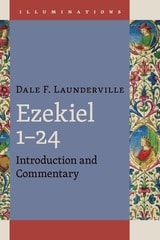
cover of Ezekiel 1–24: Introduction and Commentary

Ezekiel 1–24

Introduction and Commentary

Dale F. Launderville

SBL Press, 2026

In volume 1 of his cutting-edge two-volume commentary, Dale F. Launderville relies on the Hebrew, Old Greek, Aramaic, Syriac, and Latin texts of Ezekiel to produce a fresh translation of the first twenty-four chapters. Each passage is followed by interpretive sections that emphasize the history of reception, explaining how the text of Ezekiel has sparked the imagination of subsequent thinkers, writers, and artists. Each chapter concludes with a section of commentary dedicated to a historical-critical examination of the canonical text. Readers will become more equipped to interpret Ezekiel and more confident in their understanding of Old Testament prophecy and its relevance to contemporary issues in church and society. This is an essential resource for ministers, seminary students, and teachers of biblical studies courses.
[more]