Results by title
81 books match the query 'Composers' and 2 start with e

Elliott Carter
James Wierzbicki
University of Illinois Press, 2011
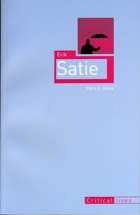
Erik Satie
Mary E. Davis
Reaktion Books, 2007
A composer who dabbled in the Dada movement, a Bohemian “gymnopédiste” of fin-de-siècle Montmartre, and a legendary dresser known as “The Velvet Gentleman,” Erik Satie cut a unique figure among early twentieth-century European composers. Yet his legacy has largely languished in the shadows of Stravinsky, Debussy, and Ravel. Mary E. Davis now brings Satie to life in this fascinating new biography.
Satie redefined the composer’s art, devising new methods of artistic expression that melded ordinary and rarified elements of words, visual art, and music. Davis argues that Satie’s modernist aesthetic was grounded in the contradictions of his life—such as enrolling in the conservative Schola Cantorum after working as a cabaret performer—and is reflected in his irreverent essays, drawn art, and music. Erik Satie explores how the composer was embraced by avant-garde artists and fashionable Parisian elite, and how his experiences inspired him to create the musical style of Neoclassicism. Satie also employed the power of the image through his infamous fashion statements, Davis contends, and became part of a nascent celebrity culture.
A cogent and informative portrait, Erik Satie upends the accepted history of modernist music and restores the composer to his rightful pioneering status.