Results by title
98 books match the query 'Control' and 5 start with e

Edited Clean Version
Technology and the Culture of ControlRaiford Guins
University of Minnesota Press, 2009
Where is censorship in the age of digital technology?
Not long ago it would have been an absurd idea to purchase a television, CD or MP3 or DVD player, computer software, or game console with the intention of limiting its capabilities. However, as Raiford Guins demonstrates in Edited Clean Version, today’s media technology is marketed and sold for what it does not contain and what it will not deliver.
TVs equipped with V-chips, Internet filters, editing DVD players, clean-version CDs and MP3s, and game consoles with parental control features can block out, monitor, disable, and filter information. As Guins argues in this provocative book, consumers now find themselves in new relationships with their everyday media in which they inscribe their viewing, listening, and playing experiences with self-prescribed and technologically enabled values and morals. Censorial practices are not so much enacted on media by regulatory bodies today as they are in our media technology.According to Guins, these new “control technologies” are designed to embody an ethos of neoliberal governance—through the very media that have been previously presumed to warrant management, legislation, and policing. Repositioned within a discourse of empowerment, security, and choice, the action of regulation, he reveals, has been relocated into the hands of users.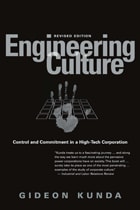
Engineering Culture
Control and Commitment in a High-Tech CorporationGideon Kunda
Temple University Press, 2006

Escape Routes
Control and Subversion in the Twenty-First CenturyDimitris Papadopoulos, Niamh Stephenson, and Vassilis Tsianos
Pluto Press, 2008
Illegal migrants who evade detection, creators of value in insecure and precarious working conditions and those who refuse the constraints of sexual and biomedical classifications: these are the people who manage to subvert power and to craft unexpected sociabilities and experiences. Escape Routes shows how people can escape control and create social change by becoming imperceptible to the political system of Global North Atlantic societies.

Ethnic Diversity and the Control of Natural Resources in Southeast Asia
A. Terry Rambo, Kathleen Gillogly, and Karl L. Hutterrer, Editors
University of Michigan Press, 1988
Explanation and Power
The Control of Human BehaviorMorse Peckham
University of Minnesota Press, 1988
Explanation and Power was first published in 1988. Minnesota Archive Editions uses digital technology to make long-unavailable books once again accessible, and are published unaltered from the original University of Minnesota Press editions.
The meaning of any utterance or any sign is the response to that utterance or sign: this is the fundamental proposition behind Morse Peckham's Explanation and Power. Published in 1979 and now available in paperback for the first time, Explanation and Power grew out of Peckham's efforts, as a scholar of Victorian literature, to understand the nature of Romanticism. His search ultimately led back to—and built upon—the tradition of signs developed by the American Pragmatists. Since, in Peckham's view, meaning is not inherent in word or sign, only in response, human behavior itself must depend upon interaction, which in turn relies upon the stability of verbal and nonverbal signs. In the end, meaning can be stabilized only by explanation, and when explanation fails, by force. Peckham's semiotic account of human behavior, radical in its time, contends with the same issues that animate today's debates in critical theory — how culture is produced, how meaning is arrived at, the relation of knowledge to power and of society to its institutions. Readers across a wide range of disciplines, in the humanities and social sciences, will welcome its reappearance.