434 books match the query 'Criticism & Theory' and 15 start with e
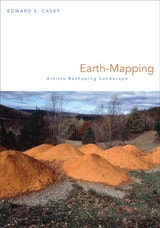
cover of Earth-Mapping: Artists Reshaping Landscape

Earth-Mapping

Artists Reshaping Landscape

Edward S. Casey

University of Minnesota Press, 2005
Dutch world maps of the sixteenth and seventeenth centuries, with their decorative pictures and elaborate typography, stand in sharp contrast to the wholly practical maps of today, which emphasize precise detail and consistent scale. Art, since the Impressionist period, has seemingly moved in the opposite direction, toward a less realistic interpretation of the world around us. Edward S. Casey demonstrates that the disciplines of mapping and painting, long thought to have diverged, are again intersecting. Earth-Mapping describes the ways in which artists of the last half century have incorporated ingenious mapping techniques into their art works. Beginning with a reassessment of the pioneering earth art of Robert Smithson in the 1960s and 1970s, Casey follows Smithson's legacy in the works of Sandy Gellis, Margot McLean, and Michelle Stuart. He also explores the visions of the earth found in the abstract paintings of Richard Diebenkorn, Jasper Johns, Willem de Kooning, Eve Ingalls, and Dan Rice. Focusing on forms of mapping that depart radically from conventional cartography - particularly "mapping with/in," being with or in a place, and "mapping out," communicating that experience of connection with others - Casey shows how earth art and abstract painting respectively reshape our landscape and our view of it, drawing us in from our bird's-eye view of the grid of highways and roads. In these works, we come to see the earth as it is sensed, remembered, and reshaped by artists as they explore the effect of the landscape on humans and the human effect on the landscape, and as they demand a response to the changing world around us.
[more]
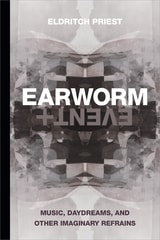
cover of Earworm and Event: Music, Daydreams, and Other Imaginary Refrains

Earworm and Event

Music, Daydreams, and Other Imaginary Refrains

Eldritch Priest

Duke University Press, 2022
In Earworm and Event Eldritch Priest questions the nature of the imagination in contemporary culture through the phenomenon of the earworm: those reveries that hijack our attention, the shivers that run down our spines, and the songs that stick in our heads. Through a series of meditations on music, animal mentality, abstraction, and metaphor, Priest uses the earworm and the states of daydreaming, mind-wandering, and delusion it can produce to outline how music is something that is felt as thought rather than listened to. Priest presents Earworm and Event as a tête-bêche—two books bound together with each end meeting in the middle. Where Earworm theorizes the entanglement of thought and feeling, Event performs it. Throughout, Priest conceptualizes the earworm as an event that offers insight into not only the way human brains process musical experiences, but how abstractions and the imagination play key roles in the composition and expression of our contemporary social environments and more-than-human milieus. Unconventional and ambitious, Earworm and Event offers new ways to interrogate the convergence of thought, sound, and affect.
[more]
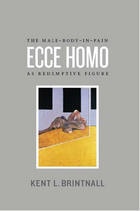
cover of Ecce Homo: The Male-Body-in-Pain as Redemptive Figure

Ecce Homo

The Male-Body-in-Pain as Redemptive Figure

Kent L. Brintnall

University of Chicago Press, 2011

Images of suffering male bodies permeate Western culture, from Francis Bacon’s paintings and Robert Mapplethorpe’s photographs to the battered heroes of action movies. Drawing on perspectives from a range of disciplines—including religious studies, gender and queer studies, psychoanalysis, art history, and film theory—Ecce Homo explores the complex, ambiguous meanings of the enduring figure of the male-body-in-pain.

Acknowledging that representations of men confronting violence and pain can reinforce ideas of manly tenacity, Kent L. Brintnall also argues that they reveal the vulnerability of men’s bodies and open them up to eroticization. Locating the roots of our cultural fascination with male pain in the crucifixion, he analyzes the way narratives of Christ’s death and resurrection both support and subvert cultural fantasies of masculine power and privilege. Through stimulating readings of works by Georges Bataille, Kaja Silverman, and more, Brintnall delineates the redemptive power of representations of male suffering and violence.
[more]
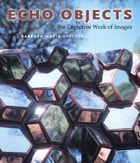
cover of Echo Objects: The Cognitive Work of Images

Echo Objects

The Cognitive Work of Images

Barbara Maria Stafford

University of Chicago Press, 2007
Barbara Maria Stafford is at the forefront of a growing movement that calls for the humanities to confront the brain’s material realities. In Echo Objects, she argues that humanists should seize upon the exciting neuroscientific discoveries that are illuminating the underpinnings of cultural objects. In turn, she contends, brain scientists could enrich their investigations of mental activity by incorporating phenomenological considerations—particularly the intricate ways that images focus intentional behavior and allow us to feel thought.
           
As a result, Echo Objects is a stunningly broad exploration of how complex images—or patterns that compress space and time—make visible the invisible ordering of human consciousness. Stafford demonstrates, for example, how the compound formats of emblems, symbols, collage, and electronic media reveal the brain’s grappling to construct mental objects that are redoubled by prior associations. In contrast, she shows that findings in evolutionary biology and the neurosciences are providing profound opportunities for understanding aesthetic conundrums such as the human urge to imitate and the role of narrative and nonnarrative representation.
           
 Ultimately, she makes an impassioned plea for a common purpose—for the acknowledgement that, at the most basic level, these separate projects belong to a single investigation.
 
“Heroic. . . . The larger message of Stafford’s intense, propulsive prose is unassailable. If we are to get much further in the great puzzle of ‘binding’—how the perception of an image, the will to act on intention, or the forging of consciousness is assembled from the tens of thousands of neurons firing at any one moment in time—then there needs to be action on all fronts.”—Science
[more]
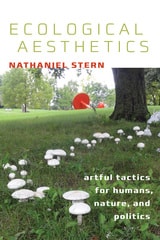
cover of Ecological Aesthetics: artful tactics for humans, nature, and politics

Ecological Aesthetics

artful tactics for humans, nature, and politics

Nathaniel Stern

Dartmouth College Press, 2018
With this poetic and scholarly collection of stories about art, artists, and their materials, Nathaniel Stern argues that ecology, aesthetics, and ethics are inherently entwined, and together act as the cornerstone for all contemporary arts practices. An ecological approach, says Stern, takes account of agents, processes, thoughts, and relations. Humans, matter, concepts, things, not-yet-things, politics, economics, and industry are all actively shaped in, and as, their interrelation. And aesthetics are a style of, and orientation toward, thought—and thus action. Including dozens of color images, this book narrativizes artists and artworks—ranging from print to installation, bio art to community activism—contextualizing and amplifying our experiences and practices of complex systems and forces, our experiences and practices of thought. Stern, an artist himself, writes with an eco-aesthetic that continually unfurls artful tactics that can also be used in everyday existence.
[more]
cover of Edward W. Said, Volume 25

Edward W. Said, Volume 25

Paul Bové

Duke University Press, 0

This volume begins to show why the current period in humanistic studies could be known as "The Age of Edward Said." The collection brings together outstanding intellectuals from the wide variety of fields to which Edward Said, the most important humanist of his generation, has made contributions: literary criticism, postcolonial studies, musicology, Middle Eastern Studies, anthropology, and journalism.

Featured is a new interview with Said, conducted by W. J. T. Mitchell, in which Said discusses the importance of the visual to his thinking, specifically the works of Goya and Caravaggio, which in turn made possible Said's valuable contributions to our understanding of photography and painting. Other contributions reflect on Said's influences on the American public sphere; the subtle personal politics that inform the relationship between music and emotion; Said's importance to a thinking about "race before racism" and the disappearance of the American; and jazz man Jim Merod reflects on Said's "sublime lyrical abstractions."

Covering with insight the many debates Said so deftly entered and formed, the distinguished contributors to this volume reflect upon his oeuvre to create an atmosphere of thoughtfulness, questioning, and interactivity.
[more]
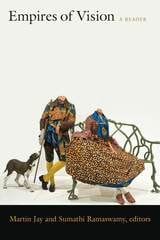
cover of Empires of Vision: A Reader

Empires of Vision

A Reader

Martin Jay and Sumathi Ramaswamy, eds.

Duke University Press, 2014

Empires of Vision brings together pieces by some of the most influential scholars working at the intersection of visual culture studies and the history of European imperialism. The essays and excerpts focus on the paintings, maps, geographical surveys, postcards, photographs, and other media that comprise the visual milieu of colonization, struggles for decolonization, and the lingering effects of empire. Taken together, they demonstrate that an appreciation of the role of visual experience is necessary for understanding the functioning of hegemonic imperial power and the ways that the colonized subjects spoke, and looked, back at their imperial rulers. Empires of Vision also makes a vital point about the complexity of image culture in the modern world: We must comprehend how regimes of visuality emerged globally, not only in the metropole but also in relation to the putative margins of a world that increasingly came to question the very distinction between center and periphery.


Contributors. Jordanna Bailkin, Roger Benjamin, Daniela Bleichmar, Zeynep Çelik, David Ciarlo, Natasha Eaton, Simon Gikandi, Serge Gruzinski, James L. Hevia, Martin Jay, Brian Larkin, Olu Oguibe, Ricardo Padrón, Christopher Pinney, Sumathi Ramaswamy, Benjamin Schmidt, Terry Smith, Robert Stam, Eric A. Stein, Nicholas Thomas, Krista A. Thompson

[more]
cover of Encounters with Rauschenberg: (A Lavishly Illustrated Lecture)

Encounters with Rauschenberg

(A Lavishly Illustrated Lecture)

Leo Steinberg

University of Chicago Press, 2000

In his insightful and engrossing lecture, Leo Steinberg surveys and critiques the work of Robert Rauschenberg, one of the great American post-war artists. He also discusses his own experience as a critic in the exciting and turbulent art world of New York in the 1950s and 1960s. The result is a rare glimpse not only into Rauschenberg, but also into Steinberg.

With the sharpness and confidence that can only come from a critic who has long been involved with Rauschenberg's work, Steinberg offers an in-depth discussion of such major pieces as the Erased DeKooning Drawing, Bed, and Monogram. He explains the subtle differences between his interpretations and those of other critics, such as Clement Greenberg and Hilton Kramer. He candidly reflects on how he has changed his mind over the years, and defends his new ideas about Rauschenberg's work with precise, fresh arguments. He critically evaluates Rauschenberg's more recent work and addresses how it falls short from the artist's earlier work.

From Rauschenberg's silk-screen prints of the 1960s to the vegetable dye transfer prints of the 1990s, Steinberg warns against the dangers of overinterpretation and iconographic enthusiasm. He argues that the unifying strand through this great artist's work is his drive to appropriate, to take objects and images from the world and make them his own by making them become a part of his art.

Provocative, intelligent, and beautifully articulated, Steinberg's words shed light on one remarkable artist and on the post-war New York art scene, on Steinberg's particular appreciation of Rauschenberg and on his life's work as an art critic.
[more]
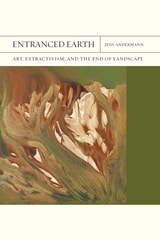
cover of Entranced Earth: Art, Extractivism, and the End of Landscape

Entranced Earth

Art, Extractivism, and the End of Landscape

Jens Andermann

Northwestern University Press, 2023

A sweeping analysis of the lasting effects of neocolonial extractivism in Latin American aesthetic modernity from 1920 to the present

Looking to the extractive frontier as a focal point of Latin American art, literature, music, and film, Jens Andermann asks what emerges at the other end of landscape. Art in the Global South has long represented and interrogated “insurgent nature”—organic and inorganic matter, human and nonhuman life, thrown into turmoil.

In Entranced Earth: Art, Extractivism, and the End of Landscape, Andermann traces the impact of despaisamiento—world-destroying un-landscaping—throughout the Latin American modernist archive. At the same time, he explores innovative, resilient modes of allyship forged between diverse actors through their shared experiences of destruction. From the literary regionalism of the 1930s to contemporary bio art, from modernist garden architecture to representations of migration and displacement in sound art and film, Entranced Earth tracks the crisis of landscape and environmental exhaustion beyond despair toward speculative, experimental forms of survival.
[more]
cover of Epistemologies of Aesthetics

Epistemologies of Aesthetics

Dieter Mersch

Diaphanes, 2015

The ideas of “art as research” and ”research as art” have risen over the past two decades as important critical focuses for the philosophy of media, aesthetics, and art. Of particular interest is how the methodologies of art and science might be merged to create a better conceptual understanding of art-based research.
           
In Epistemologies of Aesthetics, Dieter Mersch deconstructs and displaces the terminology that typically accompanies the question of the relationship between art and scientific truth. Identifying artistic practices as modes of thought that do not make use of language in a way that can easily be translated into scientific discourse, Mersch advocate for an aesthetic mode of thought beyond the “linguistic turn,” a way of thinking that cannot be substituted by any other disciplinary system. A sophisticated reflection on the epistemological status of the aesthetic by one of Germany’s leading philosophers, Epistemologies of Aesthetics will be of great interest within this growing field of study.
[more]
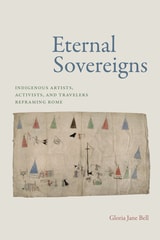
cover of Eternal Sovereigns: Indigenous Artists, Activists, and Travelers Reframing Rome

Eternal Sovereigns

Indigenous Artists, Activists, and Travelers Reframing Rome

Gloria Jane Bell

Duke University Press, 2024

In 1925, Pius XI staged the Vatican Missionary Exposition in Rome’s Vatican City. Offering a narrative of the Catholic Church’s beneficence to a global congregation, the exposition displayed thousands of cultural belongings stolen from Indigenous communities, which were seen by one million pilgrims. Gloria Jane Bell’s Eternal Sovereigns offers critical revision to that story. Bell reveals the tenacity, mobility, and reception of Indigenous artists, travelers, and activists in 1920s Rome. Animating these conjunctures, the book foregrounds competing claims to sovereignty from Indigenous and papal perspectives. Bell deftly juxtaposes the “Indian Museum” of nineteenth-century sculptor Ferdinand Pettrich, acquired by the Vatican, with the oeuvre of Indigenous artist Edmonia Lewis. Focusing on Turtle Island, Bell analyzes Indigenous cultural belongings made by artists from nations including Cree, Lakota, Anishinaabe, Nipissing, Kanien’kehá:ka, Wolastoqiyik, and Kwakwaka’wakw. Drawing on years of archival research and field interviews, Bell provides insight into the Catholic Church’s colonial collecting and its ongoing ethnological display practices. Written in a voice that questions the academy’s staid conventions, the book reclaims Indigenous belongings and other stolen treasures that remain imprisoned in the stronghold of the Vatican Museums.
[more]
cover of Evil by Design: The Creation and Marketing of the Femme Fatale

Evil by Design

The Creation and Marketing of the Femme Fatale

Elizabeth K. Menon

University of Illinois Press, 2000

 
Evil by Design documents the search for the origins of the iconic “femme fatale.” Depicted as a dangerous, depraved, and deadly woman, this image was found frequently in Salon paintings from 1885 to 1910.
Elizabeth K. Menon’s study is the first to use popular sources to make the critical link between the femme fatale and the rise of feminism. In addition to the Salon paintings, Menon sifts through a variety of popular sources, including French illustrated journals, literature, posters, and decorative arts. Over 120 images depict women with serpents, evil flowers, and even miniature men having their hearts cooked. She argues that the evolution of the femme fatale, with both literary and visual links to the biblical Eve figure, came as a response to increasing feminism and the desire by men to halt its spread.

 
[more]
cover of Extra/Ordinary: Craft and Contemporary Art

Extra/Ordinary

Craft and Contemporary Art

Maria Elena Buszek, ed.

Duke University Press, 2011

Contemporary artists such as Ghada Amer and Clare Twomey have gained international reputations for work that transforms ordinary craft media and processes into extraordinary conceptual art, from Amer’s monumental stitched paintings to Twomey’s large, ceramics-based installations. Despite the amount of attention that curators and gallery owners have paid to these and many other conceptual artists who incorporate craft into their work, few art critics or scholars have explored the historical or conceptual significance of craft in contemporary art. Extra/Ordinary takes up that task. Reflecting on what craft has come to mean in recent decades, artists, critics, curators, and scholars develop theories of craft in relation to art, chronicle how fine-art institutions understand and exhibit craft media, and offer accounts of activist crafting, or craftivism. Some contributors describe generational and institutional changes under way, while others signal new directions for scholarship, considering craft in relation to queer theory, masculinity, and science. Encompassing quilts, ceramics, letterpress books, wallpaper, and textiles, and moving from well-known museums to home workshops and political protests, Extra/Ordinary is an eclectic introduction to the “craft culture” referenced and celebrated by artists promoting new ways of thinking about the role of craft in contemporary art.

Contributors. Elissa Auther, Anthea Black, Betty Bright, Nicole Burisch, Maria Elena Buszek, Jo Dahn, M. Anna Fariello, Betsy Greer, Andrew Jackson, Janis Jefferies, Louise Mazanti, Paula Owen, Karin E. Peterson, Lacey Jane Roberts, Kirsty Robertson, Dennis Stevens, Margaret Wertheim
[more]
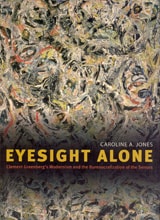
cover of Eyesight Alone: Clement Greenberg's Modernism and the Bureaucratization of the Senses

Eyesight Alone

Clement Greenberg's Modernism and the Bureaucratization of the Senses

Caroline A. Jones

University of Chicago Press, 2006

Even a decade after his death, Clement Greenberg remains controversial. One of the most influential art writers of the twentieth century, Greenberg propelled Abstract Expressionist painting-in particular the monumental work of Jackson Pollock-to a leading position in an international postwar art world. On radio and in print, Greenberg was the voice of "the new American painting," and a central figure in the postwar cultural history of the United States.

Caroline Jones's magisterial study widens Greenberg's fundamental tenet of "opticality"-the idea that modernist art is apprehended through "eyesight alone"-to a broader arena, examining how the critic's emphasis on the specular resonated with a society increasingly invested in positivist approaches to the world. Greenberg's modernist discourse, Jones argues, developed in relation to the rationalized procedures that gained wide currency in the United States at midcentury, in fields ranging from the sense-data protocols theorized by scientific philosophy to the development of cultural forms, such as hi-fi, that targeted specific senses, one by one. Greenberg's attempt to isolate and celebrate the visual was one manifestation of a large-scale segmentation-or bureaucratization-of the body's senses. Working through these historical developments, Jones brings Greenberg's theories into contemporary philosophical debates about agency and subjectivity.

Eyesight Alone offers artists, art historians, philosophers, and all those interested in the arts a critical history of this generative figure, bringing his work fully into dialogue with the ideas that shape contemporary critical discourse and shedding light not only on Clement Greenberg but also on the contested history of modernism itself.
[more]
cover of eco-operations

eco-operations

Edited by Fabienne Liptay and Liliana Gómez

Diaphanes, 2024

An edited collection of contributions to conversations about the climate crisis and its role in critical discourse.

The climate change crisis has become part of aesthetic discourse and critical research in culture and the arts. Future-oriented, ecologically conceived possibilities for action are being explored by artists, curators, and scholars alike. eco-operations addresses these emerging aesthetic ecologies and new technologies of cooperation that both challenge and shape a sustainable future, foregrounding interruptions, ruptures, disconnections, dissonances, exclusions, and allochronism. Moving beyond the concepts of “flow” and “network” as a single, coherent (ecological or technological) system, eco-operations instead emphasizes the frictions within asynchronously running systems. The infrastructures and formats of artistic production and exhibition play a central role here, as they themselves constitute ecosystems that invite and regulate processes of sharing and exchange. Artists and activists are embedded in these ecosystems, in which they simultaneously intervene when searching for alternative ways of creating collaborative practice. Bringing together scholars, artists, writers, and curators, and working across a range of disciplines, eco-operations explores this field of tension between global and local ecologies and aims to speculate on where dissonances imply both creative potential and political challenges.

eco-operations features contributions by Dalida María Benfield, Ursula Biemann, Lisa Blackmore, Mateo Chacón Pino, Lucrezia Cippitelli, T. J. Demos, Sandra Frimmel, Laura Flórez, Lorena Cely, Alexandra Gelis, Liliana Gómez, Fabienne Liptay, Uriel Orlow, and Dorota Sajewska.
 
[more]