Results by title
193 books match the query 'Cultural & Regional' and 4 start with e
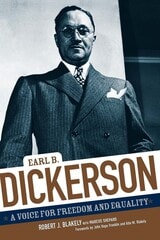
Earl B. Dickerson
A Voice for Freedom and EqualityRobert J. Blakely
Northwestern University Press, 2006
At fifteen, Earl Burrus Dickerson stowed away on a train in Canton, Mississippi, fleeing the racial oppression of his native South. But Chicago, the boy's destination, was no haven of racial fairness and equality. His flight north was in fact the beginning of a journey that would last a lifetime--and would forever pit Dickerson against the forces of racial injustice. Earl B. Dickerson's story, told here for the first time, is one of courage and character, of remarkable accomplishment in the face of terrible odds; it is also emblematic of the twentieth-century struggle for civil rights--a crucial chapter of African American history as it was lived by one uncompromising individual.
In this book, Robert J. Blakely tells how Dickerson (1891-1986) worked his way through preparatory schools and college, a segregated officer's training school, and law school at the University of Chicago. The story follows Dickerson's career as general counsel to the first insurance company owned and operated by African Americans; the first African American Democratic alderman elected to the Chicago City Council; a member of FDR's first Fair Employment Practices Committee; leader of the movement that broke the color barrier to membership in the Illinois Bar Association; and, perhaps most famously, the power behind Hansberry v. Lee, the U.S. Supreme Court case that marked the beginning of the end of restrictive real estate covenants--one of the most pernicious legal tools of segregation in the North. Blakely gives us a sense of the man behind the achievements, the life that defied conventions and statistics, and the world in which "the dean of Chicago's black lawyers" became a pioneering architect for equal opportunity in American life.
Every Farm Tells a Story
A Tale of Family ValuesJerry Apps
Wisconsin Historical Society Press, 2018
“Do your chores without complaining. Show up on time. Do every job well. Always try to do better. Never stop learning. Next year will be better. Care for others, especially those who have less than you. Accept those who are different from you. Love the land.”
In this paperback edition of a beloved Jerry Apps classic, the rural historian captures the heart and soul of life in rural America. Inspired by his mother’s farm account books—in which she meticulously recorded every farm purchase—Jerry chronicles life on a small farm during and after World War II. Featuring a new introduction exclusive to this 2nd edition, Every Farm Tells a Story reminds us that, while our family farms are shrinking in number, the values learned there remain deeply woven in our cultural heritage.
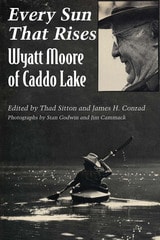
Every Sun That Rises
Wyatt Moore of Caddo LakeEdited by Thad Sitton and James H. Conrad
University of Texas Press, 1985
“What I done and what I been accused of covers everything, you put ’em both together.” Wyatt Moore of Caddo Lake exaggerates, but perhaps not very much. During his long life at Caddo Lake, Moore was at various times a boat operator, commercial fisherman, boat builder, farmer, fishing and hunting camp operator, guide, commercial hunter, trapper, raftsman, moonshiner, oil field worker, water well driller, and mechanical jack-of-all-trades. Still, he always found time for his lifelong study of the natural and human history of Caddo Lake. Here, in words as fresh and forceful as the day they were uttered, is his tale.
Moore, who was given the gift of a unique story to tell and great power to tell it, was the historical interpreter of his strange homeland of Caddo Lake. Twenty-three miles long, some forty thousand acres at high water, stretching across two Texas counties and one Louisiana parish, Caddo Lake’s fresh waters merge into a labyrinthine swamp punctuated by inlets, holes, and geological oddities like Goat Island, Whistleberry Slough, Whangdoodle Pass, and the Devil’s Elbow. Here among these lost reminders of steamboats and old bateau men is Moore’s world.
Born in 1901 at Karnack, Texas, Moore grew up in a time when kids wore button shoes and in a place where pigs and chickens roamed the backyard. He drank his first whiskey at age eight, gigged fish, trapped, and hunted for pearls as a boy, and grew up to an easy assurance on the lake that comes only to those long accustomed to its ways. A walking library of the history of Caddo Lake, Moore delved into almost every nook and corner of it, and wherever he went, whatever he did, he sought to learn more about his subect. Sought out by writers and journalists—among them James Michener and Bill Moyers—because of his laconic wit and remarkable command of the region’s story, Moore became known as a resource as precious as the lake itself. Moore’s story is eloquently introduced by Thad Sitton in an opening essay that chronicles the history of Caddo Lake. Striking photographs of Moore at home and at work on the lake beautifully amplify his life story, and an exuberant word-and-picture essay of Moore expertly building the traditional boat of the region, a bateau, reinforces the vivid image we have of this remarkable man.
Eye to the Sky
Storytelling on the Edge of MagicBobby Norfolk
Parkhurst Brothers, Inc., 2016
Nobody knows how to tell a story like Bobby Norfolk, and here he tells his own life story. Norfolk grew up in hardscrabble neighborhoods of Saint Louis, Missouri, during the 1950s and 60s, sometimes walking to elementary school from an apartment his parents could not afford to heat. Lifting himself up by force of will and God-given talent, Norfolk defeated a childhood stutter to become a high school dramatist and later an exceptional college student. The path was never easy—and often frightening. With men of color being killed all-too-frequently in America, Norfolk sought a personal identity based upon talent and hard work, but also upon where safety and justice might be found. He tells these stories—some heartwarming or humorous, some frightful and treacherous—honestly, with a graceful mindfulness that all would do well to emulate.