Results by title
345 books match the query 'Design' and 9 start with e

Educating Artists for the Future
Learning at the Intersections of Art, Science, Technology, and CultureEdited by Mel Alexenberg
Intellect Books, 2008
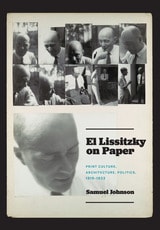
El Lissitzky on Paper
Print Culture, Architecture, Politics, 1919–1933Samuel Johnson
University of Chicago Press, 2024
Russian artist El Lissitzky’s work spans painting, photography, theatrical and exhibition design, architecture, graphic design, typography, and literature. He was active in the Jewish cultural renaissance, formed an artists’ collective with Kazimir Malevich, was a key figure in the dissemination of early Soviet art in Western Europe, and designed propaganda for the Stalin regime. With such a varied history and body of work, scholars have often struggled to identify the core principles that tied his diverse oeuvre together.
In El Lissitzky on Paper, Samuel Johnson argues that Lissitzky’s commitment to creating works on paper is a constant that unites his endeavors. Paper played a key role in the utopian projects that informed Lissitzky’s work, and the artist held a commitment to print as the premier medium of immediate public exchange. Johnson analyzes and contextualizes this idea against the USSR’s strict management of this essential resource and the growth of new media communications, including the telephone, telegraph, and film.
With this book, Johnson presents a significant contribution to scholarship on this major artist, revealing new connections between Lissitzky’s work in architecture and visual art and bringing to light sources from largely unstudied Russian archives.
Electric Vehicle Components and Charging Technologies
Design, modeling, simulation and controlSanjeev Singh
The Institution of Engineering and Technology, 2024
Electronic Monuments
Gregory Ulmer
University of Minnesota Press, 2005
From a do-it-yourself Mount Rushmore to an automated tribute to the devastating annual toll of traffic deaths in the United States, Electronic Monuments describes commemoration as a fundamental experience, joining individual and collective identity, and adapting both to the emerging apparatus of “electracy,” or digital literacy. Concerns about the destruction of civic life caused by the society of the spectacle are refocused on the question of how a collectivity remembers who or what it is.
Ulmer proposes that the Internet makes it possible for monumentality to become a primary site of self-knowledge, one that supports a new politics, ethics, and dimension of education. The Internet thus holds the promise of bringing citizens back into the political equation as witnesses and monitors.
Gregory L. Ulmer is professor of English and media studies at the University of Florida, Gainesville.

Elusive Archives
Material Culture in FormationMartin Brückner
University of Delaware Press, 2021
The essays that comprise Elusive Archives raise a common question: how do we study material culture when the objects of study are transient, evanescent, dispersed or subjective? Such things resist the taxonomic protocols that institutions, such as museums and archives, rely on to channel their acquisitions into meaningful collections. What holds these disparate things together here are the questions authors ask of them. Each essay creates by means of its method a provisional collection of things, an elusive archive. Scattered matter then becomes fixed within each author’s analytical framework rather than within the walls of an archive’s reading room or in cases along a museum corridor.
This book follows the ways in which objects may be identified, gathered, arranged, conceptualized and even displayed rather than by “discovering” artifacts in an archive and then asking how they came to be there. The authors approach material culture outside the traditional bounds of learning about the past. Their essays are varied not only in subject matter but also in narrative format and conceptual reach, making the volume accessible and easy to navigate for a quick reference or, if read straight through, build toward a new way to think about material culture.
Enabling Technologies for Sustainable Smart Cities
Design, development and managementMohammad A. Matin
The Institution of Engineering and Technology, 2025
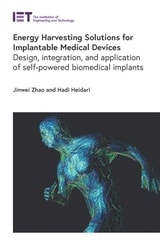
Energy Harvesting Solutions for Implantable Medical Devices
Design, integration, and application of self-powered biomedical implantsJinwei Zhao
The Institution of Engineering and Technology, 2025
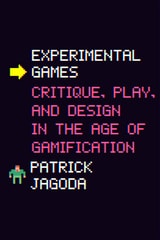
Experimental Games
Critique, Play, and Design in the Age of GamificationPatrick Jagoda
University of Chicago Press, 2020
Drawing from his own experience as a game designer, Patrick Jagoda argues that games need not be synonymous with gamification. He studies experimental games that intervene in the neoliberal project from the inside out, examining a broad variety of mainstream and independent games, including StarCraft, Candy Crush Saga, Stardew Valley, Dys4ia, Braid, and Undertale. Beyond a diagnosis of gamification, Jagoda imagines ways that games can be experimental—not only in the sense of problem solving, but also the more nuanced notion of problem making that embraces the complexities of our digital present. The result is a game-changing book on the sociopolitical potential of this form of mass entertainment.
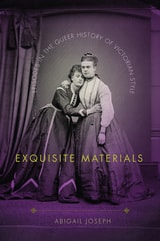
Exquisite Materials
Episodes in the Queer History of Victorian StyleAbigail Joseph
University of Delaware Press, 2011
Published by University of Delaware Press. Distributed worldwide by Rutgers University Press.