Results by title
54 books match the query 'Diaspora' and 4 start with e
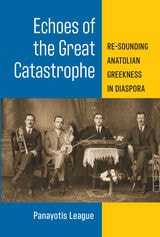
Echoes of the Great Catastrophe
Re-Sounding Anatolian Greekness in DiasporaPanayotis League
University of Michigan Press, 2021
Echoes of the Great Catastrophe: Re-sounding Anatolian Greekness in Diaspora explores the legacy of the Great Catastrophe—the death and expulsion from Turkey of 1.5 million Greek Christians following the Greco-Turkish War of 1919–1922—through the music and dance practices of Greek refugees and their descendants over the last one hundred years. The book draws extensively on original ethnographic research conducted in Greece (on the island of Lesvos in particular) and in the Greater Boston area, as well as on the author’s lifetime immersion in the North American Greek diaspora. Through analysis of handwritten music manuscripts, homemade audio recordings, and contemporary live performances, the book traces the routes of repertoire and style over generations and back and forth across the Atlantic Ocean, investigating the ways that the particular musical traditions of the Anatolian Greek community have contributed to their understanding of their place in the global Greek diaspora and the wider post-Ottoman world. Alternating between fine-grained musicological analysis and engaging narrative prose, it fills a lacuna in scholarship on the transnational Greek experience.
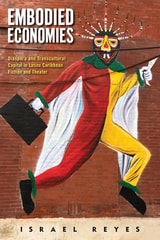
Embodied Economies
Diaspora and Transcultural Capital in Latinx Caribbean Fiction and TheaterIsrael Reyes
Rutgers University Press, 2022
In chapters that compare works by Lin-Manuel Miranda, Nilo Cruz, Edwin Sánchez, Ángel Lozada, Rita Indiana Hernández, Dolores Prida, and Mayra Santos Febres, Reyes examines the contradictions of transcultural capital, its potential to establish networks of support in Latinx enclaves, and the risks it poses for reproducing the inequities of power and privilege that have always been at the heart of the American Dream. Embodied Economies shares new perspectives through its comparison of works written in both English and Spanish, and the literary voices that emerge from the US and the Hispanic Caribbean.

Essential Essays (Two-volume set)
Foundations of Cultural Studies & Identity and DiasporaStuart Hall
Duke University Press, 2018
From his arrival in Britain in the 1950s and involvement in the New Left, to founding the field of cultural studies and examining race and identity in the 1990s and early 2000s, Stuart Hall has been central to shaping many of the cultural and political debates of our time. Essential Essays—a landmark two volume set—brings together Stuart Hall's most influential and foundational works. Spanning the whole of his career, these volumes reflect the breadth and depth of his intellectual and political projects while demonstrating their continued vitality and importance.
Volume 1: Foundations of Cultural Studies focuses on the first half of Hall's career, when he wrestled with questions of culture, class, representation, and politics. This volume's stand-out essays include his field-defining “Cultural Studies and Its Theoretical Legacies;” the prescient “The Great Moving Right Show,” which first identified the emergent mode of authoritarian populism in British politics; and “Encoding and Decoding in the Television Discourse,” one of his most influential pieces of media criticism. As a whole, Volume 1 provides a panoramic view of Hall's fundamental contributions to cultural studies.
Volume 2: Identity and Diaspora draws from Hall's later essays, in which he investigated questions of colonialism, empire, and race. It opens with “Gramsci's Relevance for the Study of Race and Ethnicity,” which frames the volume and finds Hall rethinking received notions of racial essentialism. In addition to essays on multiculturalism and globalization, black popular culture, and Western modernity's racial underpinnings, Volume 2 contains three interviews with Hall, in which he reflects on his life to theorize his identity as a colonial and diasporic subject.

Essential Essays, Volume 2
Identity and DiasporaStuart Hall
Duke University Press, 2018
Volume 2: Identity and Diaspora draws from Hall's later essays, in which he investigated questions of colonialism, empire, and race. It opens with “Gramsci's Relevance for the Study of Race and Ethnicity,” which frames the volume and finds Hall rethinking received notions of racial essentialism. In addition to essays on multiculturalism and globalization, black popular culture, and Western modernity's racial underpinnings, Volume 2 contains three interviews with Hall, in which he reflects on his life to theorize his identity as a colonial and diasporic subject.