Results by title
152 books match the query 'Diplomacy' and 3 start with e
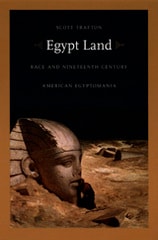
Egypt Land
Race and Nineteenth-Century American EgyptomaniaScott Trafton
Duke University Press, 2004
Drawing on literary and cultural studies, art and architectural history, political history, religious history, and the histories of archaeology and ethnology, Trafton illuminates anxieties related to race in different manifestations of nineteenth-century American Egyptomania, including the development of American Egyptology, the rise of racialized science, the narrative and literary tradition of the imperialist adventure tale, the cultural politics of the architectural Egyptian Revival, and the dynamics of African American Ethiopianism. He demonstrates how debates over what the United States was and what it could become returned again and again to ancient Egypt. From visions of Cleopatra to the tales of Edgar Allan Poe, from the works of Pauline Hopkins to the construction of the Washington Monument, from the measuring of slaves’ skulls to the singing of slave spirituals—claims about and representations of ancient Egypt served as linchpins for discussions about nineteenth-century American racial and national identity.
Empire and Dissent
The United States and Latin AmericaFred Rosen, ed.
Duke University Press, 2008
Several essays provide historical perspective on contemporary U.S.–hemispheric relations. These include an analysis of the nature and dynamics of imperial domination, an assessment of financial relations between the United States and Latin America since the end of World War II, an account of Native American resistance to colonialism, and a consideration of the British government’s decision to abolish slavery in its colonies. Other essays focus on present-day conflicts in the Americas, highlighting various modes of domination and dissent, resistance and accommodation. Examining southern Mexico’s Zapatista movement, one contributor discusses dissent in the era of globalization. Other contributors investigate the surprisingly conventional economic policies of Brazil’s president, Luiz Inácio Lula da Silva; Argentina’s recovery from its massive 2001 debt default; the role of coca markets in the election of Bolivia’s first indigenous president, Evo Morales; and the possibilities for extensive social change in Venezuela. A readers’ guide offers a timeline of key events from 1823 through 2007, along with a list of important individuals, institutions, and places.
Contributors: Daniel A. Cieza, Gregory Evans Dowd, Steve Ellner, Neil Harvey, Alan Knight, Carlos Marichal, John Richard Oldfield, Silvia Rivera, Fred Rosen, Jeffrey W. Rubin
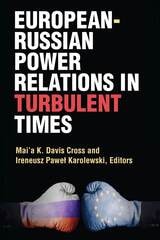
European-Russian Power Relations in Turbulent Times
Mai’a K. Davis Cross and Ireneusz Pawel Karolewski, Editors
University of Michigan Press, 2021
The volume editors’ primary goal is to illuminate the nature of the deteriorating security relationship between Europe and Russia, and the key implications for its future. While the book is timely, the editors and contributors also draw out long-term lessons from this era of diplomatic degeneration to show how increasing cooperation between two regions can devolve into rapidly escalating conflict. While it is possible that the relationship between Russia and Europe can ultimately be restored, it is also necessary to understand why it was undermined in the first place. The fact that these transformations occur under the backdrop of an uncertain transatlantic relationship makes this investigation all the more pressing.
Each chapter in this volume addresses three dimensions of the problem: first, how and why the power status quo that had existed since the end of the Cold War has changed in recent years, as evidenced by Russia’s newly aggressive posturing; second, the extent to which the EU’s power has been enabled or constrained in light of Russia’s actions; and third, the risks entailed in Europe’s reactive power—that is, the tendency to act after-the-fact instead of proactively toward Russia—in light of the transatlantic divide under Trump.