Results by title
436 books match the query 'Disability' and 17 start with e
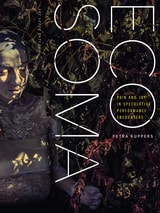
Eco Soma
Pain and Joy in Speculative Performance EncountersPetra Kuppers
University of Minnesota Press, 2022
Modeling a disability culture perspective on performance practice toward socially just futures
In Eco Soma, Petra Kuppers asks readers to be alert to their own embodied responses to art practice and to pay attention to themselves as active participants in a shared sociocultural world. Reading contemporary performance encounters and artful engagements, this book models a disability culture sensitivity to living in a shared world, oriented toward more socially just futures.
Eco soma methods mix and merge realities on the edges of lived experience and site-specific performance. Kuppers invites us to become moths, sprout gills, listen to our heart’s drum, and take starships into crip time. And fantasy is central to these engagements: feeling/sensing monsters, catastrophes, golden lines, heartbeats, injured sharks, dotted salamanders, kissing mammoths, and more. Kuppers illuminates ecopoetic disability culture perspectives, contending that disabled people and their co-conspirators make art to live in a changing world, in contact with feminist, queer, trans, racialized, and Indigenous art projects. By offering new ways to think, frame, and feel “environments,” Kuppers focuses on art-based methods of envisioning change and argues that disability can offer imaginative ways toward living well and with agency in change, unrest, and challenge.
Traditional somatics teach us how to fine-tune our introspective senses and to open up the world of our own bodies, while eco soma methods extend that attention toward the creative possibilities of the reach between self, others, and the land. Eco Soma proposes an art/life method of sensory tuning to the inside and the outside simultaneously, a method that allows for a wider opening toward ethical cohabitation with human and more-than-human others.
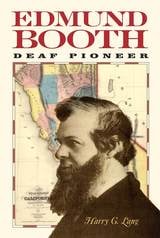
Edmund Booth
Deaf PioneerHarry G. Lang
Gallaudet University Press, 2004
Edmund Booth was born in 1810 and died in 1905, and during the 94 years of his life, he epitomized virtually everything that characterized an American legend of that century. In his prime, Booth stood 6 feet, 3 inches tall, weighed in at 210 pounds, and wore a long, full beard. He taught school in Hartford, CT, then followed his wife-to-be Mary Ann Walworth west to Anamosa, Iowa, where in 1840, he built the area’s first frame house. He pulled up stakes nine years later to travel the Overland Trail on his way to join the California Gold Rush. After he returned to Iowa in 1854, he became the editor of the Anamosa Eureka, the local newspaper. Edmund Booth fit perfectly the mold of the ingenious pioneer of 19th-century America, except for one unusual difference — he was deaf.
Edmund Booth: Deaf Pioneer follows the amazing career of this American original and his equally amazing wife in fascinating detail. Author Harry G. Lang vividly portrays Booth and his wife by drawing from a remarkable array of original material. A prolific writer, Booth corresponded with his fiancé from the American School for the Deaf in Hartford, and he kept a journal during his days on the California trail, parts of which have been reproduced here. He also wrote an autobiographical essay when he was 75, and his many newspaper articles through the years bore first-hand witness to the history of his times, from the Civil War to the advent of the 20th century.
Edmund Booth depicts a larger-than-life man in larger-than-life times, but perhaps its greatest contribution derives from its narrative about pioneer days as seen through Deaf eyes. Booth became a respected senior statesman of the American Deaf community, and blended with his stories of the era’s events are anecdotes and issues vital to Deaf people and their families. His story proves again that extraordinary people vary in many ways, but they often possess a common motive in acting to enhance their own communities.
Elements of French Deaf Heritage
Ulf Hedberg
Gallaudet University Press, 2019
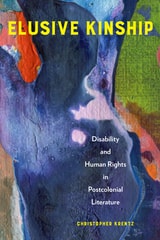
Elusive Kinship
Disability and Human Rights in Postcolonial LiteratureChristopher Krentz
Temple University Press, 2022
Characters with disabilities are often overlooked in fiction, but many occupy central places in literature by celebrated authors like Chinua Achebe, Salman Rushdie, J. M. Coetzee, Anita Desai, Jhumpa Lahiri, Edwidge Danticat, and others. These authors deploy disability to do important cultural work, writes Christopher Krentz in his innovative study, Elusive Kinship. Such representations not only relate to the millions of disabled people in the global South, but also make more vivid such issues as the effects of colonialism, global capitalism, racism and sexism, war, and environmental disaster.
Krentz is the first to put the fields of postcolonial studies, studies of human rights and literature, and literary disability in conversation with each other in a book-length study. He enhances our appreciation of key texts of Anglophone postcolonial literature of the global South, including Things Fall Apart and Midnight’s Children. In addition, he uncovers the myriad ways fiction gains energy, vitality, and metaphoric force from characters with extraordinary bodies or minds.
Depicting injustices faced by characters with disabilities is vital to raising awareness and achieving human rights. Elusive Kinship nudges us toward a fuller understanding of disability worldwide.
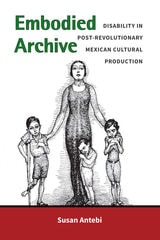
Embodied Archive
Disability in Post-Revolutionary Mexican Cultural ProductionSusan Antebi
University of Michigan Press, 2021
Embodied Archive focuses on perceptions of disability and racial difference in Mexico’s early post-revolutionary period, from the 1920s to the 1940s. In this period, Mexican state-sponsored institutions charged with the education and health of the population sought to strengthen and improve the future of the nation, and to forge a more racially homogeneous sense of collective identity and history. Influenced by regional and global movements in eugenics and hygiene, Mexican educators, writers, physicians, and statesmen argued for the widespread physical and cognitive testing and categorization of schoolchildren, so as to produce an accurate and complete picture of “the Mexican child,” and to carefully monitor and control forms of unwanted difference, including disability and racialized characteristics. Differences were not generally marked for eradication—as would be the case in eugenics movements in the US, Canada, and parts of Europe—but instead represented possible influences from a historically distant or immediate reproductive past, or served as warnings of potential danger haunting individual or collective futures.
Weaving between the historical context of Mexico’s post-revolutionary period and our present-day world, Embodied Archive approaches literary and archival documents that include anti-alcohol and hygiene campaigns; projects in school architecture and psychopedagogy; biotypological studies of urban schoolchildren and indigenous populations; and literary approaches to futuristic utopias or violent pasts. It focuses in particular on the way disability is represented indirectly through factors that may have caused it in the past or may cause it in the future, or through perceptions and measurements that cannot fully capture it. In engaging with these narratives, the book proposes an archival encounter, a witnessing of past injustices and their implications for the disability of our present and future.
Embodied Rhetorics
Disability in Language and CultureEdited by James C. Wilson and Cynthia Lewiecki-Wilson
Southern Illinois University Press, 2001
Presenting thirteen essays, editors James C. Wilson and Cynthia Lewiecki-Wilson unite the fields of disability studies and rhetoric to examine connections between disability, education, language, and cultural practices. Bringing together theoretical and analytical perspectives from rhetorical studies and disability studies, these essays extend both the field of rhetoric and the newer field of disability studies.
The contributors span a range of academic fields including English, education, history, and sociology. Several contributors are themselves disabled or have disabled family members. While some essays included in this volume analyze the ways that representations of disability construct identity and attitudes toward the disabled, other essays use disability as a critical modality to rethink economic theory, educational practices, and everyday interactions. Among the disabilities discussed within these contexts are various physical disabilities, mental illness, learning disabilities, deafness, blindness, and diseases such as multiple sclerosis and AIDS.
Employment, Disability, and the Americans with Disabilities Act
Issues in Law, Public Policy, and ResearchPeter David Blanck
Northwestern University Press, 2000
Empowerment and Black Deaf Persons
Lindsay Moeletsi Dunn
Gallaudet University Press, 2024
This is the inaugural volume in the Early Papers in Deaf Studies series, which will consist of reissued works originally published by the Gallaudet University College for Continuing Education but long out of print. The aim of this series is to restore these foundational papers to the scholarly community. Empowerment and Black Deaf Persons is available in both print and open digital formats, ensuring broad access to this important contribution to the literature.
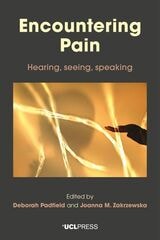
Encountering Pain
Hearing, Seeing, SpeakingEdited by Deborah Padfield and Joanna M. Zakrzewska
University College London, 2020
What is pain—and how do we communicate it? Persistent pain changes the brain and nervous system so that it can no longer warn of danger. However, despite being a major cause of disability globally, pain remains difficult to communicate. As language struggles to bridge the gap between those who suffer from pain and those who are trying to help, this book shares leading research into the potential value of visual images and non-verbal forms of communication as means of improving interactions between clinicians and their patients. Accompanied by vivid photographs co-created with those who live with pain, the volume integrates the voices of leading scientists, academics, and contemporary artists to provide a manual for understanding the meanings of pain for healthcare professionals, pain patients, students, academics, and artists.
Enhancing Diversity
Educators with DisabilitiesRonald J. Anderson
Gallaudet University Press, 1998
Epic and Lovely
A NovelMo Daviau
West Virginia University Press, 2025
Written as a deathbed letter to the UCLA physician who has tracked Nina and the other Good Thumbs throughout their lives, Nina recounts her final days with the group and with Cole, the charismatic, sadistic fellow A12er with whom she has fallen madly in love, who charms and harms her in equal measures. An unlikely alliance with a tech billionaire, the return of her estranged mother, and the birth of the baby she never thought she’d have force Nina to reckon with the triumphs and mistakes of her life and to fight to leave her child in good hands.
Every Last Breath
A Memoir of Two IllnessesJoanne Jacobson
University of Utah Press, 2020
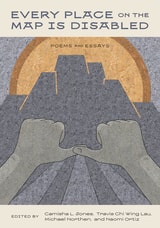
Every Place on the Map Is Disabled
Poems and EssaysCamisha L. Jones, Michael Northen, Naomi Ortiz, and Travis Chi Wing Lau
Northwestern University Press, 2026
An anthology of poems and essays by and celebrating Disabled writers
Declaring that Disabled people exist, innovate, thrive, and persevere, Every Place on the Map Is Disabled imagines the world we deserve. Its contributors spotlight the wisdom Disabled people embody from living within and navigating the economic and medical systems, communities, and families that often oppress their existence. This anthology is an intersectional compass pointing to the creative ways Disabled people build bridges to each other through Disability poetics and perspectives.
The contributing poets write about love, resistance, loss, pain, beauty, and culture. They capture tender and life-affirming moments where one Disabled person recognizes themself in another. The essays illustrate how Disability poetics suggest avenues for embracing the full spectrum of disability experiences. Every Place on the Map Is Disabled offers students, scholars, members of disability communities, and any reader a direction for paving a wider path toward a collective survival.
Exile and Pride
Disability, Queerness, and LiberationEli Clare
Duke University Press, 2015
Exit, Miss Saigon
An American MemoirDavid Mura
University of Minnesota Press, 2026
A profound memoir of coming to terms with a lost racial identity
David Mura was well into his twenties when he began to explore his Asian American identity. His Japanese American parents had been incarcerated in internment camps during World War II, and in response to their traumatic experience, they abandoned their Japanese roots to try to assimilate into white, middle-class America. As a result, Mura was raised to consider himself as a white person, and his journey toward understanding and accepting his Asianness was a fraught road—one that left many fractured relationships in its wake. In Exit, Miss Saigon, Mura writes with frank openness about his personal experiences and the irrevocable ways they are rooted in the internalized, systemic racism that permeates American culture.
Starting out as a young poet in Minneapolis working toward a PhD, Mura avoided reading “minority literature,” yearning instead to be like famed poets in their ivory towers—Robert Lowell, Randall Jarrell, John Berryman, artists tortured by their families and personal demons rather than by politics or race. As Mura began to read more widely, his conceptions of race and its societal construction began to broaden. When the Ordway Theater in St. Paul, Minnesota, staged a presentation of Miss Saigon in 1992, Mura published “Secrets and Anger” in Mother Jones, a scathing critique of the play’s racist undertones and the arguments he’d been having with white artist friends about it. As a result, Mura was ostracized from the local, dominantly white writing community, yet in its place he found a deeper connection with other BIPOC writers and eventually started an Asian American arts organization in the Twin Cities.
Far more than a personal memoir, Exit, Miss Saigon is a clear-eyed examination of issues affecting Asian Americans: anti-Asian hate crimes during the pandemic, affirmative action, racial and sexual stereotypes in the media, interracial relationships and raising mixed-race children, the legacy of Japanese American internment, and the shortfalls of therapy in addressing race. Mura excavates the deep-seated racist stereotypes thrust on those perceived as “other” (read: nonwhite people) and works to uncover a more authentic, liberatory path to defining personal identity.
Retail e-book files for this title are screen-reader friendly.
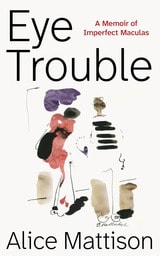
Eye Trouble
A Memoir of Imperfect MaculasAlice Mattison
Northwestern University Press, 2027
A candid and enlightening account of life with flawed vision
Alice Mattison observes the world differently: Her sight has been altered by a progressive eye disease. Mattison had hints early in life of something amiss when reading became difficult, and she was diagnosed in her forties with a rare form of macular degeneration—a disease that gradually destroyed her central vision in one eye. Years later, another form of the same disease threatened her other eye, further altering her sight. Her eye ailments affect relationships with friends, students, doctors, her partner—and especially with herself. Mattison asks questions that apply to all of us, whether or not we live with imperfect vision: What can we learn from a medical problem? How do we determine how bad it is? Who gets to decide that—our family and friends, our doctors, or we ourselves? And, perhaps most challenging of all, what good can come of disease?

Eyes like Mine
A Memoir between Blindness and SightTalea Anderson
Temple University Press, 2027
Talea Anderson is a person with low vision. Although she passes as sighted, she feels she has a “blind identity.” Eyes like Mine is her candid and revealing memoir detailing her experience grappling with partial vision and the isolation and loneliness that this often brings. Anderson expresses a longing for connection and community, especially with those who live in the space between sight and blindness.
Eyes like Mine examines ideas of disability as Anderson understands the nature of her blindness and sight and how that has evolved over her life. She relates her experiences to historical figures with low or partial vision, including painter Claude Monet, disability advocate Helen Keller, and musician and composer Maria Theresia von Paradis, among others.
Writing eloquently about her surgeries, and others’ efforts to “fix her,” Anderson captures her experience with disability with confidence and self-reflexive humor. Eyes like Mine does not speak for all blind people or others with partial vision. Instead, Anderson investigates how disabled people think about their relationship with disability and how they identify.