Results by title
281 books match the query 'Disease & Health Issues' and 6 start with e
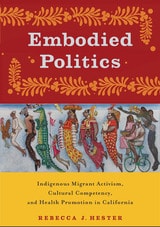
Embodied Politics
Indigenous Migrant Activism, Cultural Competency, and Health Promotion in CaliforniaRebecca J. Hester
Rutgers University Press, 2022
Embracing Age
How Catholic Nuns Became Models of Aging WellAnna I. Corwin
Rutgers University Press, 2021
Embracing Age: How Catholic Nuns Became Models of Aging Well examines a community of individuals whose aging trajectories contrast mainstream American experiences. In mainstream American society, aging is presented as a “problem,” a state to be avoided as long as possible, a state that threatens one’s ability to maintain independence, autonomy, control over one’s surroundings. Aging “well” (or avoiding aging) has become a twenty-first century American preoccupation. Embracing Age provides a window into the everyday lives of American Catholic nuns who experience longevity and remarkable health and well-being at the end of life. Catholic nuns aren’t only healthier in older age, they are healthier because they practice a culture of acceptance and grace around aging. Embracing Age demonstrates how aging in the convent becomes understood by the nuns to be a natural part of the life course, not one to be feared or avoided. Anna I. Corwin shows readers how Catholic nuns create a cultural community that provides a model for how to grow old, decline, and die that is both embedded in American culture and quite distinct from other American models.
Instructor's Guide is available at no cost (https://www.rutgersuniversitypress.org/media/wysiwyg/documents/corwin_instructor_guide_final.pdf).
Open access edition funded by the National Endowment for the Humanities.
The text of this book is licensed under a Creative Commons Attribution NonCommercial-NoDerivatives 4.0 International License: https://creativecommons.org/licenses/by-nc-nd/4.0/
Download open access ebook here (https://www.rutgersuniversitypress.org/media/wysiwyg/documents/embracing_age_open_access.pdf).
Emergency
COVID-19 and the Uneven Valuation of LifeClaire Laurier Decoteau
University of Chicago Press, 2024
The COVID-19 pandemic inaugurated a state of emergency unprecedented for most Americans. Some could observe this emergency from the relative safety of their homes, but those in marginalized communities, without access to the same privileges, were forced to risk their health and well-being.
In Emergency, sociologist Claire Laurier Decoteau documents and theorizes the emergencies of COVID-19 by looking at the experiences of Chicagoans and the policies that shaped their lives. She describes the uneven racial impact of COVID-19 on Black and Latinx Chicagoans as a crisis within a crisis, caused by a convergence of emergencies: a state of emergency that protected white supremacy and wealth, the slow emergencies racially marginalized populations have faced for decades due to the long-term gutting of care infrastructure and deindustrialization, and the sacrifice “essential workers” were asked to make to protect the United States economy. As Decoteau shows, the city’s “racial equity” project used data to determine which communities would be given scarce resources, but once positivity or death rates declined, resources were retracted and redistributed elsewhere. City officials thus attempted to manage these converging emergencies by manipulating epidemiological data and orchestrating systems for interpreting that data. Decoteau makes clear that the emergencies precipitated by COVID-19 long predated the pandemic, and that we will continue to live with their compounding crises if we do not tackle their structural underpinnings.
Emergency
Reading the Popol Vuh in a Time of CrisisEdgar Garcia
University of Chicago Press, 2022
Written during the lockdown in Chicago in the depths of the COVID-19 pandemic, these essays consider the Popol Vuh as a work that was also written during a time of feverish social, political, and epidemiological crisis as Spanish missionaries and colonial military deepened their conquest of indigenous peoples and cultures in Mesoamerica. What separates the Popol Vuh from many other creation texts is the disposition of the gods engaged in creation. Whereas the book of Genesis is declarative in telling the story of the world’s creation, the Popol Vuh is interrogative and analytical: the gods, for example, question whether people actually need to be created, given the many perfect animals they have already placed on earth.
Emergency uses the historical emergency of the Popol Vuh to frame the ongoing emergencies of colonialism that have surfaced all too clearly in the global health crisis of COVID-19. In doing so, these essays reveal how the authors of the Popol Vuh—while implicated in deep social crisis—nonetheless insisted on transforming emergency into scenes of social, political, and intellectual emergence, translating crisis into creativity and world creation.
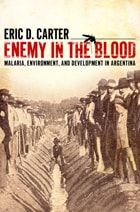
Enemy in the Blood
Malaria, Environment, and Development in ArgentinaEric D. Carter
University of Alabama Press, 2012
Tracing the Fight Against Malaria and the Making of Modern Argentina.
Enemy in the Blood: Malaria, Environment, and Development in Argentina examines the dramatic yet mostly forgotten history of malaria control in northwest Argentina. Carter traces the evolution of malaria science and policy in Argentina from the disease’s emergence as a social problem in the 1890s to its effective eradication by 1950. Malaria-control proponents saw the campaign as part of a larger project of constructing a modern identity for Argentina. Insofar as development meant building a more productive, rational, and hygienic society, the perceptions of a culturally backwards and disease-ridden interior prevented Argentina from joining the ranks of “modern” nations. The path to eradication, however, was not easy due to complicated public health politics, inappropriate application of foreign malaria control strategies, and a habitual misreading of the distinctive ecology of malaria in the northwest, especially the unique characteristics of the local mosquito vector. Homegrown scientific expertise, a populist public health agenda, and an infusion of new technologies eventually brought a rapid end to malaria’s scourge, if not the cure for regional underdevelopment.
Enemy in the Blood sheds light on the often neglected history of northwest Argentina’s interior, adds to critical perspectives on the history of development and public health in modern Latin America, and demonstrates the merits of integrative social-environmental research.
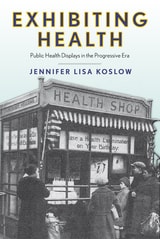
Exhibiting Health
Public Health Displays in the Progressive EraJennifer Lisa Koslow
Rutgers University Press, 2020