Results by title
154 books match the query 'East' and 11 start with e
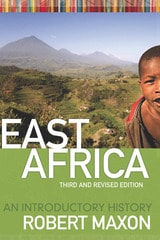
East Africa
An Introductory HistoryRobert Maxon
West Virginia University Press, 2009
In this third edition of East Africa: An Introductory History, Robert M. Maxon revisits the diverse eastern region of Africa, including the modern nations of Kenya, Tanzania, and Uganda. With revised sections and a new preface, this comprehensive text surveys East Africa’s political, economic, and social history from pre-colonial to modern times. Maxon reveals the physical movement and societal development of and between ethnic groups before the 1890s; the capitalistic impact of European colonialism in the early nineteenth century; and the achievement and aftermath of independence in East Africa during the later part of this century.
East Africa: An Introductory History, 3rd and Revised Edition offers the student and scholar:
• the only revision of this title in over a decade
• a complete index and glossary of African terms that promote an effortless navigation of the complex history of this region
• over twenty maps and diagrams that provide visual depictions of the development of eastern Africa
• detailed geographical and topographical analysis that supplement the historical scope and investigation of this region
East Africa: An Introductory History documents the transformation of East Africa from the Stone Age to the first decade of the twenty-first century. The book is ideal for any reader interested in unraveling the intricate history of this East Africa, and especially for students coming to the study of this region for the first time.
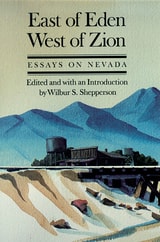
East Of Eden, West Of Zion
Essays On NevadaWilbur S. Shepperson
University of Nevada Press, 1989
A collection of essays in which a dozen historians and novelists present their impressions and concerns about "end of the century Nevada." Human expectations and illusions are seen as a backdrop for today's Nevada as a new human frontier. As an overview of Nevada society, this study deals with culture as well as economics, with tradition as well as rapid population growth. The essayists inquire whether the friction between acquisition and preservation, quick wealth and refined sensitivity, will build a more humane and enlightened society.

East of East
The Making of Greater El MonteRomeo Guzmán
Rutgers University Press, 2020
Enemies from the East?
V. S. Soloviev on Paganism, Asian Civilizations, and IslamEdited by Vladimir Wozniuk
Northwestern University Press, 2007
The six essays comprising this book span Soloviev’s publishing career, beginning with “The Mythological Process in Ancient Paganism,” written at the age of twenty, and ending with “Muhammad, His Life and Religious Teaching,” which appeared four years before Soloviev’s death at forty-seven. Throughout, Soloviev grapples with commonalities and differences apparent in the moral frameworks of civilizations since antiquity; and in religious and cultural practices, from Europe through the Middle East to Asia. His probing of the sources of religious morality and political authority in human history reinvigorated Russian intellectual interest in the East/West question in his time and still resonates powerfully in our own.
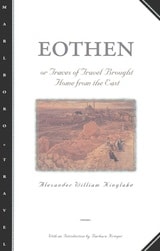
Eothen
Traces of Travel Brought Home from the EastAlexander William Kinglake
Northwestern University Press, 1997
Eothen has the freshness of the immediate and the new. Kinglake kept it free of the details of geography, history, science, politics, religion, and statistics; it is far less about the countries and the cities he passes through that it is about himself. This is what makes Eothen a modern travel book, possibly the first and certainly one of the greatest of its kind.
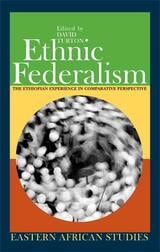
Ethnic Federalism
The Ethiopian Experience in Comparative PerspectiveDavid Turton
Ohio University Press, 2006
Since 1991, Ethiopia has gone further than any other country in using ethnicity as the fundamental organizing principle of a federal system of government. And yet this pioneering experiment in “ethnic federalism” has been largely ignored in the growing literature on democratization and ethnicity in Africa and on the accommodation of ethnic diversity in democratic states. Ethnic Federalism brings a much-needed comparative dimension to the discussion of this experiment in Ethiopia.
Ethnic Federalism closely examines aspects of the Ethiopean case and asks why the use of territorial decentralism to accommodate ethnic differences has been generally unpopular in Africa, while it is growing in popularity in the West.
The book includes case studies of Nigerian and Indian federalism and suggests how Ethiopia might learn from both the failures and successes of these older federations. In the light of these broader issues and cases, it identifies the main challenges facing Ethiopia in the next few years, as it struggles to bring political practice into line with constitutional theory and thereby achieve a genuinely federal division of powers.
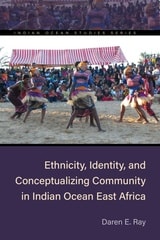
Ethnicity, Identity, and Conceptualizing Community in Indian Ocean East Africa
Daren E. Ray
Ohio University Press, 2023
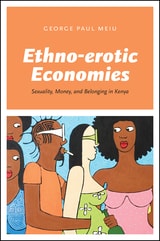
Ethno-erotic Economies
Sexuality, Money, and Belonging in KenyaGeorge Paul Meiu
University of Chicago Press, 2017
George Paul Meiu uses his deep familiarity with the communities these men come from to explore the long-term effects of markets of ethnic culture and sexuality on a wide range of aspects of life in rural Kenya, including kinship, ritual, gender, intimate affection, and conceptions of aging. What happens to these communities when young men return with such surprising wealth? And how do they use it to improve their social standing locally? By answering these questions, Ethno-erotic Economies offers a complex look at how intimacy and ethnicity come together to shape the pathways of global and local trade in the postcolonial world.

European Energy Challenge
East and WestGeorge W. Hoffman
Duke University Press, 1985

Exit-Voice Dynamics and the Collapse of East Germany
The Crisis of Leninism and the Revolution of 1989Steven Pfaff
Duke University Press, 2006
East Germany was the first domino to fall when the Soviet bloc began to collapse in 1989. Its topple was so swift and unusual that it caught many area specialists and social scientists off guard; they failed to recognize the instability of the Communist regime, much less its fatal vulnerability to popular revolt. In this volume, Steven Pfaff identifies the central mechanisms that propelled the extraordinary and surprisingly bloodless revolution within the German Democratic Republic (GDR). By developing a theory of how exit-voice dynamics affect collective action, Pfaff illuminates the processes that spurred mass demonstrations in the GDR, led to a peaceful surrender of power by the hard-line Leninist elite, and hastened German reunification. While most social scientific explanations of collective action posit that the option for citizens to emigrate—or exit—suppresses the organized voice of collective public protest by providing a lower-cost alternative to resistance, Pfaff argues that a different dynamic unfolded in East Germany. The mass exit of many citizens provided a focal point for protesters, igniting the insurgent voice of the revolution.
Pfaff mines state and party records, police reports, samizdat, Church documents, and dissident manifestoes for his in-depth analysis not only of the genesis of local protest but also of the broader patterns of exit and voice across the entire GDR. Throughout his inquiry, Pfaff compares the East German rebellion with events occurring during the same period in other communist states, particularly Czechoslovakia, China, Poland, and Hungary. He suggests that a trigger from outside the political system—such as exit—is necessary to initiate popular mobilization against regimes with tightly centralized power and coercive surveillance.

Experiments in the Dark
Visualizing Capital Art Studio, ZanzibarPamila Gupta
University of Michigan Press, 2027
What kind of history are photographs? Experiments in the Dark explores this question through the lens of a twentieth-century East African Indian Ocean photo studio collection, Capital Arts Studio (CAS), and its proprietors Ranchhod and Rohit Oza in Stone Town, Zanzibar. Pamila Gupta gathers and reads a range of photographs and genres from the studio, exploring how they relate to Zanzibar’s vibrant visual cultures during the Omani sultanate, British colonial, and postrevolution periods. Gupta’s reading of this little-known photographic archive brings the work into a broader historical context of the Indian Ocean in a visual archive that has endured despite the forces of history.
Through a blend of archival reconstruction and curation, personal reflection, and interviews with Rohit Oza, the son of the studio’s founder Ranchhod Oza, Gupta focuses on the construction and curation of the CAS collection and what this archive can tell us about the South Asian and Goan diasporas, the wider Indian Ocean world, African fashion, urban lives, and image making in Zanzibar from 1930 to 2024.