Results by title
300 books match the query 'Economic Development' and 40 start with e
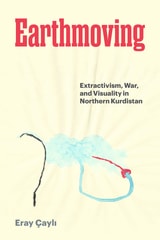
Earthmoving
Extractivism, War, and Visuality in Northern KurdistanEray Çayli
University of Texas Press, 2025
Focuses on contemporary art and media to examine the role of visuals in environmental violence and war in Northern Kurdistan.
Extractivism—exploiting the earth for resources—has long driven racial capitalism and colonialism. And yet, how does extractivism operate in a world where ecological and humanitarian sensibilities are unprecedentedly widespread? Eray Çaylı argues it does so by mobilizing these sensibilities in new ways. Extractivism is no longer only about moving the earth—displacing peoples, fossils, minerals, and waters—but also leaving those who witness this violent displacement sentimentally moved.
Earthmoving conceptualizes this duality. Derived from Çaylı’s years-long work in Northern Kurdistan, home to the world’s largest stateless nation—rendered stateless by colonial policies since the nineteenth century—Earthmoving focuses on the 2010s, a decade that began with peace talks between Turkey and the Kurdish liberation movement but ended with war. The decade saw extractivism intensify in the region and images of its harm proliferate across art and media. Together with contemporary artists, Çaylı shows that images challenge extractivism both by making its harm visible and by fostering self-reflexive and reciprocal collaboration that breaks with its valuation of the colonized and the racialized only in quantifiable and marketable terms.
Ecology Control and Economic Development in East African History
The Case of Tanganyika, 1850–1950Helge Kjekshus
Ohio University Press, 1995
The book puts people at the centre of events. It thus serves as a modification to nationalist history with its emphasis on leaders. It presents environmental factors that had been underestimated; for instance, it points to the critical importance of the rinderpest outbreak.
Helge Kjekshus provides evidence to suggest that the nineteenth century was a period of relative prosperity with well-developed trade. He questions the view that warfare was pervasive and that the slave trade led to depopulation. He points to a balance between man and the environment.
This book is reissued at the same time as the first publication of Custodians of the Land: Ecology and Culture in the History of Tanzania edited by Gregory Maddox, James I. Giblin and Isaria N. Kimambo. The footnotes in that book point to the importance of the work of Helge Kjekshus.
Economic Analysis and Infrastructure Investment
Edited by Edward L. Glaeser and James M. Poterba
University of Chicago Press, 2021
Economic Analysis and Infrastructure Investment explores the links between infrastructure investment and economic outcomes, analyzing key economic issues in the funding and management of infrastructure projects. It includes new research on the short-run stimulus effects of infrastructure spending, develops new estimates of the stock of US infrastructure capital, and explores incentive aspects of public-private partnerships with particular attention to their allocation of risk. The volume provides a reference for researchers seeking to study infrastructure issues and for policymakers tasked with determining the appropriate level and allocation of infrastructure spending.
Economic Development and Cultural Change, volume 69 number 3 (April 2021)
The University of Chicago Press
University of Chicago Press Journals, 2021

Economic Development and Cultural Change, volume 69 number 4 (July 2021)
The University of Chicago Press
University of Chicago Press Journals, 2021
Economic Development and Cultural Change, volume 70 number 1 (October 2021)
The University of Chicago Press
University of Chicago Press Journals, 2021
Economic Development and Cultural Change, volume 70 number 2 (January 2022)
The University of Chicago Press
University of Chicago Press Journals, 2022
Economic Development and Cultural Change, volume 70 number 3 (April 2022)
The University of Chicago Press
University of Chicago Press Journals, 2022
Economic Development and Cultural Change, volume 70 number 4 (July 2022)
The University of Chicago Press
University of Chicago Press Journals, 2022
Economic Development and Cultural Change, volume 71 number 1 (October 2022)
The University of Chicago Press
University of Chicago Press Journals, 2022
Economic Development and Cultural Change, volume 71 number 2 (January 2023)
The University of Chicago Press
University of Chicago Press Journals, 2023
Economic Development and Cultural Change, volume 71 number 3 (April 2023)
The University of Chicago Press
University of Chicago Press Journals, 2023
Economic Development and Cultural Change, volume 71 number 4 (July 2023)
The University of Chicago Press
University of Chicago Press Journals, 2023
Economic Development and Cultural Change, volume 72 number 1 (October 2023)
The University of Chicago Press
University of Chicago Press Journals, 2023
Economic Development and Cultural Change, volume 72 number 2 (January 2024)
The University of Chicago Press
University of Chicago Press Journals, 2024
Economic Development and Cultural Change, volume 72 number 3 (April 2024)
The University of Chicago Press
University of Chicago Press Journals, 2024
Economic Development and Cultural Change, volume 72 number 4 (July 2024)
The University of Chicago Press
University of Chicago Press Journals, 2024
Economic Development and Cultural Change, volume 73 number 1 (October 2024)
The University of Chicago Press
University of Chicago Press Journals, 2024
Economic Development and Cultural Change, volume 73 number 2 (January 2025)
The University of Chicago Press
University of Chicago Press Journals, 2025
Economic Development and Cultural Change, volume 73 number 3 (April 2025)
The University of Chicago Press
University of Chicago Press Journals, 2025
Economic Development and Cultural Change, volume 73 number 4 (July 2025)
The University of Chicago Press
University of Chicago Press Journals, 2025
Economic Development and Cultural Change, volume 74 number 1 (October 2025)
The University of Chicago Press
University of Chicago Press Journals, 2025
Economic Development and Cultural Change, volume 74 number 2 (January 2026)
The University of Chicago Press
University of Chicago Press Journals, 2026
Economic Development and Cultural Change, volume 74 number 3 (April 2026)
The University of Chicago Press
University of Chicago Press Journals, 2026
Economic Development and Cultural Change, volume 74 number 4 (July 2026)
The University of Chicago Press
University of Chicago Press Journals, 2026
Economic Development and Cultural Change, volume 75 number 1 (October 2026)
The University of Chicago Press
University of Chicago Press Journals, 2026
Economic Development
The History of an IdeaH. W. Arndt
University of Chicago Press, 1989

Economic Organizations and Social Systems
Robert A. Solo
University of Michigan Press, 2000
Economic Policy Making in Mexico
Factors Underlying the 1982 CrisisRobert Looney
Duke University Press, 1985
Economic Policy Reform
The Second StageEdited by Anne O. Krueger
University of Chicago Press, 2000
Economic Policy Reform: The Second Stage provides an incisive overview of the context of these crucial second-stage reforms with a thorough examination of the issues confronting the policymakers involved. Edited by Anne O. Krueger, it features studies from distinguished experts in various fields of economics. Each chapter of this book addresses a key issue in economic policy, examines the progress of reforms in the markets considered, and then explores what research might further aid leaders as they embark on fundamental changes.
Both a handbook for economists and practitioners and a theoretical exploration of the most significant challenges currently facing the economic world, this new book will be indispensable to anyone involved in the global economic scene.
Contributors:
Vittorio Corbo
Cimon Cowan
Sebastian Edwards
Stephan Haggard
Michael Kremer
Steven Matusz
Frederic S. Mishkin
Jonathan Morduch
Roger G. Noll
Miguel A. Savastano
T. Paul Shultz
Mary M. Shirley
T.N. Srinivasan
Joseph E. Stiglitz
Vito Tanzi
David Tarr
Aaron Tornell
Economic Policy Reforms and the Indian Economy
Edited by Anne O. Krueger
University of Chicago Press, 2002
Economic Policy Reforms and the Indian Economy evaluates the effects of those changes and identifies areas of the Indian economy still in urgent need of reform. After an overview of Indian economic policies and development since independence, papers focus on the country's fiscal situation, the environment for private economic activity, education, the reservation of certain activities for small-scale industry, and determinants of differentials in rates of growth across the different Indian states. Contributors include respected academic specialists on India and policy reform, high-level Indian administrators, and present and past policymakers.

Economic Reform in China
Problems and ProspectsJames A. Dorn and Wang Xi
University of Chicago Press, 1990
These clearly written and insightful essays address the roots of China's crisis. The authors focus on institutional changes necessary for a spontaneous market order and point to the close relation between economic reform and political-constitutional reform. Topics include the speed and degree of the transition, whether ownership reform must precede price reform, how inflation can be avoided, steps to depoliticize economic life, how to create an environment conducive to foreign trade and investment, and how to institute basic constitutional change and open China to the outside world.
The revolutionary changes now shaking the foundations of socialism and central planning in the Soviet Union and Eastern and Central Europe are sure to have an impact on China's future. Despite their seriousness, the events of Tiananmen Square may constitute only a temporary detour on the road toward a private market order. The essays in this volume help lay a rational framework for understanding China's present problems and for discussing the prospects for future reform.

Economic and Monetary Sovereignty in 21st Century Africa
Maha Ben Gadha
Pluto Press, 2021
Over forty years after the formal end of colonialism, suffocating ties to Western financial systems continue to prevent African countries from achieving any meaningful monetary sovereignty.
Economic and Monetary Sovereignty in 21st Century Africa traces the recent history of African monetary and financial dependencies, looking at the ways African nations are resisting colonial legacies. Using a comparative, multi-disciplinary approach, this book uncovers what went wrong after the Pan-African approaches that defined the early stages of independence, and how most African economies fell into the firm grip of the IMF, World Bank, and the EU’s strict neoliberal policies.
This collection is the first to offer a wide-ranging, comparative and historical look at how African societies have attempted to increase their policy influence and move beyond neoliberal orthodoxy and US-dollar dependency. Economic and Monetary Sovereignty in 21st Century Africa is essential reading for anyone interested in the African quest for self-determination in a turbulent world of recurring economic and financial crises.
Egalitarian Capitalism
Jobs, Incomes, and Growth in Affluent CountriesLane Kenworthy
Russell Sage Foundation, 2004
Elites and Economic Development
Comparative Studies on the Political Economy of Latin American CitiesBy John Walton
University of Texas Press, 1977
This book is a detailed comparative analysis of development politics in four urban regions of Latin America, two in Mexico and two in Colombia. John Walton has based his studies on the assumption that the problems of economic growth are essentially political, that is, are problems of choice, decision-making, and the exercise of power. His fundamental purpose has been to discover how elites of different kinds are more and less successful in the promotion of economic development, which he defines as a process in the organization of a society leading not only to higher levels of efficient output but also to a more equitable distribution of benefits.
At the time, the four cities compared were the second- and third-largest metropolitan areas in each country, Guadalajara and Monterrey in Mexico, Medellín and Cali in Colombia. This selection allows the author to pair, across countries, cases of early and large-scale industrialization (Monterrey and Medellín) with cases of more recent industrial growth in agricultural-commercial centers (Guadalajara and Cali). Walton presents historical introductions to each of the regions and integrates these with original fieldwork and interviews with more than three hundred members of the political and economic elites.
The findings are extensive, but in general they demonstrate that where political and economic power is more broadly distributed, where elites are more open and accessible, and where organizational life is more active and coordinated, regions tend to develop qualitatively as well as quantitatively, showing increases both in productivity and in such benefits as public services, housing, education, and a more balanced distribution of income. If these characteristics are absent, regions may be industrialized but do not provide a broad sharing of the benefits. Walton places a good deal of emphasis on the role of foreign investments, demonstrating that the more penetrated regions are also the less developed.
Finally, the results of these studies are used to evaluate and advance theories of underdevelopment and particularly of economic dependency.

Empire State-Building
War and Welfare in Kenya, 1925–1952Joanna Lewis
Ohio University Press, 2001
This history of administrative thought and practice in colonial Kenya looks at the ways in which white people tried to engineer social change.
It asks four questions:
- Why was Kenya’s welfare operation so idiosyncratic and spartan compared with that of other British colonies?
- Why did a transformation from social welfare to community development produce further neglect of the very poor?
- Why was there no equivalent to the French tradition of community medicine?
- If there was a transformatory element of colonial rule that sought to address poverty, where and why did it fall down?
The answers offer revealing insight into the dynamics of rule in the late colonial period in Kenya.
Entrepreneurship, Technological Innovation, and Economic Growth
Studies in the Schumpeterian TraditionFrederic M. Scherer and Mark Perlman, Editors
University of Michigan Press, 1992

Ethics of Environment and Development
Global Challenge, International ResponseJ. Ronald Engel
University of Arizona Press, 1990
Ethics, Business and Capitalism
Thailand and Indonesia in an Asian PerspectiveEdited by Janet Hunter, Patnaree Srisuphaolarn, Pierre van der Eng, and Julia Yongue
National University of Singapore Press, 2024
Taking cues from the Japanese concept of ethical or stakeholder capitalism, this book demonstrates how the business activities of firms in Thailand and Indonesia are guided by their perceptions of morality in society and their concerns about the environment. The authors explore the likelihood that foreign influences contributed to the development of such management philosophies, for example through the expansion of Japanese subsidiary firms in the 1980s or the spread of foreign articulations of the concept of corporate social responsibility (CSR) since the 2000s. Companies in both countries may exercise a degree of pragmatism in how they develop these activities. As the authors reveal, the perceptions of morality in business that have shaped many entrepreneurs and companies in Thailand and Indonesia are their responses to the dynamic political, social, and economic factors that have formed the business environments of both countries.
Explaining Process and Change
Approaches to Evolutionary EconomicsUlrich Witt, Editor
University of Michigan Press, 1992