Results by title
453 books match the query 'Economic policy' and 29 start with e

Economic Adjustment and Reform in Eastern Europe and the Soviet Union
Essays in Honor of Franklyn D. HolzmanJosef C. Brada, Ed A. Hewett, and Thomas Wolf, eds.
Duke University Press, 1988
The contributions to this volume reflect the recent research on this issue by various specialists on the economies of the Soviet Union and Eastern Europe. Each author emphasizes macroeconomic stabilization, structural adjustment, participation in the larger world economy, or ecomonic reform.
Economic Development
The History of an IdeaH. W. Arndt
University of Chicago Press, 1989
Economic Interdependence and International Conflict
New Perspectives on an Enduring DebateEdward D. Mansfield and Brian M. Pollins, Editors
University of Michigan Press, 2003
Edward D. Mansfield is Hum Rosen Professor of Political Science and Co-Director of the Christopher H. Browne Center for International Politics at the University of Pennsylvania.
Brian M. Pollins is Associate Professor of Political Science at Ohio State University and a Research Fellow at the Mershon Center.
Economic Performance in the Nordic World
Torben M. Andersen
University of Wisconsin Press, 2021
Economist Torben M. Andersen shows how the Nordic model rests on two pillars: the social safety net, which offers income compensation to the majority of those unable to support themselves, and the provision of services like education, childcare, and healthcare to all. The Nordic model can be characterized as one of employment, since its financial viability rests on a high labor participation rate with few working poor.
Andersen lays out the structure of the model and highlights factors important for understanding its economic performance. He then looks into specific policy areas based on Denmark's experiences regarding labor market policies (flexicurity), pension systems, and preparation for an aging population; and addresses the challenges arising from new technologies and globalization.
Economic Policy Beyond the Headlines
George P. Shultz and Kenneth W. Dam
University of Chicago Press, 1998
"A model of brevity and lucidity . . . [Economic Policy Beyond the Headlines] incorporates a unique and rewarding blend of economic reasoning with a high level of political awareness . . . enriched by the wide personal experience in government of the authors."—Albert T. Sommers, Across the Board
"[Shultz and Dam] help foreign readers to understand why the world looks so different from Washington. . . . This book should provide the model."—The Economist
"A wise and valuable book showing great insight into the realities of economic policy making."—Henry A. Kissinger
Economic Policy Making in Mexico
Factors Underlying the 1982 CrisisRobert Looney
Duke University Press, 1985
Economic Policy Reform
The Second StageEdited by Anne O. Krueger
University of Chicago Press, 2000
Economic Policy Reform: The Second Stage provides an incisive overview of the context of these crucial second-stage reforms with a thorough examination of the issues confronting the policymakers involved. Edited by Anne O. Krueger, it features studies from distinguished experts in various fields of economics. Each chapter of this book addresses a key issue in economic policy, examines the progress of reforms in the markets considered, and then explores what research might further aid leaders as they embark on fundamental changes.
Both a handbook for economists and practitioners and a theoretical exploration of the most significant challenges currently facing the economic world, this new book will be indispensable to anyone involved in the global economic scene.
Contributors:
Vittorio Corbo
Cimon Cowan
Sebastian Edwards
Stephan Haggard
Michael Kremer
Steven Matusz
Frederic S. Mishkin
Jonathan Morduch
Roger G. Noll
Miguel A. Savastano
T. Paul Shultz
Mary M. Shirley
T.N. Srinivasan
Joseph E. Stiglitz
Vito Tanzi
David Tarr
Aaron Tornell
Economic Policy Reforms and the Indian Economy
Edited by Anne O. Krueger
University of Chicago Press, 2002
Economic Policy Reforms and the Indian Economy evaluates the effects of those changes and identifies areas of the Indian economy still in urgent need of reform. After an overview of Indian economic policies and development since independence, papers focus on the country's fiscal situation, the environment for private economic activity, education, the reservation of certain activities for small-scale industry, and determinants of differentials in rates of growth across the different Indian states. Contributors include respected academic specialists on India and policy reform, high-level Indian administrators, and present and past policymakers.
Economic Policy, Exchange Rates, and the International System
W. Max Corden
University of Chicago Press, 1994
Exchange Rates, and the World Economy, this book addresses topics in
international macroeconomics that have come to the forefront of economic
policy debates in recent years. Covering exchange rate policy, the
European Monetary System, protection and competition, and the
international "non-system" since the collapse of Bretton Woods, Corden
provides a probing analysis of significant economic trends associated
with the increasing integration of the world capital market.
Beginning with essays on exchange rate policy, the current account, and
external effects of fiscal policy, Corden lays out the foundations of
balance-of-payments theory in relation to wage rates, income
distribution, and inflation. Chapters on the European Monetary System
focus on monetary integration and look skeptically at European proposals
to move toward monetary union. Other topical essays discuss the
"competitiveness" problem and the relation between protection and
macroeconomic policy.
Corden summarizes and clarifies a vast range of work on the coordination
of macroeconomic policies and critically reviews various proposals for
reforming the international monetary system.

Economic Reform in China
Problems and ProspectsJames A. Dorn and Wang Xi
University of Chicago Press, 1990
These clearly written and insightful essays address the roots of China's crisis. The authors focus on institutional changes necessary for a spontaneous market order and point to the close relation between economic reform and political-constitutional reform. Topics include the speed and degree of the transition, whether ownership reform must precede price reform, how inflation can be avoided, steps to depoliticize economic life, how to create an environment conducive to foreign trade and investment, and how to institute basic constitutional change and open China to the outside world.
The revolutionary changes now shaking the foundations of socialism and central planning in the Soviet Union and Eastern and Central Europe are sure to have an impact on China's future. Despite their seriousness, the events of Tiananmen Square may constitute only a temporary detour on the road toward a private market order. The essays in this volume help lay a rational framework for understanding China's present problems and for discussing the prospects for future reform.
Economic Reforms in Chile
From Dictatorship to DemocracyRicardo Ffrench-Davis
University of Michigan Press, 2002
Written in accessible and readable prose, Economic Reforms in Chile begins with an overview of the Chilean economy during the last fifty years. This historical time frame is divided into three periods of economic reform. The first period covers the Pinochet regime, during which the more orthodox neoliberalism was implemented. The second period includes the Pinochet dictatorship, during which economic policy shifted toward pragmatism, particularly in the areas of trade and finance; it also includes the crisis of 1982 and its effects. The third period begins in 1990 with the return to democratic elections and the significant reforms to prior reforms. This section also examines the search for growth-with-equity, success in investment and growth performance, macroeconomic sustainability, and the reduction of poverty. Ffrench-Davis addresses several "paradoxes," or results that defy the expectations of policymakers, in order to analyze the significance of comprehensive macroeconomic equilibrium and its implications for sustainable stability, growth, and equity.
Economic Reforms in Chile will be of interest to economists, political scientists, and policymakers involved with the economies of emerging and developing countries.
Ricardo Ffrench-Davis is Principal Regional Advisor, ECLAC, Santiago, and Professor of Economics, University of Chile.
Economic and Financial Crises in Emerging Market Economies
Edited by Martin Feldstein
University of Chicago Press, 2003
This book rises to that challenge, presenting accessible papers and commentaries on the topic not only from leading academic economists, but also from high-ranking government officials (in both industrial and developing nations), senior policymakers at international institutions, and major financial investors. Six non-technical papers, each written by a specialist in the topic, provide essential economic background, introducing sections on exchange rate regimes, financial policies, industrial country policies, IMF stabilization policies, IMF structural programs, and creditor relations. Next, personal statements from the major players give firsthand accounts of what really went on behind the scenes during the crises, giving us a rare glimpse into how international economic policy decisions are actually made. Finally, wide-ranging discussions and debates sparked by these papers and statements are summarized at the end of each section.
The result is an indispensable overview of the key issues at work in these crises, written by the people who move markets and reshape economies, and accessible to not just economists and policymakers, but also to educated general readers.
Contributors:
Montek S. Ahluwalia, Domingo F. Cavallo, William R. Cline, Andrew Crockett, Michael P. Dooley, Sebastian Edwards, Stanley Fischer, Arminio Fraga, Jeffrey Frankel, Jacob Frenkel, Timothy F. Geithner, Morris Goldstein, Paul Keating, Mervyn King, Anne O. Krueger, Roberto Mendoza, Frederic S. Mishkin, Guillermo Ortiz, Yung Chul Park, Nouriel Roubini, Robert Rubin, Jeffrey Sachs, Ammar Siamwalla, George Soros
Economic and Monetary Sovereignty in 21st Century Africa
Maha Ben Gadha
Pluto Press, 2021
Over forty years after the formal end of colonialism, suffocating ties to Western financial systems continue to prevent African countries from achieving any meaningful monetary sovereignty.
Economic and Monetary Sovereignty in 21st Century Africa traces the recent history of African monetary and financial dependencies, looking at the ways African nations are resisting colonial legacies. Using a comparative, multi-disciplinary approach, this book uncovers what went wrong after the Pan-African approaches that defined the early stages of independence, and how most African economies fell into the firm grip of the IMF, World Bank, and the EU’s strict neoliberal policies.
This collection is the first to offer a wide-ranging, comparative and historical look at how African societies have attempted to increase their policy influence and move beyond neoliberal orthodoxy and US-dollar dependency. Economic and Monetary Sovereignty in 21st Century Africa is essential reading for anyone interested in the African quest for self-determination in a turbulent world of recurring economic and financial crises.
Economics and Elections
The Major Western DemocraciesMichael S. Lewis-Beck
University of Michigan Press, 1990
Economics and Politics
The Calculus of SupportHelmut Norpoth, Michael S. Lewis-Beck, and Jean-Dominique Lafay, Editors
University of Michigan Press, 1991
Ecospeak
Rhetoric and Environmental Politics in AmericaM. Jimmie Killingsworth and Jacqueline S. Palmer
Southern Illinois University Press, 1992
In this book, M. Jimmie Killingsworth and Jacqueline S. Palmer have a twofold purpose: to analyze the patterns of rhetoric used in written discourse about environmental politics and to make a practical contribution to the art of rhetorical criticism through the study of rhetoric in use.
The language, professional objectivity, and research programs of scientists insulate these best-informed citizens in enclaves of specialization, limiting access to crucial information and hindering effective reformative action. Science, the authors stress, is not merely a database to rely upon but a view of the world that must be broadened in order to affect social morality. Science-based activism must arise to ensure the care and future of the environment.
Killingsworth and Palmer argue that for grassroots activism to be tied to this globally conscious philosophy, a rhetoric of sustainability must be cultivated.

El Paso
Local Frontiers At A Global CrossroadsVictor M. Ortiz-Gonzalez
University of Minnesota Press, 2004
A grounded and instructive analysis of the ways globalization affects a border city
Every marker of social difference can be easily interpreted in the fashionable language of “borderlands”—and if so, as Victor M. Ortiz-Gonzalez reveals, the practical reality of the border region is often grossly misrepresented and its people woefully served. He argues that amid the tantalizing abstractions generated by the sweeping reconfigurations of globalization, people in cities like El Paso and Ciudad Juárez, on the U.S.–Mexican border, are actually living the gritty realities of a new world order.
With descriptions of grassroots initiatives to confront the challenges and opportunities that NAFTA represents for the city, El Paso challenges us to acknowledge and address the conceptual and sociopolitical tasks of a world in which abstract representations and non-local interests override concrete situations. Ortiz-Gonzalez also provides an in-depth analysis of groups such as La Mujer Obrera, Unite El Paso, and the Hispanic Chamber of Commerce and their attempts to give local residents and workers more autonomy and power.Balancing ethnographic detail with precise theoretical insights, El Paso offers a compelling case study and a stirring call to understand both the conceptual challenge and the social urgency of the effects of globalization in local settings.
Elements of Econometrics
Second EditionJan Kmenta
University of Michigan Press, 1997
Throughout the book the emphasis is on simplification whenever possible, assuming the readers know college algebra and basic calculus. Jan Kmenta explains all methods within the simplest framework, and generalizations are presented as logical extensions of simple cases. And while a relatively high degree of rigor is preserved, every conflict between rigor and clarity is resolved in favor of the latter. Apart from its clear exposition, the book's strength lies in emphasizing the basic ideas rather than just presenting formulas to learn and rules to apply.
The book consists of two parts, which could be considered jointly or separately. Part one covers the basic elements of the theory of statistics and provides readers with a good understanding of the process of scientific generalization from incomplete information. Part two contains a thorough exposition of all basic econometric methods and includes some of the more recent developments in several areas.
As a textbook, Elements of Econometrics is intended for upper-level undergraduate and master's degree courses and may usefully serve as a supplement for traditional Ph.D. courses in econometrics. Researchers in the social sciences will find it an invaluable reference tool.
A solutions manual is also available for teachers who adopt the text for coursework.
Jan Kmenta is Professor Emeritus of Economics and Statistics, University of Michigan.
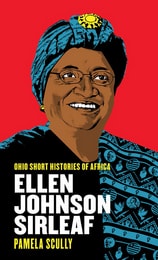
Ellen Johnson Sirleaf
Pamela Scully
Ohio University Press, 2016
In this timely addition to the Ohio Short Histories of Africa series, Pamela Scully takes us from the 1938 birth of Nobel Peace Prize winner and two-time Liberian president Ellen Johnson through the Ebola epidemic of 2014–15. Charting her childhood and adolescence, the book covers Sirleaf’s relationship with her indigenous grandmother and urban parents, her early marriage, her years studying in the United States, and her career in international development and finance, where she developed her skill as a technocrat. The later chapters cover her years in and out of formal Liberian politics, her support for women’s rights, and the Ebola outbreak.
Sirleaf’s story speaks to many of the key themes of the twenty-first century. Among these are the growing power of women in the arenas of international politics and human rights; the ravaging civil wars in which sexual violence is used as a weapon; and the challenges of transitional justice in building postconflict societies. Ellen Johnson Sirleaf is an astute examination of the life of a pioneering feminist politician.
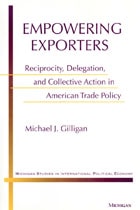
Empowering Exporters
Reciprocity, Delegation, and Collective Action in American Trade PolicyMichael J. Gilligan
University of Michigan Press, 1997
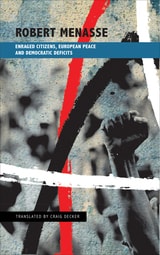
Enraged Citizens, European Peace and Democratic Deficits
Or Why the Democracy Given to Us Must Become One We Fight ForRobert Menasse
Seagull Books, 2016
Spanning from the beginning of the transnational idea with 1951’s Montanunion—the European Coal and Steel Community—to the current financial crisis, Menasse focuses on the institutional structures and forces both advancing and obstructing the European project. Given the internal tensions among the European Commission, Parliament, and Council, Menasse argues that current problems that are frequently misunderstood as resulting from the financial crisis are, in fact, political. Along the way, he makes the bold claim that either the Europe of nation-states will perish—or the project of transcending the nation-states will.
A provocative book, Enraged Citizens, European Peace and Democratic Deficits deftly analyzes the financial and bureaucratic structures of the European Union and sheds much-needed light on the state of the debt crisis. Menasse brings his considerable literary expertise to the unraveling of the real state of the Union, along the way weaving an intriguing tale of one continent’s efforts to become a truly postnational democracy.
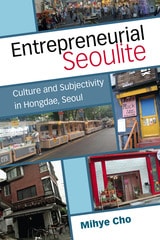
Entrepreneurial Seoulite
Culture and Subjectivity in Hongdae, SeoulMihye Cho
University of Michigan Press, 2019
Recent research on Korean culture approaches the K-wave phenomenon from the perspectives of cultural consumption, media analysis, and cultural management and policy. Meanwhile, studies on Seoul have centered on its transformation as a global, creative city. Rather than examining the K-wave or the city itself, this book explores the experience of living through the city-in-transition, focusing on the relationship between “the ideology that justified engagement in capitalism” and the “subjectification process.” The book aims to understand the project to institutionalize a cultural district in Hongdae as a demonstration of the coevolution of ideologies and citizenship in a society undergoing rapid liberalization—politically, culturally, and economically.
A cultural turn took place in Korea during the 1990s, amid the economic prosperity driven by state-led industrialization and the collapse of the military dictatorship due to democratization movements. Cultural critiques, emerging as an alternative to social movements, proliferated to assert the freedom and autonomy of individuals against regulatory systems and institutions. The nation was hit by the Asian financial crisis in 1997, and witnessed massive economic restructuring including layoffs, stakeouts, and a prevalence of contingent employment. As a result, the entire nation had to find new engines of economic growth while experiencing a creative destruction. At the center of this national transformation, Seoul has sought to recreate itself from a mega city to a global city, equipped with cutting-edge knowledge industries and infrastructures.
By juxtaposing the cultural turn and cultural/creative city-making, Entrepreneurial Seoulite interrogates the formation of new citizen subjectivity, namely the enterprising self, in post-Fordist Seoul. What kinds of logic guide individuals in the engagement of new urban realities in rapidly liberalized Seoul—culturally and economically? In order to explore this query, Mihye Cho draws on Weber’s concept of “the spirit of capitalism” on the formation of a new economic agency focusing on the re-configuration of meanings, and seeks to capture a transformative moment detailing when and how capitalism requests a different spirit and lifestyle of its participants. Likewise, this book approaches the enterprising self as the new spirit of post-Fordist Seoul and explores the ways in which people in Seoul internalize and negotiate this new enterprising self.
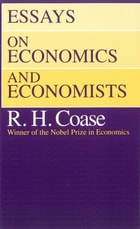
Essays on Economics and Economists
R. H. Coase
University of Chicago Press, 1994
In fifteen essays, Coase evaluates the contributions of a number of outstanding figures, including Adam Smith, Alfred Marshall, Arnold Plant, Duncan Black, and George Stigler, as well as economists at the London School of Economics in the 1930s.
Ronald H. Coase was awarded the Nobel Prize in Economic Science in 1991.
Essays on Liberalism and the Economy, Volume 18
F. A. Hayek
University of Chicago Press, 2022
Across seventeen volumes to date, the University of Chicago Press’s Collected Works of F. A. Hayek series has anthologized the diverse and prolific writings of the Austrian economist synonymous with classical liberalism. Essays on Liberalism and the Economy traces the author’s long and evolving writings on the cluster of beliefs he championed most: liberalism, its core tenets, and how its tradition represents the best hope for Western civilization.
This volume contains material from almost the entire span of Hayek’s career, the earliest from 1931 and the last from 1984. The works were written for a variety of purposes and audiences, and they include—along with conventional academic papers—encyclopedia entries, after-dinner addresses, a lecture for graduate students, a book review, newspaper articles, and letters to the editors of national newspapers. While many are available elsewhere, two have never appeared in print, and two others have not been published in English.
The varied formats collected here are enriched by Hayek’s changing voice at different stages of his life. Some of the pieces resonate as high-minded and noble; some are meant as cuts to “intellectuals” (a pejorative term when used by Hayek) like Keynes and Galbraith. All serve to distill important threads of his worldview.

Ethical Borders
NAFTA, Globalization, and Mexican MigrationAuthored by Bill Ong Hing
Temple University Press, 2010
In his topical new book, Ethical Borders, Bill Ong Hing asks, why do undocumented immigrants from Mexico continue to enter the United States and, what would discourage this surreptitious traffic? An expert on immigration law and policy, Hing examines the relationship between NAFTA, globalization, and undocumented migration, and he considers the policy options for controlling immigration. He develops an ethical rationale for opening up the U.S./Mexican border, as well as improving conditions in Mexico so that its citizens would have little incentive to migrate.
In Ethical Borders Hing insists that reforming NAFTA is vital to ameliorating much of the poverty that drives undocumented immigration and he points to the European Union's immigration and economic development policies as a model for North America. Hing considers the world-wide economic crisis and the social problems that attend labor migration into homogenous countries, arguing for a spectrum of changes, including stricter border enforcement and more effective barriers; a path to citizenship for undocumented migrants; or a guest worker program.
Hing also situates NAFTA and its effects in the larger, and rapidly shifting, context of globalization—particularly the recent rise of China as the world's economic giant. Showing how NAFTA’s unforeseen consequences have been detrimental to Mexico, Hing passionately argues that the United States is ethically bound to address the problems in a way that puts prosperity within the grasp of all North Americans.
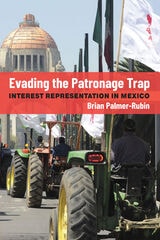
Evading the Patronage Trap
Interest Representation in MexicoBrian Palmer-Rubin
University of Michigan Press, 2022
Why have Latin American democracies proven unable to confront the structural inequalities that cripple their economies and stymie social mobility? Brian Palmer-Rubin contends that we may lay the blame on these countries’ systems of interest representation, which exhibit “biased pluralism,” a system in which the demands of organizations representing economic elites—especially large corporations—predominate. A more inclusive model of representation would not only require a more encompassing and empowered set of institutions to represent workers, but would also feature spaces for non-eliteproducers—such as farmers and small-business owners to have a say in sectoral economic policies.
With analysis drawing on over 100 interviews, an original survey, and official government data, this book focuses on such organizations and develops an account of biased pluralism in developing countries typified by the centrality of patronage—discretionarily allocated state benefits. Rather than serving as conduits for demand-making about development models, political parties and interest organizations often broker state subsidies or social programs, augmenting the short-term income of beneficiaries, but doing little to improve their long-term economic prospects. When organizations become diverted into patronage politics, the economic demands of the masses go unheard in the policies that most affect their lives, and along the way, their economic interests go unrepresented.
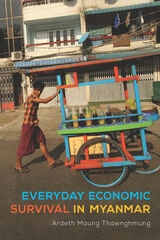
Everyday Economic Survival in Myanmar
Ardeth Maung Thawnghmung
University of Wisconsin Press, 2022
Thawnghmung conducted in-depth interviews and surveys of 372 individuals from all walks of life and across geographical locations in Myanmar between 2008 and 2015. To frame her analysis, she provides context from countries with comparable political and economic situations. Her findings will be welcomed by political scientists and policy analysts, as well by journalists and humanitarian activists looking for substantive, reliable information about everyday life in a country that remains largely in the shadows.
Everything for Sale
The Virtues and Limits of MarketsRobert Kuttner
University of Chicago Press, 1999
"The best survey of the limits of free markets that we have. . . . A much needed plea for pragmatism: Take from free markets what is good and do not hesitate to recognize what is bad."—Jeff Madrick, Los Angeles Times
"It ought to be compulsory reading for all politicians—fortunately for them and us, it is an elegant read."—The Economist
"Demonstrating an impressive mastery of a vast range of material, Mr. Kuttner lays out the case for the market's insufficiency in field after field: employment, medicine, banking, securities, telecommunications, electric power."—Nicholas Lemann, New York Times Book Review
"A powerful empirical broadside. One by one, he lays on cases where governments have outdone markets, or at least performed well."—Michael Hirsh, Newsweek
"To understand the economic policy debates that will take place in the next few years, you can't do better than to read this book."—Suzanne Garment, Washington Post Book World
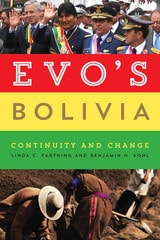
Evo's Bolivia
Continuity and ChangeBy Linda C. Farthing and Benjamin H. Kohl
University of Texas Press, 2014
In this compelling and comprehensive look at the rise of Evo Morales and Bolivia’s Movimiento al Socialismo (MAS), Linda Farthing and Benjamin Kohl offer a thoughtful evaluation of the transformations ushered in by the western hemisphere’s first contemporary indigenous president. Accessible to all readers, Evo’s Bolivia not only charts Evo’s rise to power but also offers a history of and context for the MAS revolution’s place in the rising “pink tide” of the political left. Farthing and Kohl examine the many social movements whose agendas have set the political climate in Bolivia and describe the difficult conditions the administration inherited. They evaluate the results of Evo’s policies by examining a variety of measures, including poverty; health care and education reform; natural resources and development; and women’s, indigenous, and minority rights. Weighing the positive with the negative, the authors offer a balanced assessment of the results and shortcomings of the first six years of the Morales administration.
At the heart of this book are the voices of Bolivians themselves. Farthing and Kohl interviewed women and men in government, in social movements, and on the streets throughout the country, and their diverse backgrounds and experiences offer a multidimensional view of the administration and its progress so far. Ultimately the “process of change” Evo promised is exactly that: an ongoing and complicated process, yet an important example of development in a globalized world.