110 books match the query 'Education (Higher)' and 6 start with e
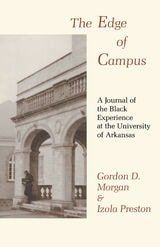
cover of Edge of Campus: A Journal of the Black Experience at the University of Arkansas

Edge of Campus

A Journal of the Black Experience at the University of Arkansas

Gordon Morgan

University of Arkansas Press, 1990
Written by the first black faculty member employed at the University and his wife, a longtime research assistant, this book chronicles the setbacks and triumphs in their attempts to bring true integration to the University of Arkansas.
[more]
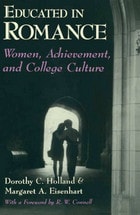
cover of Educated in Romance: Women, Achievement, and College Culture

Educated in Romance

Women, Achievement, and College Culture

Dorothy C. Holland and Margaret A. Eisenhart

University of Chicago Press, 1990
Is romance more important to women in college than grades are? Why do so many women enter college with strong academic backgrounds and firm career goals but leave with dramatically scaled-down ambitions? Dorothy C. Holland and Margaret A. Eisenhart expose a pervasive "culture of romance" on campus: a high-pressure peer system that propels women into a world where their attractiveness to men counts most.
[more]
cover of Educating Women: Cultural Conflict and Victorian Literature

Educating Women

Cultural Conflict and Victorian Literature

Laura Morgan Green

Ohio University Press, 2001

In 1837, when Queen Victoria came to the throne, no institution of higher education in Britain was open to women. By the end of the century, a quiet revolution had occurred: women had penetrated even the venerable walls of Oxford and Cambridge and could earn degrees at the many new universities founded during Victoria's reign. During the same period, novelists increasingly put intellectually ambitious heroines students, teachers, and frustrated scholars—at the center of their books. Educating Women analyzes the conflict between the higher education movement's emphasis on intellectual and professional achievement and the Victorian novel's continuing dedication to a narrative in which women's success is measured by the achievement of emotional rather than intellectual goals and by the forging of social rather than institutional ties.

Focusing on works by Charlotte Brontë, George Eliot, Anna Leonowens, and Thomas Hardy, Laura Morgan Green demonstrates that those texts are shaped by the need to mediate the conflict between the professionalism and publicity increasingly associated with education, on the one hand, and the Victorian celebration of women as emblems of domesticity, on the other. Educating Women shows that the nineteenth-century “heroines” of both history and fiction were in fact as indebted to domestic ideology as they were eager to transform it.
[more]
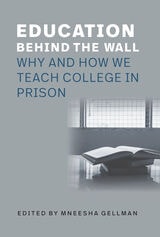
cover of Education Behind the Wall: Why and How We Teach College in Prison

Education Behind the Wall

Why and How We Teach College in Prison

Edited by Mneesha Gellman

Brandeis University Press, 2022

An edited volume reflecting on different aspects of teaching in prison and different points of view.

This book seeks to address some of the major issues faced by faculty who are teaching college classes for incarcerated students. Composed of a series of case studies meant to showcase the strengths and challenges of teaching a range of different disciplines in prison, this volume brings together scholars who articulate some of the best practices for teaching their expertise inside alongside honest reflections on the reality of educational implementation in a constrained environment. The book not only provides essential guidance for faculty interested in developing their own courses to teach in prisons, but also places the work of higher education in prisons in philosophical context with regards to racial, economic, social, and gender-based issues. Rather than solely a how-to handbook, this volume also helps readers think through the trade-offs that happen when teaching inside, and about how to ensure the full integrity of college access for incarcerated students.
[more]
cover of Embracing Queer Students’ Diverse Identities at Historically Black Colleges and Universities: A Primer for Presidents, Administrators, and Faculty

Embracing Queer Students’ Diverse Identities at Historically Black Colleges and Universities

A Primer for Presidents, Administrators, and Faculty

Steve D. Mobley Jr.

Rutgers University Press, 2025
Embracing Queer Students’ Diverse Identities at Historically Black Colleges and Universities: A Primer for Presidents, Administrators, and Faculty is both a call to action and a resource for historically Black college and university (HBCU) leaders and administrators, focusing on historical and contemporary issues related to expanding inclusionary policies and practices for members of HBCU communities who identify as lesbian, gay, bisexual, transgender, and queer (LGBTQ+). The essays, by HBCU presidents, faculty, administrators, alumni, and researchers, explore the specific challenges and considerations of serving LGBTQ+ students within these distinct college and university settings, with the ultimate goal of summoning HBCU communities, higher education scholars, and scholar-practitioners to take thoughtful and urgent action to support and recognize LGBTQ+ students. With this book as a primary resource, HBCUs can work toward becoming fully inclusive campus communities for all of their students.

 
[more]
cover of Empowering Men of Color on Campus: Building Student Community in Higher Education

Empowering Men of Color on Campus

Building Student Community in Higher Education

Brooms, Derrick R.

Rutgers University Press, 2018

While recruitment efforts toward men of color have increased at many colleges and universities, their retention and graduation rates still lag behind those of their white peers. Men of color, particularly black and Latino men, face a number of unique challenges in their educational careers that often impact their presence on campus and inhibit their collegiate success. Empowering Men of Color on Campus examines how men of color negotiate college through their engagement in Brothers for United Success (B4US), an institutionally-based male-centered program at a Hispanic Serving Institution. Derrick R. Brooms, Jelisa Clark, and Matthew Smith introduce the concept of educational agency, which is harbored in cultural wealth and demonstrates how ongoing B4US engagement empowers the men’s efforts and abilities to persist in college. They found that the cultural wealth(s) of the community enhanced the students’ educational agency, which bolstered their academic aspirations, academic and social engagement, and personal development. The authors demonstrate how educational agency and cultural wealth can be developed and refined given salient and meaningful immersions, experiences, engagements, and communal connections. 
[more]