Results by title
87 books match the query 'Emotions' and 7 start with e

Ecological Feelings
A Rhetorical CompendiumJoshua Trey Barnett
Michigan State University Press, 2025
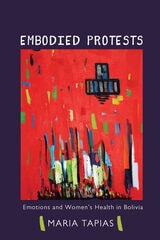
Embodied Protests
Emotions and Women's Health in BoliviaMaria Tapias
University of Illinois Press, 2015
Evocative and compassionate, Embodied Protests gives voice to the human costs of the ongoing neoliberal experiment.
Emotion
A Comprehensive Phenomenology of Theories and Their Meanings for TherapyJames Hillman
Northwestern University Press, 1962
As James Hillman writes in his new preface to this sweeping study, he intends nothing less than "to vitalize a standard topic of academic psychology by making the theory of emotion as crucial as is emotion itself in our lives." Hillman offers an informative and readable survey of a range of theories of emotion, focusing on the twentieth century but moving also from Greek thought to early Christianity to nineteenth-century German physiology. The work challenges readers to rethink our concepts and thereby to re-experience emotional phenomena.
Hillman's study contributes to today's renewed interest in the history of the body. Furthermore, his understanding of emotions in terms of epiphany makes a stimulating contribution to phenomenology. It is equally thought-provoking for the therapist, the philosopher, the intellectual historian, and the general reader.
Emotional Bodies
The Historical Performativity of EmotionsEdited by Dolores Martín Moruno and Beatriz Pichel
University of Illinois Press, 2019
Contributors: Jon Arrizabalaga, Rob Boddice, Leticia Fernández-Fontecha, Emma Hutchison, Dolores Martín-Moruno, Piroska Nagy, Beatriz Pichel, María Rosón, Pilar León-Sanz, Bertrand Taithe, and Gian Marco Vidor.
Emotions in History – Lost and Found
Ute Frevert
Central European University Press, 2011
Coming to terms with emotions and how they influence human behaviour, seems to be of the utmost importance to societies that are obsessed with everything "neuro." On the other hand, emotions have become an object of constant individual and social manipulation since "emotional intelligence" emerged as a buzzword of our times. Reflecting on this burgeoning interest in human emotions makes one think of how this interest developed and what fuelled it. From a historian's point of view, it can be traced back to classical antiquity. But it has undergone shifts and changes which can in turn shed light on social concepts of the self and its relation to other human beings (and nature). The volume focuses on the historicity of emotions and explores the processes that brought them to the fore of public interest and debate.
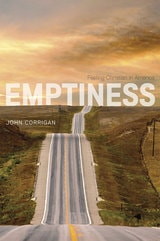
Emptiness
Feeling Christian in AmericaJohn Corrigan
University of Chicago Press, 2015
Corrigan examines different kinds of emptiness essential to American Christianity, such as the emptiness of deep longing, the emptying of the body through fasting or weeping, the emptiness of the wilderness, and the emptiness of historical time itself. He argues, furthermore, that emptiness is closely connected to the ways Christian groups differentiate themselves: many groups foster a sense of belonging not through affirmation, but rather avowal of what they and their doctrines are not. Through emptiness, American Christians are able to assert their identities as members of a religious community.
Drawing much-needed attention to a crucial aspect of American Christianity, Emptiness expands our understanding of historical and contemporary Christian practices.
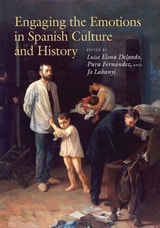
Engaging the Emotions in Spanish Culture and History
Luisa Elena Delgado
Vanderbilt University Press, 2016
The collection ranges across topics such as eighteenth-century sensibility, nineteenth-century concerns with the transmission of emotions, early twentieth-century cinematic affect, and the contemporary mobilization of political emotions including those regarding nonstate national identities. The complexities and effects of emotions are explored in a variety of forms—political rhetoric, literature, personal letters, medical writing, cinema, graphic art, soap opera, journalism, popular music, digital media—with attention paid to broader European and transatlantic implications.