Results by title
99 books match the query 'Environment' and 19 start with e
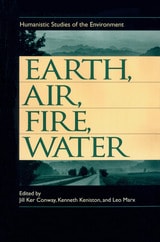
Earth, Air, Fire, Water
Humanistic Studies of the EnvironmentJill Ker Conway
University of Massachusetts Press, 1999
Written in a clear, accessible style with a general audience in mind, the essays in this volume offer fresh approaches to thinking about environmental issues. When we consider the forms of environmental decline most urgently in need of attention—eroding soils, shrinking forests, expanding deserts, acid rain, ozone depletion, air pollution, poisoned water supplies, the loss of biological diversity—it may seem logical that scientists should be the people mobilized to tackle these problems. Yet to devise effective solutions for today's environmental threats, we must situate them within their larger historical, societal, and cultural settings. Amelioration does not require exclusively scientific knowledge, but also changes based upon law and public policy, on institutional structures and practices, on habits of consumption, and on countless other facets of daily life. Earth, Air, Fire, Water seeks to redirect our thinking about environmental issues by locating them in the behavior of human beings—in the institutions, beliefs, and practices that mediate between people and that obscure but beautiful nonhuman world we refer to as “nature.” The book opens with a section on the elements and the ways humans have understood them in the past. There follows a section devoted to social institutions and the ways in which we can learn from current and past efforts to study the interaction between people and nature. The concluding section analyzes the culture of modernity and the ways in which the human imagination has changed in response to the arrival of modern technology. In addition to the editors, contributors include Gregory Nagy, Donald Worster, Stephen J. Pyne, John F. Richards, Richard White, Terence Turner, Barbara Epstein, Oleg N. Yanitsky, Bina Agarwal, Anton Struchkov, Yaakov Garb, and Louis Menand.
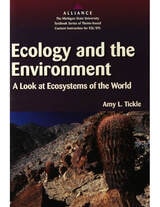
Ecology and the Environment
A Look at Ecosystems of the WorldAmy L. Tickle
University of Michigan Press, 1996

Ecology and the Environment
A Look at Ecosystems of the World: Teacher's ManualAmy L. Tickle
University of Michigan Press, 1996
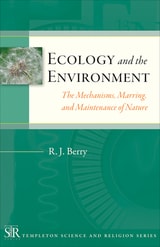
Ecology and the Environment
The Mechanisms, Marrings, and Maintenance of NatureR. J. Berry
Templeton Press, 2011
Ecology and the Environment: The Mechanisms, Marring, and Maintenance of Nature is the ninth title published in the Templeton Science and Religion Series, in which scientists from a wide range of fields distill their experience and knowledge into brief tours of their respective specialties. In this volume, R. J. Berry, a well-known leader in the field of ecology, describes the basic concepts of ecology and seeks to put them into a general context for a reader who lacks any scientific background.

Ecomusicology
Rock, Folk, and the EnvironmentMark Pedelty
Temple University Press, 2012
Can musicians really make the world more sustainable? Anthropologist Mark Pedelty, joined an eco-oriented band, the Hypoxic Punks, to find out. In his timely and exciting book, Ecomusicology, Pedelty explores the political ecology of rock, from local bands to global superstars. He examines the climate change controversies of U2's 360 Degrees stadium tour—deemed excessive by some—and the struggles of local folk singers who perform songs about the environment. In the process, he raises serious questions about the environmental effects and meanings on music.
Ecomusicology examines the global, national, regional, and historical contexts in which environmental pop is performed. Pedelty reveals the ecological potentials and pitfalls of contemporary popular music, in part through ethnographic fieldwork among performers, audiences, and activists. Ultimately, he explains how popular music dramatically reflects both the contradictions and dreams of communities searching for sustainability.
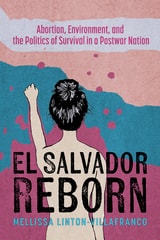
El Salvador Reborn
Abortion, Environment, and the Politics of Survival in a Postwar NationMellissa Linton-Villafranco
University of Arizona Press, 2026
El Salvador Reborn examines the nation’s efforts to reshape its identity after the Peace Accords amid declining Cold War tensions. The book explores the criminalization of abortion and environmental activism in postwar El Salvador by focusing on two key organizations, Agrupación Ciudadana por la Despenalización del Aborto and Foro del Agua, highlighting their political strategies during a critical moment in El Salvador’s formation.
Author Mellissa Linton-Villafranco critically analyzes the political shift under the right-wing party, which sought to redefine notions of life and sovereignty. Historically associated with death squads, the right repositioned itself as a pro-life force by criminalizing abortion, amending the constitution to declare life begins at conception, and imposing penalties of up to thirty years. These measures marginalized women’s autonomy, creating a repressive legal environment centered on fetal rights. In response, feminist groups mobilized through protests, online campaigns, transnational alliances, and public art, advocating for reproductive justice that encompasses gender-based violence, health, and environmental sustainability.
Linton-Villafranco makes the case for a holistic conception of life that integrates land, body, and community sovereignty, weaving reproductive justice with environmental activism to promote a broader, interconnected understanding of life and rights in El Salvador.
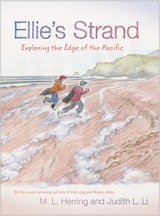
Ellie's Strand
Exploring the Edge of the PacificM. L. Herring
Oregon State University Press, 2018
Green Earth Book Award, Honor Book
There are days in late winter when the Pacific coast enjoys a brief spell of clear, warm weather. Most of the winter storms have passed and the summer fog has not yet settled in. This is when some coastal communities plan their annual beach clean-ups.
In this sequel to Ellie’s Log and Ricky’s Atlas, Ellie and Ricky travel to the Oregon coast from their home in the Cascade Mountains to help with a one-day beach clean-up. Hoping to find a prized Japanese glass float, they instead find more important natural treasures, and evidence of an ocean that needs its own global-scale clean-up.
Ellie and Ricky are amazed by their discoveries at the edge of the world’s largest ocean. Together, they realize the power of volunteering and grapple with the challenges of ocean conservation. In her journal Ellie records her observations of their adventures in her own words and pictures.
With charming pen-and-ink drawings and a compelling story, Ellie's Strand makes coastal science exciting for upper elementary school students. It will be a treasured companion for young beach explorers everywhere.
Empire and Environment
Ecological Ruin in the TranspacificJeffrey Santa Ana, Heidi Amin-Hong, Rina Garcia Chua, Zhou Xiaojing, Editors
University of Michigan Press, 2022
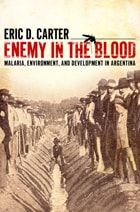
Enemy in the Blood
Malaria, Environment, and Development in ArgentinaEric D. Carter
University of Alabama Press, 2012
Tracing the Fight Against Malaria and the Making of Modern Argentina.
Enemy in the Blood: Malaria, Environment, and Development in Argentina examines the dramatic yet mostly forgotten history of malaria control in northwest Argentina. Carter traces the evolution of malaria science and policy in Argentina from the disease’s emergence as a social problem in the 1890s to its effective eradication by 1950. Malaria-control proponents saw the campaign as part of a larger project of constructing a modern identity for Argentina. Insofar as development meant building a more productive, rational, and hygienic society, the perceptions of a culturally backwards and disease-ridden interior prevented Argentina from joining the ranks of “modern” nations. The path to eradication, however, was not easy due to complicated public health politics, inappropriate application of foreign malaria control strategies, and a habitual misreading of the distinctive ecology of malaria in the northwest, especially the unique characteristics of the local mosquito vector. Homegrown scientific expertise, a populist public health agenda, and an infusion of new technologies eventually brought a rapid end to malaria’s scourge, if not the cure for regional underdevelopment.
Enemy in the Blood sheds light on the often neglected history of northwest Argentina’s interior, adds to critical perspectives on the history of development and public health in modern Latin America, and demonstrates the merits of integrative social-environmental research.
Energy
Resources, technologies and the environmentChristian Ngô
The Institution of Engineering and Technology, 2010
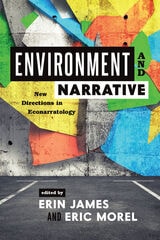
Environment and Narrative
New Directions in EconarratologyEdited by Erin James and Eric Morel
The Ohio State University Press, 2020
To explore the methodological possibilities within “econarratology,” the contributors evaluate the mechanics of how narratives convey environmental understanding via building blocks such as the organization of time and space, characterization, focalization, description, and narration. They also query how readers emotionally and cognitively engage with such representations and how the process of encountering different environments in narratives stands to affect real-world attitudes and behaviors. By positioning narratives as important repositories of values, political and ethical ideas, and behaviors that determine how we engage with our ecological homes, the authors in this volume suggest that to change the way that we interact with the environment requires not only new stories but also a better understanding of the ones that have long been in circulation.
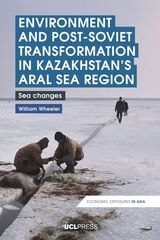
Environment and Post-Soviet Transformation in Kazakhstan’s Aral Sea Region
Sea ChangesWilliam Wheeler
University College London, 2021
Once the fourth largest lake in the world, Kazakhstan’s Aral Sea dried into an unrecognizable fraction of its size during a period of dramatic political change. Through the experiences of local fisheries across the rise and fall of the Soviet Union, Environment and Post-Soviet Transformation in Kazakhstan’s Aral Sea Region explores the diverse ways people in different socioeconomic contexts understand environmental change. In this book, William Wheeler offers a rigorous political ecology of life amid overlapping upheavals, attentive both to the legacies of Sovietism and the possibilities of transnationalism.
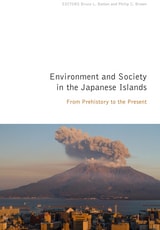
Environment and Society in the Japanese Islands
From Prehistory to the PresentBruce L. Batten
Oregon State University Press, 2015
Environment and Society in the Japanese Islands attempts to answer these questions through a series of case studies by leading Japanese and Western historians, geographers, archaeologists, and climatologists. These essays, on diverse topics from all periods of Japanese history and prehistory, are unified by their focus on the key concepts of “resilience” and “risk mitigation.” Taken as a whole, they place Japan’s experience in global context and call into question the commonly presumed division between pre-modern and modern environmental history.
Primarily intended for scholars and students in fields related to Japan or environmental history, these accessibly-written essays will be valuable to anyone wishing to learn about the historical roots of today’s environmental issues or the complex relationship between human society and the natural environment.

Environment in the Global Arena
Actors, Values, Policies, and FuturesKenneth A. Dahlberg, Marvin S. Soroos, Anne Thompson Feraru, James E. Harf, and B. Thomas Trout
Duke University Press, 1985
The issues in the series are each considered within a systematic framework common to all. Each volume begins with a historical background and then the issues are placed in their contemporary context. Four distinct perspectives are presented: (1) Who are the "global actors" involved in the issue, and what are the linkages among them? (2) What prevailing values are operating, and how have the relevant actors responded to those values? (3) What policies are applied by these actors at the global level, and how are these policies determined? (4) What are the possible results of the values and policies of these global actors?
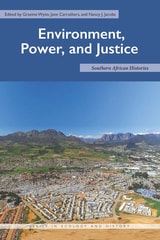
Environment, Power, and Justice
Southern African HistoriesGraeme Wynn
Ohio University Press, 2022
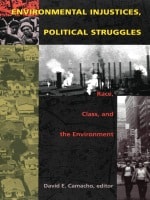
Environmental Injustices, Political Struggles
Race, Class and the EnvironmentDavid E. Camacho, ed.
Duke University Press, 1998
David E. Camacho’s collection of essays examines the value-laden choices behind the public policy that determines placement of commercial environmental hazards, points to the underrepresentation of people of color in the policymaking process, and discusses the lack of public advocates representing low-income neighborhoods and communities. This book combines empirical evidence and case studies—from the failure to provide basic services to the “colonias” in El Paso County, Texas, to the race for water in Nevada—and covers in great detail the environmental dangers posed to minority communities, including the largely unexamined communities of Native Americans. The contributors call for cooperation between national environmental interest groups and local grassroots activism, more effective incentives and disincentives for polluters, and the adoption by policymakers of an alternative, rather than privileged, perspective that is more sensitive to the causes and consequences of environmental inequities.
Environmental Injustices, Political Struggles is a unique collection for those interested in the environment, public policy, and civil rights as well as for students and scholars of political science, race and ethnicity, and urban and regional planning.
Contributors. C. Richard Bath, Kate A. Berry, John G. Bretting, David E. Camacho, Jeanne Nienaber Clarke, Andrea K. Gerlak, Peter I. Longo, Diane-Michele Prindeville, Linda Robyn, Stephen Sandweiss, Janet M. Tanski, Mary M. Timney, Roberto E. Villarreal, Harvey L. White
Ethics of Environment and Development
Global Challenge, International ResponseJ. Ronald Engel
University of Arizona Press, 1990

Evolution and Environment in Tropical America
Edited by Jeremy B. C. Jackson, Ann F. Budd, and Anthony G. Coates
University of Chicago Press, 1996
Recent discoveries show that dramatic changes in climate and ocean circulation can occur very quickly, and that ecological communities respond just as rapidly. Abrupt changes in the composition of fossil assemblages, formerly dismissed as artifacts of a poor fossil record, now are seen as accurate records of swift changes in the composition of ocean communities.
The twenty-four contributors use current work in paleontology, geology, oceanography, anthropology, ecology, and evolution to paint this challenging portrait of rapid environmental and evolutionary change. Their conclusions argue for a revision of existing interpretations of the fossil record and the processes—including invading Eurasian peoples—that have produced it.
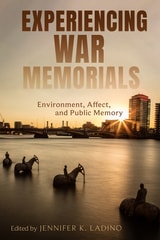
Experiencing War Memorials
Environment, Affect, and Public MemoryEdited by Jennifer K. Ladino
University of Alabama Press, 2026
Examines the emotional, formal, and environmental dimensions of war commemoration
Experiencing War Memorials is a compelling edited collection of essays that examines how war is commemorated through public memorials and the powerful emotions and ideologies these sites generate. Drawing on fields such as war studies, affect studies, public memory studies, and the environmental humanities, the volume demonstrates that commemoration is not only an intellectual act but an embodied, affective experience.
Through diverse case studies, contributors analyze how memorials shape public feelings about fast and slow violence, including battles, massacres, and incarceration. The essays reveal how materials, landscapes, narrative conventions, and innovative memorial forms guide emotional responses such as grief, pride, ambivalence, and outrage while making injustice perceptible. Against the backdrop of ongoing debates over heritage and violence, the collection insists on the importance of attending to the messy and disordered emotional dimensions of public memory. Some essays explore varied human and animal experiences, including military working dogs; scrutinize unsettling sites such as Confederate monuments and overlooked Holocaust locations; and consider digital, ecological, and pandemic-era memorials that expand the boundaries of commemoration.
Edited by Jennifer K. Ladino, Experiencing War Memorials offers nuanced insights into how memorial practices shape national identities, ethical understanding, and the possibilities for social change, illuminating the profound ways public remembrance influences how societies feel, remember, and reckon with violence in all its forms. This volume will appeal to scholars and students of memory studies, war and cultural studies, environmental humanities, and American studies, as well as museum professionals, artists, and readers interested in the politics and emotions of public commemoration.