Results by title
733 books match the query 'Environmental Conservation & Protection' and 38 start with e

Earth Rising
David Oates
Oregon State University Press, 1989
Earth in Our Care
Ecology, Economy, and SustainabilityMaser, Chris
Rutgers University Press, 2009
So writes Chris Maser in this compelling study of three interactive spheres of the ecosystem: atmosphere (air), litho-hydrosphere (rock that comprises the restless continents and the water that surrounds them), and biosphere (all life sandwiched in between).
Rich in detail and insightful analogies, Earth in Our Care addresses key issues including land-use policies, ecological restoration, forest management, local living, and sustainability thinking. Exploring our interconnectedness with the Earth, Maser examines today's problems and, more importantly, provides solutions for the future.
Earth, Air, Fire, Water
Humanistic Studies of the EnvironmentJill Ker Conway
University of Massachusetts Press, 1999
Written in a clear, accessible style with a general audience in mind, the essays in this volume offer fresh approaches to thinking about environmental issues. When we consider the forms of environmental decline most urgently in need of attention—eroding soils, shrinking forests, expanding deserts, acid rain, ozone depletion, air pollution, poisoned water supplies, the loss of biological diversity—it may seem logical that scientists should be the people mobilized to tackle these problems. Yet to devise effective solutions for today's environmental threats, we must situate them within their larger historical, societal, and cultural settings. Amelioration does not require exclusively scientific knowledge, but also changes based upon law and public policy, on institutional structures and practices, on habits of consumption, and on countless other facets of daily life. Earth, Air, Fire, Water seeks to redirect our thinking about environmental issues by locating them in the behavior of human beings—in the institutions, beliefs, and practices that mediate between people and that obscure but beautiful nonhuman world we refer to as “nature.” The book opens with a section on the elements and the ways humans have understood them in the past. There follows a section devoted to social institutions and the ways in which we can learn from current and past efforts to study the interaction between people and nature. The concluding section analyzes the culture of modernity and the ways in which the human imagination has changed in response to the arrival of modern technology. In addition to the editors, contributors include Gregory Nagy, Donald Worster, Stephen J. Pyne, John F. Richards, Richard White, Terence Turner, Barbara Epstein, Oleg N. Yanitsky, Bina Agarwal, Anton Struchkov, Yaakov Garb, and Louis Menand.
Eating the Landscape
American Indian Stories of Food, Identity, and ResilienceEnrique Salmón
University of Arizona Press, 2012
"Eating is not only a political act, it is also a cultural act that reaffirms one’s identity and worldview," Enrique Salmón writes in Eating the Landscape. Traversing a range of cultures, including the Tohono O’odham of the Sonoran Desert and the Rarámuri of the Sierra Tarahumara, the book is an illuminating journey through the southwest United States and northern Mexico. Salmón weaves his historical and cultural knowledge as a renowned indigenous ethnobotanist with stories American Indian farmers have shared with him to illustrate how traditional indigenous foodways—from the cultivation of crops to the preparation of meals—are rooted in a time-honored understanding of environmental stewardship.
In this fascinating personal narrative, Salmón focuses on an array of indigenous farmers who uphold traditional agricultural practices in the face of modern changes to food systems such as extensive industrialization and the genetic modification of food crops. Despite the vast cultural and geographic diversity of the region he explores, Salmón reveals common themes: the importance of participation in a reciprocal relationship with the land, the connection between each group’s cultural identity and their ecosystems, and the indispensable correlation of land consciousness and food consciousness. Salmón shows that these collective philosophies provide the foundation for indigenous resilience as the farmers contend with global climate change and other disruptions to long-established foodways. This resilience, along with the rich stores of traditional ecological knowledge maintained by indigenous agriculturalists, Salmón explains, may be the key to sustaining food sources for humans in years to come.
As many of us begin to question the origins and collateral costs of the food we consume, Salmón’s call for a return to more traditional food practices in this wide-ranging and insightful book is especially timely. Eating the Landscape is an essential resource for ethnobotanists, food sovereignty proponents, and advocates of the local food and slow food movements.
Eco-pragmatism
Making Sensible Environmental Decisions in an Uncertain WorldDaniel A. Farber
University of Chicago Press, 1999
"A comprehensive well-argued effort to address many of the most difficult issues facing legislators concerned with environmental issues."—Stephen P. Adamian, Boston Book Review
"A timely and well-argued contribution."—Calestous Juma, Nature
Ecoambiguity
Environmental Crises and East Asian LiteraturesKaren Laura Thornber
University of Michigan Press, 2012
Ecoambiguity is the first book in any language to analyze Chinese, Japanese, Korean, and Taiwanese literary treatments of damaged ecosystems. Thornber closely examines East Asian creative portrayals of inconsistent human attitudes, behaviors, and information concerning the environment and takes up texts by East Asians who have been translated and celebrated around the world, including Gao Xingjian, Ishimure Michiko, Jiang Rong, and Ko Un, as well as fiction and poetry by authors little known even in their homelands. Ecoambiguity addresses such environmental crises as deforesting, damming, pollution, overpopulation, species eradication, climate change, and nuclear apocalypse. This book opens new portals of inquiry in both East Asian literatures and ecocriticism (literature and environment studies), as well as in comparative and world literature.
Ecological Restoration in the Midwest
Past, Present, and FutureChristian Lenhard and Peter C. Smiley, Jr.
University of Iowa Press, 2018
Most people do not realize it, but the Midwest has been at the forefront of ecological restoration longer than perhaps any other region in the United States, dating back to the 1930s. Because of its industrial history, agricultural productivity, and natural features such as the Great Lakes, the Midwest has always faced a unique set of ecological challenges.
Focusing on six cutting-edge case studies that highlight thirty restoration efforts and research sites throughout the region— Iowa, Indiana, Illinois, Wisconsin, Michigan, Minnesota, and Ohio— editors Christian Lenhart and Peter “Rocky” Smiley Jr. bring together a group of scholars and practitioners to show how midwestern restoration efforts have developed, as well as where they are headed. Whether cleaning up contamination from auto plants in Ohio, or restoring native prairie grasses along the Iowa highway, the contributors uncover a vast network of interested citizens and volunteer groups committed to preserving the region’s environment.
This study, intended for researchers, students, and practitioners, also provides an updated synthesis of restoration theory and practice, and pinpoints emerging issues of importance in the Midwest, such as climate change and the increase in invasive species it will bring to the region. Though focusing exclusively on the Midwest, the contributors demonstrate how these case studies apply to restoration efforts across the globe.
Contributors: Luther Aadland, David P. Benson, Andrew F. Casper, Hua Chen, Joe DiMisa, Steve Glass, Heath M. Hagy, John A. Harrington, Neil Haugerud, Constance Hausman, Michael J. Lemke, Christian Lenhart, Jen Lyndall, Dan Shaw, John A. Shuey, Peter C. Smiley Jr., Daryl Smith
Ecopoetics
The Language of Nature, the Nature of LanguageScott Knickerbocker
University of Massachusetts Press, 2012
Ecopoetics probes the complex relationship between artifice and the natural world in the work of modern American poets—in particular Wallace Stevens, Elizabeth Bishop, Richard Wilbur, and Sylvia Plath. These poets relate to nature as a deep wellspring of meaning, although they all avoid using language the way most nature writers do, merely to reflect or refer directly to the world. Each of these poets, in his or her own distinct way, employs instead what Knickerbocker terms sensuous poesis, the process of rematerializing language through sound effects and other formal devices as a sophisticated response to nonhuman nature.
Rather than attempt to erase the artifice of their own poems, to make them seem more natural and thus supposedly closer to nature, the poets in this book unapologetically embrace artifice—not for its own sake but in order to perform and enact the natural world. Indeed, for them, artifice is natural. In examining their work, Knickerbocker charts a new direction for ecocriticism.
Ecosublime
Environmental Awe and Terror from New World to OddworldLee Rozelle
University of Alabama Press, 2006
Explores 19th-century, modern, postmodern, and millennial texts as they portray the changing ecological face of America
Lee Rozelle probes the metaphor of environmental catastrophe in American literature of the last 150 years. In each instance, Rozelle finds evidence that the ecosublime--nature experienced as an instance of wonder and fear--profoundly reflects spiritual and political responses to the natural world, America’s increasingly anti-ecological trajectory, and the ascendance of a post-natural landscape.
In the 19th century, Rozelle argues, Isabella Bird and Edgar Allan Poe represented the western wilderness as culturally constructed and idealized landscapes. Gardens, forests, and frontiers are conceptual frameworks that either misrepresent or uphold ecological space. Modernists like Nathanael West and William Carlos Williams, on the other hand, portray urban space as either wastelands or mythical urban gardens. A chapter on Charles W. Chesnutt and Rebecca Harding Davis analyzes a new breed of literary eco-advocate, educating and shocking mainstream readers through depictions of ecological disaster. A later chapter probes the writings of Edward Abbey and the Unabomber Manifesto to delve into the sublime dimensions of environmental activism, monkey-wrenching, and eco-terrorism.
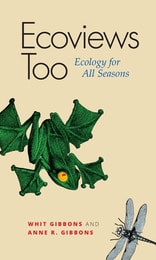
Ecoviews Too
Ecology for All SeasonsWhit Gibbons and Anne R. Gibbons
University of Alabama Press, 2017
Discover the wonders of ecology through the changing seasons of the natural world.
Whit Gibbons and Anne R. Gibbons’s Ecoviews Too: Ecology for All Seasons is based on the popular weekly column “Ecoviews,” published by numerous newspapers for more than thirty years. A follow-up to Ecoviews: Snakes, Snails and Environmental Tales, this lively and entertaining book provides a fascinating and thought-provoking look at the ecology of animals, plants, and their habitats, and promotes awareness of pressing environmental issues.
Because nature, in all its myriad and amazing manifestations, can be enjoyed all year round, this collection is conveniently divided into four sections paralleling the seasons and tracking the adaptations and responses of wildlife to the relentless changes that occur at any location over time. The ecological vignettes focus on seasonal happenings in the cycle of life. The authors not only draw parallels between the natural world and human activities but also highlight unique behaviors of various plant and animal species. They often use humor to get across their message regarding the need to protect our native species and the habitats they depend on for survival.
An intriguing and captivating publication, Ecoviews Too is comprised of fifty informative essays that address ecological topics such as camouflage and mimicry, hibernation and estivation, the human need to encounter scary animals, the mysteries of plant dormancy in winter, the comeback of the wild turkey coinciding with the decline of bobwhites, the chemistry behind the color change in fall leaves, and the top ten environmental problems facing the world today. Educating, entertaining, and delighting a general audience, especially those with an interest in nature, Ecoviews Too provides a useful resource for students and scientists alike.

Ecoviews
Snakes, Snails, and Environmental TalesWhit Gibbons and Anne R. Gibbons
University of Alabama Press, 1998
Discover the wonder of nature through stories that connect science, wildlife, and everyday life.
This lively and entertaining book provides a fascinating and thought-provoking look at the ecology of animals, plants, and their habitats and promotes awareness of pressing environmental issues. The eight informative chapters deliver effective environmental messages and supply compelling insight into the natural world and the ecologists who investigate its many mysteries.
From a concerned ecological stance, the authors show that human relationship with other organisms and the environment is always complex and can be exhilarating, inspiring, humorous, and irritating, depending on perspectives and circumstances. Writing truly to inform and delight, they give a captivating variety of examples from the natural world in hopes of making readers of all ages more compassionate, more tolerant, and more sensitive to other living organisms and their interrelationships. The book celebrates the intrinsic worth of all plants and animals in order to motivate people in a unified effort to preserve the Earth's rich array of life forms. The preservation of the integrity of our planet's biodiversity is, the authors illustrate, critical to our own survival.
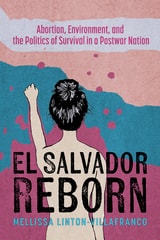
El Salvador Reborn
Abortion, Environment, and the Politics of Survival in a Postwar NationMellissa Linton-Villafranco
University of Arizona Press, 2026
El Salvador Reborn examines the nation’s efforts to reshape its identity after the Peace Accords amid declining Cold War tensions. The book explores the criminalization of abortion and environmental activism in postwar El Salvador by focusing on two key organizations, Agrupación Ciudadana por la Despenalización del Aborto and Foro del Agua, highlighting their political strategies during a critical moment in El Salvador’s formation.
Author Mellissa Linton-Villafranco critically analyzes the political shift under the right-wing party, which sought to redefine notions of life and sovereignty. Historically associated with death squads, the right repositioned itself as a pro-life force by criminalizing abortion, amending the constitution to declare life begins at conception, and imposing penalties of up to thirty years. These measures marginalized women’s autonomy, creating a repressive legal environment centered on fetal rights. In response, feminist groups mobilized through protests, online campaigns, transnational alliances, and public art, advocating for reproductive justice that encompasses gender-based violence, health, and environmental sustainability.
Linton-Villafranco makes the case for a holistic conception of life that integrates land, body, and community sovereignty, weaving reproductive justice with environmental activism to promote a broader, interconnected understanding of life and rights in El Salvador.
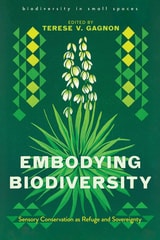
Embodying Biodiversity
Sensory Conservation as Refuge and SovereigntyTerese V. Gagnon
University of Arizona Press, 2024
Harnessing a myriad of methodologies and research spanning multiple continents, this volume delves into the power of everyday forms of biodiversity conservation, motivated by sensory and embodied engagement with plants. Through an array of interdisciplinary contributions, the authors argue that the vast majority of biodiversity conservation worldwide is carried out not by large-scale, hierarchical initiatives but by ordinary people who cultivate sensory-motivated, place-based bonds with plants.
Acknowledging the monumental role of everyday champions in tending biodiversity, the contributors write that this caretaking is crucial to countering ecological harm and global injustice stemming from colonial violence and racial capitalism.
Contributors
Mike Anastario
Ally Ang
Antonia Barreau
Julián Caviedes
Chen Chen
Evelyn Flores
Terese V. Gagnon
José Tomás Ibarra
Fred L. Joiner
Gary Nabhan
Virginia D. Nazarea
Shannon A. Novak
Valentina Peveri
Emily Ramsey
Yasuaki Sato
Justin Simpson
David E. Sutton
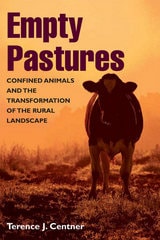
Empty Pastures
Confined Animals and the Transformation of the Rural LandscapeTerence J. Centner
University of Illinois Press, 2004
Just as Rachel Carson's landmark Silent Spring used the disappearance of songbirds as a jumping-off point for a work that raised public awareness of pesticides' devastating environmental impact, Empty Pastures sees the dwindling numbers of livestock in the American countryside as a symptom of a broader transformation, one with serious consequences for the rural landscape and its inhabitants--animal as well as human.
After outlining the rise of the AFO, Centner examines the troubling consequences of consolidation in animal farming and suggests a number of remedies. The issues he tackles include groundwater contamination, the loss of biodiversity, animal welfare, concentrated odors and other nuisances, soil erosion, and the economic effects of the disappearance of the small family farm.
Inspired by largely abandoned traditional practices rather than a radical and unrealistic vision of a return to an idealized past, Centner proposes a series of pragmatic reforms for regulating factory farms to halt ecological degradation and revitalize rural communities.
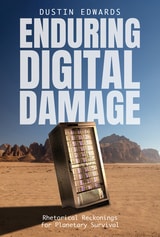
Enduring Digital Damage
Rhetorical Reckonings for Planetary SurvivalDustin Edwards
University of Alabama Press, 2025
Networks the intricate relationship between rapidly advancing digital technologies and environmental degradation and reveals the costs of our globally connected world.
Taking a step back from the screens of electronic devices and exploring the profound impacts of digital technologies on our environment, Enduring Digital Damage lifts the veil on the “hidden costs” in our modern technological world.
Dustin Edwards traces key moments in the lifecycle of technology—such as the extraction of raw materials to the disposal of electronic waste—to uncover the often overlooked consequence of our digital age. He illuminates how data centers, mining operations, and other digital infrastructures contribute to environmental harm and how the rapidly increasing demand for land use and water access is essential to sustain our growing digital needs. Weaving together narratives of technological advancement and ecological destruction, Edwards presents a comprehensive analysis of the true cost of our digital lives. By drawing on case studies, cultural critique, and a critical examination of labor and sustainability, Enduring Digital Damage reveals the deeper histories and ongoing struggles that make our digital lives possible, urging readers to imagine the possibility of a less harmful and extractive world.
Enduring Seeds
Native American Agriculture and Wild Plant ConservationGary Paul Nabhan; Forewords by Wendell Berry and Miguel Altieri
University of Arizona Press, 2002
Gary Paul Nabhan here reveals the rich diversity of plants found in tropical forests and their contribution to modern crops, then tells how this diversity is being lost to agriculture and lumbering. He then relates "local parables" of Native American agriculture—from wild rice in the Great Lakes region to wild gourds in Florida—that convey the urgency of this situation and demonstrate the need for saving the seeds of endangered plants. Nabhan stresses the need for maintaining a wide gene pool, not only for the survival of these species but also for the preservation of genetic strains that can help scientists breed more resilient varieties of other plants.
Enduring Seeds is a book that no one concerned with our environment can afford to ignore. It clearly shows us that, as agribusiness increasingly limits the food on our table, a richer harvest can be had by preserving ancient ways.
This edition features a new foreword by Miguel Altieri, one of today's leading spokesmen for sustainable agriculture and the preservation of indigenous farming methods.
Energy Culture
Art and Theory on Oil and BeyondImre Szeman
West Virginia University Press, 2019
Energy Culture is a provocative book about oil’s firm grip on our politics and everyday lives. It brings together essays and artwork produced in a collaborative environment to stimulate new ways of thinking and to achieve a more just and sustainable world.
The original work collected in Energy Culture creatively engages energy as a social form through lively arguments and artistic research organized around three vectors of inquiry. The first maps how fossil fuels became, and continue to be, embedded in North American society, from the ideology of tar sands reclamation projects to dreams of fiber optic cables running through the Northwest Passage. The second comprises creative and artistic responses to the dominance of fossil fuels in everyday life and to the challenge of realizing new energy cultures. The final section addresses the conceptual and political challenges posed by energy transition and calls into question established views on energy. Its contributions caution against solar capitalism, explore the politics of sabotage, and imagine an energy efficient transportation system called “the switch.” Imbued with a sense of urgency and hope, Energy Culture exposes the deep imbrications of energy and culture while pointing provocatively to ways of thinking and living otherwise.
Energy without Conscience
Oil, Climate Change, and ComplicityDavid McDermott Hughes
Duke University Press, 2017
Enforcement at the EPA
High Stakes and Hard Choices, Revised EditionBy Joel A. Mintz
University of Texas Press, 2012
The only published work that treats the historical evolution of EPA enforcement, this book provides a candid inside glimpse of a crucial aspect of the work of an important federal agency. Based on 190 personal interviews with present and former enforcement officials at EPA, the U.S. Department of Justice, and key congressional staff members—along with extensive research among EPA documents and secondary sources—the book vividly recounts the often tumultuous history of EPA’s enforcement program. It also analyzes some important questions regarding EPA’s institutional relationships and the Agency’s working environment.
This revised and updated edition adds substantial new chapters examining EPA enforcement during the Clinton and George W. Bush administrations. Its treatment of issues of civil service decline and the applicability of captive agency theory is also new and original.
Engineering Vulnerability
In Pursuit of Climate AdaptationSarah E. Vaughn
Duke University Press, 2022
Duke University Press Scholars of Color First Book Award recipient
Environmental Activism and the Urban Crisis
Baltimore, St. Louis, ChicagoRobert Gioielli
Temple University Press, 2015
Environmental Activism and the Urban Crisis focuses on the wave of environmental activism and grassroots movements that swept through America's older, industrial cities during the late 1960s and early 1970s. Robert Gioielli offers incisive case studies of Baltimore, St. Louis, and Chicago to show how urban activism developed as an impassioned response to a host of racial, social, and political conflicts. As deindustrialization, urban renewal, and suburbanization caused the decline of the urban environment, residents--primarily African Americans and working-class whites--organized to protect their families and communities from health threats and environmental destruction.
Gioielli examines various groups' activism in response to specific environmental problems caused by the urban crisis in each city. In doing so, he forms concrete connections between environmentalism, the African American freedom struggle, and various urban social movements such as highway protests in Baltimore and air pollution activism in Chicago. Eventually, the efforts of these activists paved the way for the emergence of a new movement-environmental justice.
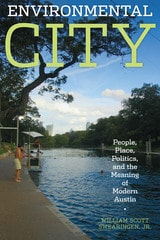
Environmental City
People, Place, Politics, and the Meaning of Modern AustinBy William Scott Swearingen, Jr.
University of Texas Press, 2010
As Austin grew from a college and government town of the 1950s into the sprawling city of 2010, two ideas of Austin as a place came into conflict. Many who promoted the ideology of growth believed Austin would be defined by economic output, money, and wealth. But many others thought Austin was instead defined by its quality of life. Because the natural environment contributed so much to Austin's quality of life, a social movement that wanted to preserve the city's environment became the leading edge of a larger movement that wanted to retain a unique sense of place. The "environmental movement" in Austin became the political and symbolic arm of the more general movement for place.
This is a history of the environmental movement in Austin—how it began; what it did; and how it promoted ideas about the relationships between people, cities, and the environment. It is also about a deeper movement to retain a sense of place that is Austin, and how that deeper movement continues to shape the way Austin is built today. The city it helped to create is now on the forefront of national efforts to rethink how we build our cities, reduce global warming, and find ways that humans and the environment can coexist in a big city.
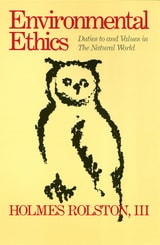
Environmental Ethics
Holmes Rolston
Temple University Press, 1989
Environmental Ethics is a systematic account of values carried by the natural world, coupled with an inquiry into duties toward animals, plants, species, and ecosystems. A comprehensive philosophy of nature is illustrated by and integrated with numerous actual examples of ethical decisions made in encounters with fauna and flora, endangered species, and threatened ecosystems. The ethics developed is informed throughout by ecological science and evolutionary biology, with attention to the logic of moving from what is in nature to what ought to be.
The ethical theory is applied in detail to social, public, and business policy. Written in an engaging style, using diagrams and figures as well as numerous case studies, Environmental Ethics prods the reader into concrete application and invites reader participation in the ethical discussions. The ethics concludes by exploring the historical experiences of personal residence in a surrounding environment. Here is an adventure into what it means to live as responsible human beings in the community of life on Earth.
In the series Ethics and Action, edited by Tom Regan.
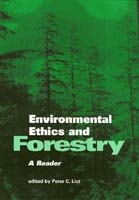
Environmental Ethics and Forestry
Peter List
Temple University Press, 2000
This rising tide of public scrutiny has led many foresters to suspect that their "contract" with society to manage forests using their best professional judgment has been undermined. Some of these professionals, as well as some of their critics, have begun to reexamine their old beliefs and to look for new ways of practicing forestry. Part of this reflective process has entailed new directions in environmental ethics and environmental philosophy.
This reader brings together some of the new thinking in this area. Here students of the applied environmental and natural resource sciences, as well as the interested general reader, will discover a rich sampling of writings in environmental ethics and philosophy as they apply to forestry. Readings focus on basic ethical systems in forestry and forest management, philosophical issues in forestry ethics, codes of ethics in forestry and related natural resource sciences such as fisheries science and wildlife biology, Aldo Leopold's land ethic in forestry, ethical advocacy and whistleblowing in government resource agencies, the ethics of new forestry, ecoforestry, and public debate in forestry, as well as ethical issues in global forestry such as the responsibilities of forest corporations, environmentalists, and individual wood consumers.
The volume contains materials from the founders of forestry ethics, such as Bernhard Fernow, Giford Pinchot, John Muir, and Aldo Leopold; from such organizations as the Society of American Foresters, the Wildlife Society, the American Fisheries Society, Forest Service Employees for Environmental Ethics, and the Ecoforesters group, in addition to the writings by a variety of well-known environmental philosophers and foresters, including Holmes Rolston, Robin Attfield, Lawrence Johnson, Michael McDonald, Paul Wood, James E. Coufal, Raymond Craig, Kristin Shrader-Frechette, Jeff DeBonis, Jim L. Bowyer, Alasdair Gunn, Doug Daigle, Alan G. McQuillan, Stephanie Kaza, Alan Drengson, Duncan Taylor, and Kathleen Dean Moore.
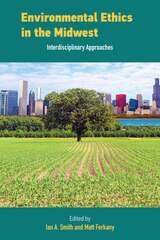
Environmental Ethics in the Midwest
Interdisciplinary ApproachesIan Smith
Michigan State University Press, 2022

Environmental Inequality
Explaining Variation in Environmental Justice Efforts in the Mid-Atlantic StatesKimberly P. Fields
Temple University Press, 2027
The Mid-Atlantic region is often overlooked in environmental justice scholarship, but as Kimberly Fields argues, it provides insights into broadly applicable patterns of state policymaking. Focusing on Pennsylvania, Delaware, Maryland, and Virginia, Fields examines how state governments respond to claims of environmental racism—deliberate decisions about whose neighborhoods should host environmental burdens—and to sustained pressure from community activists.
Environmental Inequality examines how these states develop their environmental justice policies and approaches as a way to understand why they vary in form and focus despite similar issues and demands. Fields reviews the institutional and structural factors that shape environmental justice policymaking. She pays particular attention to how the relevant policy-formulating bodies are organized and how they engage—or fail to engage—with affected communities. She considers race-conscious and race-dismissive models, as well as open versus closed approaches to deliberations with engaged local activists. By analyzing these processes, Fields uncovers profound implications of policymaking and institutional design choices, showing how differing arrangements produce variation in states’ policy focus and enactment.
Drawing on extensive original research, Environmental Inequality offers a nuanced and detailed explanation for the variation in state-level environmental justice efforts
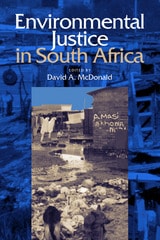
Environmental Justice in South Africa
David A. McDonald
Ohio University Press, 2002
Beginning with a history of the environmental justice movement in the country, the book explores a range of conceptual and practical questions: How does environmental justice relate to issues of marginalization and poverty in South Africa? What are the links between environmental justice and other schools of environmental thought? Is the legal system an appropriate tool for addressing environmental equity? How do race, class, and gender intersect in the South African environmental context?
The second half of the book is a more concrete exploration of environmental (in)justice in the country. These chapters are interspersed with real-life stories of struggles by workers and communities for environmental change. The book is an invaluable resource for South African and international audiences interested in the growing, and increasingly global, environmental justice movement.
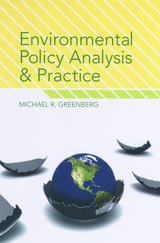
Environmental Policy Analysis and Practice
Greenberg, Michael R
Rutgers University Press, 2008
In Environmental Policy Analysis and Practice, Michael R. Greenberg cuts through the complicated layers of bureaucracy, science, and the public interest to show how all policy considerations can be broken down according to six specific factors: 1) the reaction of elected government officials, 2) the reactions of the public and special interests, 3) knowledge developed by scientists and engineers, 4) economics, 5) ethical imperatives, and 6) time pressure to make a decision.
The book is organized into two parts, with the first part defining and illustrating each one of these criteria. Greenberg draws on examples such as nuclear power, pesticides, brownfield redevelopment, gasoline additives, and environmental cancer, but focuses on how these subjects can be analyzed rather than exclusively on the issues themselves. Part two goes on to describe a set of over twenty tools that are used widely in policy analysis, including risk assessment, environmental impact analysis, public opinion surveys, cost-benefit analysis, and others. These tools are described and then illustrated with examples from part one.
Weaving together an impressive combination of practical advice and engaging first person accounts from government officials, administrators, and leaders in the fields of public health and medicine, this clearly written volume is poised to become a leading text in environmental policy.
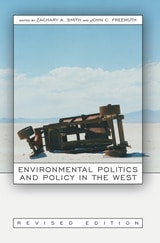
Environmental Politics and Policy in the West, Revised Edition
Zachary A. Smith
University Press of Colorado, 2007
Zachary A. Smith and John Freemuth bring together a roster of top scholars to explicate the issues noted above as well as other key questions in this new edition of Environmental Politics and Policy in the West, which was first published in 1993. This thoroughly revised and updated edition offers a comprehensive and current survey.
Contributors address the policy process as it affects western states, how bureaucracy and politics shape environmental dialogues in the West, how western states innovate environmental policies independently of Washington, and how and when science is involved (or ignored) in management of the West's federal lands. Experts in individual resource areas explore multifaceted issues such as the politics of dam removal and restoration, wildlife resource concerns, suburban sprawl and smart growth, the management of hard-rock mining, and the allocation of the West's tightly limited water resources. Contributors include: Leslie R. Alm, Carolyn D. Baber, Walter F. Baber, Robert V. Bartlett, Hugh Bartling, Matthew A. Cahn, R. McGreggor Cawley, Charles Davis, Sandra Davis, John C. Freemuth, Sheldon Kamieniecki, Matt Lindstrom, William R. Mangun, Denise McCain-Tharnstrom, Daniel McCool, Jaina L. Moan, and Zachary A. Smith.
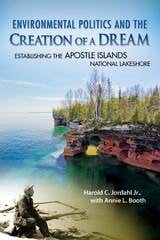
Environmental Politics and the Creation of a Dream
Establishing the Apostle Islands National LakeshoreHarold C. Jordahl
University of Wisconsin Press, 2011
The Apostle Islands National Lakeshore is a breathtakingly beautiful archipelago of twenty-two islands in Lake Superior, just off the tip of northern Wisconsin. For years, the national park has been a favorite destination for tourists and locals alike, but the remarkable story behind its creation is little known. In Environmental Politics and the Creation of a Dream, Harold Jordahl, one of the primary advocates for designating the islands as a national park, discloses the full story behind the effort to preserve their natural beauty for posterity. He describes in detail the political and bureaucratic complexities of the national lakeshore campaign, augmented by his own personal recollections and those of such prominent figures as Wisconsin Senator Gaylord Nelson and President John F. Kennedy. Writing in collaboration with Annie Booth, Jordahl recounts how activists, legislators, media, local residents, and other players shaped the islands’ future establishment as a national park.
Environmental Preservation and the Grey Cliffs Conflict
Negotiating Common Narratives, Values, and EthosKristin D. Pickering
Utah State University Press, 2024
Though environmental degradation and unauthorized use threatened the Grey Cliffs recreational lake area to the point that the Corps considered closure, community members valued it highly and wanted to keep it open. The community near this damaged and crime-ridden area needed help rejuvenating its landscape and image, but the Corps and community were sharply divided on how to maintain this beloved geographic space because of the stakeholders’ different cultural backgrounds and values, as well as the narratives used to discuss them. By co-constructing and aligning narratives, values, and ethos over time—a difficult and lengthy process—the Corps and community succeeded, and Grey Cliffs remains open to all. Focusing on field notes, participant interviews, and analysis of various texts created throughout the conflict, Pickering applies rhetorical analysis and a grounded theory approach to regulation, identity, sustainability, and community values to analyze this communication process.
Illustrating the positive change that can occur when governmental organizations and rural communities work together to construct shared values and engage in a rhetoric of relationship that preserves the environment, Environmental Preservation and the Grey Cliffs Conflict provides key recommendations for resolving environmental conflicts within local communities, especially for those working in technical and professional communication, organizational communication, environmental science, and public policy.

Environmental Program Evaluation
A PrimerEdited by Gerrit Knaap and Tschango John Kim: Foreword by Ravinder K. Jain
University of Illinois Press, 1998
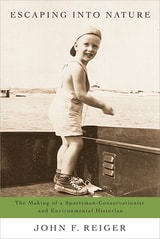
Escaping into Nature
The Making of a Sportsman-Conservationist and Environmental HistorianJohn F. Reiger
Oregon State University Press, 2013
In Escaping into Nature, prominent wildlife conservationist and environmental historian John Reiger shares his story of an angler and hunter who found a cause and a calling and combined them for his life’s work.
John Reiger’s outdoor adventures as a young man primed him for the teachings of the great sportsmen-conservationists of the past, particularly George Bird Grinnell, Theodore Roosevelt, and Aldo Leopold. Inspired by these conservation giants, Reiger left the security of a tenured professorship to serve as executive director of the Connecticut Audubon Society where he, sometimes controversially, put his ideals into practice. Later, he resumed his academic career to illuminate the lives of early wildlife conservationists, visionaries who continue to inspire us to care deeply about the future of the natural world.
Abused psychologically within his family in his early years, Reiger found solace in nature. Though he first entered the outdoors as an escape from his unpleasant circumstances, he soon found the study and pursuit of insects, fishes, and birds to be exciting ends in themselves. He came to believe that it was only by participating in the life and death of other creatures that one could learn to truly value the natural world, be a part of it, and be inspired to work for its conservation.
John Reiger’s autobiography is also the story of his own developing fascination with America’s past, especially as it relates to human interaction with the natural world; his desire to share that passion with others; and his experiences on the road to becoming a nationally recognized scholar. The twists and turns of that journey, and his accounts of the people—and of the wild creatures—who helped him along the way, will appeal to history enthusiasts and nature lovers alike.
Ethics of Environment and Development
Global Challenge, International ResponseJ. Ronald Engel
University of Arizona Press, 1990
Exile and Pride
Disability, Queerness, and LiberationEli Clare
Duke University Press, 2015
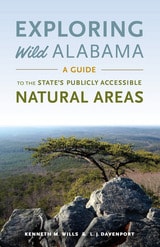
Exploring Wild Alabama
A Guide to the State's Publicly Accessible Natural AreasKenneth M. Wills and L. J. Davenport
University of Alabama Press, 2016
The most comprehensive guide available to Alabama’s publicly accessible natural destinations.
Exploring Wild Alabama is an exceptionally detailed guide to the most beautiful natural destinations in the state. From the rocky outcrops of the Appalachian plateaus to the sugar-white beaches of the Gulf Coast’s Orange Beach and Dauphin Island, Alabama offers a wealth of remarkable sites to explore by car or canoe, bicycle or motorcycle, or on foot.
Intrepid explorers Kenneth M. Wills and L. J. Davenport divide Alabama into eleven geographic regions that feature state parks and preserves, national monuments and forests, wildlife management areas, Nature Conservancy and Forever Wild properties, botanical gardens and arboreta, as well as falls, caverns, and rock cliffs. Exploring Wild Alabama provides detailed site entries to one hundred and fifty destinations. Each section is beautifully illustrated with color photographs and area maps.
Exploring Wild Alabama includes a large state map and numerous local topographic maps to help readers locate each site. Individual site entries include
· written directions to each site and GPS coordinates;
· engaging notes about the ecology, landscape features, and local species of plants and animals of the sites; and
· international recreation symbols for hiking, fishing, boating, camping, hunting, and other fun outdoor activities.
Wills and Davenport guide travelers to Alabama jewels such as Sand Mountain’s Chitwood Barrens, which harbors the rare Green Pitcher Plant and other exotic botanical species; Blowing Springs Cave in Lauderdale County, named for the cool air and the clear spring flowing out of the cave opening; Jackson Prairies in the Lime Hills region; and Booker’s Mill in Conecuh County, offering diverse habitats and historic structures.
Long a favorite destination for outdoor sports enthusiasts, Alabama is fast becoming a major “ecotourism” destination, with thousands of travelers discovering the state’s unsung natural treasures. Exploring Wild Alabama will be used and trusted by anyone who loves the outdoors—birders, botanists, cave explorers, cyclists, hunters, fishermen, rock climbers, canoeists, teachers, and other outdoor enthusiasts.
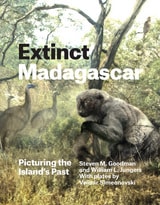
Extinct Madagascar
Picturing the Island's PastSteven M. Goodman and William L. Jungers
University of Chicago Press, 2014
In Extinct Madagascar, noted scientists Steven M. Goodman and William L. Jungers explore the recent past of these land animal extinctions. Beginning with an introduction to the geologic and ecological history of Madagascar that provides context for the evolution, diversification, and, in some cases, rapid decline of the Malagasy fauna, Goodman and Jungers then seek to recapture these extinct mammals in their environs. Aided in their quest by artist Velizar Simeonovski’s beautiful and haunting digital paintings—images of both individual species and ecosystem assemblages reproduced here in full color—Goodman and Jungers reconstruct the lives of these lost animals and trace their relationships to those still living.
Published in conjunction with an exhibition of Simeonovski’s artwork set to open at the Field Museum, Chicago, in the fall of 2014, Goodman and Jungers’s awe-inspiring book will serve not only as a sobering reminder of the very real threat of extinction, but also as a stunning tribute to Madagascar’s biodiversity and a catalyst for further research and conservation.
Extinctions
From Dinosaurs to YouCharles Frankel
University of Chicago Press, 2024
On its face, the story of mass extinction on Earth is one of unavoidable disaster. Asteroid smashes into planet; goodbye dinosaurs. Planetwide crises seem to be beyond our ability to affect or evade. Extinctions argues that geological history tells an instructive story, one that offers important signs for us to consider. When the asteroid struck, Charles Frankel explains, it set off a wave of cataclysms that wore away at the global ecosystem until it all fell apart. What if there had been a way to slow or even turn back these tides? Frankel believes that the answer to this question holds the key to human survival.
Human history, from the massacre of Ice Age megafauna to today’s industrial climate change, has brought the planet through another series of cataclysmic events. But the history of mass extinction together with the latest climate research, Frankel maintains, shows us a way out. If we curb our destructive habits, particularly our drive to kill and consume other species, and work instead to conserve what biodiversity remains, the Earth might yet recover. Rather than await decisive disaster, Frankel argues that we must instead take action to reimagine what it means to be human. As he eloquently explains, geological history reminds us that life is not eternal; we can disappear, or we can become something new and continue our evolutionary adventure.