Results by title
314 books match the query 'Environmental aspects' and 23 start with e
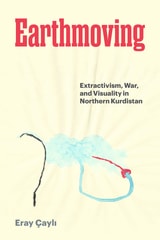
Earthmoving
Extractivism, War, and Visuality in Northern KurdistanEray Çayli
University of Texas Press, 2025
Focuses on contemporary art and media to examine the role of visuals in environmental violence and war in Northern Kurdistan.
Extractivism—exploiting the earth for resources—has long driven racial capitalism and colonialism. And yet, how does extractivism operate in a world where ecological and humanitarian sensibilities are unprecedentedly widespread? Eray Çaylı argues it does so by mobilizing these sensibilities in new ways. Extractivism is no longer only about moving the earth—displacing peoples, fossils, minerals, and waters—but also leaving those who witness this violent displacement sentimentally moved.
Earthmoving conceptualizes this duality. Derived from Çaylı’s years-long work in Northern Kurdistan, home to the world’s largest stateless nation—rendered stateless by colonial policies since the nineteenth century—Earthmoving focuses on the 2010s, a decade that began with peace talks between Turkey and the Kurdish liberation movement but ended with war. The decade saw extractivism intensify in the region and images of its harm proliferate across art and media. Together with contemporary artists, Çaylı shows that images challenge extractivism both by making its harm visible and by fostering self-reflexive and reciprocal collaboration that breaks with its valuation of the colonized and the racialized only in quantifiable and marketable terms.
Eating Our Way through the Anthropocene
Jessica Fanzo
University of Utah Press, 2022
Originally delivered as the Stegner Lecture at the 2020 annual symposium of the Wallace Stegner Center for Land, Resources and the Environment, this book explores how, in the context of the broad global trends of population growth, climate crisis, and inequitable food availability, food systems need to be re-oriented to ensure they can produce enough food to nourish the world. Fanzo discusses moving toward on-farm sustainable food production practices, decreasing food loss and waste, addressing poverty by creating jobs and decent livelihoods, and providing safe, affordable, and healthy diets for everyone. At the same time, food systems must decrease the pressure on biodiversity loss, conserve land and water resources, minimize air and water pollution, and lower greenhouse gas emissions.
Eating in Theory
Annemarie Mol
Duke University Press, 2021
Eating the Ocean
Elspeth Probyn
Duke University Press, 2016

Eco-Sufficiency and Global Justice
Women Write Political EcologyEdited by Ariel Salleh
Pluto Press, 2009
As the twenty-first century faces a crisis of democracy and sustainability, this book attempts to bring academics and alternative globalisation activists into conversation.
Through studies of global neoliberalism, ecological debt, climate change, and the ongoing devaluation of reproductive and subsistence labour, these uncompromising essays by internationally distinguished women thinkers expose the limits of current scholarship in political economy, ecological economics, and sustainability science.
The book introduces groundbreaking theoretical concepts for talking about humanity-nature links and will be a challenging read for activists and for students of political economy, environmental ethics, global studies, sociology, women's studies, and critical geography.
Ecologies of Justice
Making and Unmaking Prison WorldsMatthew DelSesto
Rutgers University Press, 2027
What is the role of multi-species ecologies in creating spaces that counteract the violence in carceral systems and environmental destruction? This book brings together, for the first time, contributions on issues related to prison, jail, and reentry programs, community-based interventions, environmental justice, and sustainability. Through rigorous analysis, detailed case studies, poetry, and personal reflections, the book offers ways of thinking and acting at the intersection of environmental issues and the carceral system. It gathers hard-earned wisdom and insight of researchers, activists, practitioners, and community leaders from within and beyond prison walls who have taken up their projects despite profound institutional constraints.
Approaches in the book range from reform to abolition, as authors detail both practical interventions and imaginative courses of action. More than a contribution to academic knowledge, the book also uniquely highlights voices of those who are incarcerated, survivors of crime, and institutional stakeholders. In addition to writing about the carceral system based on research and personal experience, authors describe practices that are creating transformative spaces of environmental education, building effective pipelines for green workforce development, and sustaining reciprocal relationships for eco-social healing.
Visit for more information: ecologiesofjustice.net

Ecology and Environmental Management of Lyme Disease
Ginsberg, Howard S
Rutgers University Press, 1993
Lyme disease--virtually unknown in the United States only a decade ago--has now been reported from almost every state; in the Northeast, it has become a major public health crisis. Under the name of borreliosis, the disease is also common in Europe. As Americans have become aware of the hazard they face from Lyme disease, they have become anxious to know how to avoid or control the disease. But the complex ecological interactions of Lyme disease make that extremely difficult. The disease is caused by a microorganism, a spirochete, which is carried by tiny ticks. The ticks, in turn, are transported from place to place by their hosts: humans, deer, white-tailed mice, dogs, lizards, and many other animals and birds. Both ticks and their hosts serve as a reservoir for the disease. As with any tick-borne disease, the best hope of prevention lies in understanding and interrupting the lifecycle of the microorganism, its vectors, and their hosts.
This book is the first attempt to survey the natural history, ecology, population dynamics, geography, and environmental management of Lyme disease. Eighteen leading American researchers on Lyme disease explain the current state of knowledge and comment candidly on the theoretical and practical advantages and difficulties with each technique of surveillance, self-protection, and tick control. The book includes suggestions for personal protection against the disease,
This is an essential resource for naturalists, ecologists, physicians, nurses, epidemiologists, public health officials, entomologists, veterinarians, pest control operators, wildlife managers, town planners, and anyone concerned with Lyme disease.
Ecology of Pastoralism
P. Nick Kardulias
University Press of Colorado, 2015
In The Ecology of Pastoralism, diverse contributions from archaeologists and ethnographers address pastoralism’s significant impact on humanity’s basic subsistence and survival, focusing on the network of social, political, and religious institutions existing within various societies dependent on animal husbandry.
Pastoral peoples, both past and present, have organized their relationships with certain animals to maximize their ability to survive and adapt to a wide range of conditions over time. Contributors show that despite differences in landscape, environment, and administrative and political structures, these societies share a major characteristic—high flexibility. Based partially on the adaptability of various domestic animals to difficult environments and partially on the ability of people to establish networks allowing them to accommodate political, social, and economic needs, this flexibility is key to the survival of complex pastoral systems and serves as the connection among the varied cultures in the volume.
In The Ecology of Pastoralism, a variety of case studies from a broad geographic sampling uses archaeological and contemporary data and offers a new perspective on the study of pastoralism, making this volume a valuable contribution to current research in the area.

Ecology, Economy, Equity
The Path to a Carbon-Neutral LibraryMandy Henk
American Library Association, 2014
Ecospeak
Rhetoric and Environmental Politics in AmericaM. Jimmie Killingsworth and Jacqueline S. Palmer
Southern Illinois University Press, 1992
In this book, M. Jimmie Killingsworth and Jacqueline S. Palmer have a twofold purpose: to analyze the patterns of rhetoric used in written discourse about environmental politics and to make a practical contribution to the art of rhetorical criticism through the study of rhetoric in use.
The language, professional objectivity, and research programs of scientists insulate these best-informed citizens in enclaves of specialization, limiting access to crucial information and hindering effective reformative action. Science, the authors stress, is not merely a database to rely upon but a view of the world that must be broadened in order to affect social morality. Science-based activism must arise to ensure the care and future of the environment.
Killingsworth and Palmer argue that for grassroots activism to be tied to this globally conscious philosophy, a rhetoric of sustainability must be cultivated.
Edge Effects
Notes From An Oregon ForestChris Anderson
University of Iowa Press, 1993
Empty Pastures
Confined Animals and the Transformation of the Rural LandscapeTerence J. Centner
University of Illinois Press, 2004
Just as Rachel Carson's landmark Silent Spring used the disappearance of songbirds as a jumping-off point for a work that raised public awareness of pesticides' devastating environmental impact, Empty Pastures sees the dwindling numbers of livestock in the American countryside as a symptom of a broader transformation, one with serious consequences for the rural landscape and its inhabitants--animal as well as human.
After outlining the rise of the AFO, Centner examines the troubling consequences of consolidation in animal farming and suggests a number of remedies. The issues he tackles include groundwater contamination, the loss of biodiversity, animal welfare, concentrated odors and other nuisances, soil erosion, and the economic effects of the disappearance of the small family farm.
Inspired by largely abandoned traditional practices rather than a radical and unrealistic vision of a return to an idealized past, Centner proposes a series of pragmatic reforms for regulating factory farms to halt ecological degradation and revitalize rural communities.
Enduring Roots
Encounters with Trees, History, and the American LandscapeGayle Brandow Samuels
Rutgers University Press, 2005
Trees are the grandest and most beautiful plant creations on earth. From their shade-giving, arching branches and strikingly diverse bark to their complex root systems, trees represent shelter, stability, place, and community as few other living objects can.
Enduring Roots tells the stories of historic American trees, including the oak, the apple, the cherry, and the oldest of the world’s trees, the bristlecone pine. These stories speak of our attachment to the land, of our universal and eternal need to leave a legacy, and demonstrate that the landscape is a gift, to be both received and, sometimes, tragically, to be destroyed.
Each chapter of this book focuses on a specific tree or group of trees and its relationship to both natural and human history, while exploring themes of community, memory, time, and place. Readers learn that colonial farmers planted marker trees near their homes to commemorate auspicious events like the birth of a child, a marriage, or the building of a house. They discover that Benjamin Franklin’s Newtown Pippin apples were made into a pie aboard Captain Cook’s Endeavour while the ship was sailing between Tahiti and New Zealand. They are told the little-known story of how the Japanese flowering cherry became the official tree of our nation’s capital—a tale spanning many decades and involving an international cast of characters. Taken together, these and many other stories provide us with a new ways to interpret the American landscape.
“It is my hope,” the author writes, “that this collection will be seen for what it is, a few trees selected from a great forest, and that readers will explore both—the trees and the forest—and find pieces of their own stories in each.”
Energy without Conscience
Oil, Climate Change, and ComplicityDavid McDermott Hughes
Duke University Press, 2017
Entranced Earth
Art, Extractivism, and the End of LandscapeJens Andermann
Northwestern University Press, 2023
A sweeping analysis of the lasting effects of neocolonial extractivism in Latin American aesthetic modernity from 1920 to the present
Looking to the extractive frontier as a focal point of Latin American art, literature, music, and film, Jens Andermann asks what emerges at the other end of landscape. Art in the Global South has long represented and interrogated “insurgent nature”—organic and inorganic matter, human and nonhuman life, thrown into turmoil.
In Entranced Earth: Art, Extractivism, and the End of Landscape, Andermann traces the impact of despaisamiento—world-destroying un-landscaping—throughout the Latin American modernist archive. At the same time, he explores innovative, resilient modes of allyship forged between diverse actors through their shared experiences of destruction. From the literary regionalism of the 1930s to contemporary bio art, from modernist garden architecture to representations of migration and displacement in sound art and film, Entranced Earth tracks the crisis of landscape and environmental exhaustion beyond despair toward speculative, experimental forms of survival.
Environmental City
People, Place, Politics, and the Meaning of Modern AustinBy William Scott Swearingen, Jr.
University of Texas Press, 2010
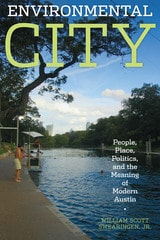
As Austin grew from a college and government town of the 1950s into the sprawling city of 2010, two ideas of Austin as a place came into conflict. Many who promoted the ideology of growth believed Austin would be defined by economic output, money, and wealth. But many others thought Austin was instead defined by its quality of life. Because the natural environment contributed so much to Austin's quality of life, a social movement that wanted to preserve the city's environment became the leading edge of a larger movement that wanted to retain a unique sense of place. The "environmental movement" in Austin became the political and symbolic arm of the more general movement for place.
This is a history of the environmental movement in Austin—how it began; what it did; and how it promoted ideas about the relationships between people, cities, and the environment. It is also about a deeper movement to retain a sense of place that is Austin, and how that deeper movement continues to shape the way Austin is built today. The city it helped to create is now on the forefront of national efforts to rethink how we build our cities, reduce global warming, and find ways that humans and the environment can coexist in a big city.

Environmental Program Evaluation
A PrimerEdited by Gerrit Knaap and Tschango John Kim: Foreword by Ravinder K. Jain
University of Illinois Press, 1998
Environmental Safety of Genetically Engineered Crops
Rebecca Grumet
Michigan State University Press, 2010
Environmental Security
Simon Dalby
University of Minnesota Press, 2002
A critical look at the relationship between environmental degradation and international relations.
Since the end of the Cold War, environmental matters-especially the international implications of environmental degradation-have figured prominently in debates about rethinking security. But do the assumptions underlying such discussions hold up under close scrutiny? In this first treatment of environmental security from a truly critical perspective, Simon Dalby shows how attempts to explain contemporary insecurity falter over unexamined notions of both environment and security.
Adding environmental history, aboriginal perspectives, and geopolitics to the analysis explicitly suggests that the growing disruptions caused by a carbon-fueled and expanding modernity are at the root of contemporary difficulties. Environmental Security argues that rethinking security means revisiting questions of how we conceive identities as endangered and how we perceive threats to these identities. The book clearly demonstrates that the conceptual basis for critical security studies requires an extended engagement with political theory and with the assumptions of the modern subject as progressive political agent. Viewed thus on a global scale, the environmental security discourse raises profoundly troubling political questions as to who we are and what kind of world we are collectively making in our efforts to be secure.
Ethics of Environment and Development
Global Challenge, International ResponseJ. Ronald Engel
University of Arizona Press, 1990
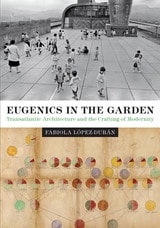
Eugenics in the Garden
Transatlantic Architecture and the Crafting of ModernityBy Fabiola López-Durán
University of Texas Press, 2018
Winner, Robert Motherwell Book Award, Outstanding Book on Modernism in the Arts, The Dedalus Foundation, 2019
As Latin American elites strove to modernize their cities at the turn of the twentieth century, they eagerly adopted the eugenic theory that improvements to the physical environment would lead to improvements in the human race. Based on Jean-Baptiste Lamarck’s theory of the “inheritance of acquired characteristics,” this strain of eugenics empowered a utopian project that made race, gender, class, and the built environment the critical instruments of modernity and progress.
Through a transnational and interdisciplinary lens, Eugenics in the Garden reveals how eugenics, fueled by a fear of social degeneration in France, spread from the realms of medical science to architecture and urban planning, becoming a critical instrument in the crafting of modernity in the new Latin world. Journeying back and forth between France, Brazil, and Argentina, Fabiola López-Durán uncovers the complicity of physicians and architects on both sides of the Atlantic, who participated in a global strategy of social engineering, legitimized by the authority of science. In doing so, she reveals the ideological trajectory of one of the most celebrated architects of the twentieth century, Le Corbusier, who deployed architecture in what he saw as the perfecting and whitening of man. The first in-depth interrogation of eugenics’ influence on the construction of the modern built environment, Eugenics in the Garden convincingly demonstrates that race was the main tool in the geopolitics of space, and that racism was, and remains, an ideology of progress.
Evolution and the Machinery of Chance
Philosophy, Probability, and Scientific Practice in BiologyMarshall Abrams
University of Chicago Press, 2023
Natural selection is one of the factors responsible for changes in biological populations. Some traits or organisms are fitter than others, and natural selection occurs when there are changes in the distribution of traits in populations because of fitness differences. Many philosophers of biology insist that a trait’s fitness should be defined as an average of the fitnesses of individual members of the population that have the trait.
Marshall Abrams argues convincingly against this widespread approach. As he shows, it conflicts with the roles that fitness is supposed to play in evolutionary theory and with the ways that evolutionary biologists use fitness concepts in empirical research. The assumption that a causal kind of fitness is fundamentally a property of actual individuals has resulted in unnecessary philosophical puzzles and years of debate. Abrams came to see that the fitnesses of traits that are the basis of natural selection cannot be defined in terms of the fitnesses of actual members of populations, as philosophers of biology often claim. Rather, it is an overall population-environment system—not actual, particular organisms living in particular environmental conditions—that is the basis of trait fitnesses. Abrams argues that by distinguishing different classes of fitness concepts and the roles they play in the practice of evolutionary biology, we can see that evolutionary biologists’ diverse uses of fitness concepts make sense together and are consistent with the idea that fitness differences cause evolution.
Abrams’s insight has broad significance, for it provides a general framework for thinking about the metaphysics of biological evolution and its relations to empirical research. As such, it is a game-changing book for philosophers of biology, biologists who want deeper insight into the nature of evolution, and anyone interested in the applied philosophy of probability.

Explosivity
Following What RemainsJavier Arbona-Homar
University of Minnesota Press, 2025
How explosions across history reveal the violence embedded in San Francisco’s landscape
Offering a novel approach to contemporary landscape studies, Explosivity unearths the hidden legacies of violence that have shaped the physical and cultural environment of the San Francisco Bay area. As he sifts through the historical debris of previous centuries, Javier Arbona-Homar analyzes a series of explosions that took place between 1866 and 2011 to call attention to the scattered remnants of militarism and racialized capitalism embedded in the region’s geography.
From incidents involving nineteenth-century explosives manufacturing and World War II munitions loading to radical activism and contemporary television productions, Arbona-Homar locates a pattern of historical violence that refocuses the broader racial and colonial context. Citing the material, social, and political conditions that gave rise to these disparate episodes, he reviews the historic erasure of those driving forces and puts forth alternative possibilities for how such disasters might be memorialized.
Synthesizing a diverse set of field research methods, including oral histories and site visits, and supplemented by specially commissioned landscape photographs by Andrea Gaffney, Explosivity presents a radical exercise in the exposition of public memory.
Retail e-book files for this title are screen-reader friendly with images accompanied by short alt text and/or extended descriptions.